Basic Addition Reading Worksheets for Ages 7-8
4 filtered results
-
From - To
Discover our engaging Basic Addition Reading Worksheets tailored for children ages 7-8! These worksheets are designed to make learning fun while helping young learners develop essential math skills. Each worksheet features vibrant illustrations and interactive activities that reinforce addition concepts through relatable contexts. Children will enjoy solving problems and reading related stories that build both reading comprehension and numerical understanding. Perfect for reinforcing classroom learning or for at-home practice, these resources aim to cultivate a strong foundation in basic math. Join us in fostering a love for learning as your child gains confidence in their addition skills!
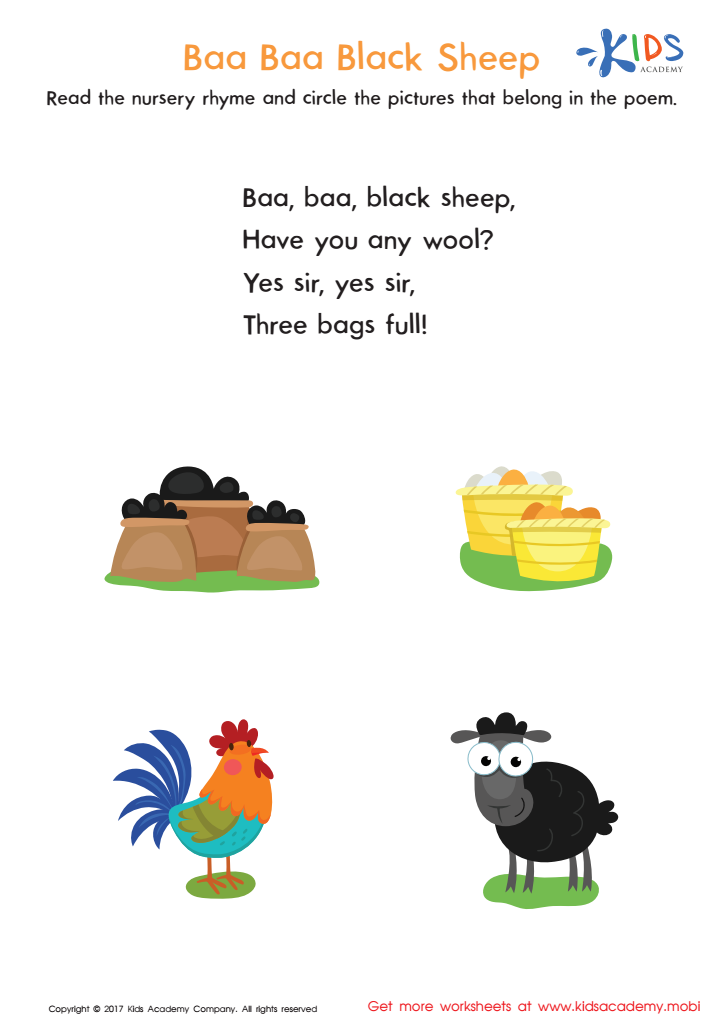
Baa Baa Black Sheep Printable
 Assign to My Students
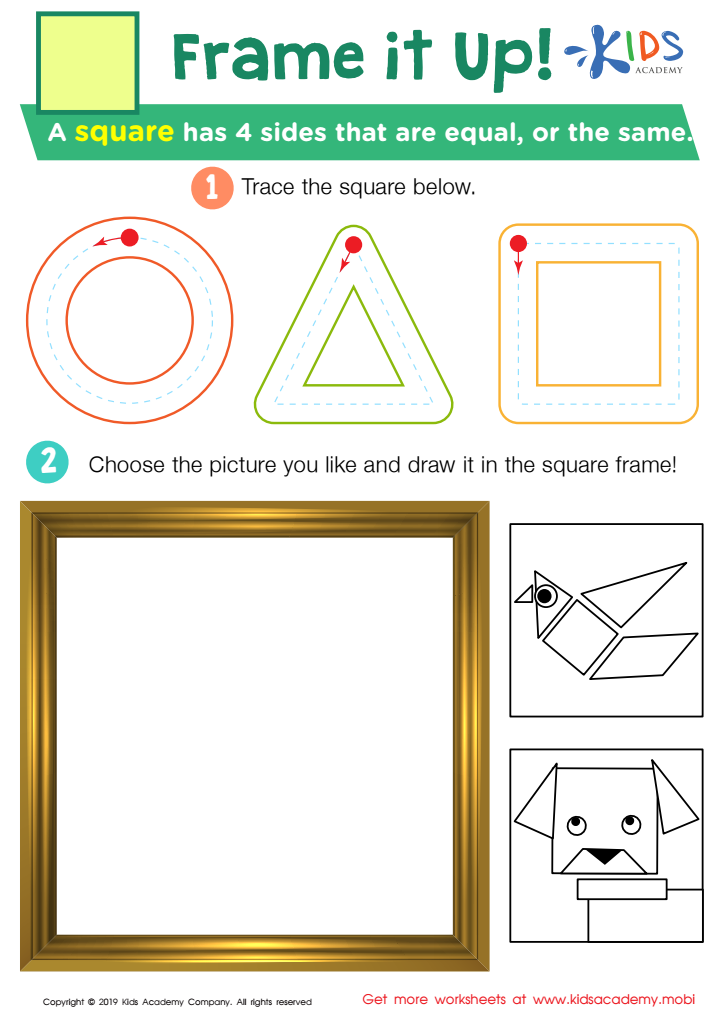
Frame it Up Worksheet
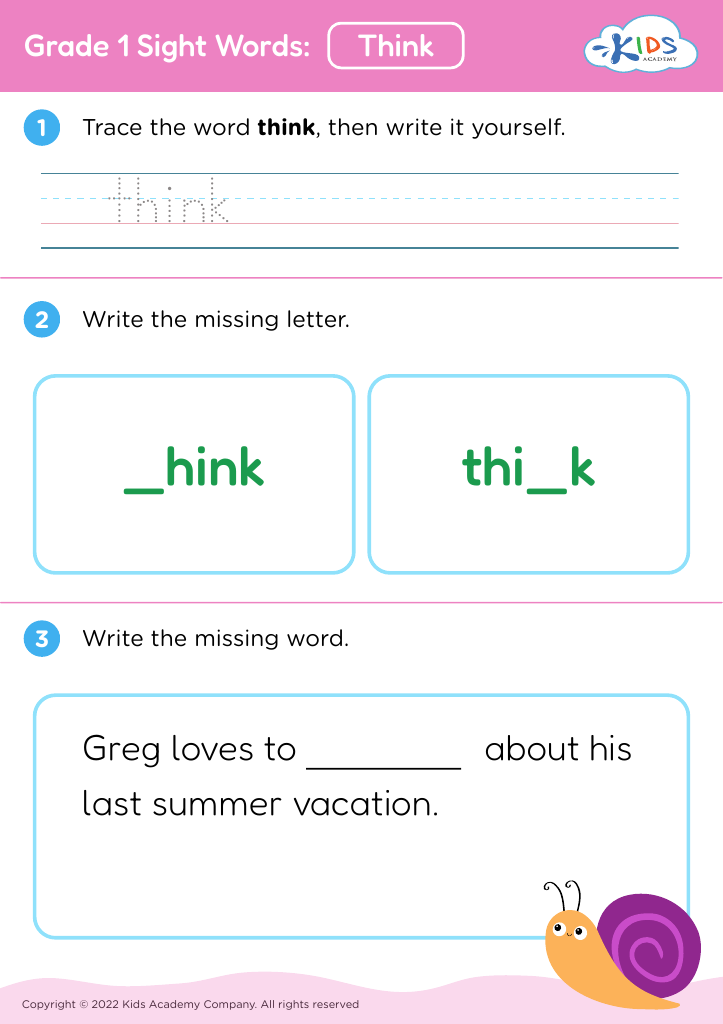
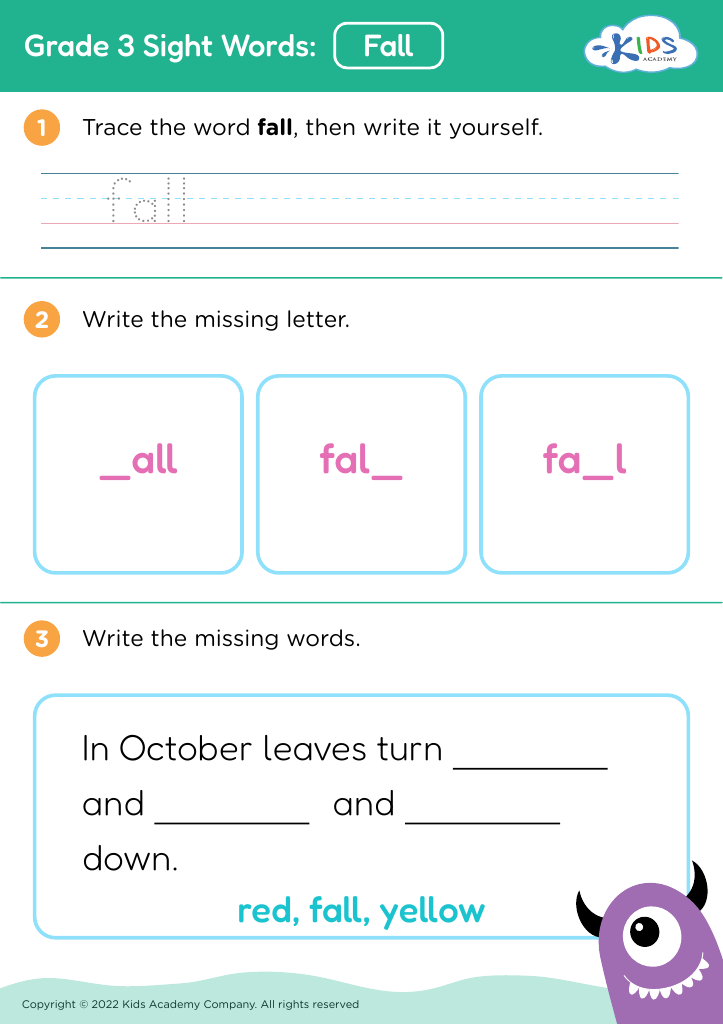








Basic addition reading for ages 7-8 is crucial for young learners as it establishes foundational skills that are essential for their academic success. At this age, children are transitioning from simple arithmetic to more complex mathematical concepts, making proficiency in addition vital. Strong addition skills enhance confidence, promote problem-solving abilities, and facilitate effective learning in various subjects.
Parents and teachers should care about this stage because it is during these formative years that children develop their attitudes towards mathematics. If children struggle with basic addition, they may develop anxiety or a negative perception of math, impacting their future learning experiences. Additionally, strong numerical literacy is vital for everyday activities like budgeting, cooking, and managing time effectively.
Moreover, basic addition reading fosters critical thinking and boosts overall academic performance. It is not solely an isolated skill; it enables a deeper understanding of concepts in science, finance, and technology. In today’s data-driven world, mathematical literacy is not just beneficial but imperative for long-term success.
Therefore, investing time and resources into ensuring children master these skills will pay dividends in shaping confident learners prepared for future challenges.








