Color recognition Reading Worksheets for Ages 7-8 - Page 2
25 filtered results
-
From - To
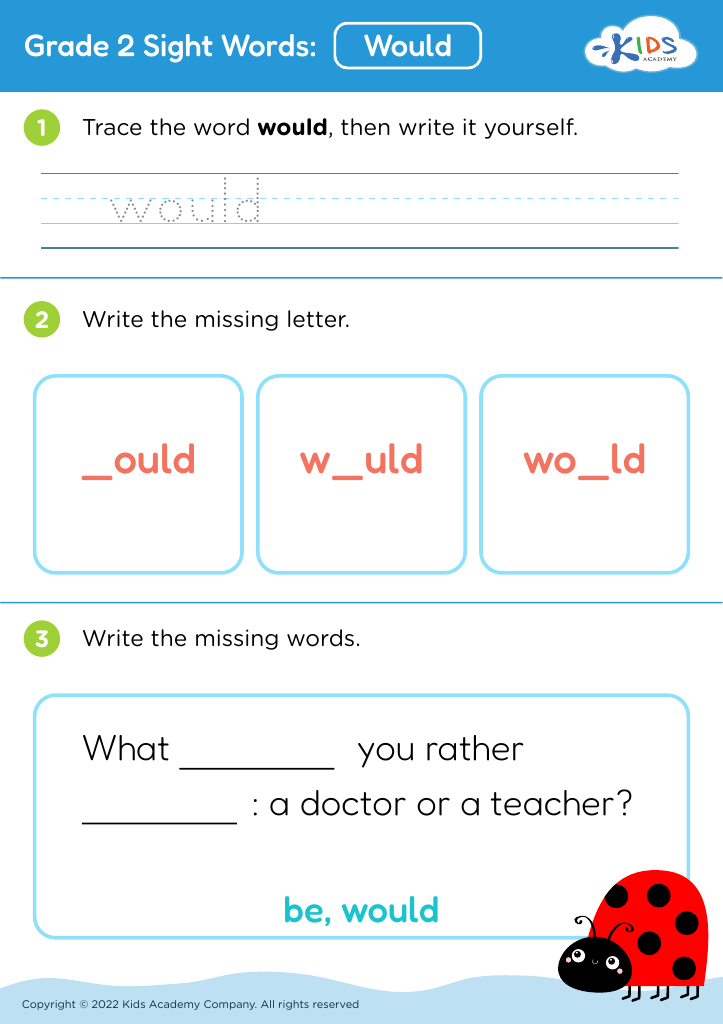







Color recognition is a critical skill that parents and teachers should nurture in 7-8 year-olds because it significantly impacts cognitive and emotional development. Learning to identify and name colors enhances children's visual perception and memory. This boosts early reading skills as children learn to notice differences and patterns in their environment, which are fundamental for decoding words and sentences.
Moreover, color recognition is strongly linked to language development. By recognizing and describing colors, children expand their vocabulary and learn to use descriptive language, enriching their communication skills. It also fosters creativity, particularly in activities like drawing and organizing, where children apply their understanding of colors to express themselves and order elements logically.
Understanding colors can have an impact on emotional intelligence too. Colors carry different connotations and can influence mood and behavior. When children learn about colors, they also learn to associate certain feelings or ideas with them, helping them to express their emotions more accurately.
Furthermore, color-coding is a useful organizational tool. Skills learned through color-recognition can help children organize tasks and materials more efficiently, laying a foundation for better time management and study habits. Therefore, investing time in color recognition activities significantly contributes to the overall cognitive, linguistic, emotional, and organizational development of 7-8 year-old children.








