Understanding prefixes Reading Worksheets for Ages 7-8
3 filtered results
-
From - To
Unleash the power of words with our "Understanding Prefixes Reading Worksheets for Ages 7-8"! Perfectly designed for young learners, these worksheets enhance vocabulary and reading comprehension by teaching common prefixes. Each exercise breaks down complex words into understandable parts, building a solid foundation in word formation. Engaging activities, playful illustrations, and practical examples make learning exciting and effective. Great for classroom use or home practice, our worksheets support early reading skills and empower children to decode new words with confidence. Help your child unlock a world of words and foster a lifelong love for reading!
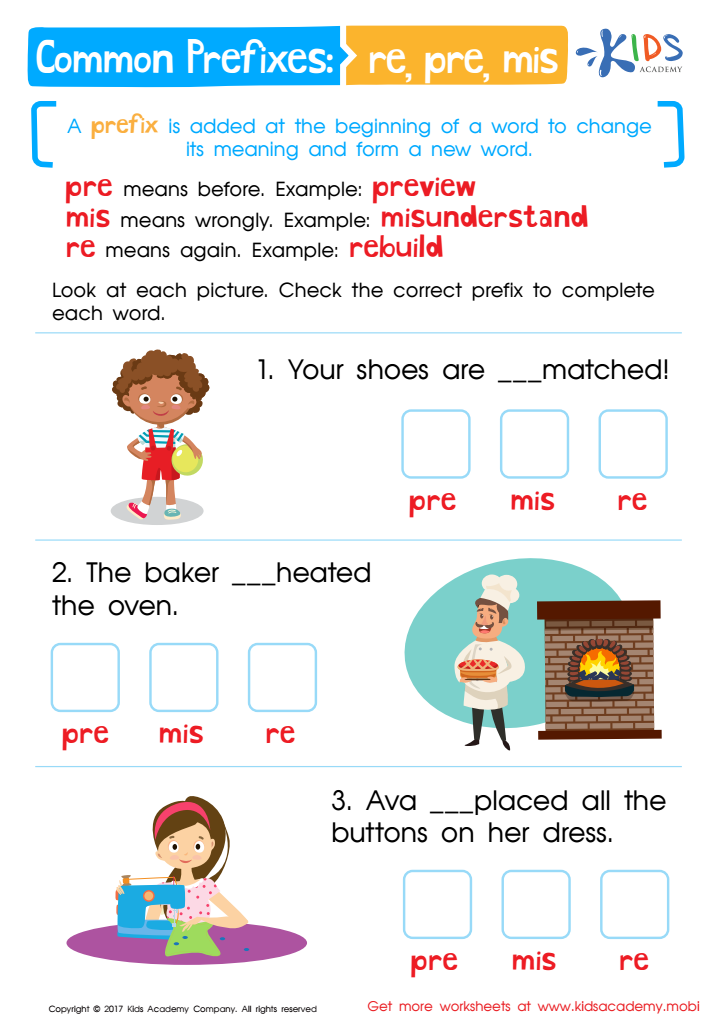
Common Prefixes Worksheet: RE, PRE, MIS
 Assign to My Students
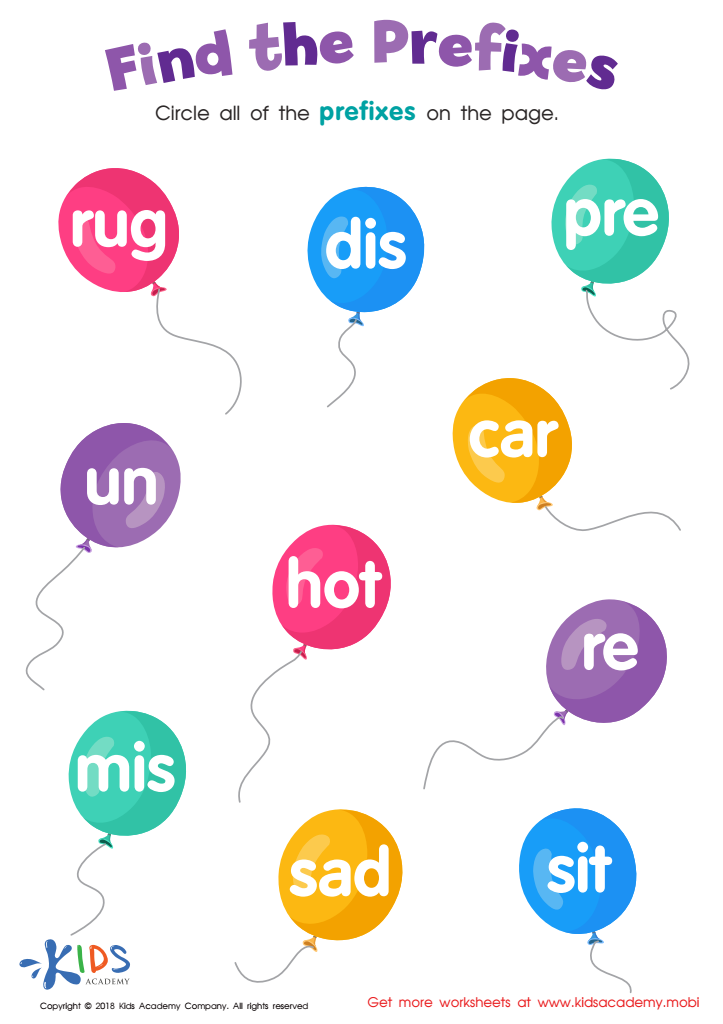
Reading: Find the Prefixes Worksheet
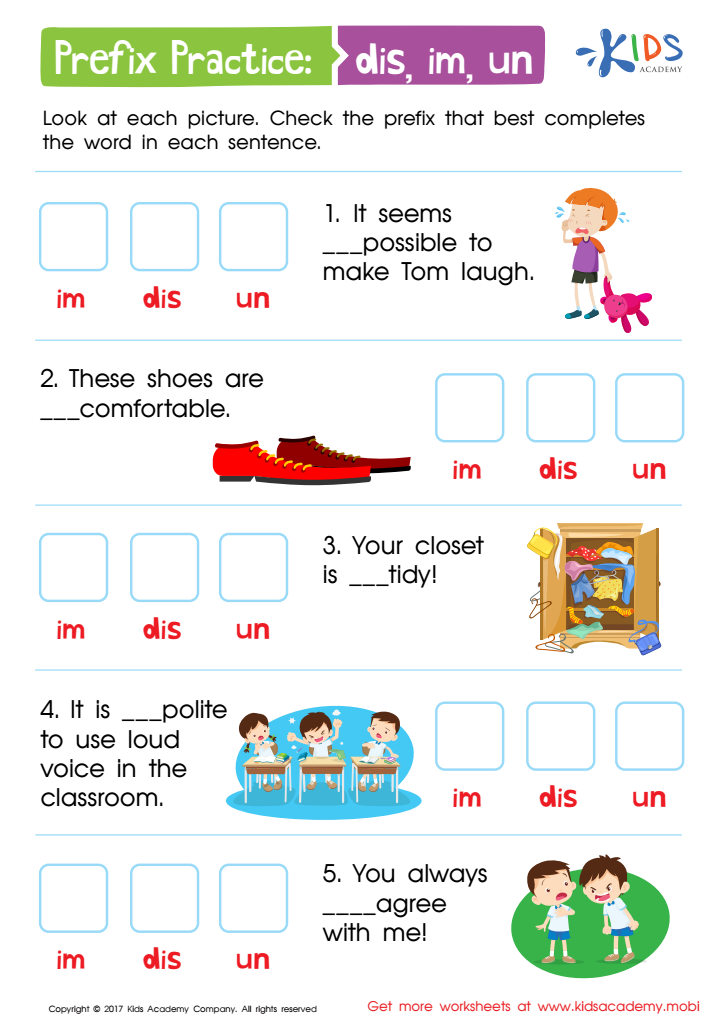
Prefix Practice Worksheet: DIS, IM, UM








Understanding prefixes is crucial for reading development in children aged 7-8. At this stage, students are expanding their vocabulary and comprehension skills, and learning prefixes can significantly enhance these areas. Prefixes are added to the beginning of root words to change their meaning, helping children decode unfamiliar words and grasp context more effectively. For example, knowing that "un-" means "not" helps a child understand that "unhappy" means "not happy."
This skill boosts reading fluency and confidence, making texts more accessible and enjoyable. It also fosters critical thinking, as children can infer meanings and make connections between words and their components. This understanding can improve spelling and writing ability, as kids become aware of word structures and consistent spelling patterns.
Early mastery of prefixes lays a foundational skill that supports future academic success across various subjects. A robust vocabulary allows children to better understand instructions, engage in discussions, and express themselves clearly.
By prioritizing the teaching of prefixes, parents and teachers can equip young readers with essential tools to succeed in elementary school and beyond, making reading a more positive and enriching experience. Therefore, investing time in prefix education is time well spent to boost overall literacy and academic performance.








