Understanding sequencing Reading Worksheets for Ages 7-8
3 filtered results
-
From - To
Enhance your child's reading skills with our "Understanding Sequencing" worksheets designed for ages 7-8. These engaging activities help young readers grasp the order of events in a story, boosting their comprehension abilities. By arranging story elements, identifying chronological events, and practicing sequencing language, kids naturally improve their critical thinking and narrative understanding. Our worksheets feature vibrant illustrations and age-appropriate content to make learning fun and effective. Whether used at home or in the classroom, these resources are essential for developing a strong foundation in reading comprehension and storytelling skills. Explore and download today for free at Kids Academy!
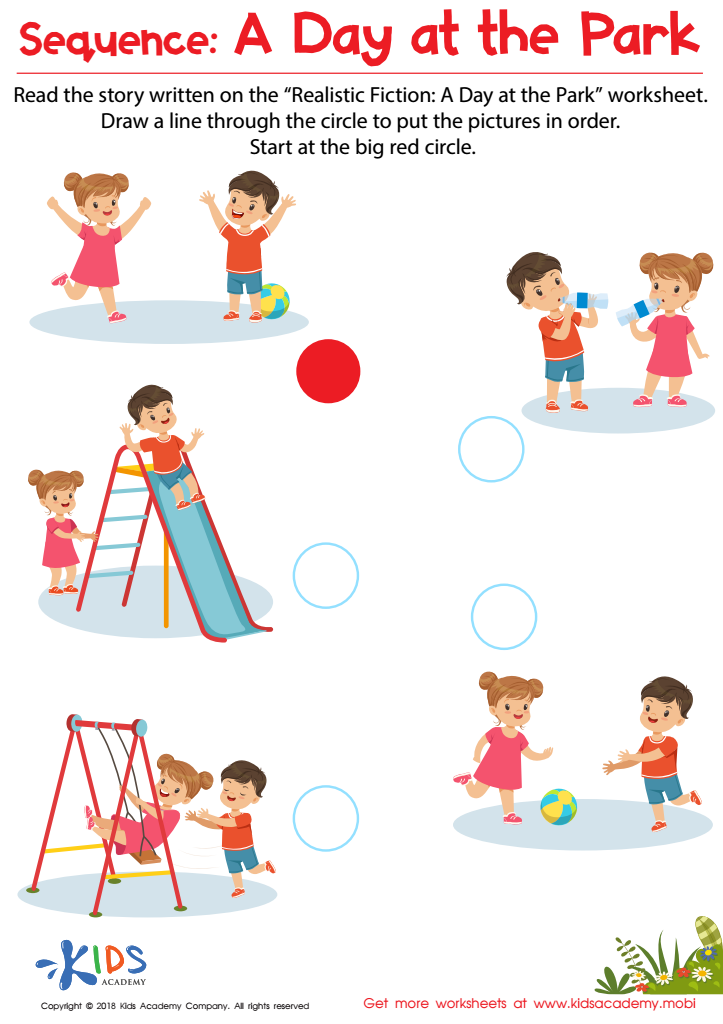
Sequence: A Day at the Park Worksheet
 Assign to My Students
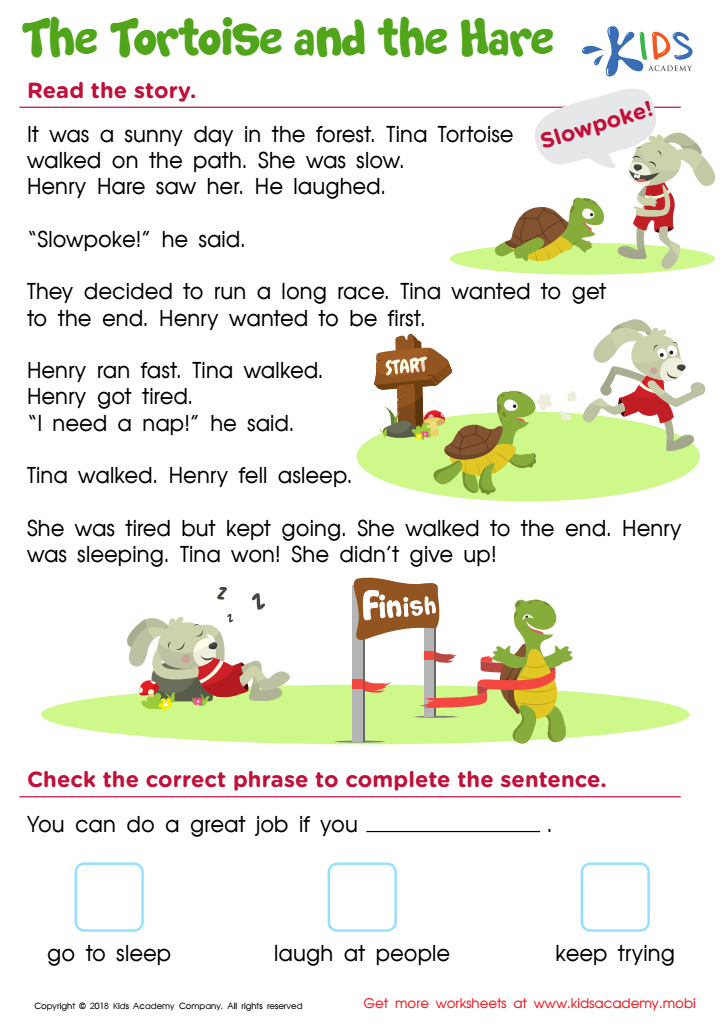
The Tortoise and the Hare Worksheet








Understanding sequencing in reading is crucial for children aged 7-8 because it forms the backbone of comprehension, critical thinking, and academic success. Sequencing—the ability to understand the order of events in a story or text—helps young readers make sense of what they are reading. For instance, knowing what happened first, next, and last enables children to follow the plot, understand cause-and-effect relationships, and make predictions about future events.
For parents and teachers, fostering sequencing skills means supporting children's overall literacy development. When kids grasp this concept, they're better able to retell stories, summarize passages, and connect ideas, enhancing their comprehension and engagement. Without sequencing skills, children may struggle to follow instructions, comprehend classroom lessons, or even execute daily tasks in an organized manner.
Moreover, strong sequencing skills are foundational for higher-order thinking and problem solving. As students encounter more complex texts in later grades, their ability to sequence accurately will enable them to tackle challenging content with greater confidence. Activities that boost sequencing include reading and discussing stories, visual aids like story maps, and interactive exercises that involve placing events in the correct order.
In summary, understanding sequencing is essential for young learners as it not only boosts reading comprehension but also prepares them for future academic challenges, making it a priority for both parents and teachers.








