Creativity enhancement Reading Comprehension Worksheets for Ages 7-8
3 filtered results
-
From - To
Unlock your child's imagination with our Creativity Enhancement Reading Comprehension Worksheets designed for ages 7-8! These engaging worksheets focus on boosting creativity while improving reading skills. Each activity incorporates imaginative prompts and thought-provoking questions that encourage children to think outside the box and express their ideas clearly. With vibrant illustrations and relatable topics, these worksheets make reading fun and interactive. Perfect for home or classroom use, you'll inspire a love for literature while fostering critical thinking and creativity. Help your child develop essential comprehension skills in an enjoyable way—explore our diverse range of worksheets today and watch their imagination soar!
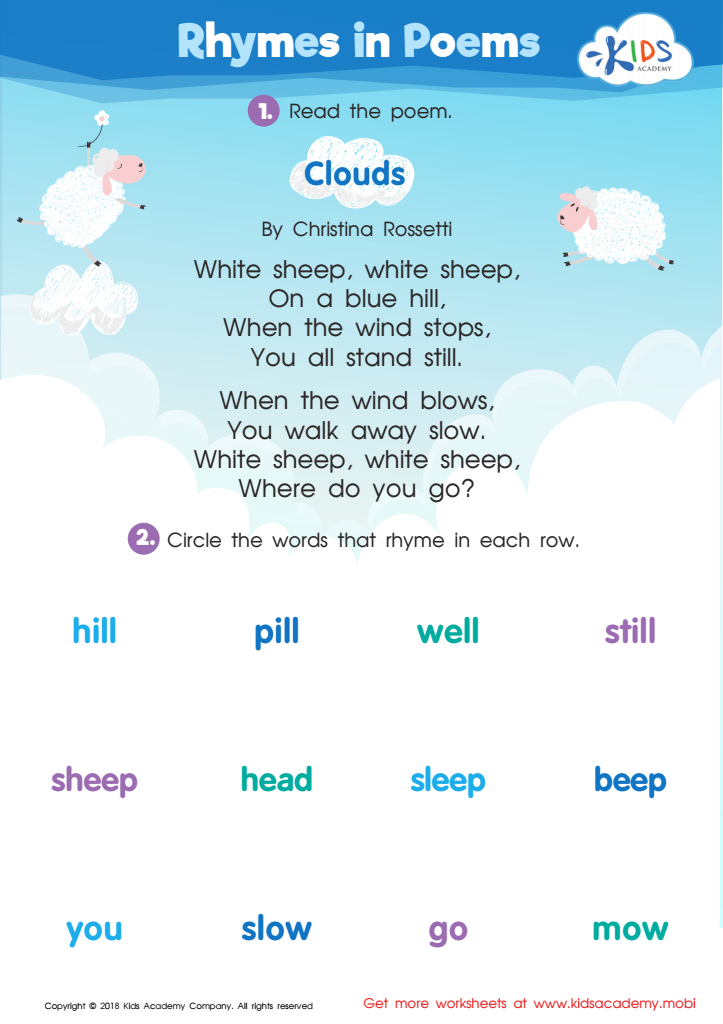
Rhymes in Poems Worksheet
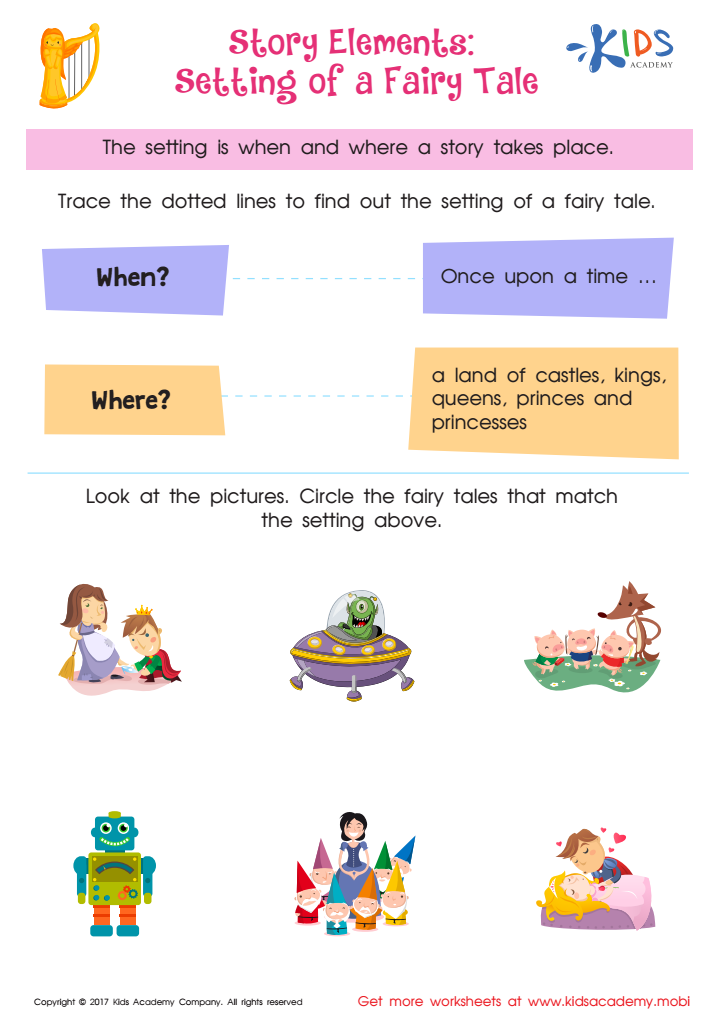
Story Elements: Setting of a Fairy Tale Printable
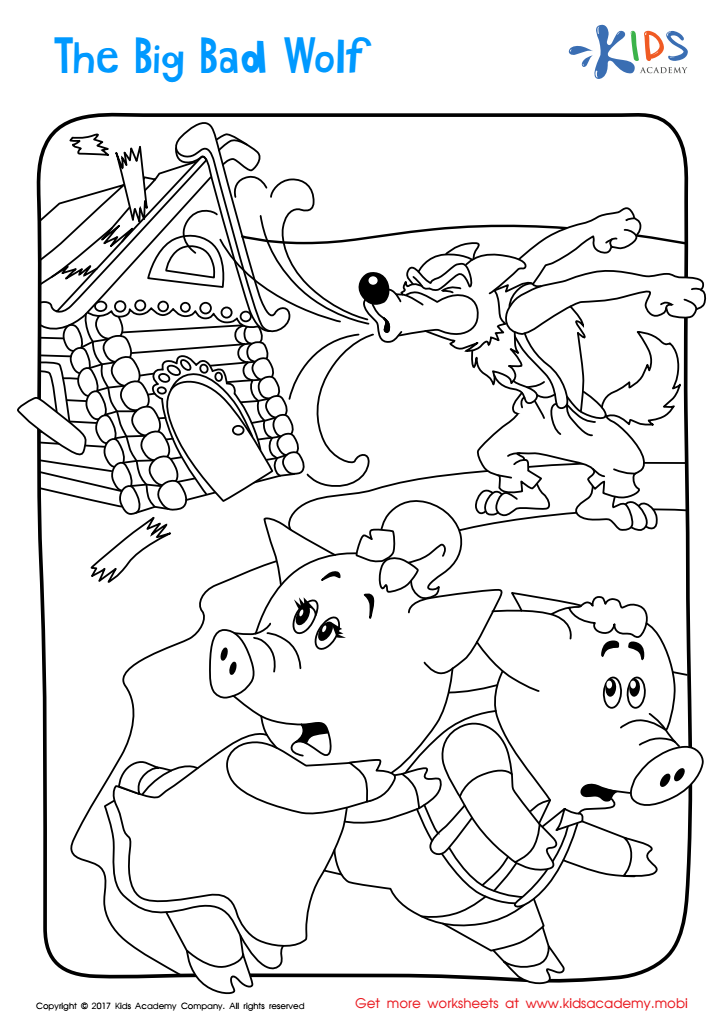
Big Bad Wolf Printable Coloring Page
 Assign to My Students








Developing creativity in reading comprehension for ages 7-8 is crucial for several reasons. At this age, children are beginning to transition from learning to read to reading to learn. Enhancing their creativity during this phase helps them engage more deeply with texts. When children are encouraged to think imaginatively about stories, characters, and settings, they not only gain a better understanding of the material but also cultivate critical thinking skills.
Creativity in reading also fosters emotional and social development. It allows children to connect personally with stories, helping them to express their thoughts and feelings more effectively. This uniqueness enriches discussions and interactions with peers and adults, promoting collaborative learning.
Moreover, encouraging creative reading comprehension equips children with essential problem-solving skills. They learn to infer, predict, and hypothesize about plot developments, which lays a strong foundation for their analytical abilities as they progress in their education.
Parents and teachers who prioritize creativity in reading comprehension make the learning process enjoyable and engaging. This not only nurtures a lifelong love of reading but also prepares children for more complex texts and diverse genres as they advance through their academic careers. In this way, creativity becomes a vital component of literacy development.








