
Visual interpretation Reading Comprehension Worksheets for Ages 7-8
3 filtered results
Difficulty Level
Grade
Age
-
From - To
Subject
Activity
Standards
Enhance your child’s reading skills with our engaging Visual Interpretation Reading Comprehension Worksheets for ages 7-8! Designed to boost critical thinking and comprehension, these worksheets focus on interpreting visual aids like charts, diagrams, and illustrations alongside text. Kids will develop the ability to analyze information visually, fostering deeper understanding of concepts. Perfect for reinforcing classroom learning or as supplemental practice at home, these worksheets creatively combine fun and education. Explore various topics that captivate young minds, motivating them to think creatively and critically. Jumpstart your child's reading journey today with our specially crafted resources that make learning enjoyable!
Favorites
With answer key
Interactive
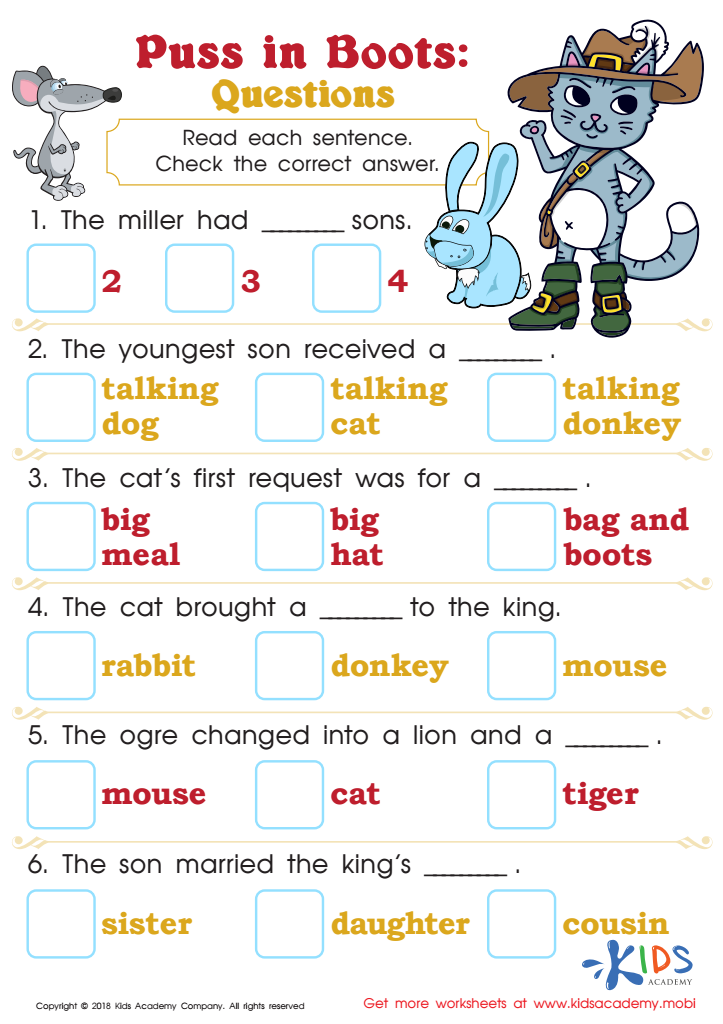
Puss in Boots: Questions Worksheet
This worksheet contains questions to be checked with boxes for the correct answers. It also has pictures of animals; ask kids to identify them, noting the objects with them. Read the questions and have kids provide the answers. Help them check the boxes for the right answer.
 Assign to My Students
Puss in Boots: Questions Worksheet
Worksheet
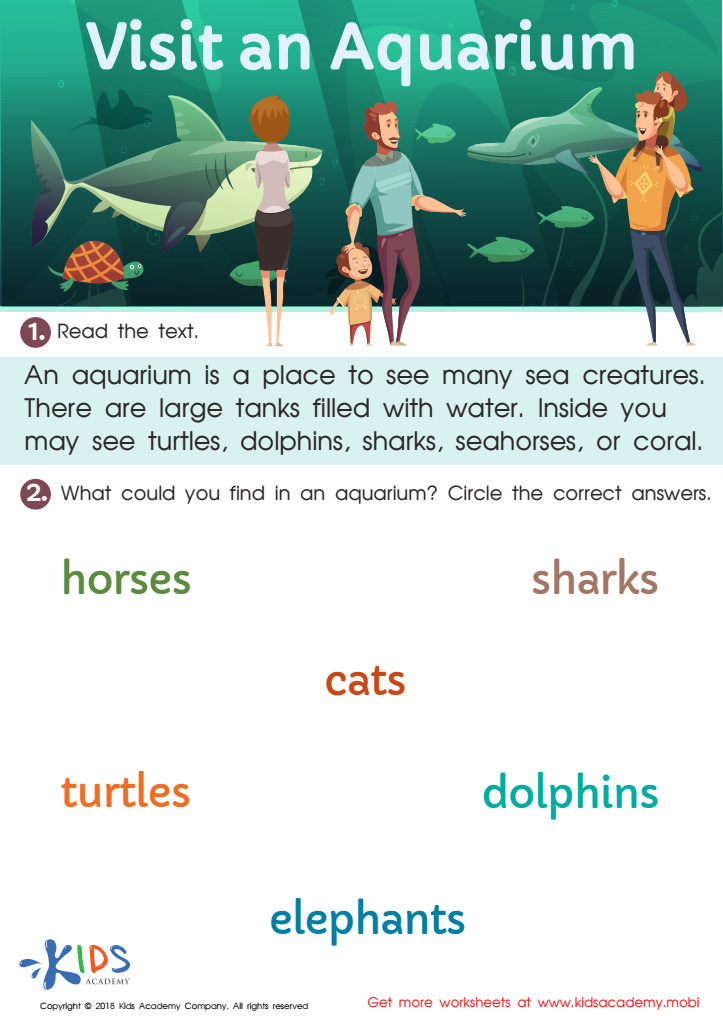
Visit an Aquarium Worksheet
Have your kids ever been to an aquarium? It's a great place to see a variety of sea creatures, like turtles, dolphins, sharks and fish. If they're fascinated by sea life, this worksheet is perfect! Help them circle the aquarium animals among the words in the picture.
Visit an Aquarium Worksheet
Worksheet
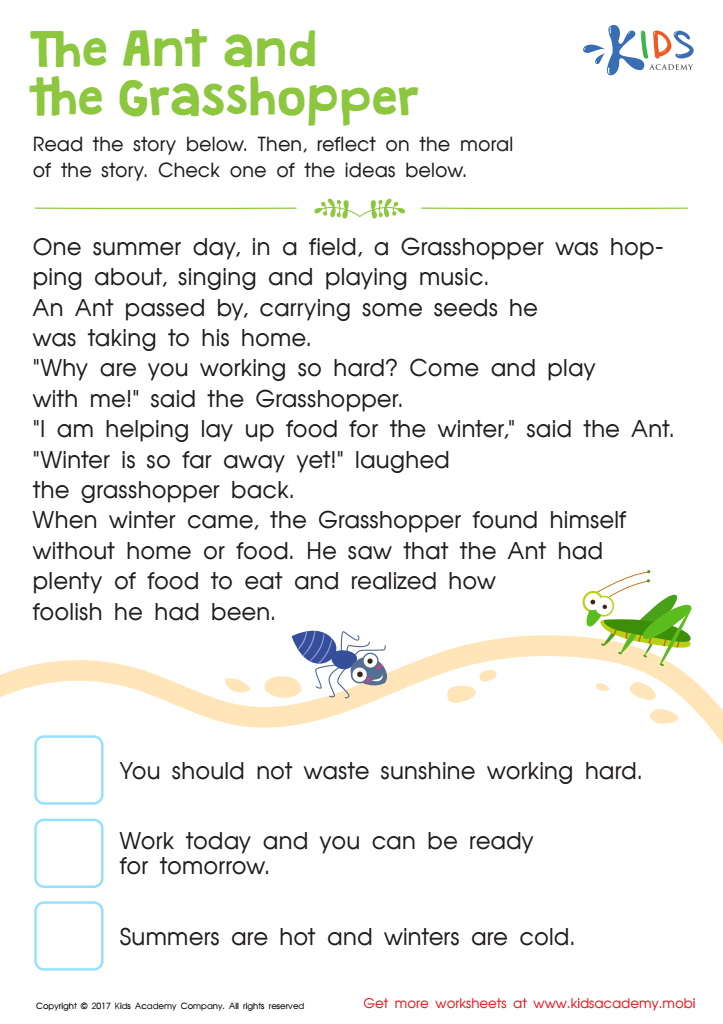
The Ant and The Grasshopper Printable
Aesop's fables have clear messages, which make them memorable and loved by children and adults. Use Kids Academy's ant and grasshopper worksheet to help your child reflect on stories and discover the life lesson.
The Ant and The Grasshopper Printable
Worksheet
Join Kids Academy for Free
Who is primarily going to use this learning content?







Visual interpretation reading comprehension is crucial for children aged 7-8 as it bridges the gap between text and understanding. At this age, children are becoming more skilled readers and are ready to engage with more complex materials that often include illustrations, graphs, and charts. Teaching kids to interpret visual information enhances their overall comprehension skills, allowing them to draw connections between what they read and what they see.
Visual elements provide context and clarify meaning, helping children make inferences and draw conclusions. For instance, a child's ability to understand a storyline in a picture book can significantly improve when they can analyze the accompanying illustrations. This skill not only aids in enjoying stories but also prepares them for diverse materials they will encounter in higher grades, where visuals play a key role in subjects like science and social studies.
Moreover, interpreting visuals fosters critical thinking and boosts creativity, essential skills in today's information-rich world. As educators and parents, promoting visual interpretation alongside text comprehension ensures that children develop a well-rounded literacy that prepares them for future academic challenges and helps them become confident, informed thinkers. Ultimately, nurturing this skill is fundamental to children’s holistic learning and overall development.








