
Critical Thinking Animals Worksheets for Ages 7-8
6 filtered results
Difficulty Level
Grade
Age
-
From - To
Subject
Activity
Standards
Unlock your child’s potential with our engaging Critical Thinking Animals Worksheets tailored for ages 7-8! These interactive worksheets seamlessly blend science and critical-thinking activities, making learning about animals an exciting adventure. Children will embark on thought-provoking tasks that enhance problem-solving and reasoning skills while discovering fascinating animal facts. Our thoughtfully designed worksheets encourage analytical thinking and nurture a deeper understanding of the animal kingdom. Ideal for classroom use or at-home practice, these resources ensure that every young learner can develop essential critical-thinking skills in a fun, educational way. Explore our collection and watch your child thrive intellectually!
Favorites
With answer key
Interactive
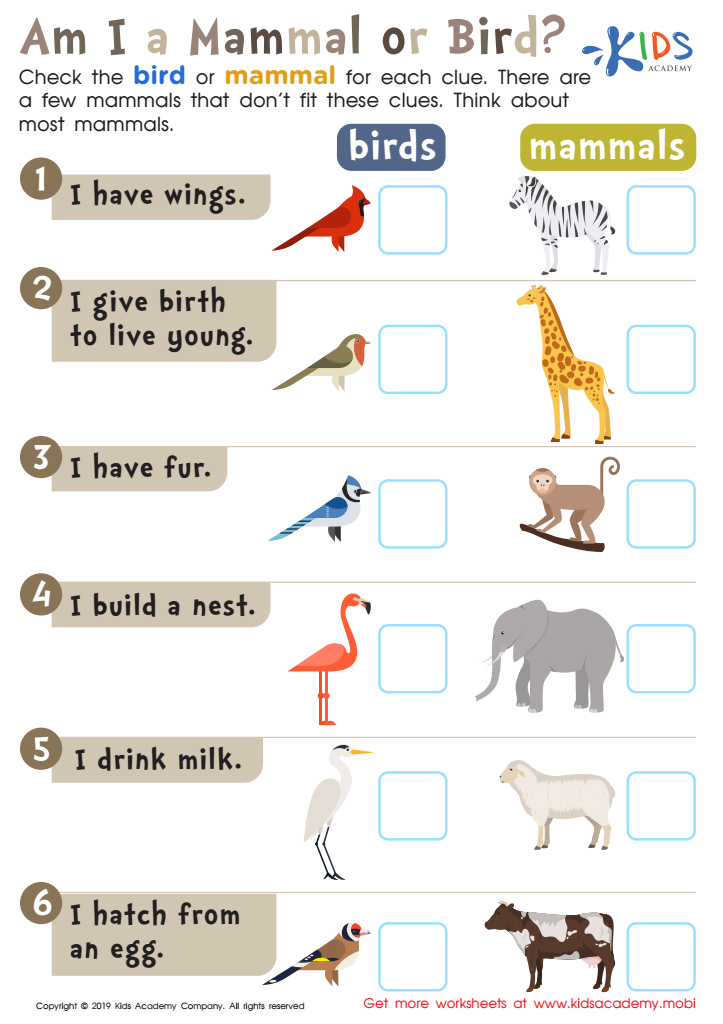
Am I a Mammal or Bird? Worksheet
We categorize animals into groups such as mammals, birds, reptiles, etc. This worksheet helps kids understand the difference between birds and mammals. Read through the clues and think about each one. Then decide if it describes a bird or mammal, check the box and complete!
 Assign to My Students
Am I a Mammal or Bird? Worksheet
Worksheet
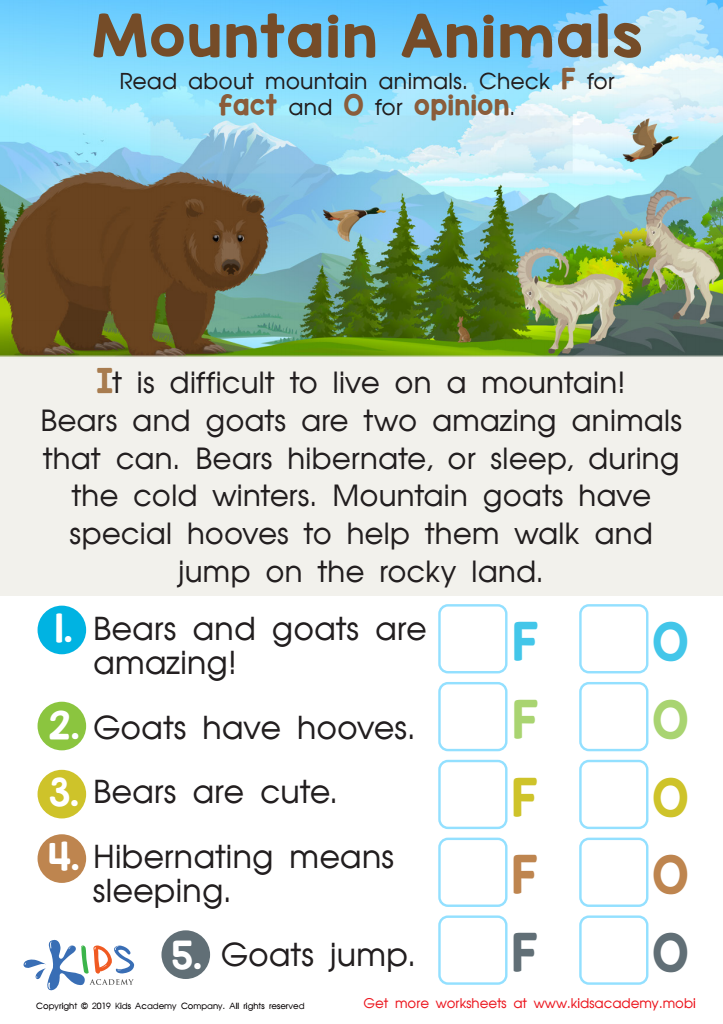
Mountain Animals Worksheet
Is mountain wildlife amazing? Fact or fiction? Help your child sharpen critical-thinking skills with this engaging worksheet. Featuring a fun nonfiction passage about animals like bears and goats, your child will read through the text and identify each statement as fact or fiction. Perfect for boosting reading comprehension and analytical abilities!
Mountain Animals Worksheet
Worksheet
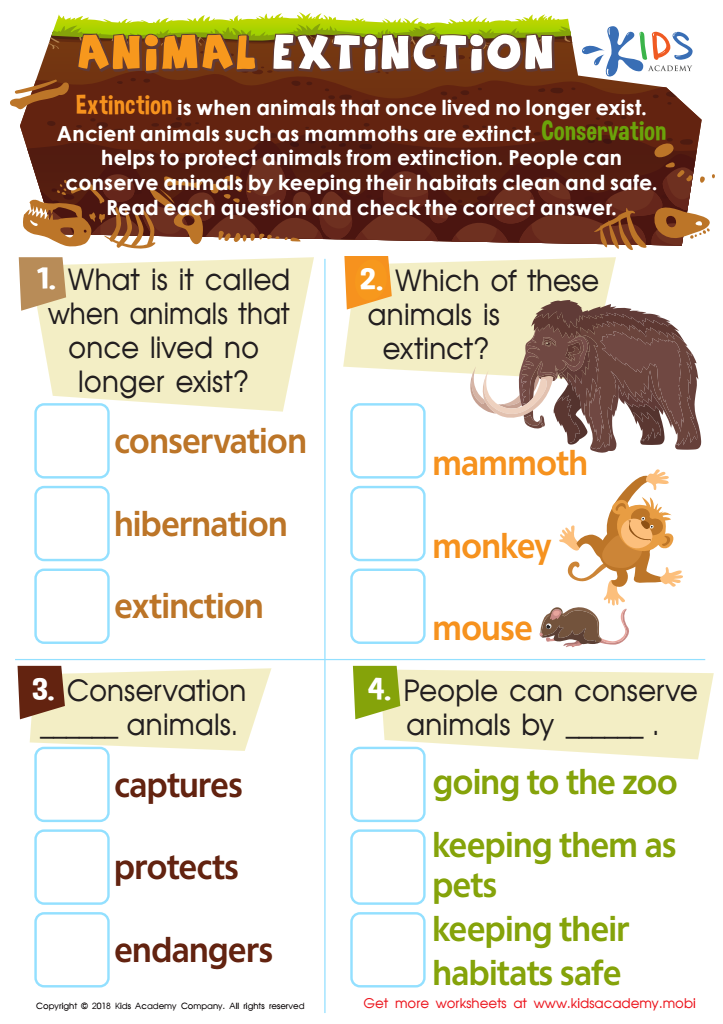
Animal Extinction Worksheet
Children can learn how their actions can help endangered animals with this free PDF worksheet. It explains extinction, looks at the mammoth as an example, and poses questions about conservation. Keeping habitats clean and safe is key to protecting animals and keeping them abundant. Learning about this now can make a huge difference for future generations.
Animal Extinction Worksheet
Worksheet
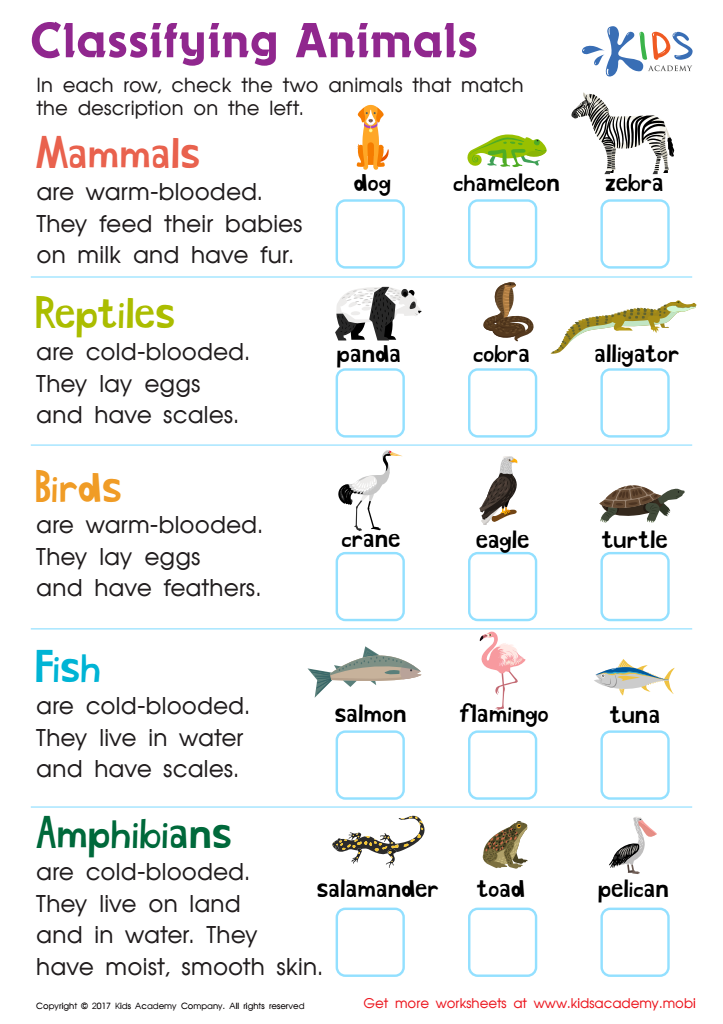
Classifying Animals Worksheet
Print the 2nd grade animal classification worksheet and help kids study the differences between mammals, reptiles, birds, fish and amphibians. Let them pick two examples from the options given.
Classifying Animals Worksheet
Worksheet
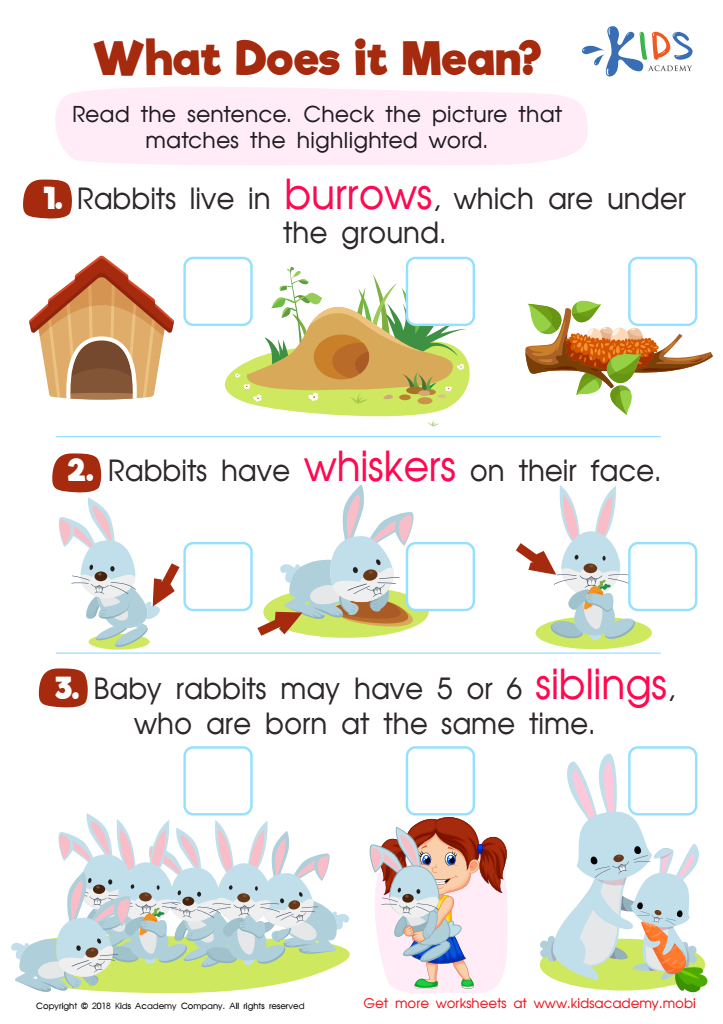
What Does It Mean? Worksheet
Teach your child to use context clues with this engaging Kids Academy worksheet. Read the sentences and find the pink-highlighted word. Use the other words in the sentence to figure out the meaning, then check the box next to the picture that represents it.
What Does It Mean? Worksheet
Worksheet
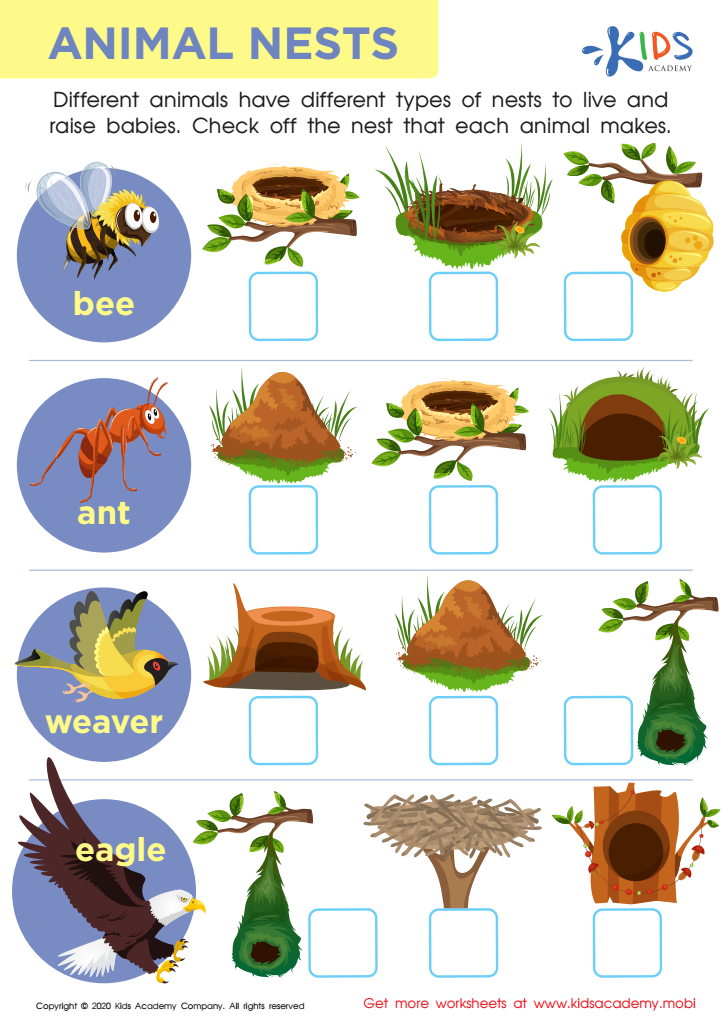
Animal Nests Worksheet
Animals need homes to sleep and stay safe. Look at the animal on the left and examine the nests and hives to the right. Check off the correct one for each animal to complete the worksheet! From birds to bees, it's a great way to show different types of homes animals make!
Animal Nests Worksheet
Worksheet
Join Kids Academy for Free
Who is primarily going to use this learning content?


%20(1).jpg)





Parents and teachers should care about Critical Thinking Animals for ages 7-8 because fostering critical thinking at a young age cultivates key life skills. At this stage of development, children are naturally curious and eager to explore the world around them. Engaging them with critical thinking activities helps to harness this curiosity constructively. Critical thinking involves analyzing information, evaluating evidence, making reasoned decisions, and solving problems—all essential skills for both academic achievements and daily life.
Teaching these skills through engaging and relatable content, such as animal-themed activities, keeps children interested and motivated. Animals pique children's interest and provide a tangible way to understand abstract ideas. For example, discussing animal behaviors can lead to conversations about cause and effect, observation, inference, and evidence-based reasoning. These activities lay a strong foundation for future learning across subjects, from science to language arts.
Moreover, fostering critical thinking equips children with the tools to approach new situations thoughtfully and independently. This is invaluable in a rapidly changing world, where adaptability and problem-solving capabilities are crucial. Over time, children who develop strong critical thinking skills become better equipped to navigate complex social situations, make informed decisions, and contribute meaningfully to the world. Thus, prioritizing critical thinking skills through creative methods like Critical Thinking Animals significantly benefits children's overall development.








