
Reading thermometers Science Worksheets for Ages 7-8
3 filtered results
Difficulty Level
Grade
Age
-
From - To
Subject
Activity
Standards
Discover our engaging "Reading Thermometers Science Worksheets" designed specifically for ages 7-8! These worksheets aim to introduce young learners to the skill of reading temperatures using both Celsius and Fahrenheit scales. Through colorful and interactive activities, children will grasp the concepts of thermal energy and temperature measurement while developing their critical thinking and problem-solving skills. Perfect for classrooms or at-home learning, these worksheets provide step-by-step guidelines to ensure understanding and encourage curiosity about the weather and science. Equip your child with essential scientific knowledge and skills today with our fun and educational reading thermometer worksheets!
Favorites
With answer key
Interactive
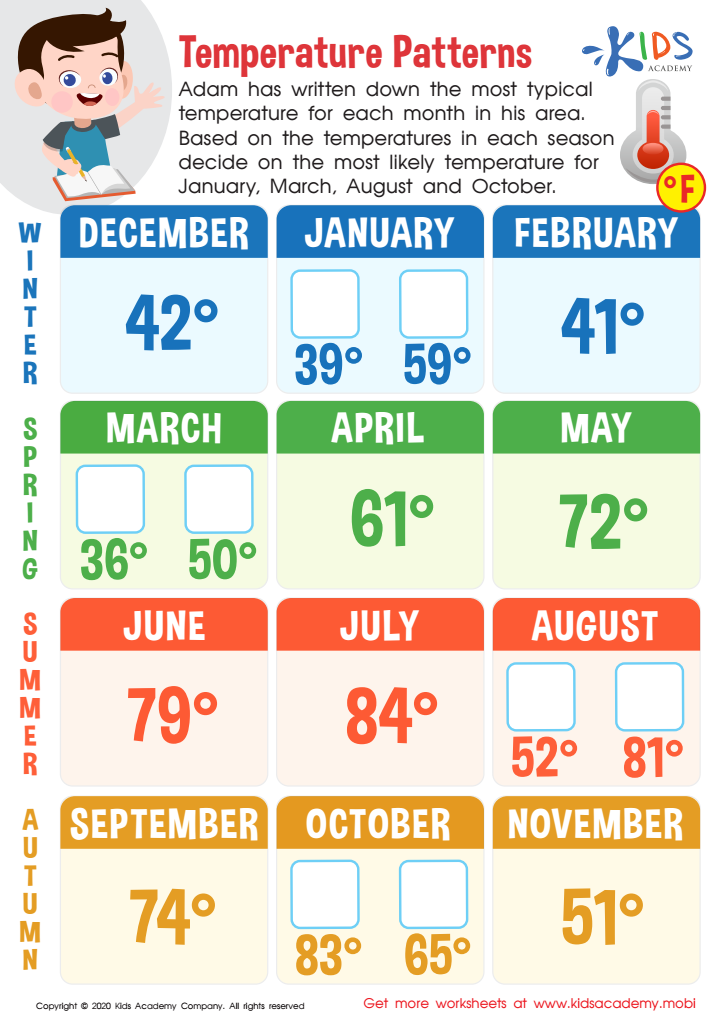
Temperature Patterns Worksheet
Adam has recorded temperatures in his area. Help your child use the data to predict temperatures for one month in each season. Check the box next to the correct temperature for each row in this worksheet. In America, temperatures vary by climate and season - colder in winter, hotter in summer.
 Assign to My Students
Temperature Patterns Worksheet
Worksheet
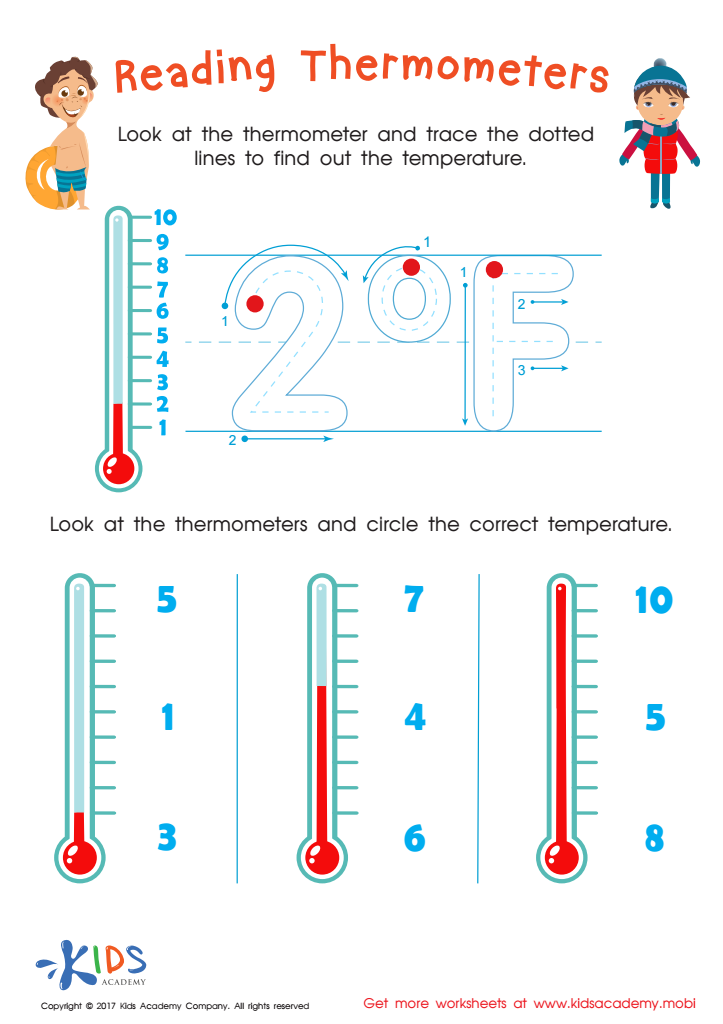
Reading Thermometers Printable
For kids to grasp temperature, they need to learn how to read a thermometer. Use this worksheet to teach them early on - whether they're sick or in the cold. It's an important life skill!
Reading Thermometers Printable
Worksheet
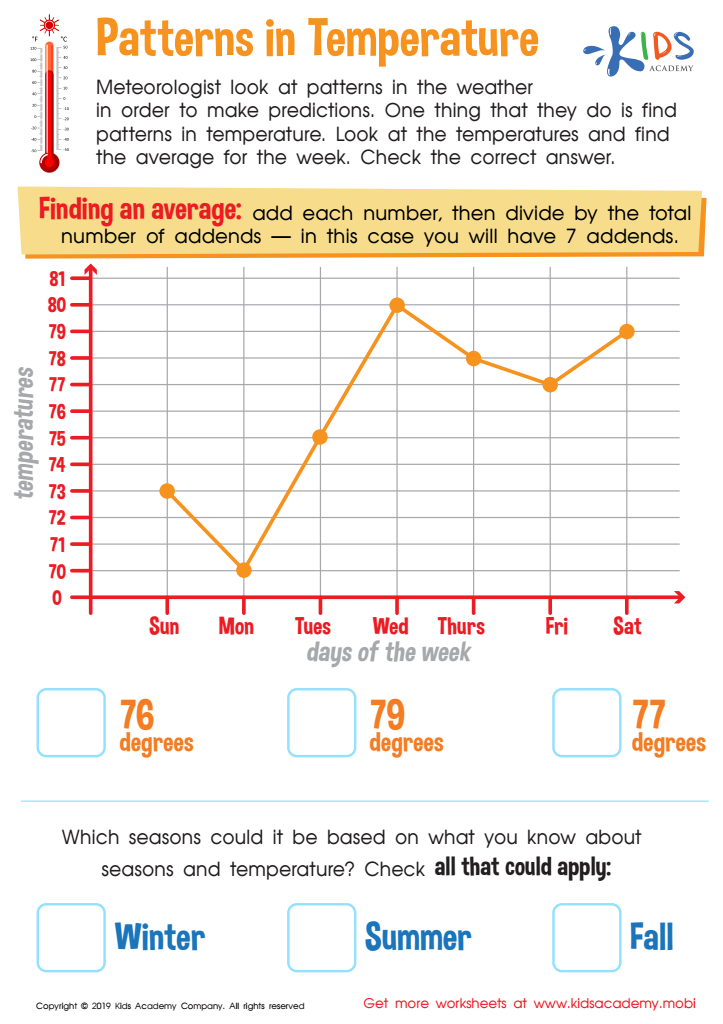
Patterns in Temperature Worksheet
Kids need to learn how to read and interpret data from graphs and charts. This free worksheet on temperature patterns helps them to do just that. They'll practice finding averages and answer questions in multiple-choice format. Plus, it provides a great learning experience!
Patterns in Temperature Worksheet
Worksheet
Join Kids Academy for Free
Who is primarily going to use this learning content?






Parents and teachers should prioritize introducing reading thermometers in science lessons for ages 7-8 because it enhances children’s understanding of fundamental scientific concepts, promotes critical thinking skills, and fosters practical life skills. At this age, children are naturally curious and eager to explore the world around them. Learning how to read a thermometer allows them to engage in hands-on activities, linking measurements with real-world phenomena, such as weather changes or measuring body temperature.
Understanding thermometers also strengthens their mathematics skills, as they learn to interpret numeric values and understand temperature scales (Celsius and Fahrenheit). This knowledge not only nurtures scientific literacy but also encourages healthy habits, like monitoring body temperature and recognizing when to seek medical advice.
Furthermore, grasping the principles of thermodynamics—how temperature affects states of matter—builds a foundation for future learning in science. It helps children develop inquiry skills as they conduct experiments, observe differences, and draw conclusions. Ultimately, teaching children to read thermometers contributes to their overall educational growth, allowing them to appreciate the wonders of science, connect learning to daily life, and develop a lifelong passion for exploration.







