
Understanding ecosystems Science Worksheets for Ages 7-8
4 filtered results
Difficulty Level
Grade
Age
-
From - To
Subject
Activity
Standards
Discover the fascinating world of ecosystems with our "Understanding Ecosystems Science Worksheets" tailored for ages 7-8. Designed to spark curiosity, these engaging resources help young learners explore the interdependence of plants, animals, and their environments. Through fun activities and informative exercises, kids will learn about food chains, habitats, and the importance of biodiversity. Our printable worksheets support foundational science skills, encouraging critical thinking and environmental awareness. Perfect for classroom learning or at-home study, these worksheets make understanding ecosystems both enjoyable and educational. Ignite your child's love for science and nature with Kids Academy today!
Favorites
With answer key
Interactive
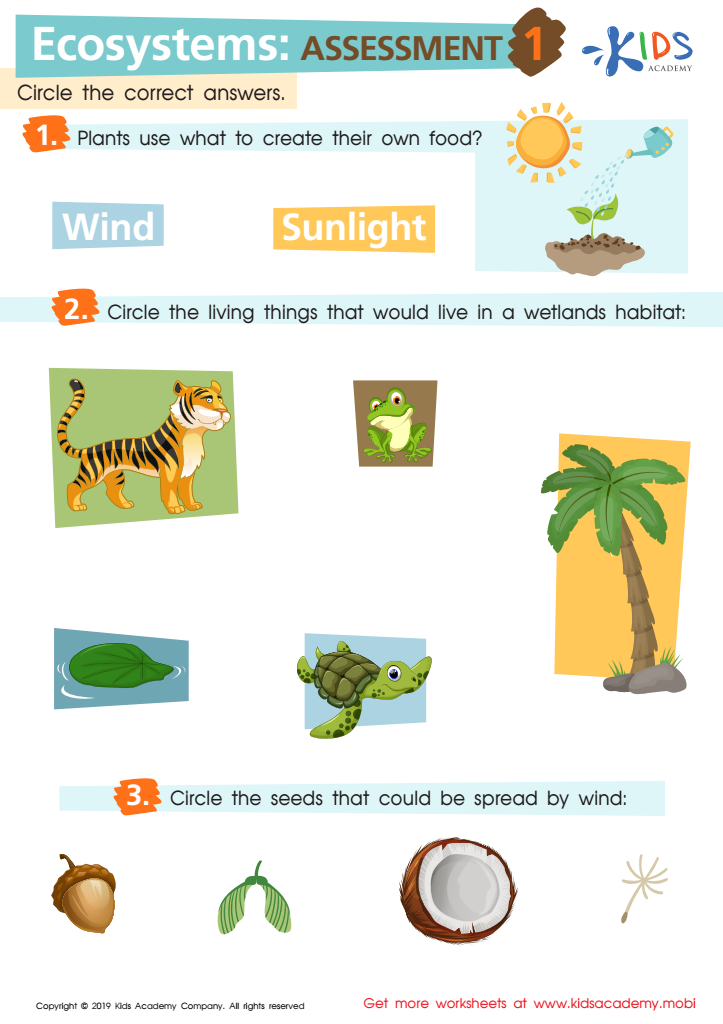
Ecosystems: Assessment 1 Worksheet
Before starting the worksheet, remind your child of the basics of the ecosystem, e.g. plants need light and winds carry small seeds. Encourage them to identify the images in the colorful printout. Ask them the questions and help them circle the correct answers.
 Assign to My Students
Ecosystems: Assessment 1 Worksheet
Worksheet
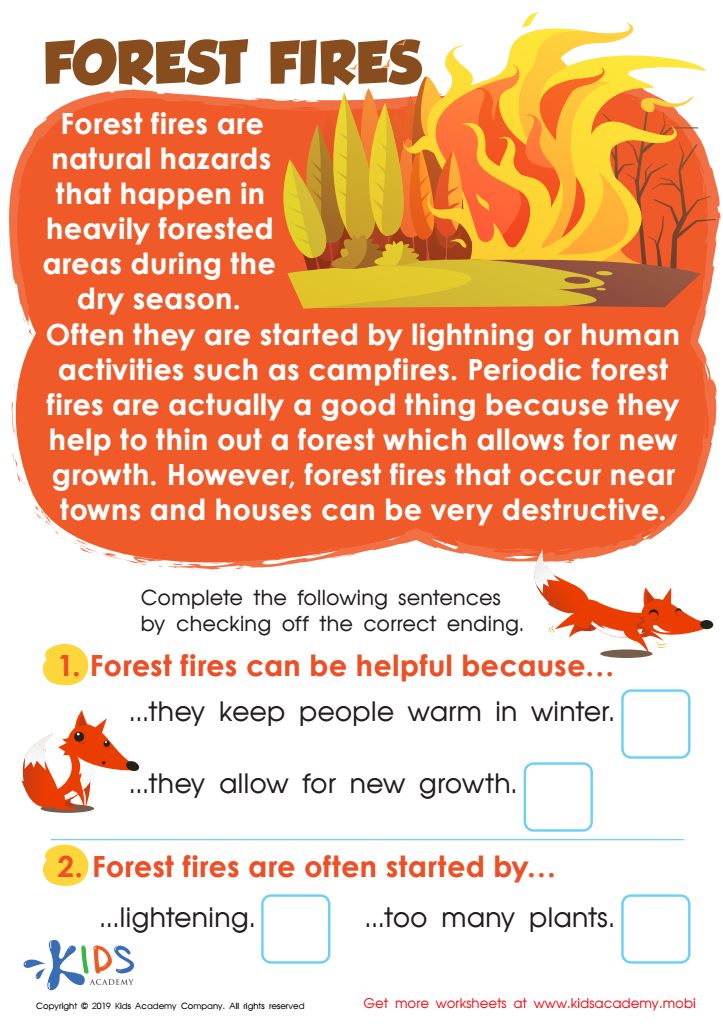
Forest Fires Worksheet
This free worksheet helps kids learn about forest fires. It encourages critical thinking by allowing them to answer multiple-choice questions. It is an important opportunity for children to develop reading skills, as understanding text is essential for further academic success. Download the PDF to give them the chance to practice comprehension and strengthen their knowledge.
Forest Fires Worksheet
Worksheet
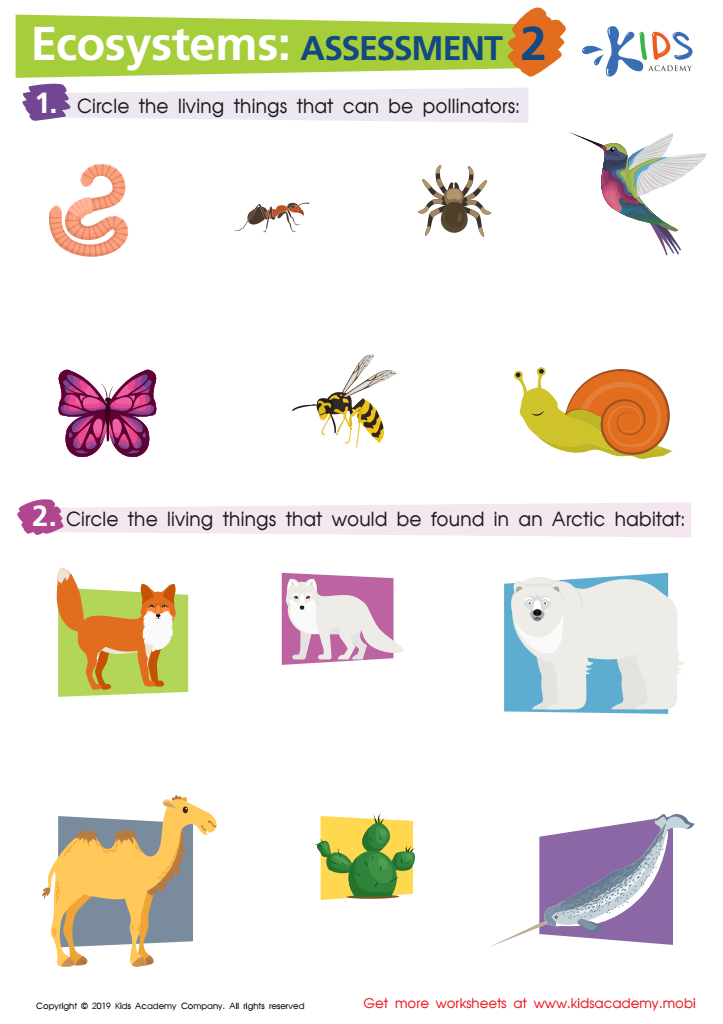
Ecosystems: Assessment 2 Worksheet
Pollinators are living or non-living things that help pollen spread. Test your child's knowledge of the ecosystem with this worksheet. Point out animals in the picture, then ask the simple questions. Help your child circle the right answers.
Ecosystems: Assessment 2 Worksheet
Worksheet
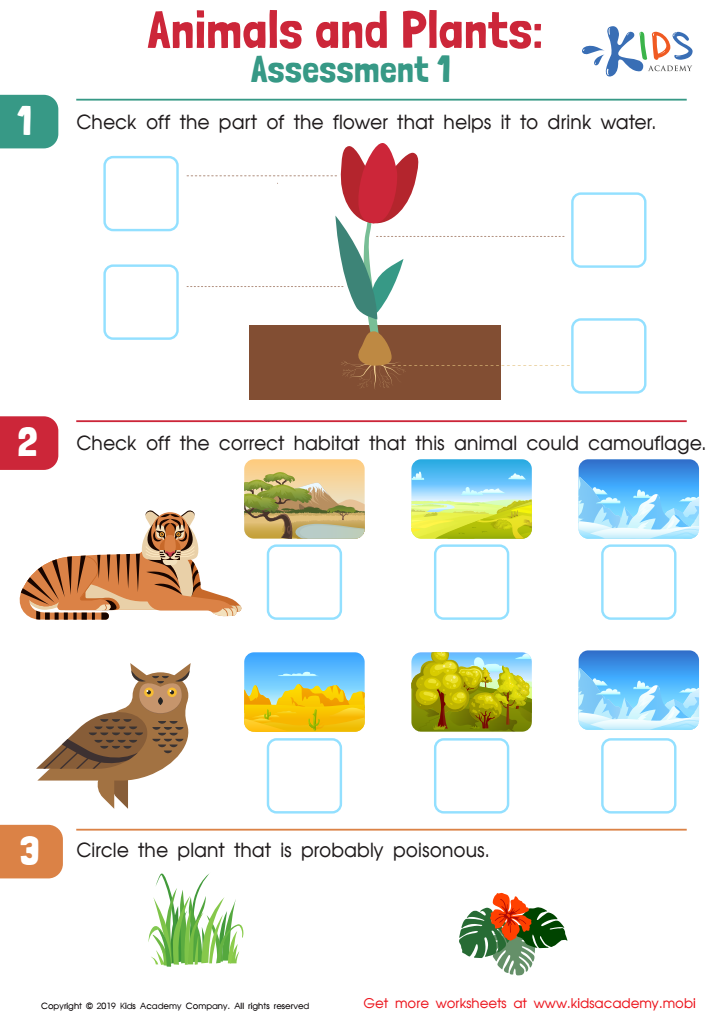
Animals and Plants: Assessment 1 Worksheet
Do you want to easily assess your child's understanding of basic science concepts? This colorful PDF offers a free opportunity for them to test their knowledge about parts of a flower, poisonous plants, animal habitats and more! Bright pictures make it fun and easy for you to see what they know.
Animals and Plants: Assessment 1 Worksheet
Worksheet
Join Kids Academy for Free
Who is primarily going to use this learning content?







Understanding ecosystems is integral for young learners, providing a foundation in both science and environmental stewardship. For children aged 7-8, learning about ecosystems illustrates the interconnectedness of life. It shows them how plants, animals, and non-living components like air and water interact within a habitat. Grasping this interconnectedness at an early age encourages respect for the environment and all its inhabitants.
Moreover, studying ecosystems nurtures critical thinking and observational skills. For instance, children ask questions like, "What happens if one species disappears?" This curiosity develops their ability to hypothesize and evaluate outcomes, laying the groundwork for scientific thinking.
From a broader perspective, ecosystems education fosters awareness about real-world environmental issues, such as climate change and biodiversity loss. Early exposure can inspire children to act responsibly, both now and in the future, leading to more environmentally-conscious adults.
For parents and teachers, instilling an understanding of ecosystems aligns with a holistic education approach, promoting not just academic knowledge but also empathy and responsible citizenship. The hands-on activities associated with learning about ecosystems, such as planting a garden or exploring local parks, provide engaging, memorable experiences that build a child's love for learning and nature.







