
Understanding light sources Science Worksheets for Ages 7-8
6 filtered results
Difficulty Level
Grade
Age
-
From - To
Subject
Activity
Standards
"Understanding Light Sources Science Worksheets for Ages 7-8"
Ignite curiosity and enhance science skills with our engaging worksheets on light sources, tailored for young learners aged 7-8. These printable activities are designed to help children explore and understand various natural and artificial light sources. Through hands-on exercises and captivating visuals, students will grasp fundamental concepts about how light behaves, blends, and helps us see. Perfect for both classroom and home learning, these worksheets align with educational standards, fostering critical thinking and a passion for science. Dive into the illuminating world of light and watch your students shine bright!
Favorites
With answer key
Interactive
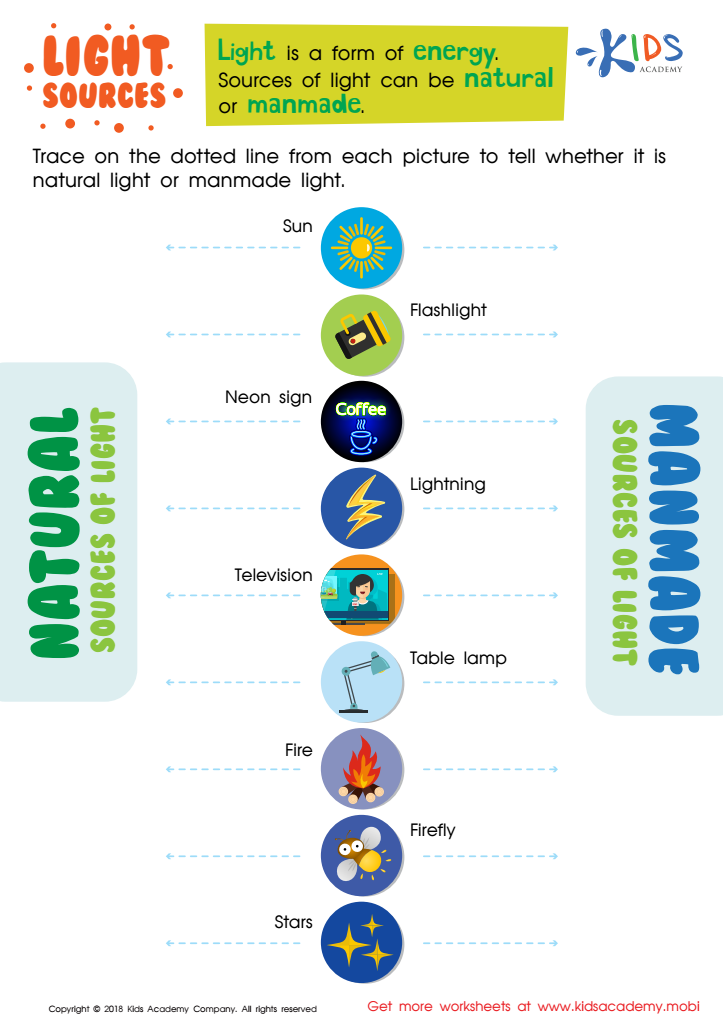
Natural and Manmade Light Sources Worksheet
Have your child learn about natural and manmade light sources with this fun worksheet! They'll distinguish the sun, fireflies and more as either natural or artificial sources. Brighten up their knowledge with this engaging activity!
 Assign to My Students
Natural and Manmade Light Sources Worksheet
Worksheet
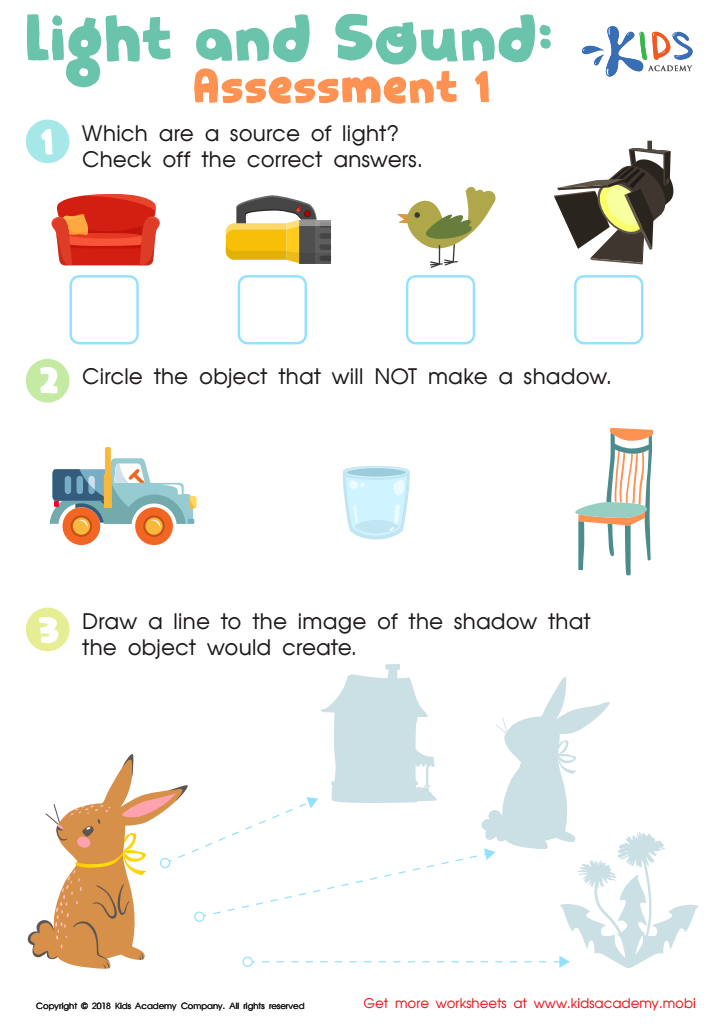
Light and Sound: Assessment 1 Worksheet
Can your kids name a light source? Challenge them to name the sun and moon, then point out objects they use when the sun sets. Look through the worksheet with them and ask them to identify the light sources. Help them check off the correct answers.
Light and Sound: Assessment 1 Worksheet
Worksheet
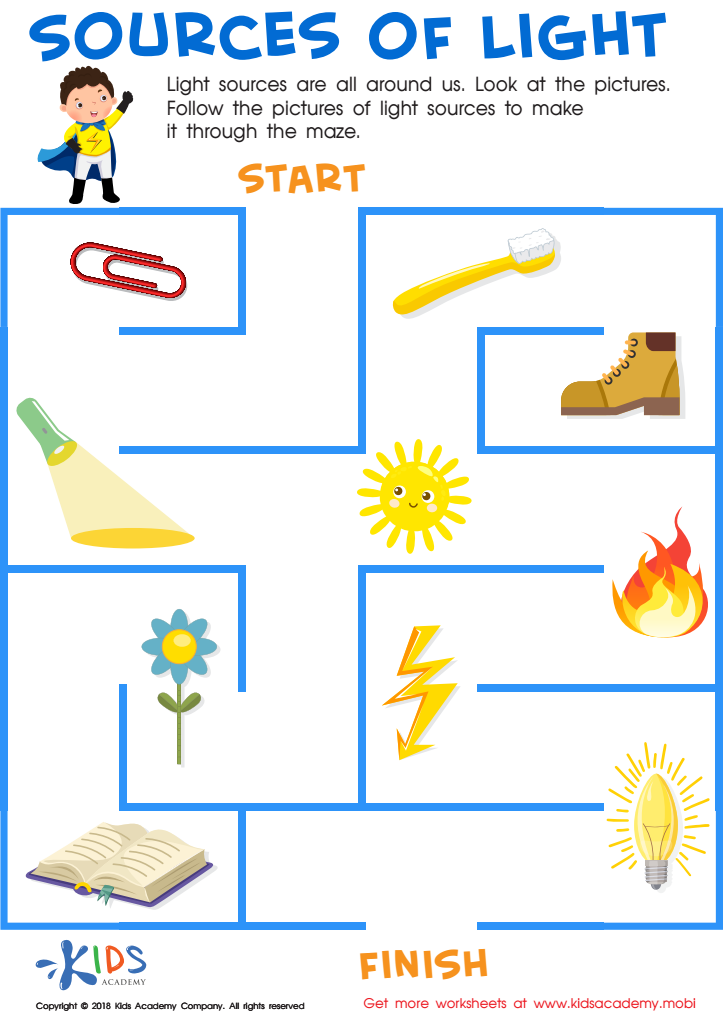
Sources of Light Worksheet
Help your child explore sources of light with this printout exercise. Ask them if they know the sun is the reason for day and night. Then point out other common light sources, then work together to guide them through the maze from start to finish.
Sources of Light Worksheet
Worksheet
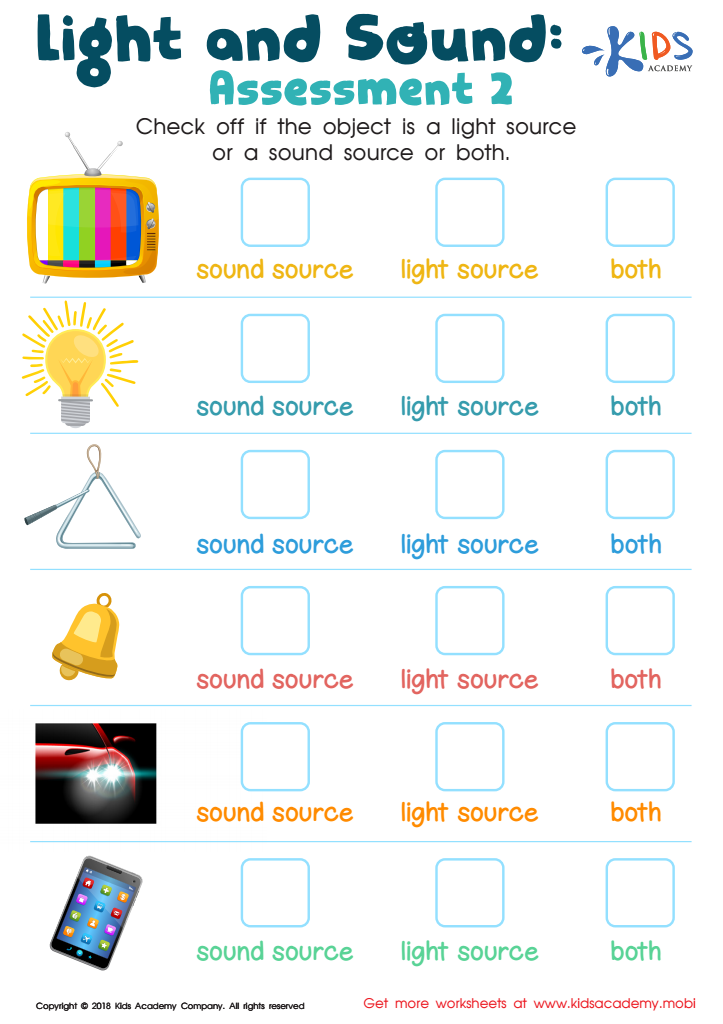
Light and Sound: Assessment 2 Worksheet
This worksheet introduces your kids to light and sound, with common sources of each. Identify the objects and help them check if it's a light source, a sound source, or both. Colourful and simple, it's a great way to teach your little ones! (80 words)
Light and Sound: Assessment 2 Worksheet
Worksheet
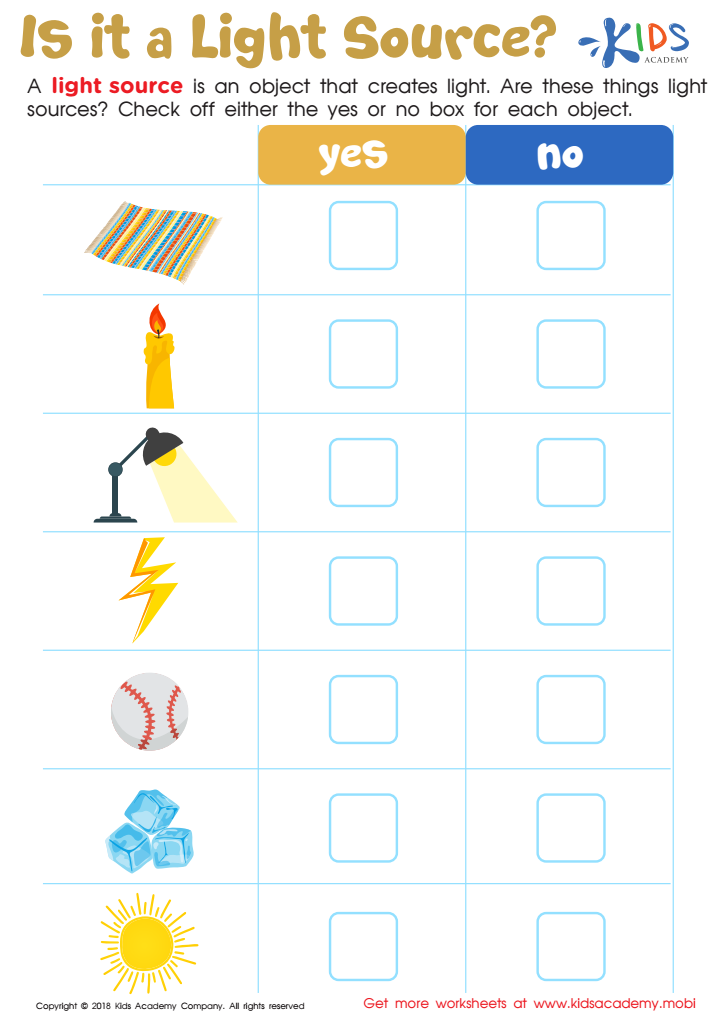
Is It a Light Source? Worksheet
This worksheet is a fun way to teach kids about light sources. Children must identify natural sources like the sun and lightning, and man-made sources such as candles and lamps. Ask them to look at each object and check the box to indicate if it's a light source or not.
Is It a Light Source? Worksheet
Worksheet
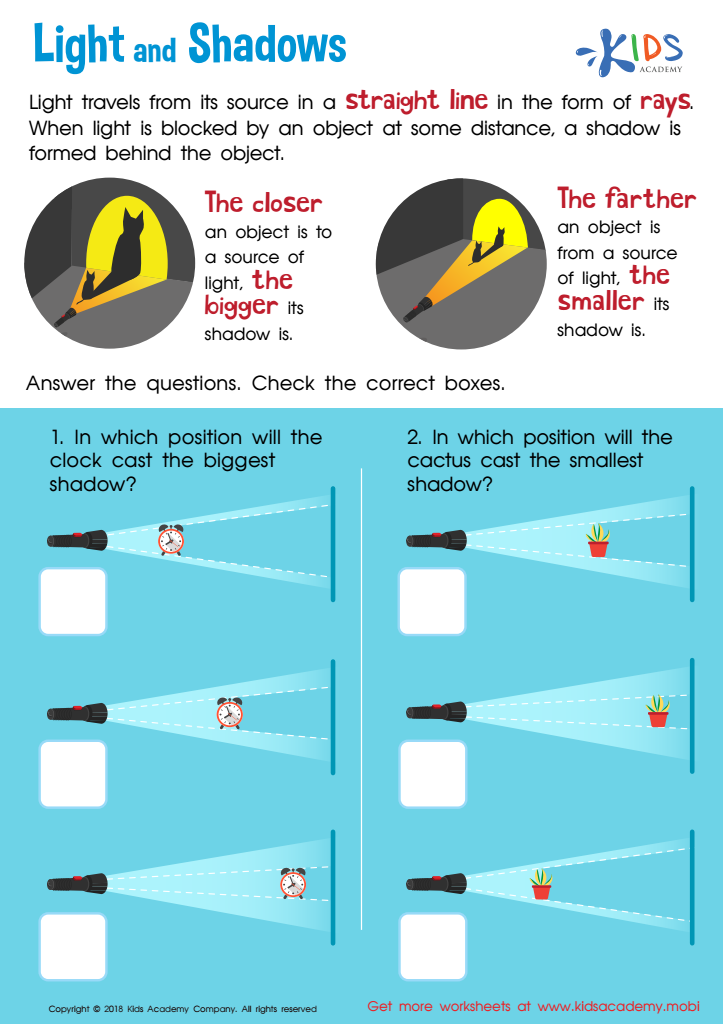
Light and Shadow Worksheet for Grade 3
Kids are often scared of shadows, but they can learn that they're not so scary! This worksheet helps grade 3 kids understand how light rays and objects create shadows, and how they can be large or small. Teach your child with this interesting worksheet!
Light and Shadow Worksheet for Grade 3
Worksheet
Learning Skills
Join Kids Academy for Free
Who is primarily going to use this learning content?







Understanding light sources is crucial for young children, and here's why both parents and teachers should prioritize it. At ages 7-8, kids are naturally curious, eager to explore and understand the world around them. Introducing them to the concept of light sources fuels this curiosity and lays a foundational knowledge for more complex scientific principles later on.
Light sources, such as the sun, lamps, and even screens, are part of children's everyday experiences. Teaching them about these sources helps make abstract concepts tangible, fostering critical thinking and observational skills. It’s not just about science; it fosters safety awareness too. For instance, understanding that the sun is a natural light source and its impact can lead to conversations about sun safety.
Moreover, activities around light, like simple experiments with shadows or reflections, are engaging and enjoyable. They create a positive and fun learning environment, promoting a lifelong love for science and inquiry. Discussing artificial light also touches on technology and its applications, making education relevant to the 21st-century world they are growing up in.
In summary, knowledge about light sources enriches children's cognitive abilities, enhances safety habits, and supports interactive learning, making it an essential topic for their holistic development.







