Map reading skills Our Planet and Environment Worksheets for Ages 7-8
1 filtered results
-
From - To
Enhance your child's map reading skills with our engaging "Our Planet and Environment Worksheets" designed for ages 7-8. These interactive resources are perfect for introducing essential concepts of geography and environmental awareness. Through fun activities, kids will learn to identify key features on a map, understand symbols, and develop spatial reasoning. Each worksheet encourages critical thinking and creativity, making geography accessible and enjoyable. Whether at home or in the classroom, these worksheets support young learners in navigating their world confidently. Explore our collection today to foster a lifelong appreciation for nature and improve essential map reading skills!
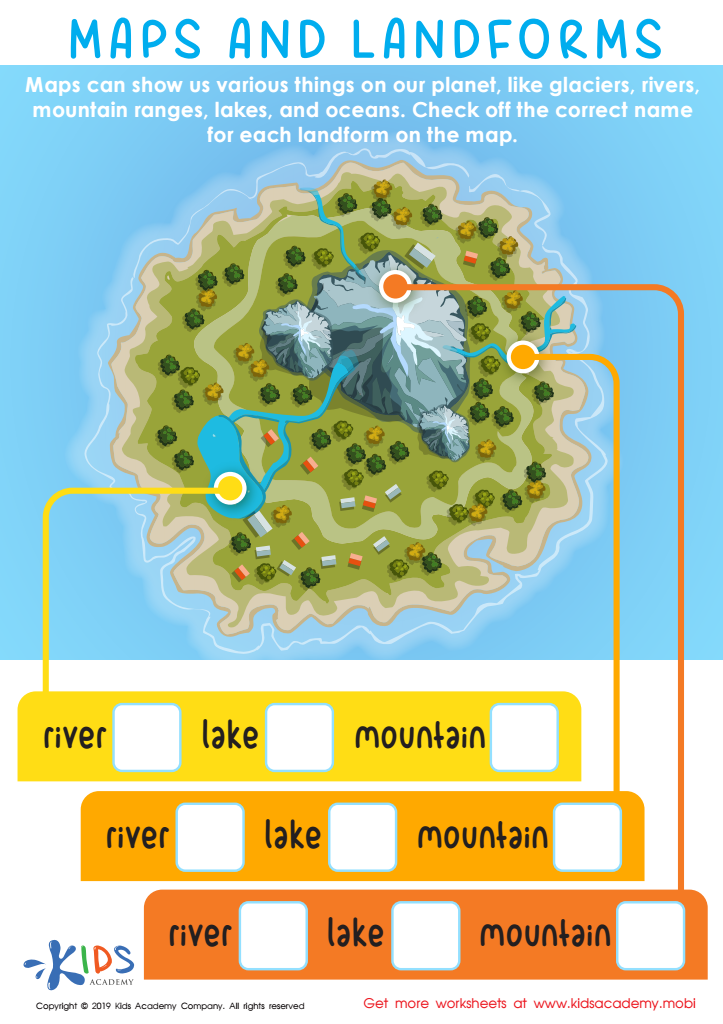
Maps and Landforms Worksheet
 Assign to My Students



Map reading skills are crucial for children aged 7-8, as they lay the foundation for understanding our planet and environment. At this age, children are naturally curious about the world around them. Teaching them how to read maps helps to cultivate spatial awareness, enhance critical thinking, and improve navigation skills.
Understanding maps encourages children to explore their community, fostering a sense of place and belonging. This skill also ties into essential subjects like geography and earth science, where they learn about different ecosystems, landscapes, and how human activities impact the environment. Engaging with maps helps children grasp complex concepts like scale, distance, and direction, which can spark a lifelong interest in exploration and environmental stewardship.
Moreover, by learning to read and interpret maps, children can develop problem-solving skills. This is especially crucial as they encounter real-world challenges, such as finding their way during trips or understanding natural resource distribution. As parents and teachers encourage these skills, they foster responsible citizens who recognize the importance of caring for our planet. In summary, map reading is not only an essential academic skill, but it also empowers children to actively engage with and appreciate their environment.







