Observational skills Physical Science Worksheets for Ages 7-8
4 filtered results
-
From - To
Enhance your child's scientific curiosity with our "Observational Skills Physical Science Worksheets" tailored for ages 7-8. These expertly designed worksheets focus on developing keen observation, critical thinking, and analytical skills in young learners. Through hands-on activities and engaging exercises, children learn to notice patterns, understand basic physical science concepts, and draw meaningful conclusions. Perfect for at-home learning or classroom use, these worksheets foster a deeper appreciation for science and encourage inquisitiveness. Discover the joy of learning while building foundational skills crucial for future scientific exploration. Let’s unlock the door to discovery and growth together!
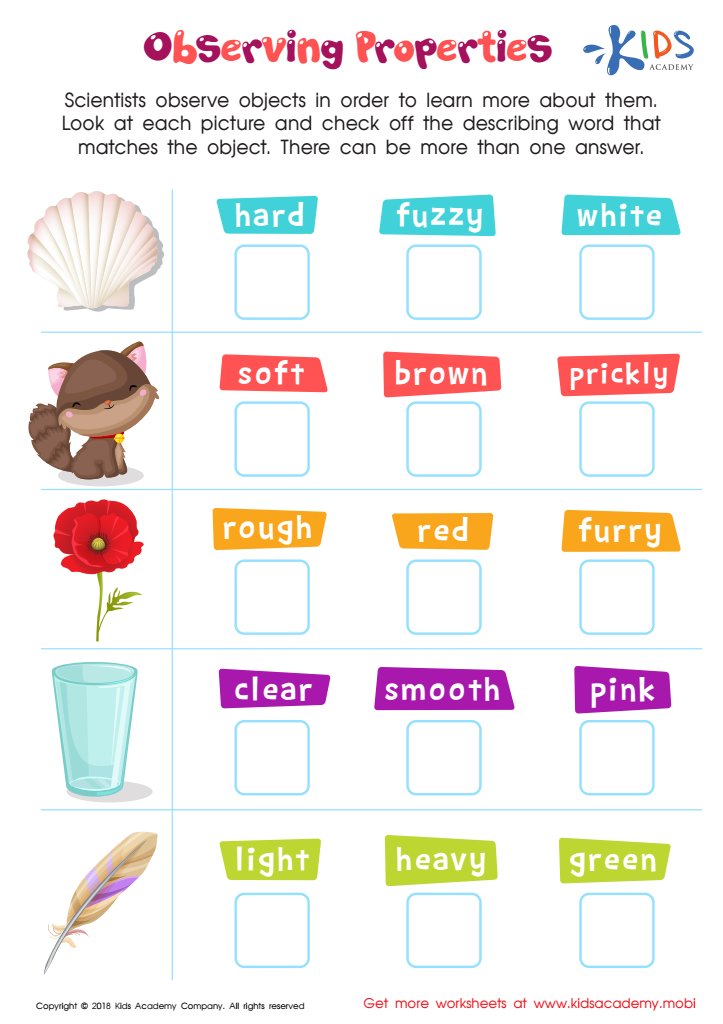
Observing Properties Worksheet
 Assign to My Students
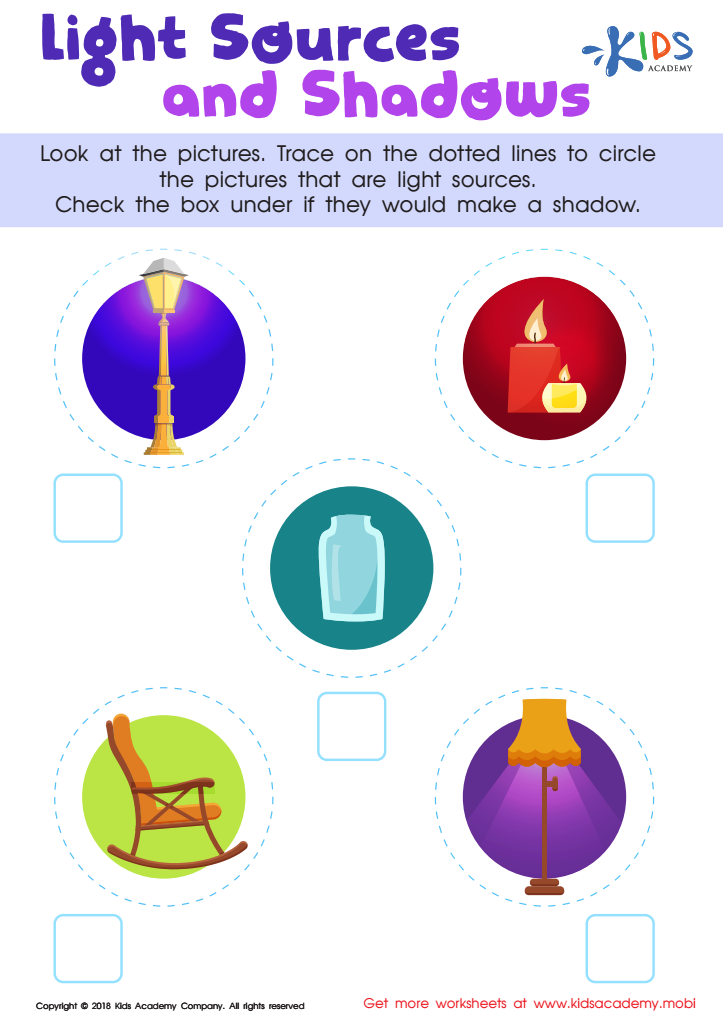
Light Sources and Shadows Worksheet
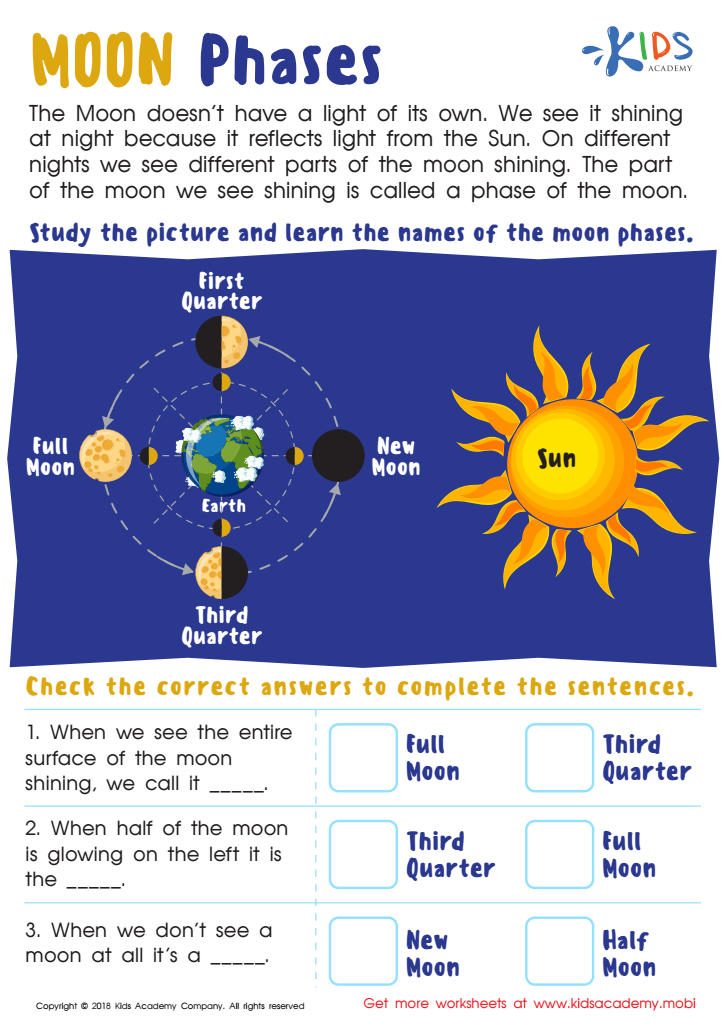
Moon Phases Worksheet
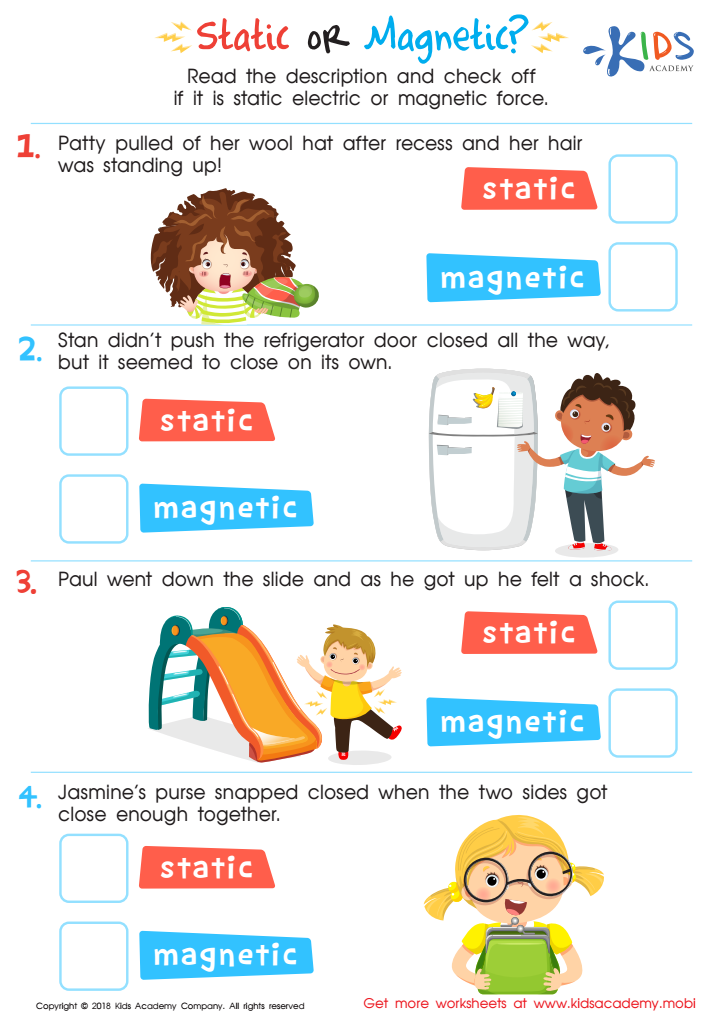
Static or Magnetic Printable Worksheet







Observational skills in Physical Science for children ages 7-8 are crucial because they lay the foundation for lifelong learning and scientific thinking. At this developmental stage, young minds are naturally curious and eager to explore the world around them. By fostering observational skills, parents and teachers help children harness this curiosity in constructive ways.
First and foremost, observation is a fundamental component of the scientific method. Children learn to note changes, identify patterns, and make predictions based on their findings, thereby developing critical thinking and problem-solving skills. These abilities are not only essential for science but are transferable to other subjects and real-life situations.
Furthermore, engaging in hands-on activities, such as watching a plant grow or comparing the sounds different materials make, helps children understand abstract scientific concepts more concretely. This experiential learning cements their comprehension and makes science both fun and relatable.
Observational skills also promote careful attention and mindfulness. These skills teach children how to focus, increases their attentiveness to details, and improves their memory, setting the stage for academic success across the board.
In summary, cultivating observational skills in young learners equips them with essential cognitive tools and nurtures a love for science, which together contribute to their overall intellectual and personal growth.







