Understanding light sources Physical Science Worksheets for Ages 7-8
6 filtered results
-
From - To
Discover the fascinating world of light sources with our worksheet collection designed for children aged 7-8! "Understanding Light Sources" Physical Science Worksheets engage young learners in exploring various types of light, including natural and artificial sources. These printable resources promote critical thinking and foster curiosity, enabling students to distinguish between different lights while enhancing their observational skills. Each worksheet is tailored to make learning enjoyable through fun activities and experiments, supporting classroom or at-home learning. Perfect for educators and parents alike, these worksheets aim to build a solid foundation in physical science that sparks a lifelong interest in exploration and discovery!
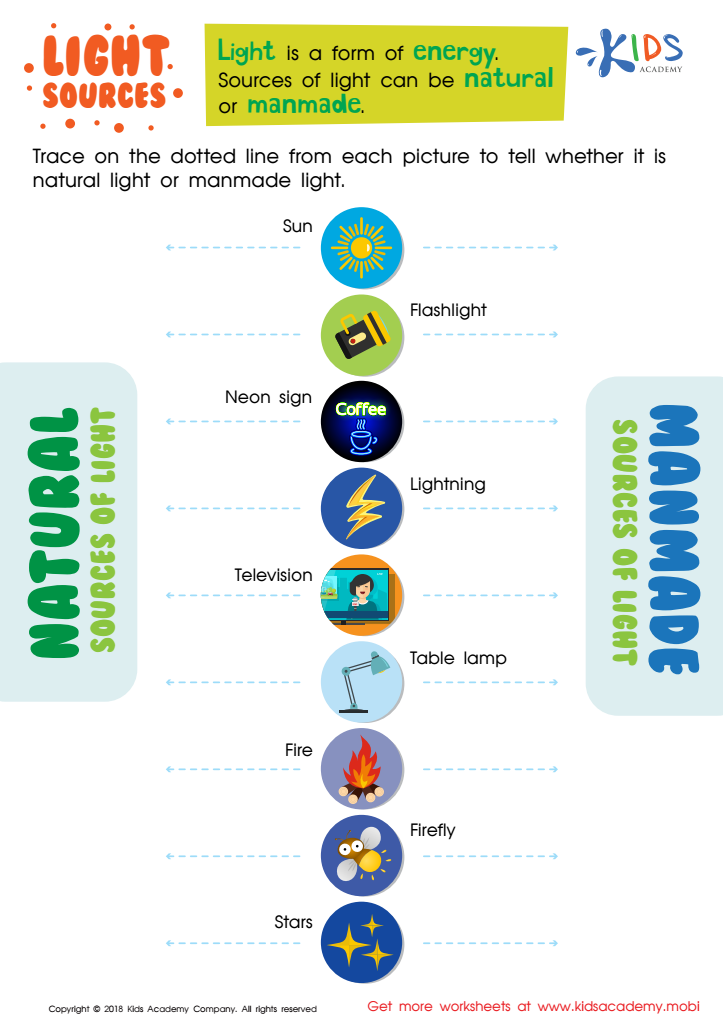
Natural and Manmade Light Sources Worksheet
 Assign to My Students
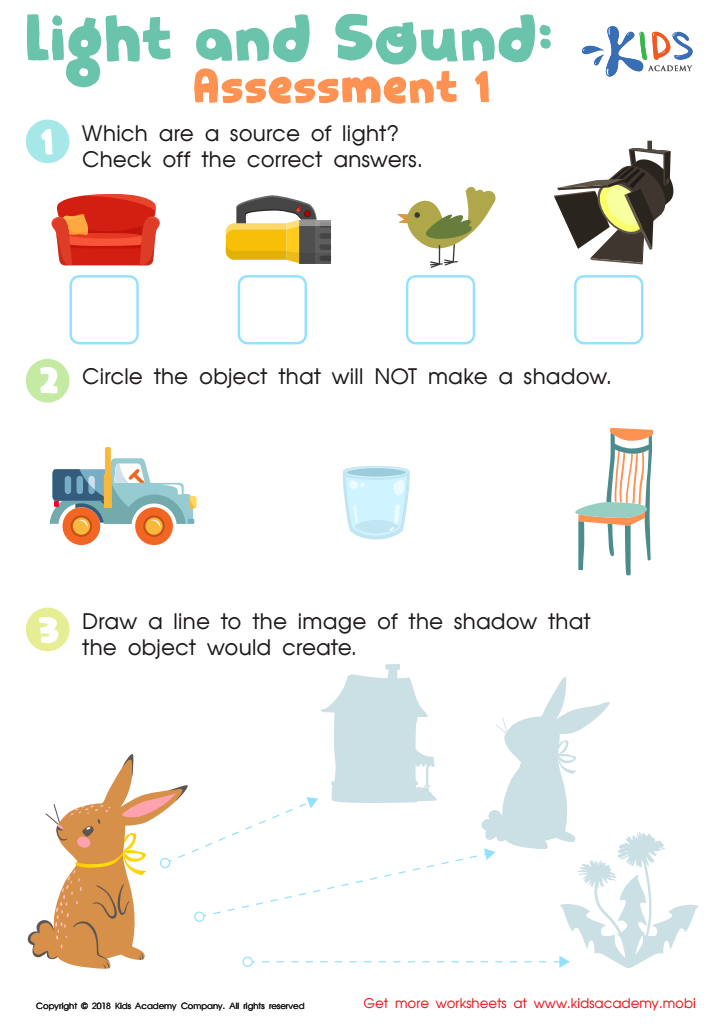
Light and Sound: Assessment 1 Worksheet
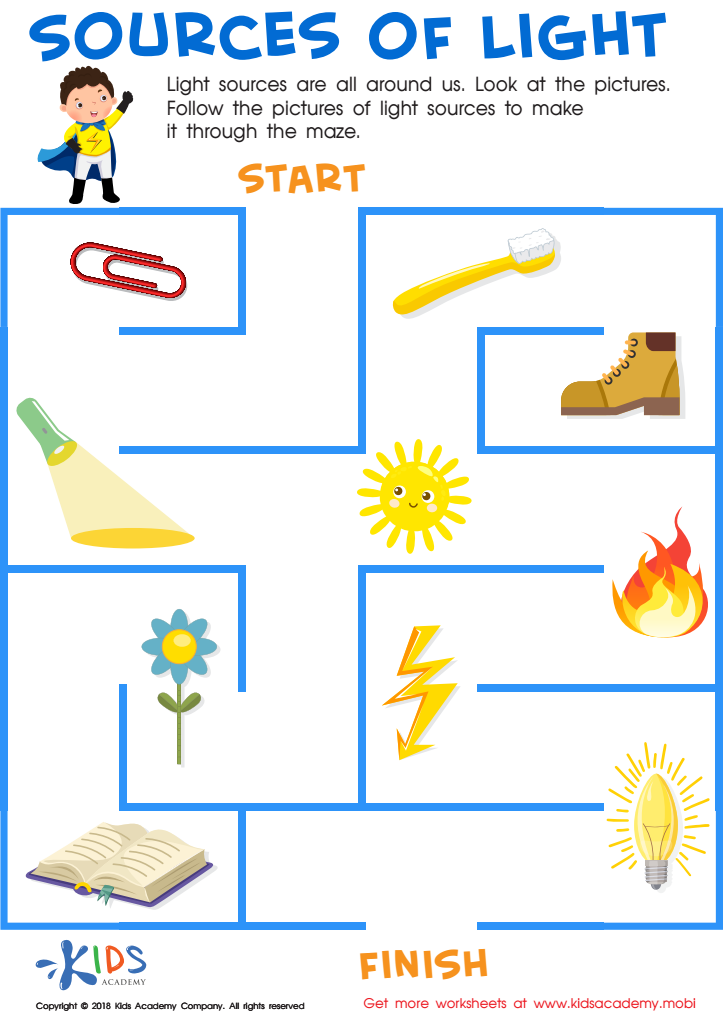
Sources of Light Worksheet
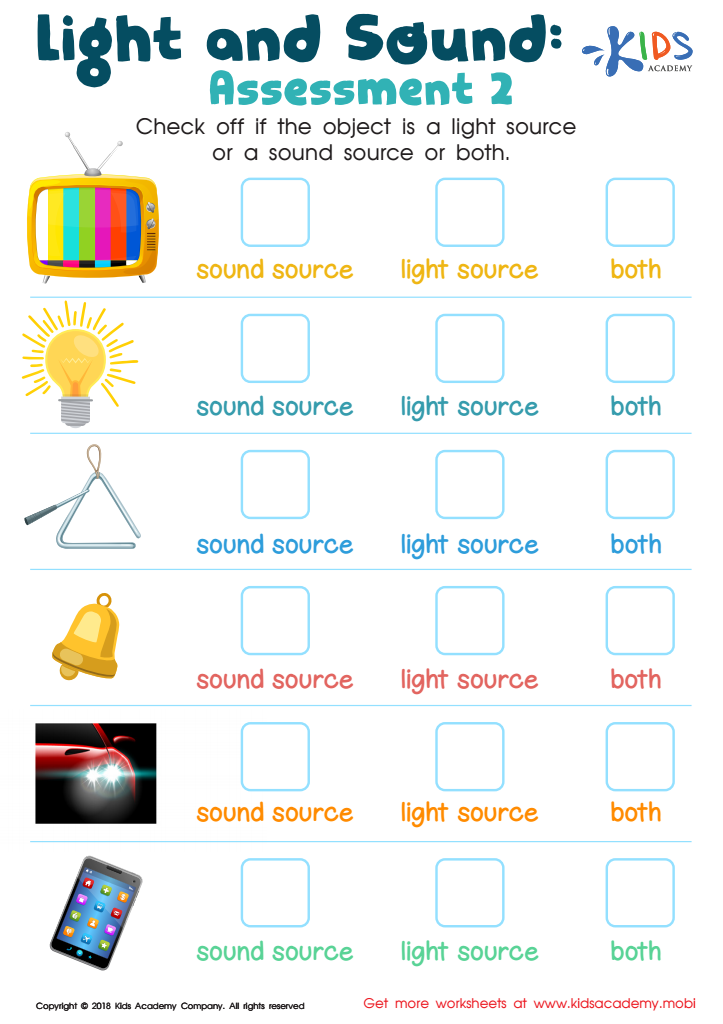
Light and Sound: Assessment 2 Worksheet
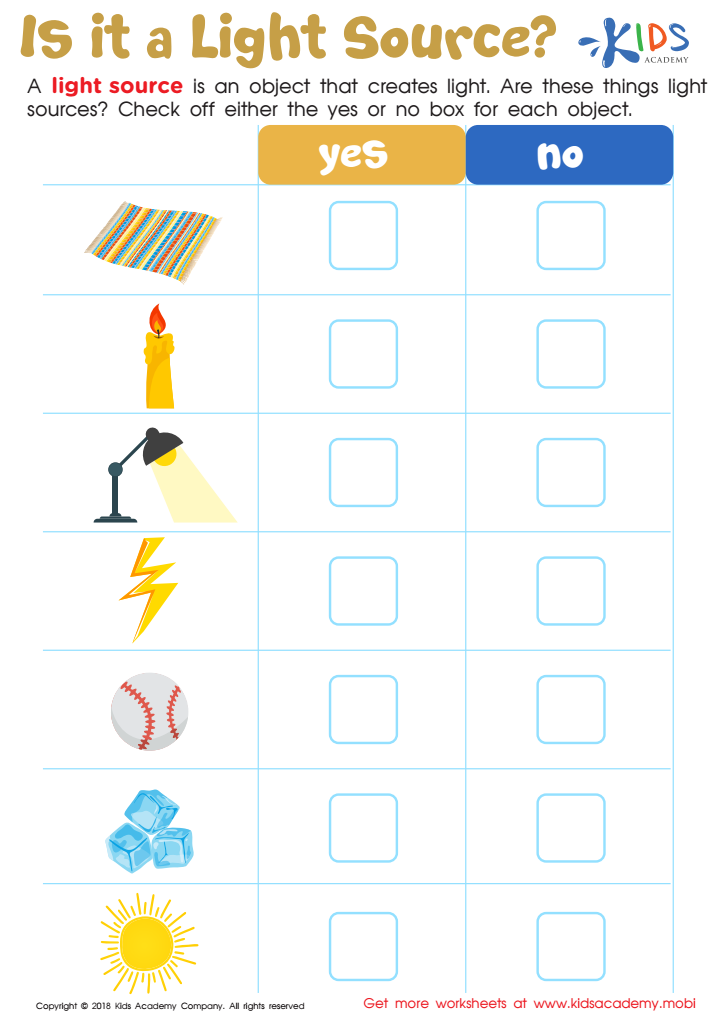
Is It a Light Source? Worksheet
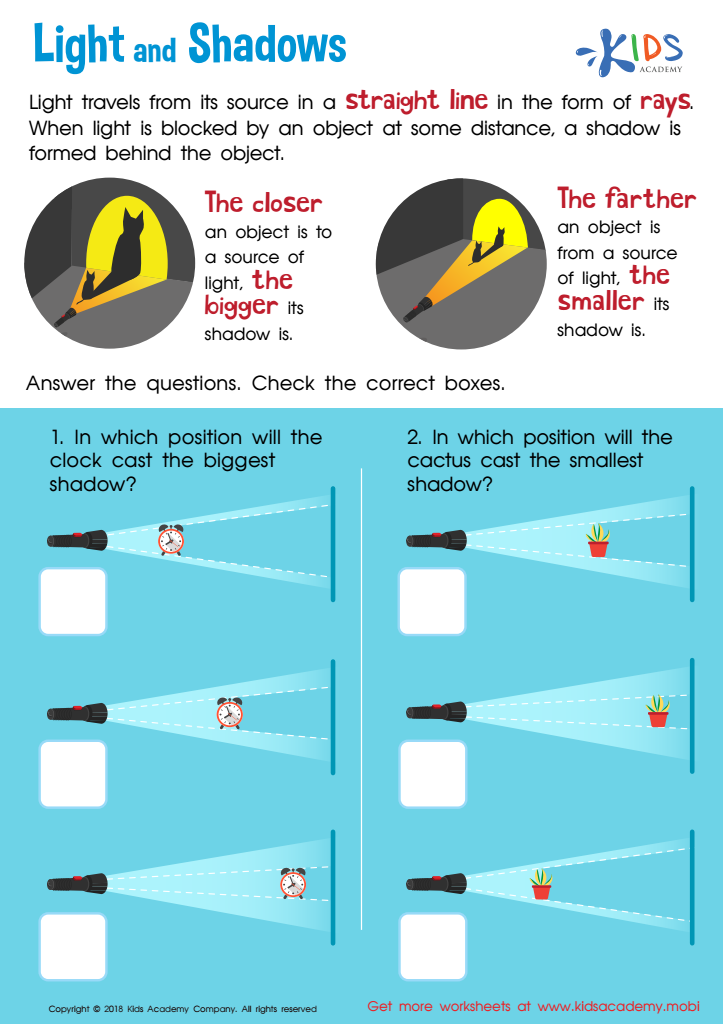
Light and Shadow Worksheet for Grade 3








Understanding light sources is crucial for children aged 7-8 as it lays the foundation for their comprehension of physical science concepts. At this age, children are naturally curious, and exploring how light works engages their exploratory minds. Learning about light sources helps them distinguish between natural light (like the sun) and artificial light (like light bulbs), fostering critical thinking and observation skills.
Additionally, introducing the science of light enhances their understanding of everyday phenomena. For example, by learning how shadows are formed or how light travels, children can grasp more complex subjects later in their education, such as optics and energy. It can also spur interest in scientific topics, encouraging a lifelong love for learning and inquiry.
Furthermore, engaging in light-related activities encourages hands-on experiments and promotes collaboration among peers. It nurtures problem-solving skills and encourages them to ask questions, think critically, and communicate their ideas.
For parents and teachers, promoting understanding of light sources provides an opportunity to connect science to daily life. By integrating these concepts, they equip children not only with scientific knowledge but also with essential skills that will benefit their overall academic journey and personal development. Thus, appreciating the science of light enriches childhood learning and understanding of the world.







