Understanding magnetism Physical Science Worksheets for Ages 7-8
4 filtered results
-
From - To
Discover the fascinating world of magnetism with our "Understanding Magnetism Physical Science Worksheets" designed specifically for ages 7-8. These engaging, hands-on activities help young learners explore magnetic fields, attraction, and repulsion in a fun, educational way. Students will perform experiments, solve puzzles, and observe magnetic forces at work, building a solid foundation in physical science. Perfect for both classroom and home use, our worksheets are crafted to foster curiosity, critical thinking, and a love for discovery. Equip your child with the skills to understand the amazing properties of magnets with our well-crafted learning resources.
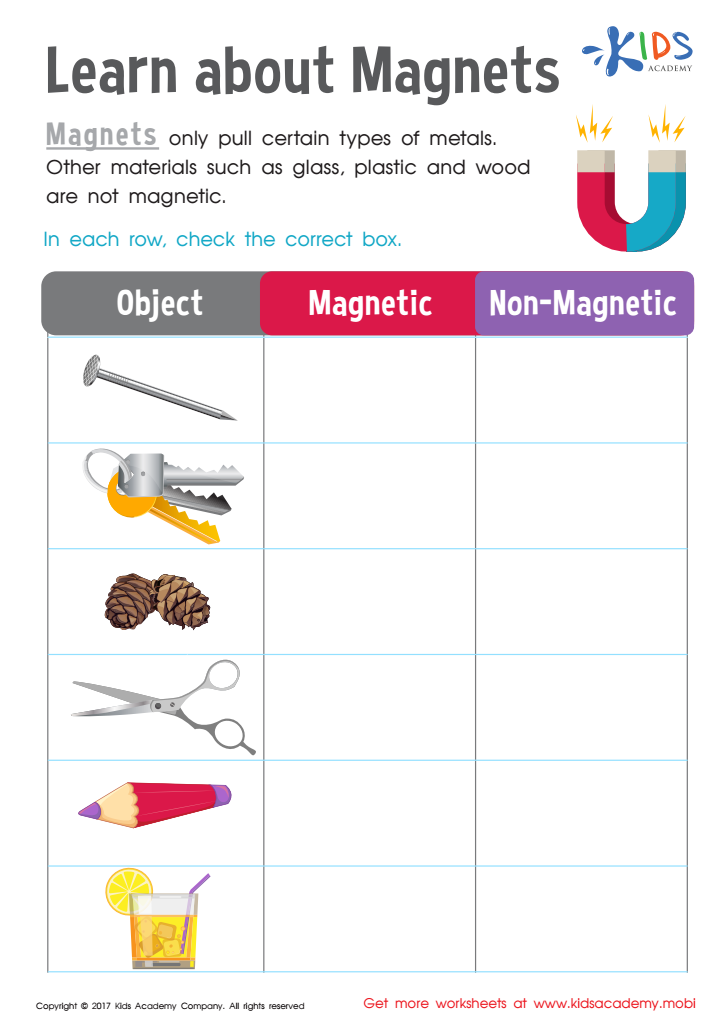
Magnetic Or Not Worksheet
 Assign to My Students
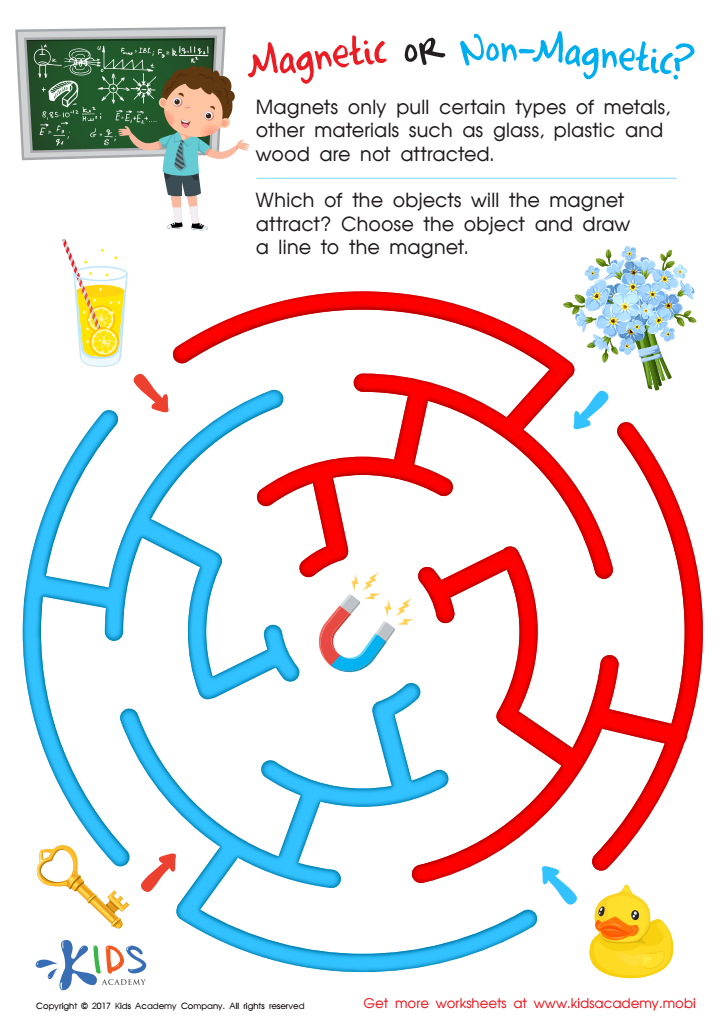
Magnetic or Non–Magnetic Worksheet
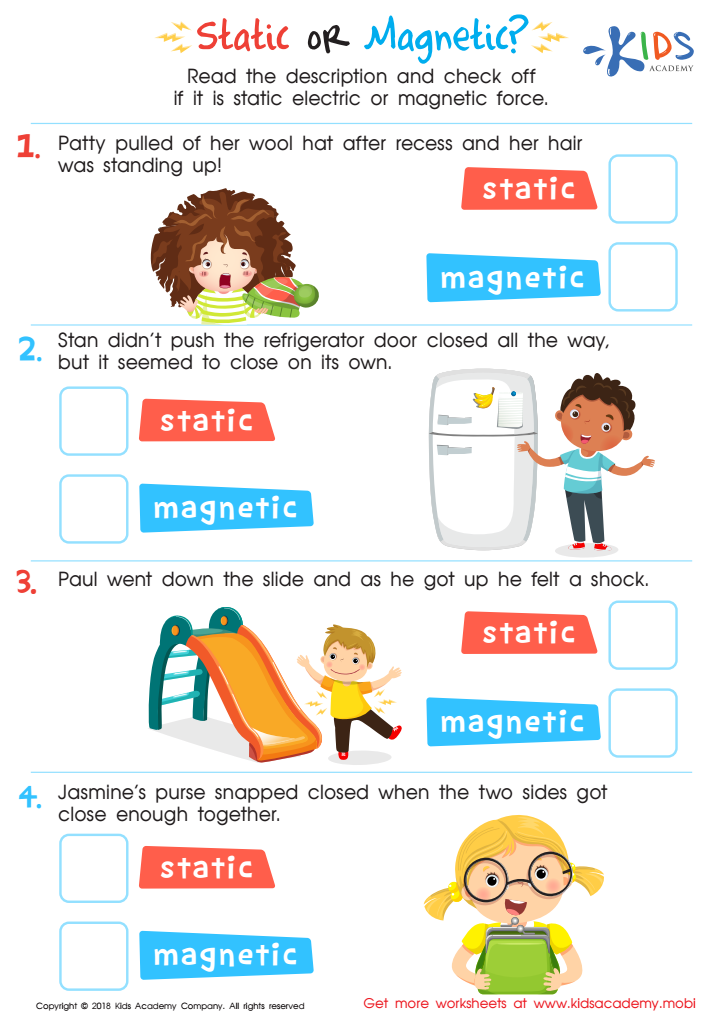
Static or Magnetic Printable Worksheet
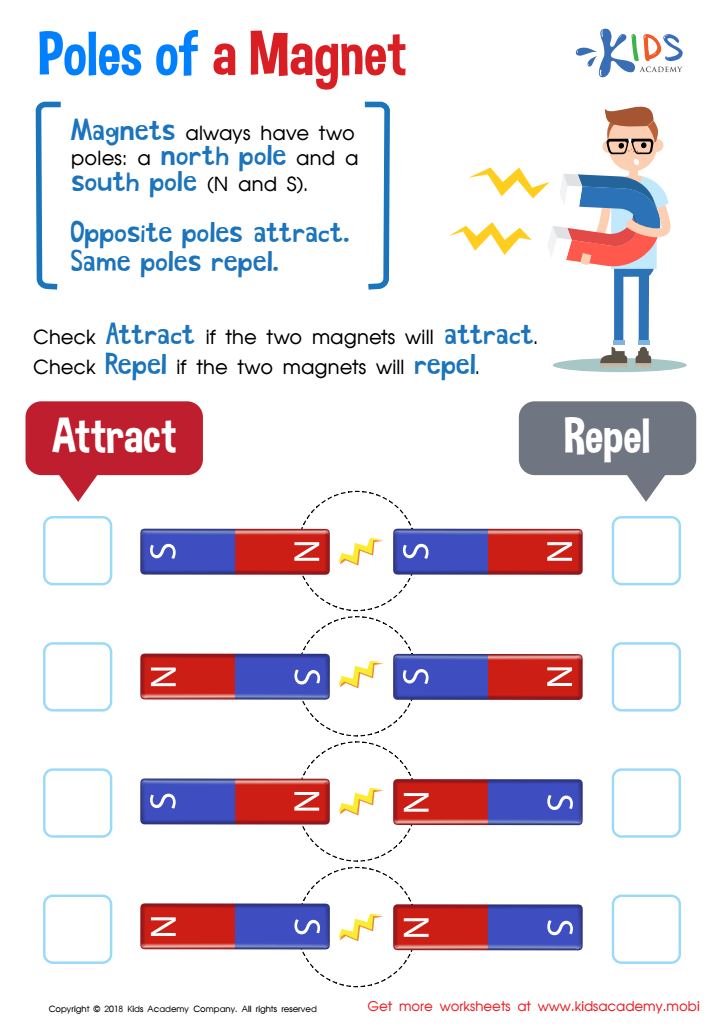
Magnet Poles Attract or Repel Worksheet







Understanding magnetism at ages 7-8 is crucial for several reasons. First, magnetism is a fundamental force in nature, influencing a wide range of phenomena and technologies. Introducing children to the basic concepts of magnetism sparks their curiosity about how the world works, laying a foundation for more complex scientific learning. Kids at this age are naturally curious and hands-on activities, like experimenting with magnets, can greatly enhance their learning experience, fostering a love for science and discovery.
For parents and teachers, teaching magnetism can also improve critical thinking and problem-solving skills. Activities involving magnets often involve experimentation and reasoning, encouraging children to make predictions, observe outcomes, and draw conclusions. These skills are transferable to other areas of learning and everyday life.
Additionally, early exposure to physical science supports cognitive development. Children start to understand cause and effect, spatial orientation, and forces, all of which are essential for their overall intellectual growth. By integrating magnetism into the curriculum, teachers and parents not only nurture budding scientists but also build a strong educational foundation that supports learning in math, technology, engineering, and other scientific fields.
In summary, teaching magnetism to young children ignites a passion for learning, strengthens key cognitive skills, and nurtures their natural curiosity about the physical world.







