Understanding moon phases Space Worksheets for Ages 7-8
3 filtered results
-
From - To
Explore the fascinating world of moon phases with our engaging Space Worksheets designed specifically for ages 7-8! These interactive assignments will help young learners grasp the cycles of the moon through fun activities and clear illustrations. Each worksheet encourages critical thinking as children identify different phases, understand the lunar cycle, and relate it to daily life. Perfect for classroom use or home learning, these resources not only reinforce science skills but also spark curiosity about the cosmos. Join us in nurturing budding astronomers and fostering a deeper appreciation for our celestial neighbor! Ideal for enhancing STEM education in a playful way.
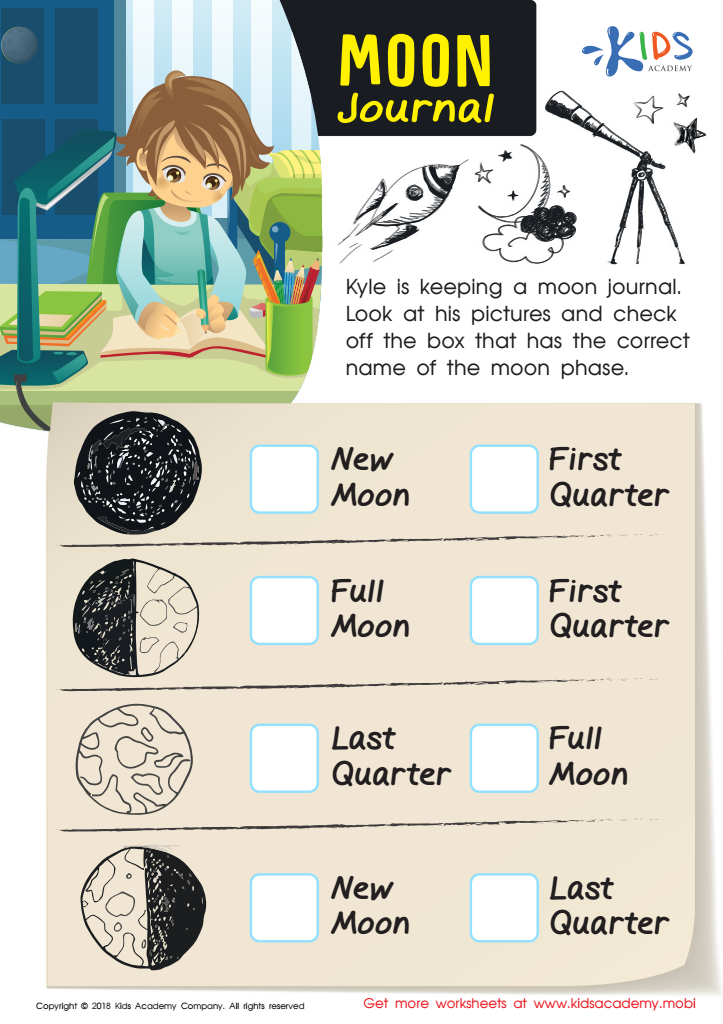
Moon Journal Worksheet
 Assign to My Students
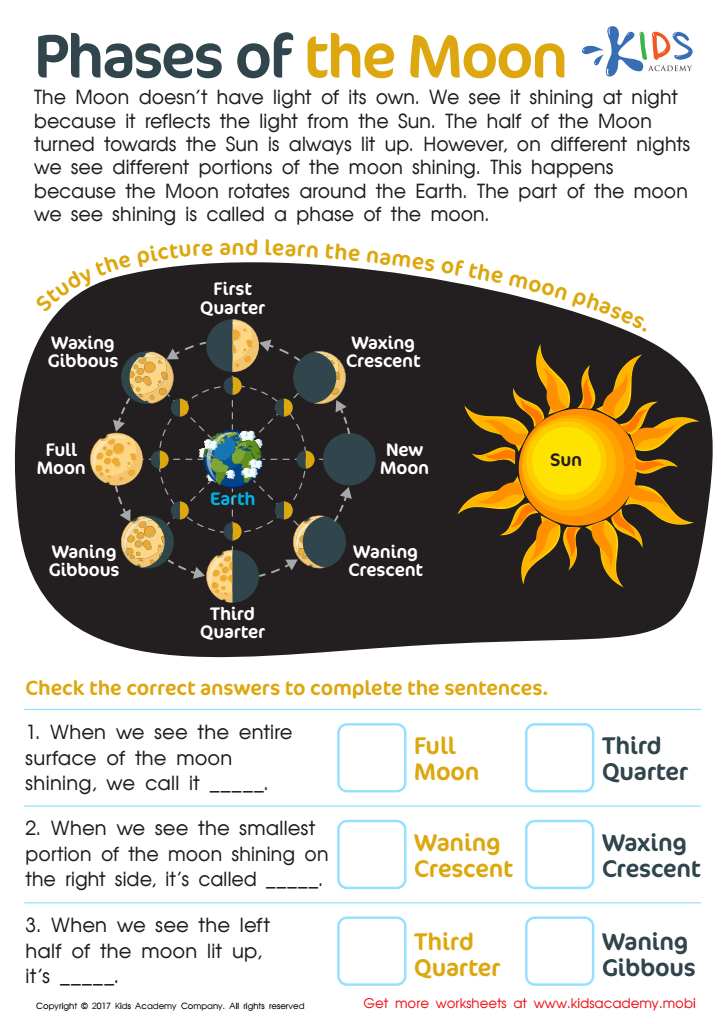
Phases of The Moon Worksheet
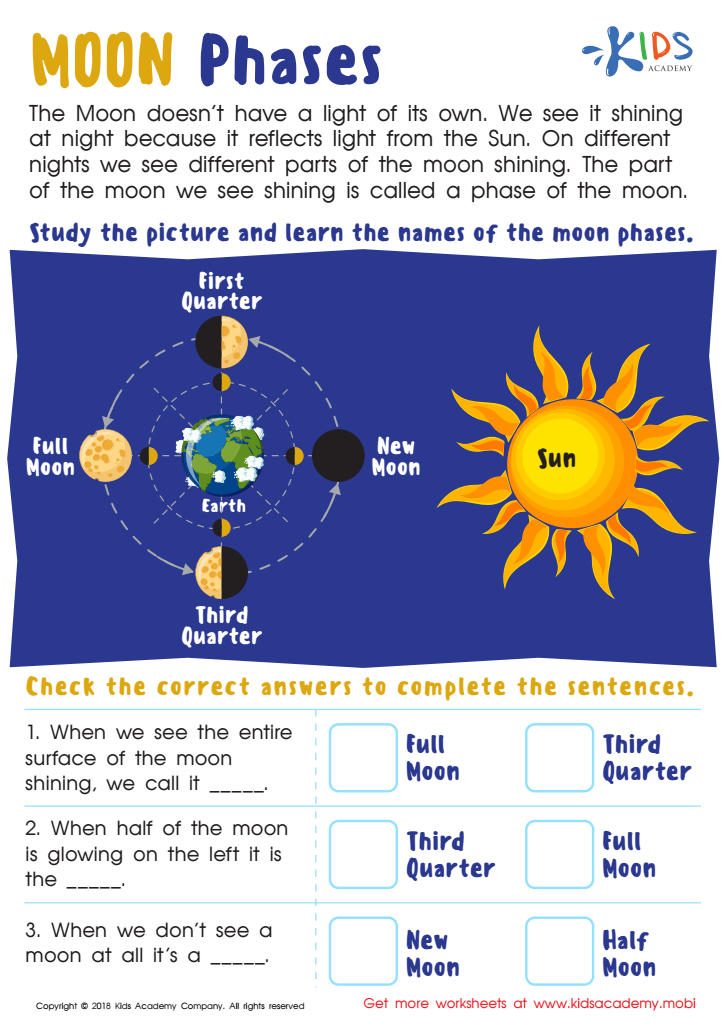
Moon Phases Worksheet





Understanding moon phases is essential for parents and teachers because it plays a crucial role in promoting scientific literacy, curiosity, and critical thinking among children ages 7-8. At this stage, children are naturally curious about the world around them, and learning about the moon phases can spark an interest in astronomy and sciences.
Engaging with concepts like waxing and waning not only helps children grasp basic observational skills but also fosters an understanding of the cyclical nature of time and natural processes. This foundational knowledge can enhance their appreciation for nature and the universe, encouraging a lifelong love for learning.
Additionally, discussing moon phases allows educators to make connections to various subjects such as geography, history, and even art, as many cultures have revered the moon in storytelling and traditions. Interactive activities, such as moon phase charts or nighttime observation, can facilitate experiential learning, tapping into diverse learning styles.
Furthermore, understanding moon phases provides opportunities for social-emotional learning, as children engage in discussions and collaborative activities with peers and adults. Ultimately, fostering an appreciation for the moon and its phases lays the groundwork for more advanced scientific concepts, encouraging a well-rounded education that empowers young minds.







