Filters

5 filtered results

Clear all filters
Favorites
With answer key
Interactive

5 filtered results

Difficulty Level

Grade


Subject

    Discover our captivating "Good Citizenship Worksheets for Ages 7-8," designed to help young learners understand the importance of being responsible and engaged citizens. Our interactive worksheets cover essential topics, including community roles, respect for others, and the significance of contributing positively to society. Through fun activities and engaging scenarios, children will explore values such as kindness, honesty, and teamwork. These worksheets not only support social studies education but also promote critical thinking and empathy. Perfect for both classroom and at-home learning, our resources aim to inspire the next generation of thoughtful and active citizens. Start nurturing good citizenship today!

    Check out this FREE Trial Lesson on Good Citizenship for age 7-8!

    Citizenship

    Favorites
    With answer key
    Interactive
    • 7-8
    • Good Citizenship
    How to Be a Good Citizen Worksheet
    How to Be a Good Citizen Worksheet

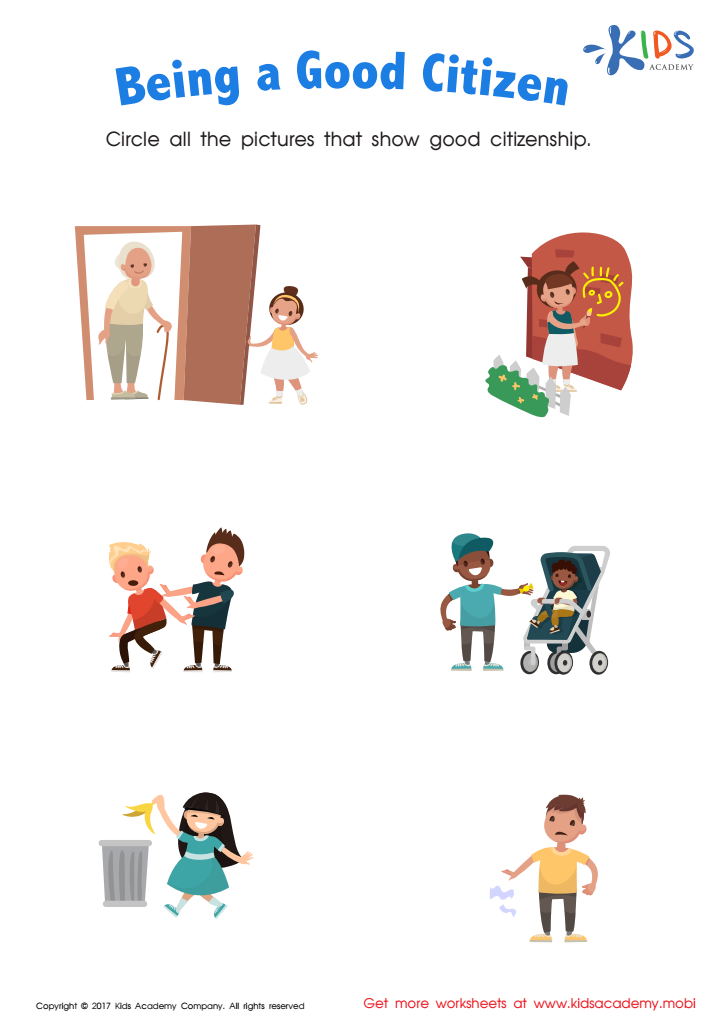
    Being a Good Citizen Printable

    Help your child learn the importance of being a good citizen with this fun worksheet! It reinforces positive behaviors in the community and teaches essential skills like character. Try it today!
    Being a Good Citizen Printable
    Worksheet
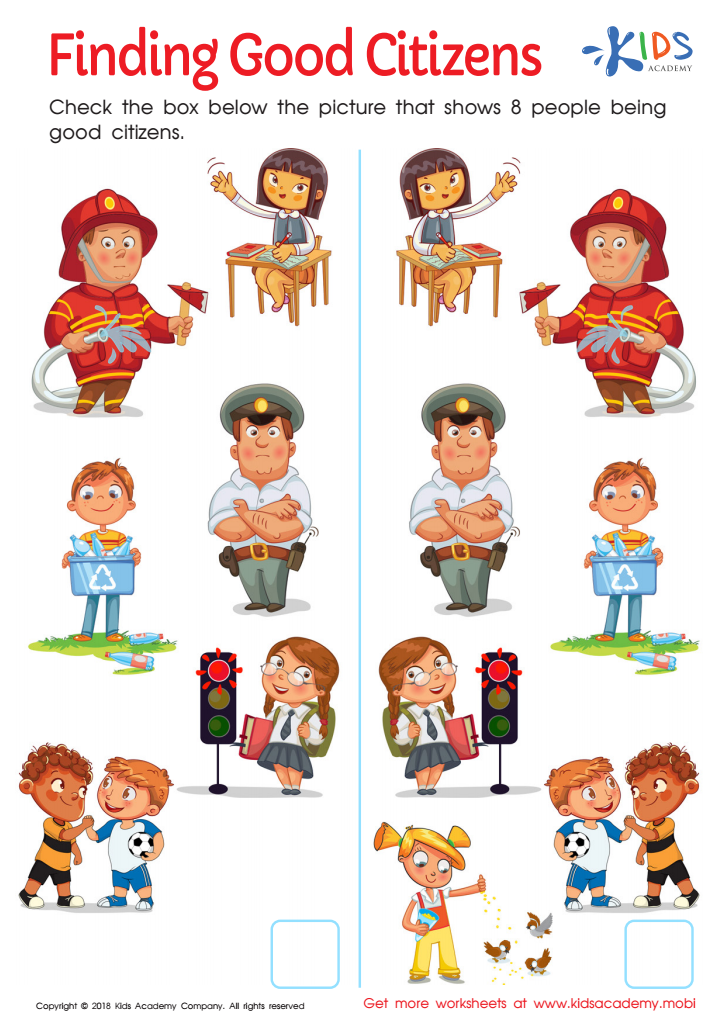
    Finding Good Citizens Worksheet
    Finding Good Citizens Worksheet

    Finding Good Citizens Worksheet

    Teach your students what it takes to be a responsible citizen in their community. Test their knowledge by having them identify good citizen acts in pictures. Ask them to check the box showing 8 people being good citizens. Challenge their comprehension and make sure they understand the importance of being a good citizen.
    Finding Good Citizens Worksheet
    Worksheet
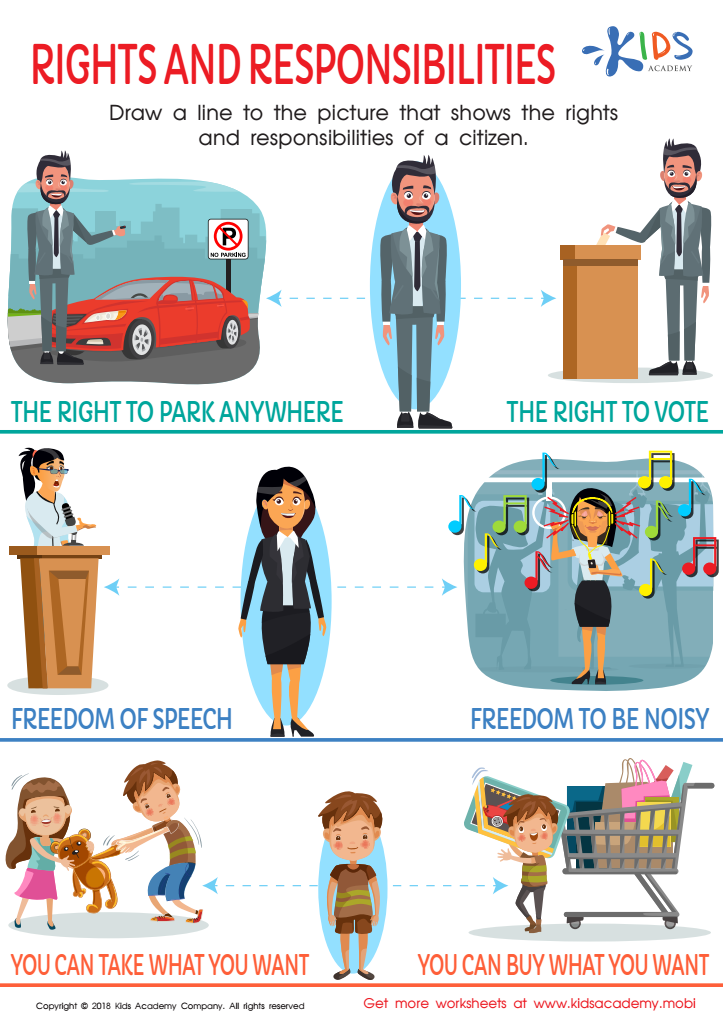
    Rights and Responsibilities Worksheet
    Rights and Responsibilities Worksheet

    Rights and Responsibilities Worksheet

    Encourage your kids to discuss their rights as citizens. Help them recognize fundamental human rights they're entitled to. Review the worksheet: ask them to read aloud and draw a line to the right picture. Invite them back to the discussion to explain their choices. Each step will help them understand and exercise their rights.
    Rights and Responsibilities Worksheet
    Worksheet
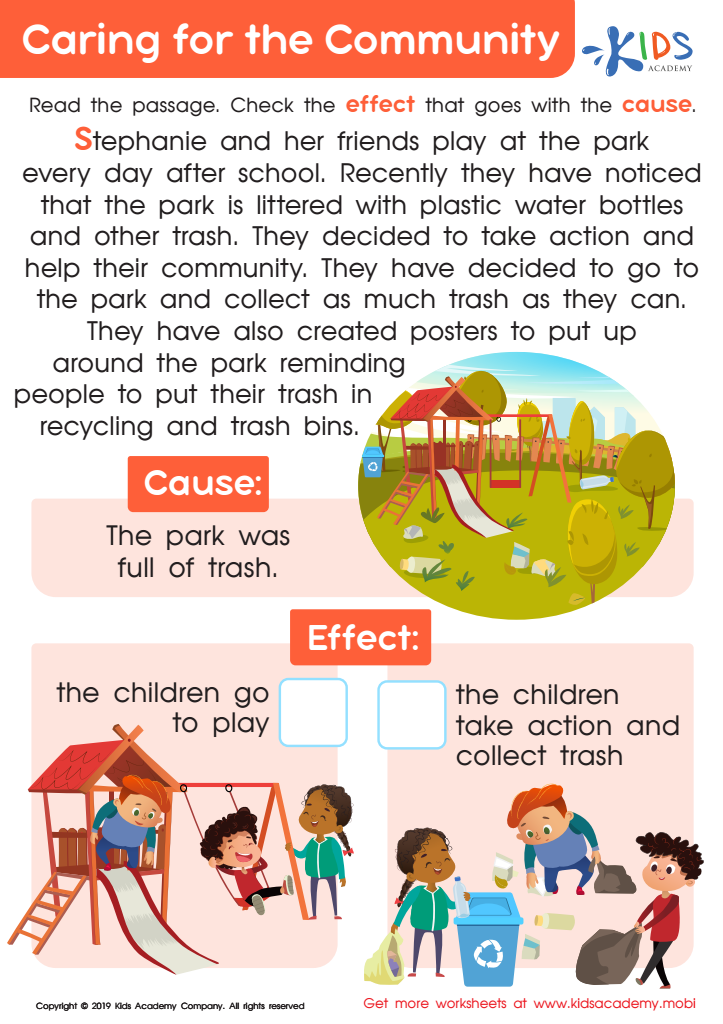
    Caring for the Community Worksheet
    Caring for the Community Worksheet

    Caring for the Community Worksheet

    Before beginning, get your kids in the right mind-set by having them name ways to care for their community. Read the passage with them, pointing at pictures, then ask them to match the ‘cause’ with the ‘effect’ on the worksheet. This will help them learn more about how to care for their community.
    Caring for the Community Worksheet
    Worksheet
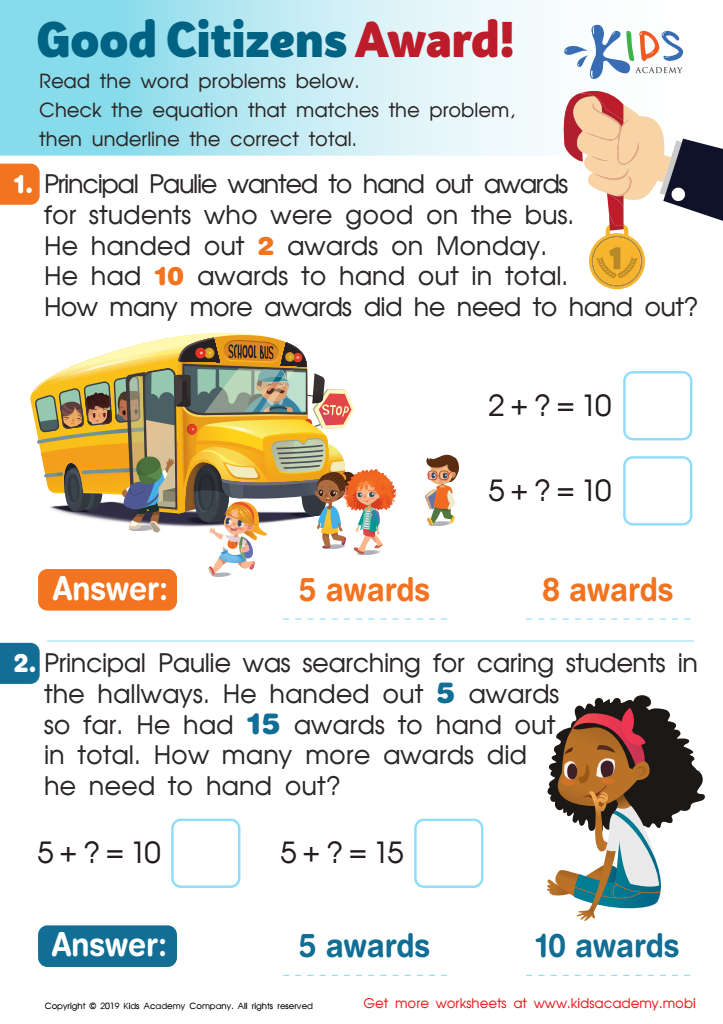
    Good Citizens Award! Worksheet

    Good Citizens Award! Worksheet

    Good Citizens Award! Worksheet
    A citizen is a person who resides in a certain area and is granted legal rights and privileges. Becoming a citizen can be achieved in various ways, most commonly through birth or marriage. Good citizens honor their nation's laws and act responsibly. Ask your students to share examples of good citizenship. Have them read the word problem and choose the equation that yields the right answer, then underline it.
    Good Citizens Award! Worksheet
    Worksheet


    Good citizenship is crucial for children ages 7-8 as it lays the foundation for their social and ethical development. During these formative years, children are increasingly aware of their surroundings and begin to recognize their roles within the community. Teaching good citizenship at this age encourages values such as respect, responsibility, and empathy. These qualities help children understand the importance of treating others kindly, valuing diversity, and making positive contributions to their classrooms and neighborhoods.

    When parents and teachers prioritize good citizenship, they empower children to become active participants in their communities. They learn the significance of following rules, whether at school or in public spaces, and recognize the impact of their actions on others. Engaging children in initiatives such as helping peers, being mindful of the environment, and volunteering fosters a sense of belonging and community responsibility.

    Moreover, instilling good citizenship skills shapes children into informed and engaged future citizens. By understanding the importance of civic duties and respect for democracy, they are better prepared to navigate social challenges as they grow. Thus, nurturing good citizenship not only enriches their immediate relationships but also prepares them to contribute meaningfully to society in the future.