Geographic Understanding Social Studies Worksheets for Ages 7-8
3 filtered results
-
From - To
Explore our engaging Geographic Understanding Social Studies worksheets designed specifically for children aged 7-8! These thoughtfully crafted resources help young learners develop essential skills in geography by introducing them to maps, landforms, continents, and more. Each worksheet is designed to enhance critical thinking and foster a deeper understanding of the world around them. With a mix of interactive exercises, fun illustrations, and real-world applications, these worksheets provide an excellent way for students to discover various geographical concepts. Perfect for classroom activities or home learning, our worksheets will captivate and educate, setting the foundation for future geographical knowledge!
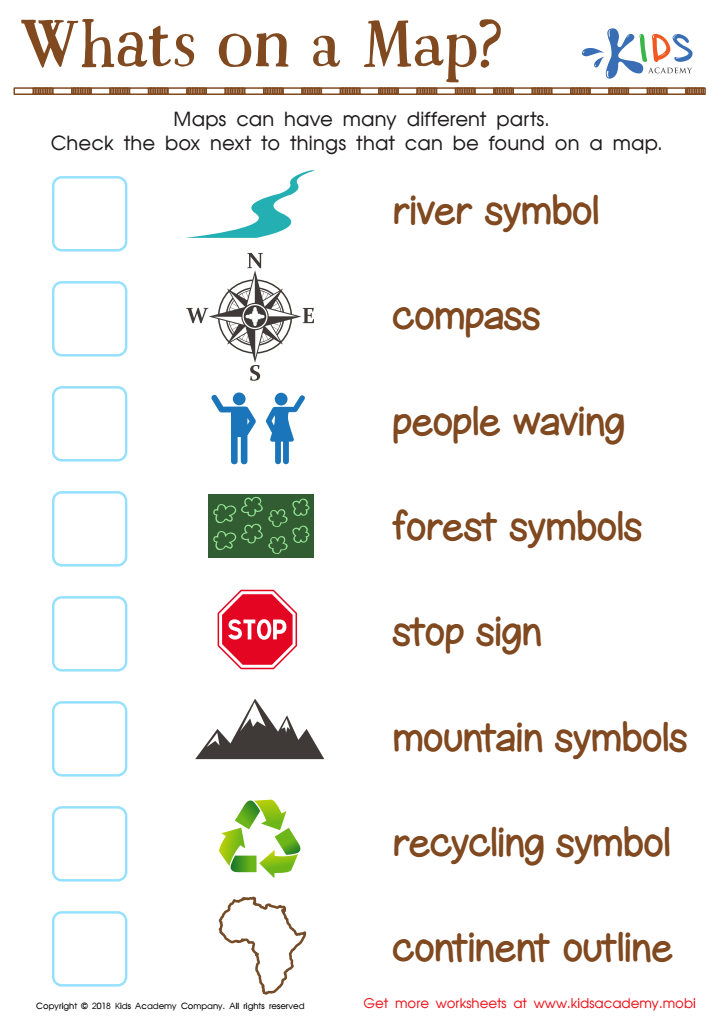
Whats on a Map? Worksheet
 Assign to My Students
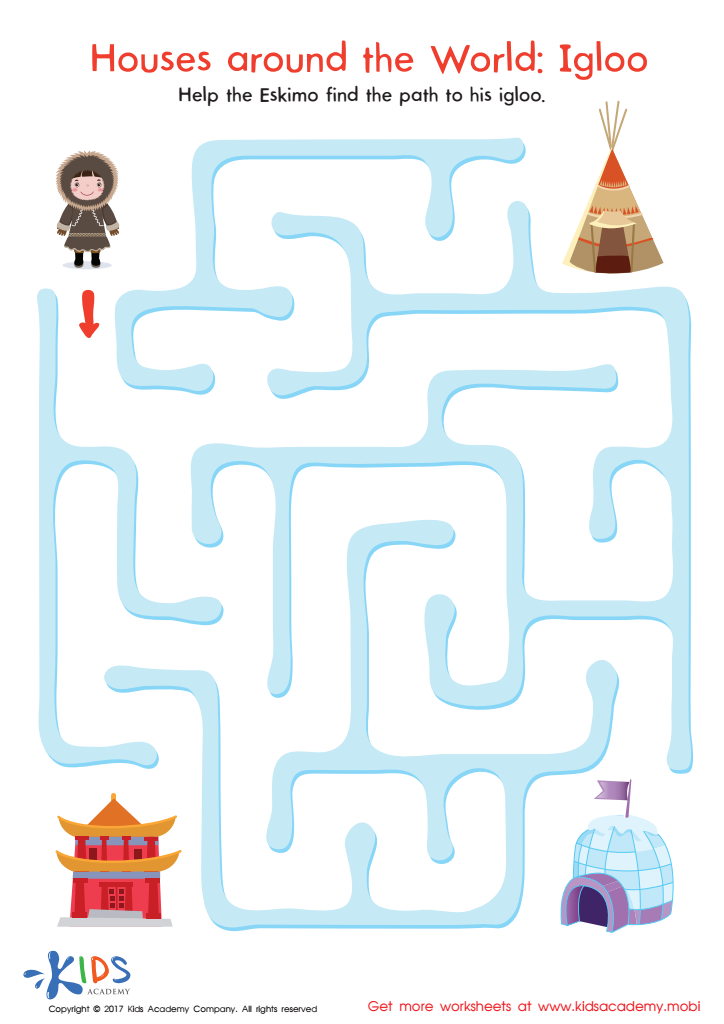
Houses Around the World: Igloo Printable
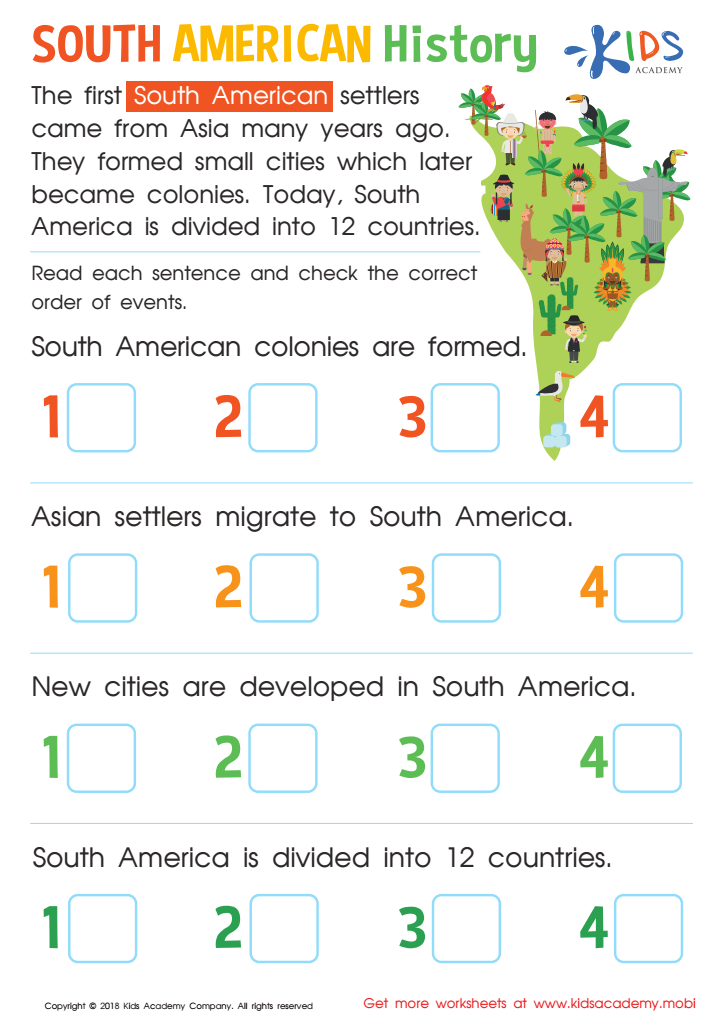
South American History Worksheet







Geographic understanding in social studies is crucial for children aged 7-8, as it lays the foundation for their awareness of the world around them. At this age, children are naturally curious about places, cultures, and people, making it an opportune time to cultivate these interests. By introducing geographic concepts, parents and teachers help children develop critical thinking skills, such as analyzing maps, understanding spatial relationships, and recognizing the significance of different regions.
Geographic understanding fosters empathy and cultural awareness. Children learn to appreciate diversity by exploring various environments and lifestyles, which can lead to a more inclusive mindset. Additionally, this knowledge equips them to engage with current global issues, enhancing their ability to connect with broader societal themes, such as climate change and migration.
Furthermore, geography encourages problem-solving skills. Children learn to identify challenges faced by specific regions, empowering them to think about solutions and appreciate the complexities of our interconnected world. Engaging with geography also enhances literacy, as students interpret written information and visuals. Overall, supporting geographic understanding in social studies during these formative years equips children with essential skills and perspectives essential for their lifelong learning and growth as responsible citizens.