Understanding citizenship Social Studies Worksheets for Ages 7-8
3 filtered results
-
From - To
Unlock the potential of young learners with our "Understanding Citizenship" Social Studies Worksheets tailored for ages 7-8. These engaging, interactive resources are designed to introduce children to the fundamental concepts of citizenship and civic responsibilities in a fun and age-appropriate way. With a variety of activities including creative exercises, puzzles, and critical thinking questions, students will explore the importance of community, rights, and duties that come with being a citizen. Foster an early appreciation for active participation in society and encourage a sense of belonging with these informative worksheets that make learning about citizenship both enjoyable and memorable!
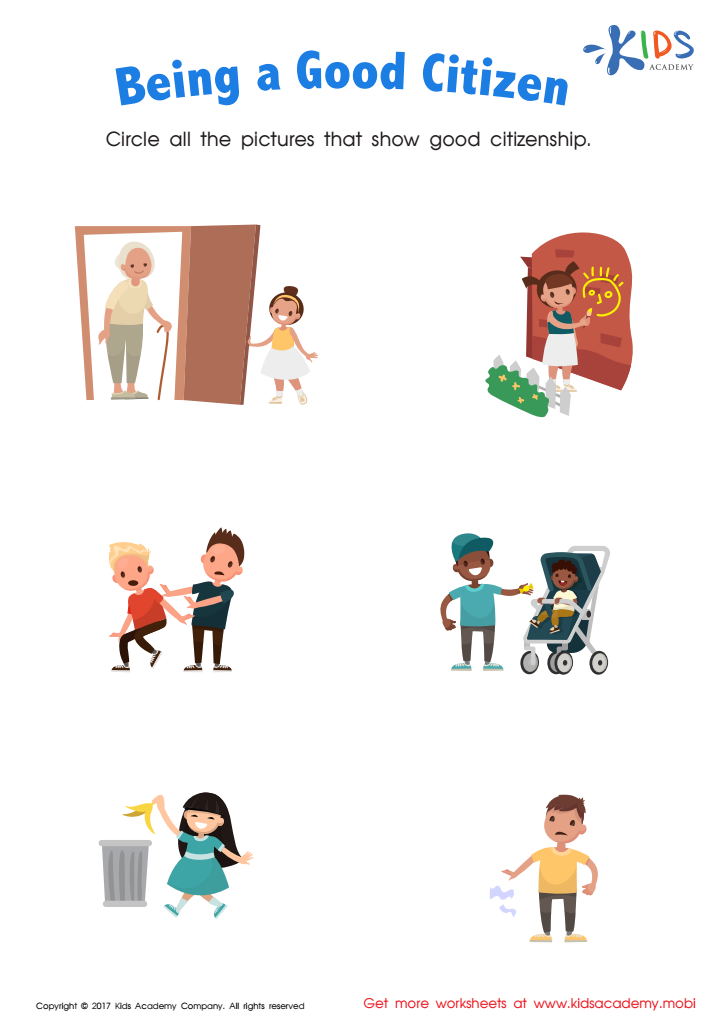
Being a Good Citizen Printable
 Assign to My Students
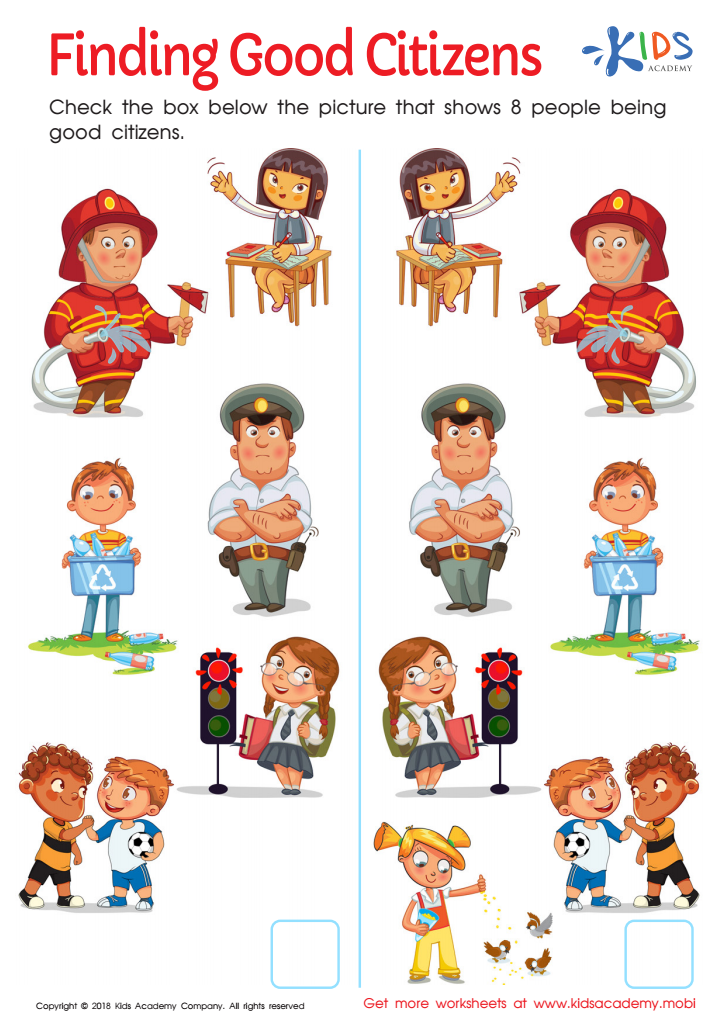
Finding Good Citizens Worksheet
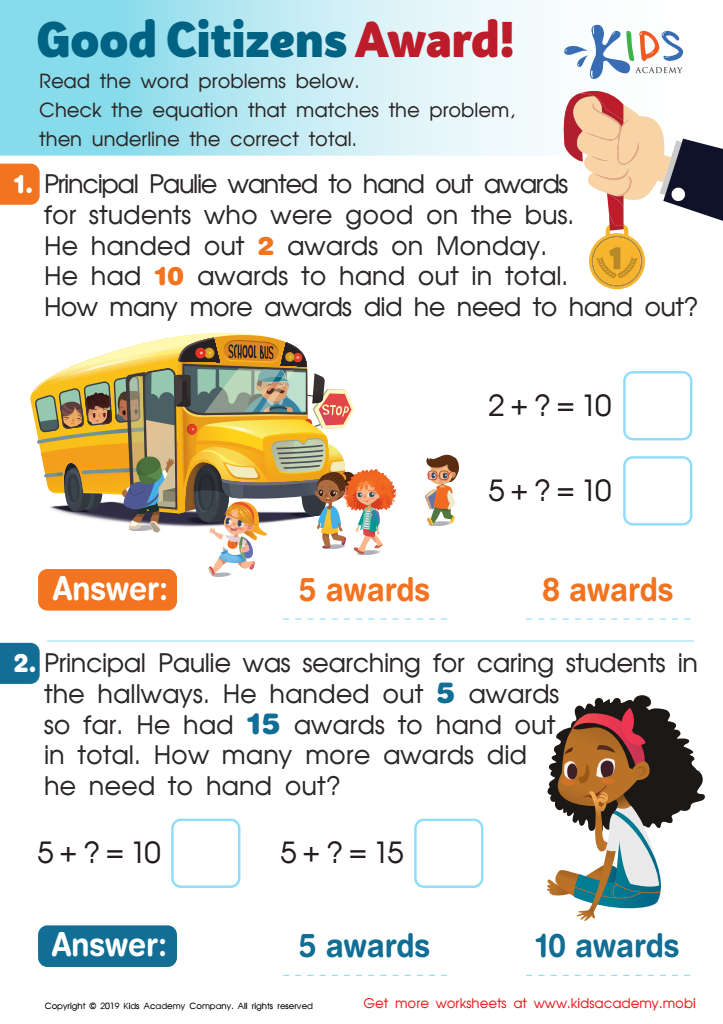
Good Citizens Award! Worksheet








Understanding citizenship in social studies for ages 7-8 is crucial for several reasons. First, it lays the foundation for instilling civic responsibility and community engagement at a young age. By teaching children about citizenship, they learn the importance of being active participants in their communities, encouraging values like respect, empathy, and cooperation.
At this developmental stage, children are curious about the world around them. Introducing concepts such as rights, responsibilities, and the significance of helping others helps foster critical thinking skills. This also empowers them to understand how society functions, leading to informed, responsible citizens in the future.
Moreover, learning about diverse cultures and histories promotes inclusivity and respect for differences. Helping children to appreciate other perspectives cultivates tolerance, which is essential in today’s multicultural world.
Finally, early education in citizenship equips children with social skills that enhance their ability to work in groups and make decisions collaboratively. Teachers and parents play an essential role in guiding children through these concepts, thereby fostering a sense of belonging and encouraging lifelong engagement in civic duties. By addressing citizenship early, we prepare our youngest generations to create a more just and active society.








