Understanding patterns Social Studies Worksheets for Ages 7-8
4 filtered results
-
From - To
Discover enriching social studies worksheets designed for kids aged 7-8, focusing on understanding patterns. These engaging exercises help children recognize and interpret various patterns in history, culture, and geography. By identifying sequences and trends, students develop critical thinking and analytical skills essential for their educational growth. Kids Academy offers a diverse selection of printables featuring vibrant visuals and interactive activities. Perfect for classroom use or at-home learning, these worksheets make exploring social studies both fun and educational. Equip your child with the tools to decode and appreciate the patterns that shape our world with Kids Academy!
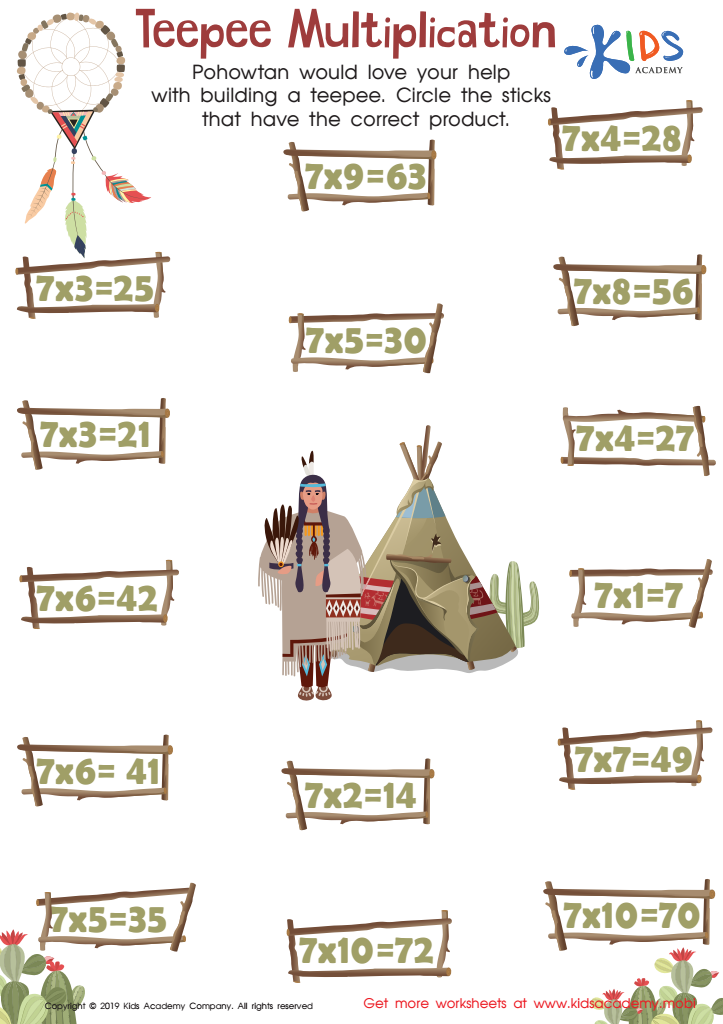
Teepee Multiplication Worksheet
 Assign to My Students
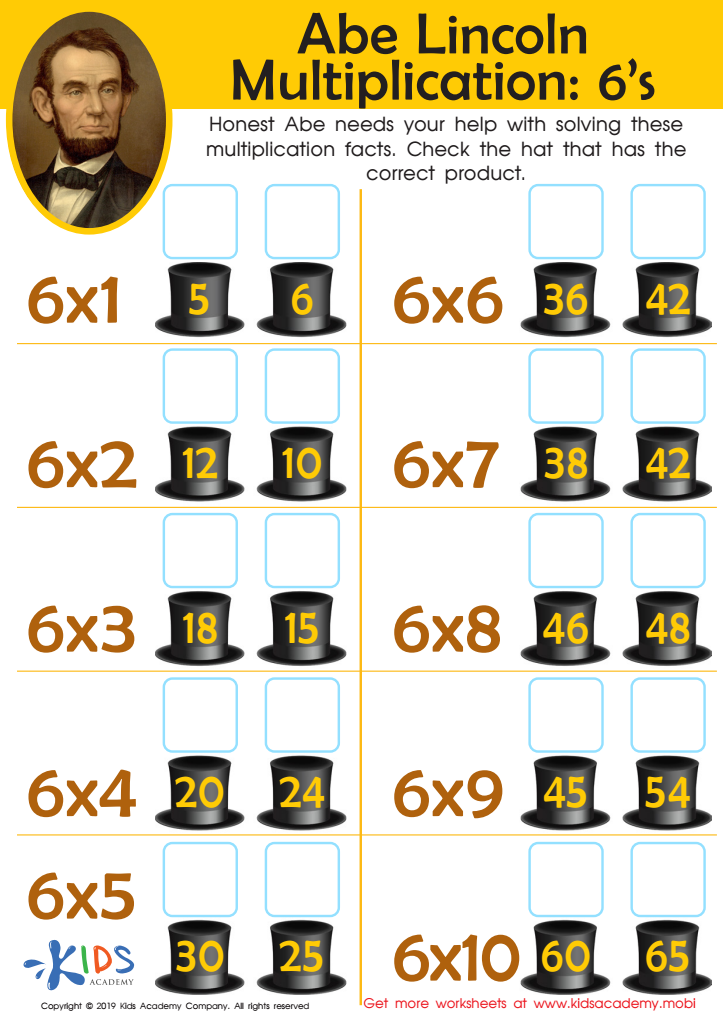
Abe Lincoln Multiplication: 6’s Worksheet
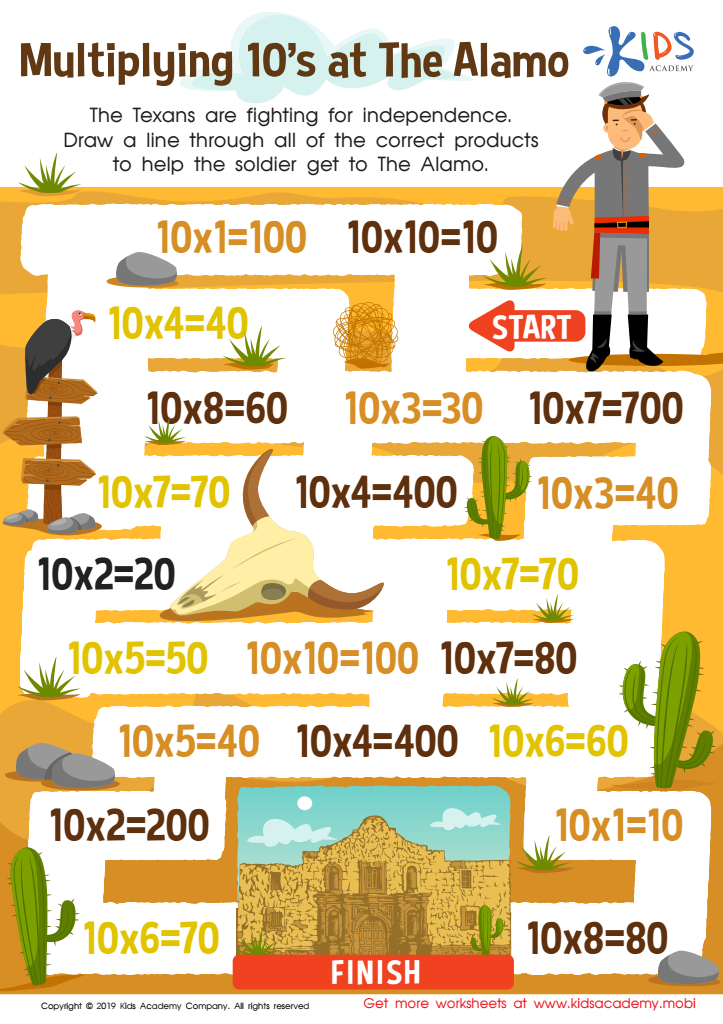
Multiplying 10’s at The Alamo Worksheet
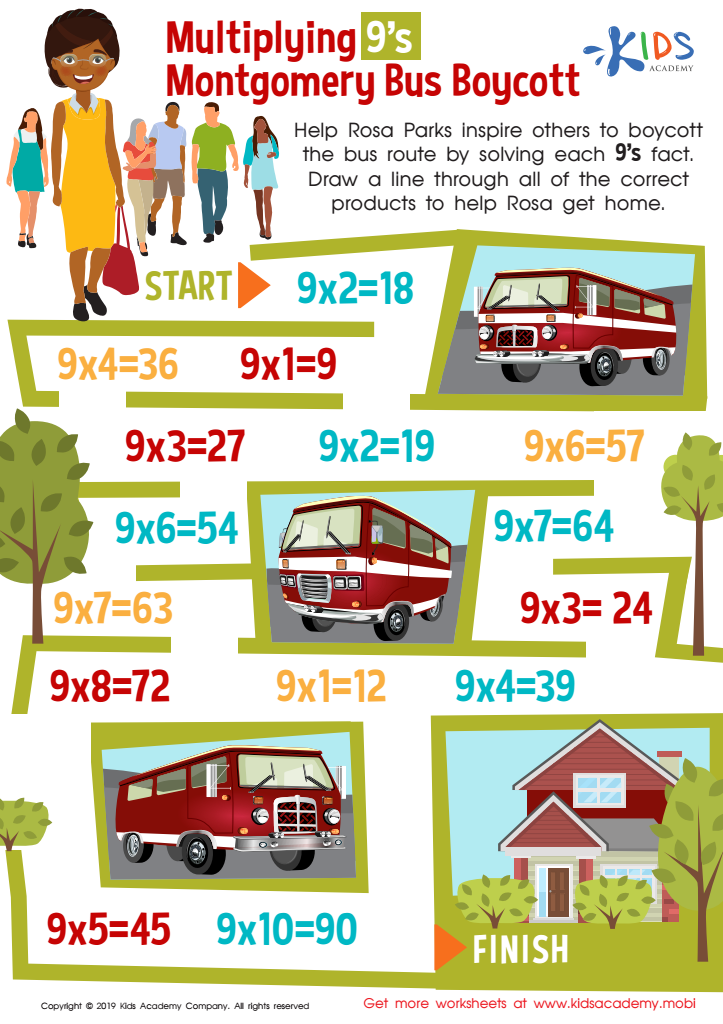
Multiplying 9’s Montgomery Bus Boycott Worksheet






Understanding patterns in social studies for children ages 7-8 is crucial for several reasons. First, recognizing patterns helps young students to make sense of the world around them. Children at this age are naturally curious and start to observe and question the regularities they see in natural and human-made systems. Identifying patterns in how communities are structured, how traditions are passed down, and how historical events unfold gives them a clearer understanding of society and their place within it.
Second, learning about patterns fosters critical thinking skills. When children discern trends and repetitions in history and culture, they begin to think more analytically. This analytical thinking isn't just useful for social studies but spills over into other subjects like math, science, and reading comprehension.
Third, grasping these concepts helps children develop empathy and appreciation for diverse cultures and practices. By seeing patterns in how different communities respond to similar challenges (like migration, trade, or conflict), children gain a better appreciation for different ways of life. This social awareness can lead to more respectful and thoughtful global citizens, which is an important goal in today’s interconnected world.
Overall, focusing on patterns in social studies not only enriches children's historical and cultural knowledge but also equips them with vital cognitive and social skills.








