
Fine Motor Skills Cursive Writing Worksheets for Ages 7-8
9 filtered results
Difficulty Level
Grade
Age
-
From - To
Subject
Activity
Standards
Enhance your child’s fine motor skills with our engaging cursive writing worksheets designed specifically for ages 7-8. These worksheets provide a fun and interactive way for kids to practice their handwriting while developing essential fine motor abilities. Our carefully crafted activities focus on letter formation, slant consistency, and spacing, promoting confidence in cursive writing. Ideal for both classroom and at-home learning, these worksheets will help improve grip strength and coordination. Encourage creativity and self-expression in your child as they delve into cursive writing, all while honing the skills necessary for fluent handwriting. Download our free worksheets today and watch your child flourish!
Favorites
With answer key
Interactive
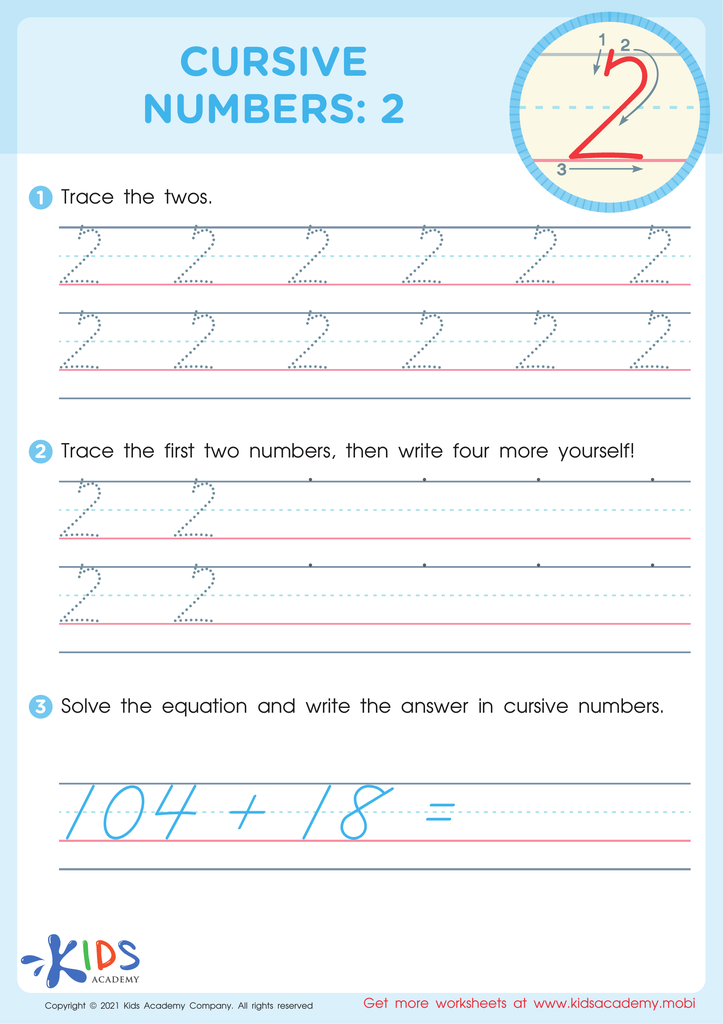
Cursive Numbers: 2 Worksheet
Mastering maths goes beyond basic counting and arithmetic. These tracing worksheets will help your kids practice their cursive numbers. The dotted lines are easy to follow and your kids can trace the number 2 over and over. Soon they'll be able to write it on their own. At the end of the sheet, there's a simple math equation - have your child write the answer in cursive.
Cursive Numbers: 2 Worksheet
Worksheet
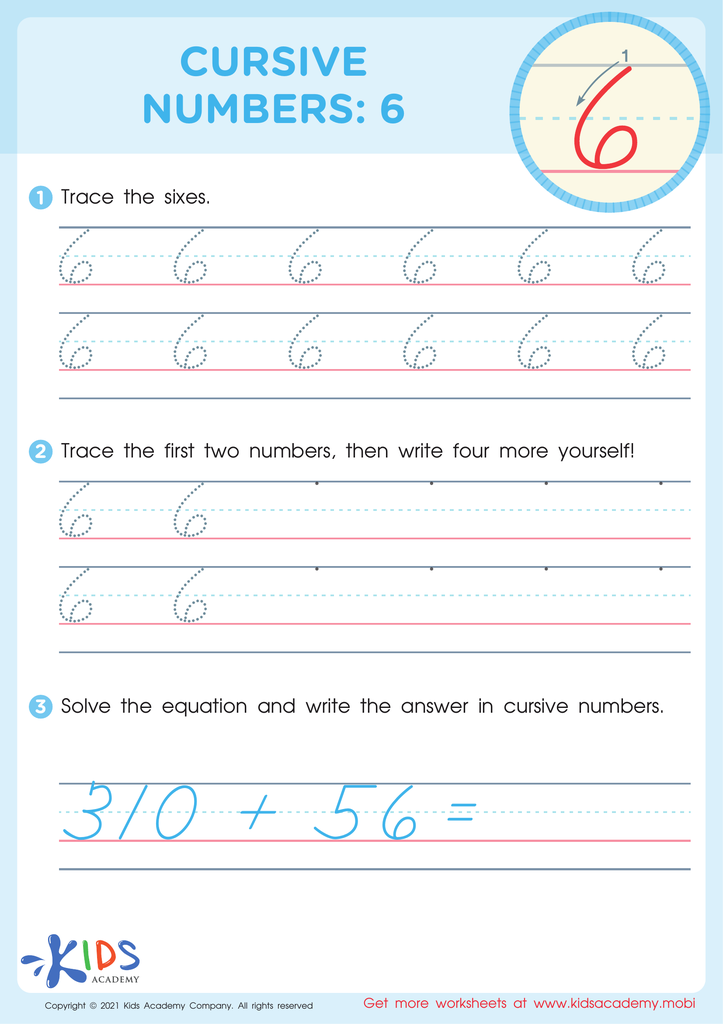
Cursive Numbers: 6 Worksheet
Help your children practice counting and writing numbers with cursive number worksheets. They'll learn to write the number six with dotted lines to guide them and space to practice writing it on their own. They can also solve a simple equation and write the answer in cursive. Let them practice as much as they need - it'll help them succeed.
Cursive Numbers: 6 Worksheet
Worksheet
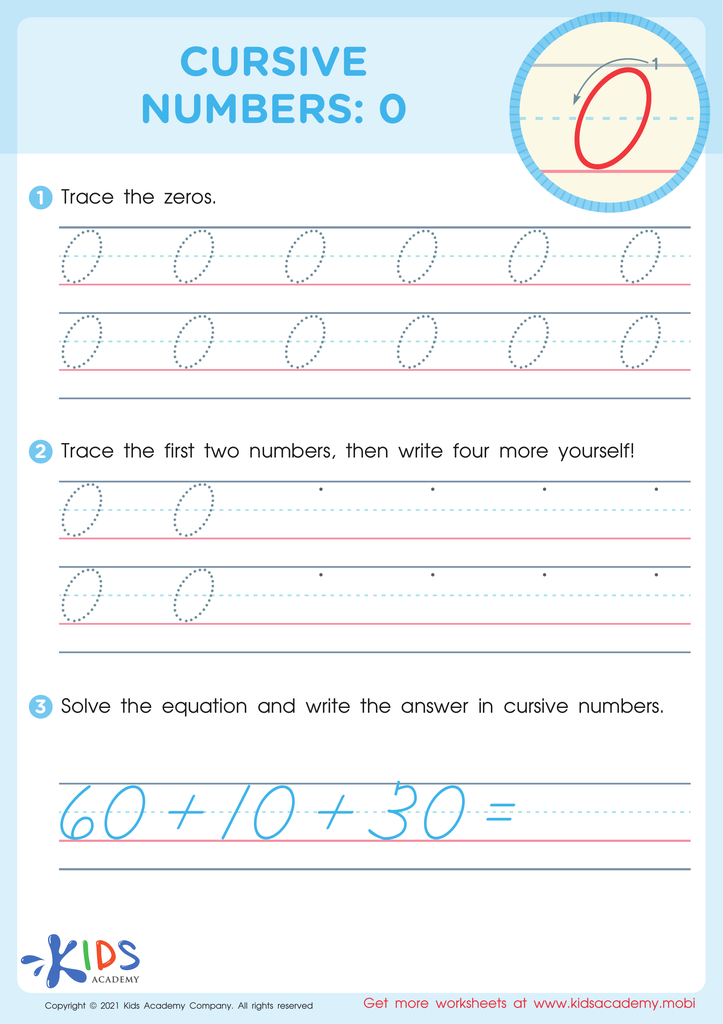
Cursive Numbers: 0 Worksheet
Practice makes perfect when teaching your kid handwriting. Spend time teaching them the alphabet and cursive numbers. These math worksheets have traceable numbers for them to practice with, then they can write 0 on their own. There's also a bonus math problem to solve and write the answer in cursive.
Cursive Numbers: 0 Worksheet
Worksheet
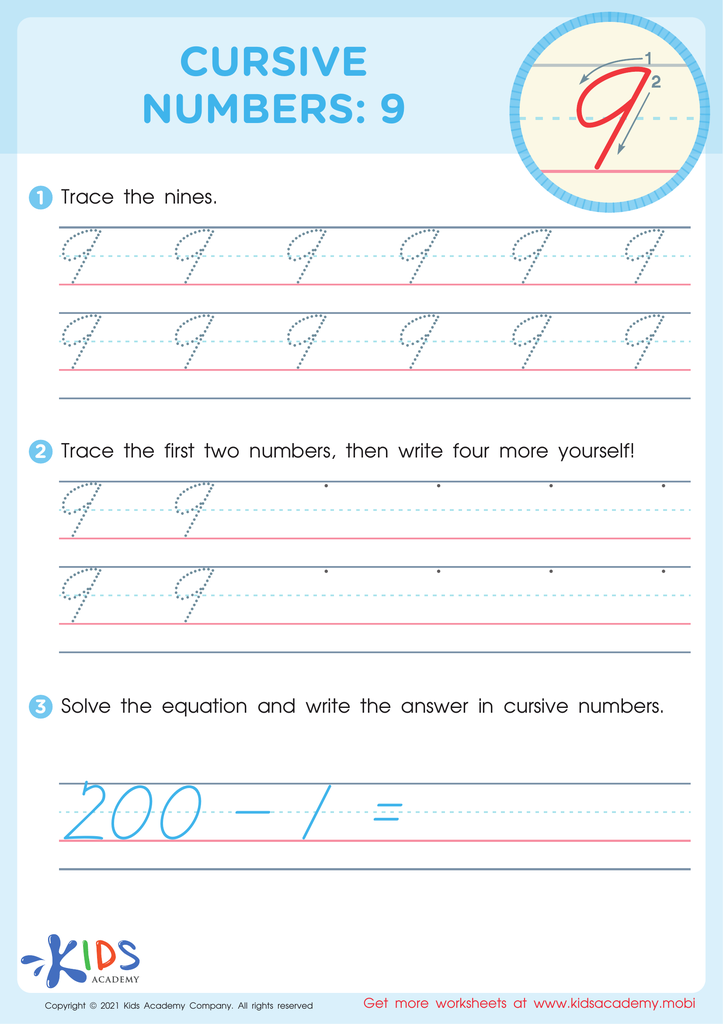
Cursive Numbers: 9 Worksheet
Identifying and writing numbers is key to math success. These worksheets help kids learn to trace the number 9 and build confidence. As they practice, they'll soon be able to write it on their own. Plus, they get to apply their learning and solve a simple equation at the bottom of the page. Writing the answer in cursive is a great way to help them remember!
Cursive Numbers: 9 Worksheet
Worksheet
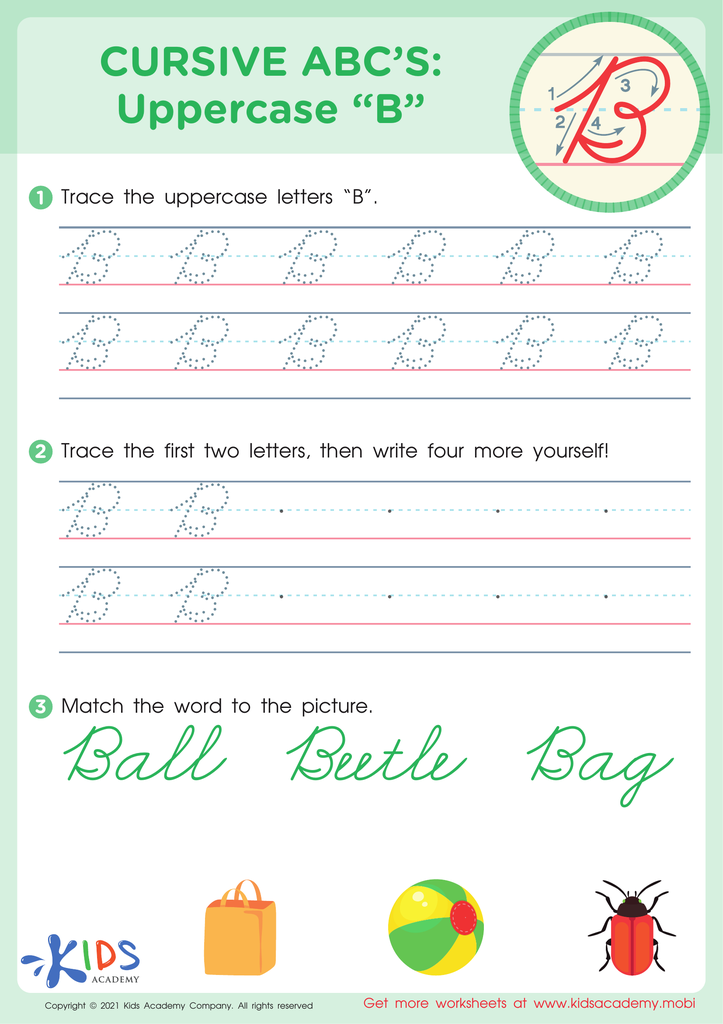
Cursive ABCs: Uppercase B
Help your kids learn the alphabet: have them identify, give examples and sound out letters, then use tracing worksheets to perfect cursive uppercase writing. Show them how to trace the letter ‘B’, then watch them write it on their own. This will give them the skills needed for further writing!
Cursive ABCs: Uppercase B
Worksheet
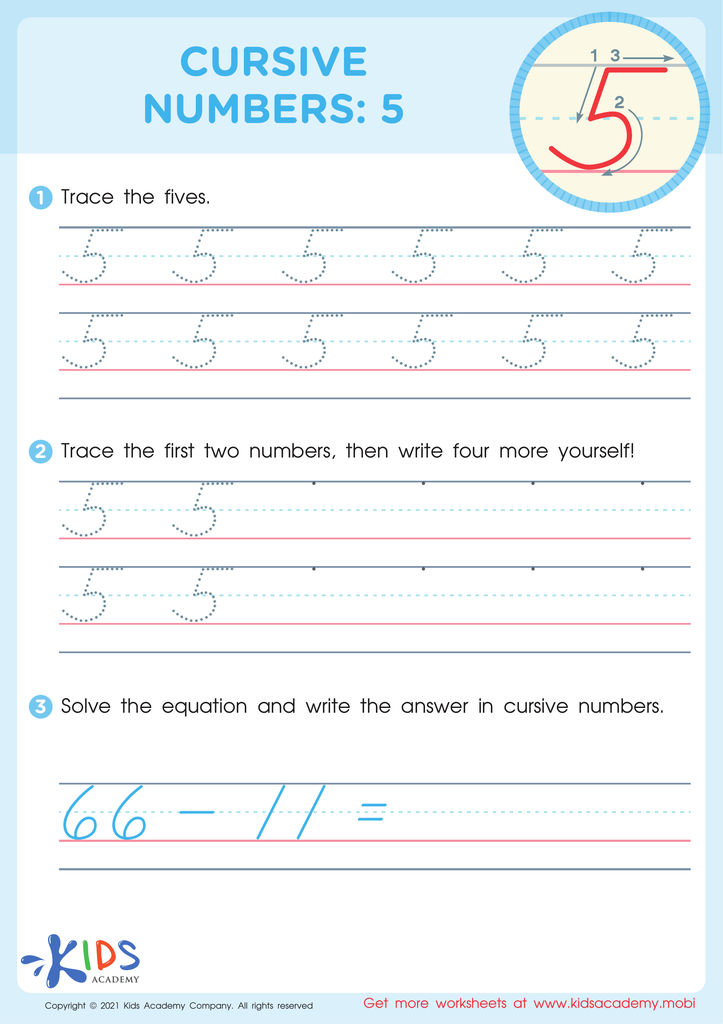
Cursive Numbers: 5 Worksheet
Ask your child to count to 10 to refresh their number knowledge. This worksheet is great for mastering the cursive number 5. Exercises are simple and keep them engaged, with the help of the dotted lines to trace. Constant practice will have your child writing the 5 like a pro!
Cursive Numbers: 5 Worksheet
Worksheet
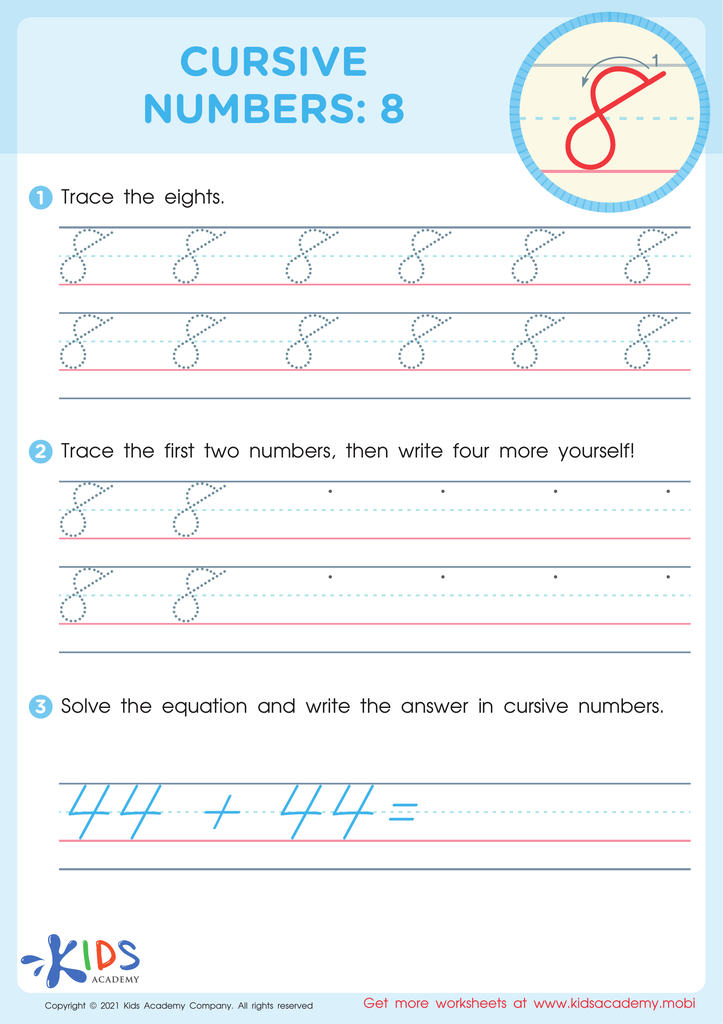
Cursive Numbers: 8 Worksheet
This tracing sheet helps your kids learn to write the cursive number 8. It's perfect for those struggling with handwriting. They'll trace the number 8, write it on their own, then solve a simple math equation and answer in cursive. Counting and writing numbers correctly is essential, so help your kids master it with this worksheet!
Cursive Numbers: 8 Worksheet
Worksheet
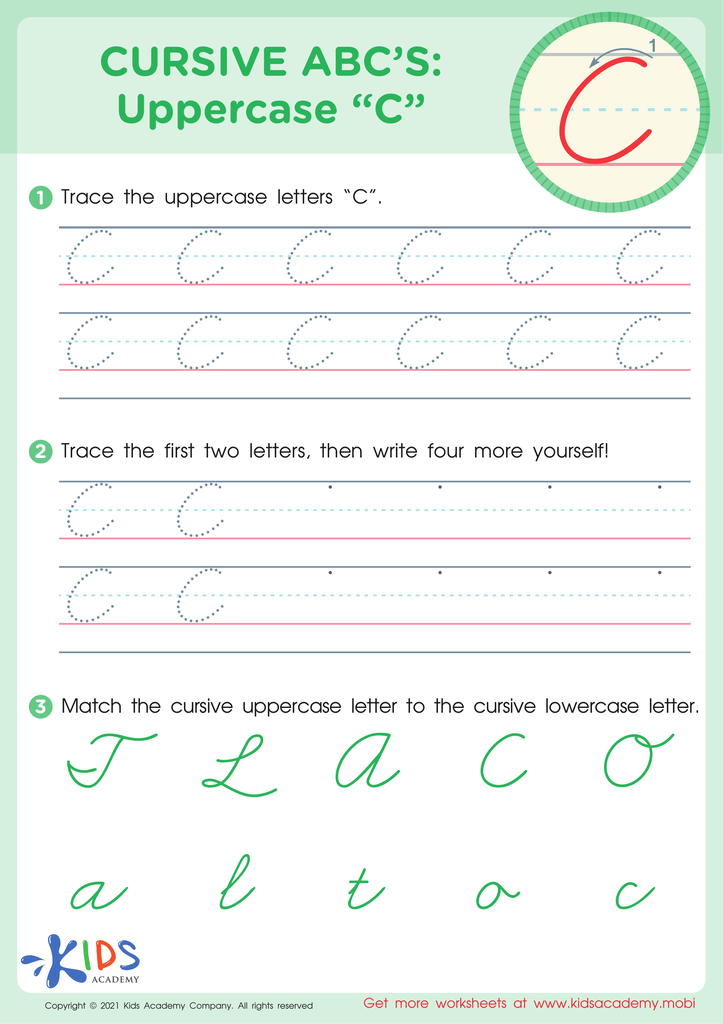
Cursive ABCs: Uppercase C
These worksheets are perfect for those wanting to improve their handwriting or learn letter recognition. The tracing exercises help younger students sharpen their writing skills and teach how to write the 'C' in cursive. First, they trace the given examples and then practice writing it solo. A letter recognition test is at the bottom of the page to check progress.
Cursive ABCs: Uppercase C
Worksheet
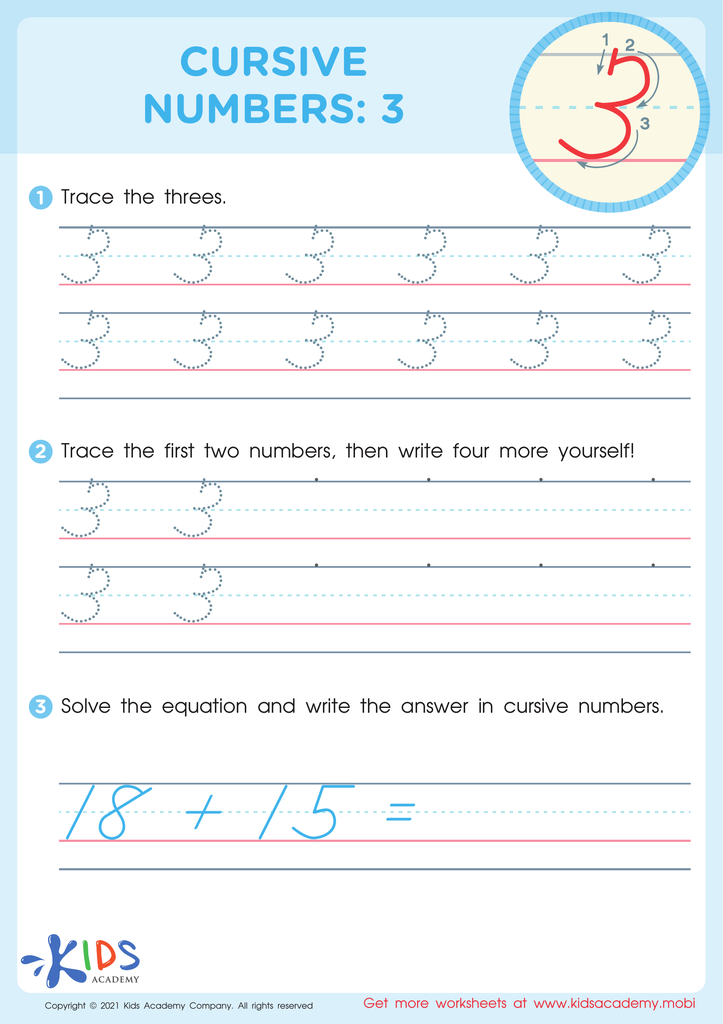
Cursive Numbers: 3 Worksheet
Help your child learn to write with this exercise. They'll practice tracing lines to write the cursive 3 until they gain the skill and confidence to do it on their own. Then have them write the 3 and solve the math equation on the worksheet. You can watch and encourage them as they progress. Writing is a key lesson, so offer your help to ensure they succeed.
Cursive Numbers: 3 Worksheet
Worksheet
Join Kids Academy for Free
Who is primarily going to use this learning content?



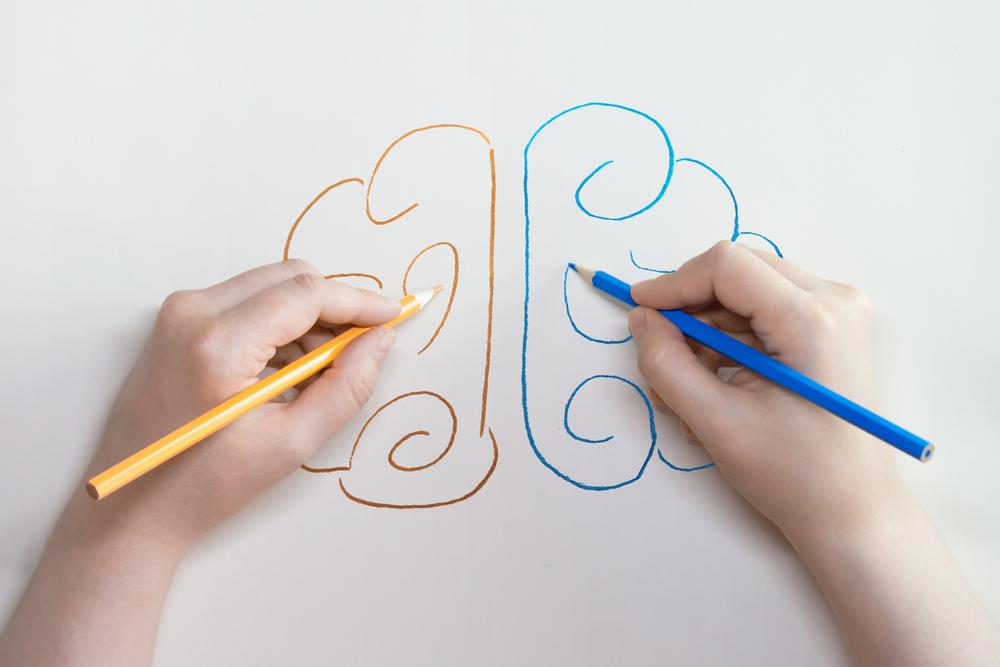



Fine motor skills and cursive writing play a crucial role in the development of children aged 7-8. During this period, children refine their hand-eye coordination and dexterity, essential for various academic and everyday tasks. Cursive writing, in particular, enhances these skills by encouraging fluid movement of the hand, promoting better control of writing instruments.
Teachers and parents should care about the cultivation of these skills for several reasons. First, cursive writing can improve reading abilities; the connected letters help children recognize words more easily, which aids in fluency. Additionally, fine motor skills are foundational for other classroom activities, such as drawing, cutting, and manipulating small objects, which significantly influence overall academic performance.
Cursive writing also fosters self-expression. As children progress, they develop a personal writing style, providing them a sense of ownership over their work. Furthermore, there is evidence to suggest that handwriting, as opposed to typing, stimulates brain development and enhances memory retention.
In an increasingly digital world, maintaining these traditional skills contributes to a well-rounded education. By prioritizing fine motor skills and cursive writing, parents and teachers can equip children with essential tools for both academic success and life.








