Boost your child's grammatical skills with our "Understanding Suffixes Grammar Worksheets for Ages 7-8". Perfectly crafted for young learners, these engaging worksheets focus on enhancing understanding of suffixes, a key aspect of language development. Our activities help children recognize and apply common suffixes, improving their ability to form words and perceive meaning. With a variety of fun exercises and colorful illustrations, kids will enjoy the learning process while building a strong grammatical foundation. Ideal for classroom support or additional home practice, these worksheets make learning suffixes an exciting and productive adventure. Download now and start the educational fun!

Check out this FREE Trial Lesson on Grammar for age 7-8!

Identify Common Suffixes

Favorites
With answer key
Interactive
  • 7-8
  • Understanding suffixes
  • Grammar
Reading: Follow the Suffixes Worksheet

Reading: Follow the Suffixes Worksheet

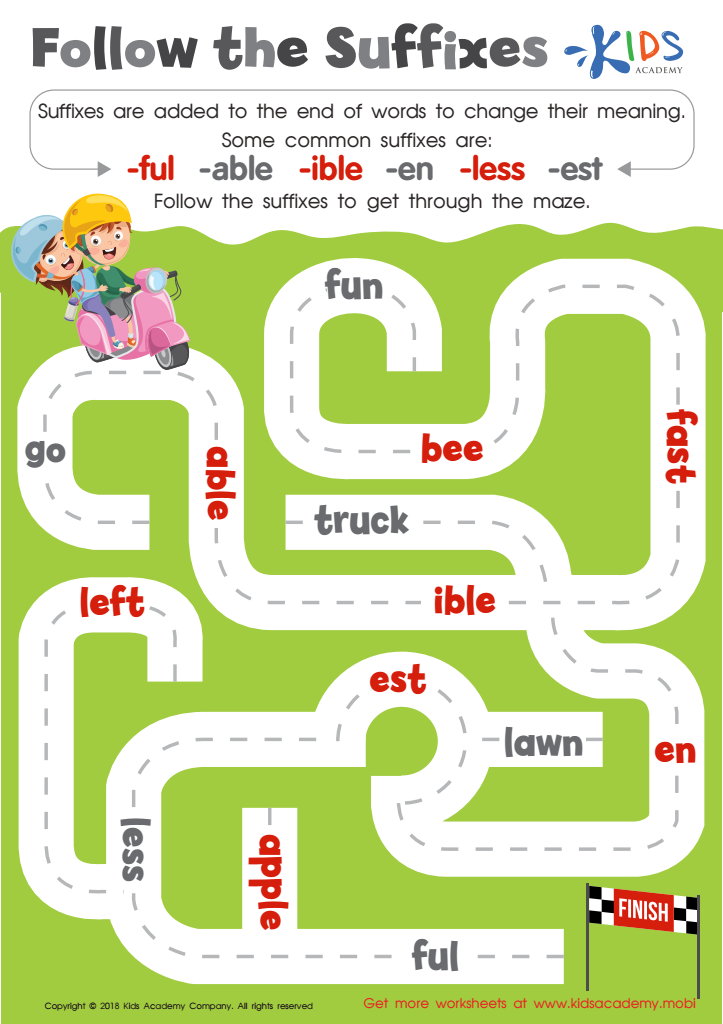
Students use suffixes to find the right way through a maze in this enjoyable activity! Understanding suffixes helps kids decode and comprehend more words, leading to better reading fluency. A great addition to your reading classes, keep this printable close!
Reading: Follow the Suffixes Worksheet
Worksheet
Reading: Words With Suffixes Worksheet

Reading: Words With Suffixes Worksheet

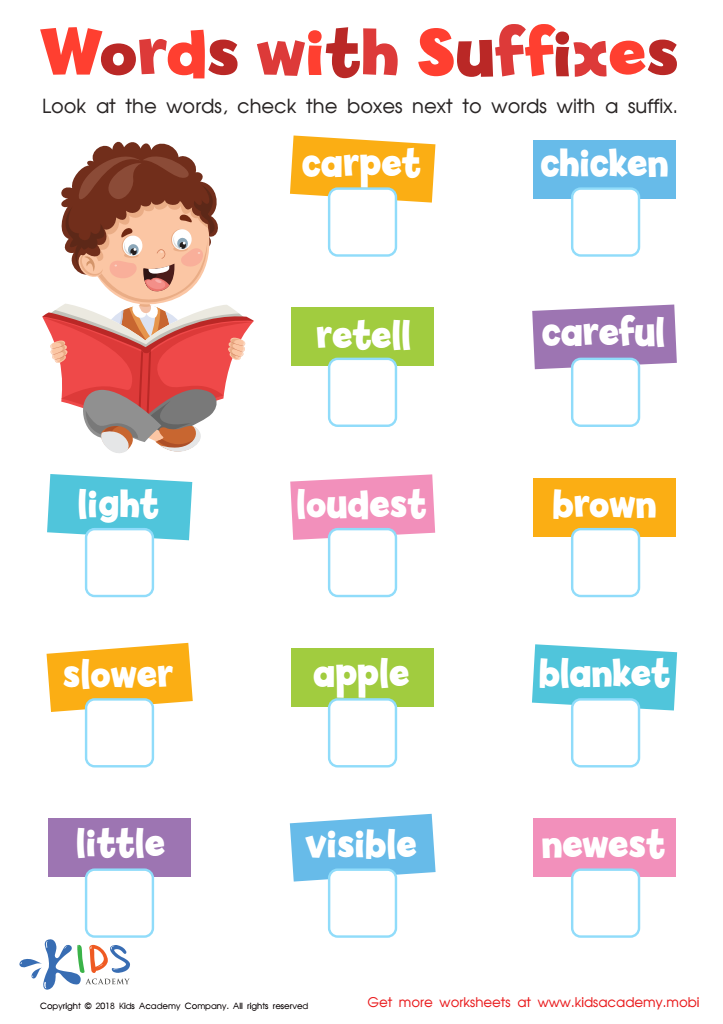
Help your students understand suffixes and build reading fluency with this worksheet. Have them read each word, then choose the ones with a suffix. Practicing this will lead to better comprehension and more confident reading. Save it for future use in language and reading classes.
Reading: Words With Suffixes Worksheet
Worksheet
Prefix pre and suffix ful worksheet

Prefix pre– and Suffix ful– Worksheet
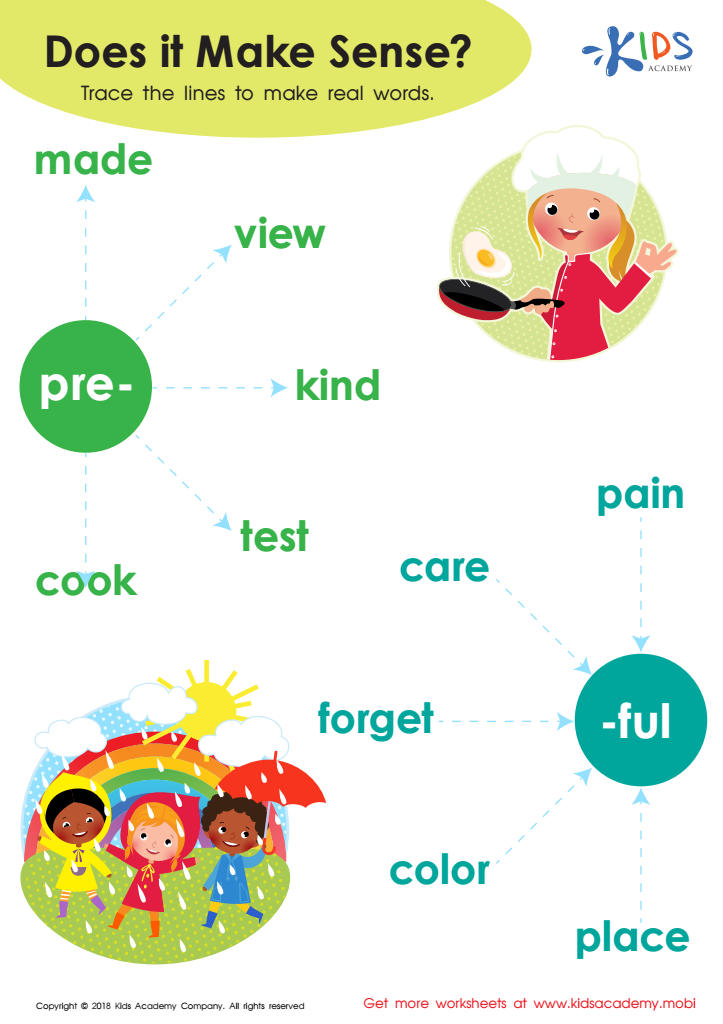
Can't preforget something! This worksheet helps kids learn how to attach prefixes and suffixes to root words, forming new words that make sense. With this activity, they'll evaluate how the root words change when adding the prefix or suffix.
Prefix pre– and Suffix ful– Worksheet
Worksheet
Suffix -Able Worksheet

Suffix -Able Worksheet

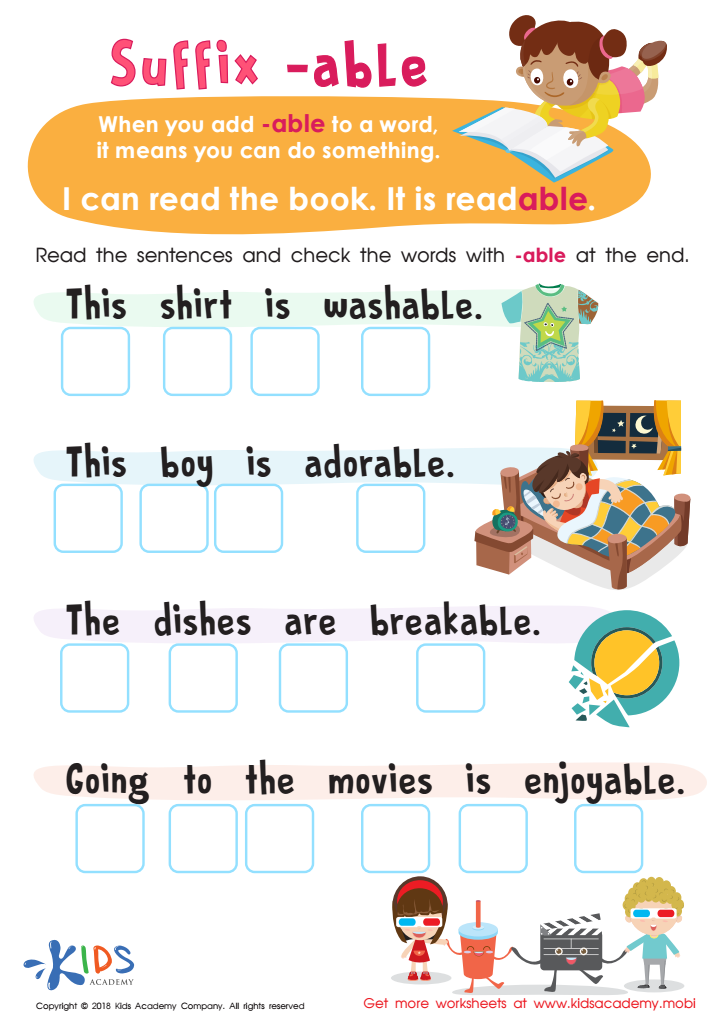
Suffix -able means you can do something. Example: readable - means you can read it. Give kids examples then check this worksheet. Read sentences with kids, looking for words with -able at the end.
Suffix -Able Worksheet
Worksheet
Prefix and suffix worksheet for grade 3

Prefix and Suffix Worksheet For Grade 3
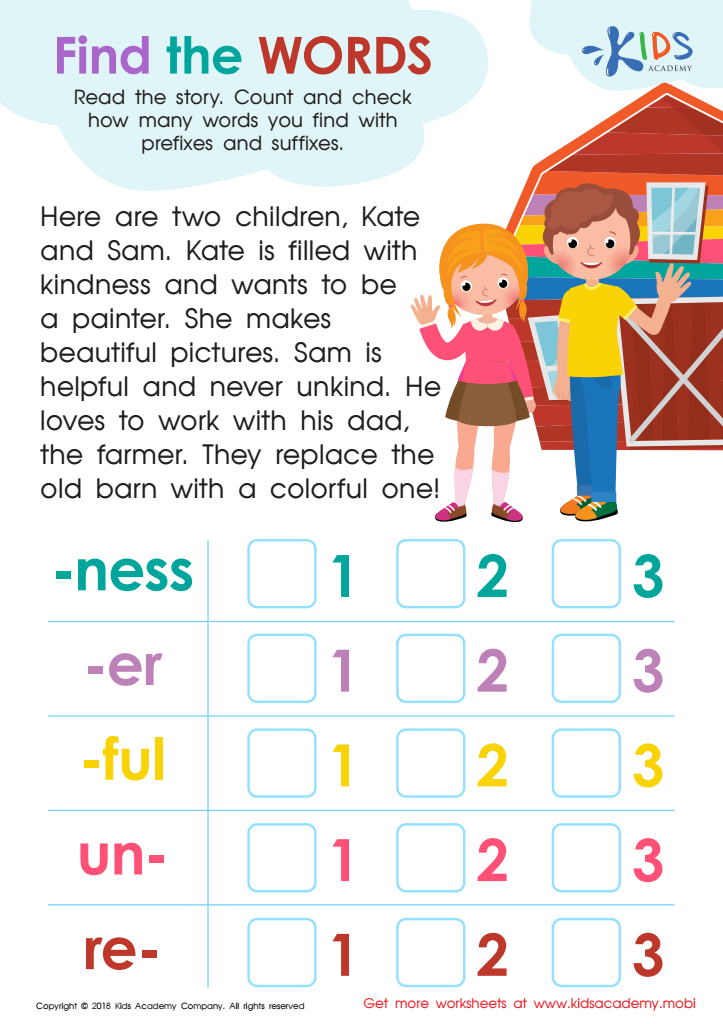
Read the story about Sam and Kate and help your grade 3 child tally all the words with prefixes and suffixes. Check their work by counting the words and ticking the appropriate boxes. This entertaining worksheet will help develop their reading and counting skills! (80 words)
Prefix and Suffix Worksheet For Grade 3
Worksheet
The Suffix -Ly Worksheet

The Suffix -Ly Worksheet

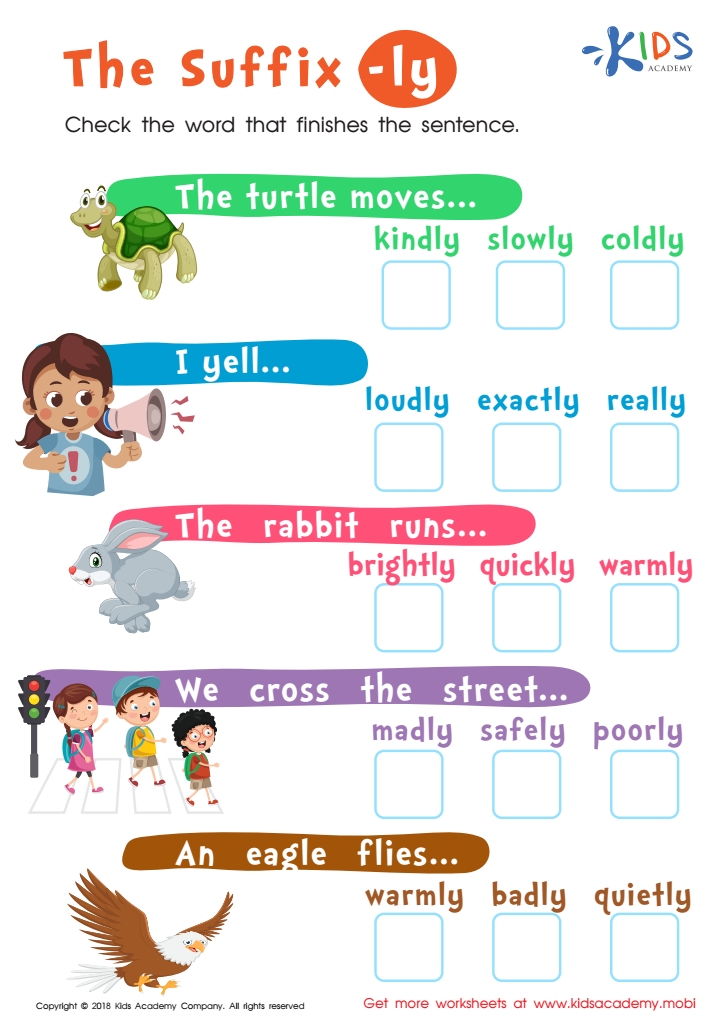
Suffixes change the meaning of words: the -ly suffix usually describes how an action is done (e.g. slowly, quickly, loudly). Help your child understand this and then check out the fun worksheet. Ask them to identify the animals and people in the pictures, then read the sentences out loud and have them check the ones that finish the sentence.
The Suffix -Ly Worksheet
Worksheet
Suffix er printable worksheet

Suffix –er Printable Worksheet

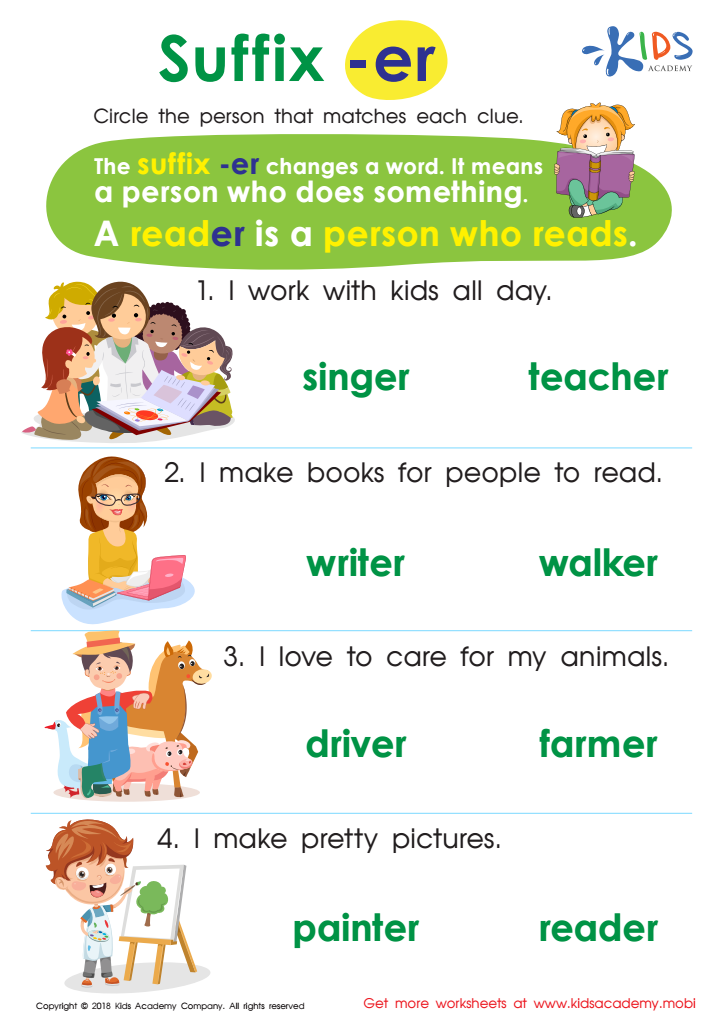
Kids learn how powerful suffixes are with this printable worksheet. Read the sentence clues and select the word it describes. Discuss how the suffix alters the original word. Amazing how two letters can transform meanings!
Suffix –er Printable Worksheet

Worksheet


Understanding suffixes is crucial for children aged 7-8 as it enhances their linguistic capabilities and lays a foundation for higher-level literacy skills. Suffixes are word endings that can change the meaning or grammatical function of a root word. When children know suffixes, they boost their reading, writing, and spelling skills.

Firstly, comprehension of suffixes aids word recognition. By identifying common suffixes like "-ed", "-ing", and "-ly", children become adept at decoding words. This leads to improved reading fluency, which is essential for academic success.

Secondly, knowledge of suffixes helps in expanding vocabulary. When children learn that adding "-ful" to "joy" creates a new word "joyful," they realize how words can transform to convey different meanings. This enriches their expressive abilities both in writing and speaking.

Moreover, understanding suffixes is vital for their grasp of grammar. It allows them to recognize tense ("played" vs. "playing"), plurality ("cats" vs. "cat"), and comparatives ("happier" vs. "happy"). This leads to more accurate and varied sentence construction.

In essence, parents and teachers should emphasize suffixes because they build foundational literacy that aids in all areas of communication, fostering more competent and confident young learners.