Verb identification Grammar Worksheets for Ages 7-8
5 filtered results
-
From - To
Welcome to our Verb Identification Grammar Worksheets designed specifically for children ages 7-8! These engaging printable resources are perfect for helping young learners recognize and understand verbs in various contexts. Each worksheet includes fun activities that challenge students to identify verbs in sentences, distinguish between action and linking verbs, and enhance their overall writing skills. By incorporating colorful illustrations and interactive exercises, we make learning grammar enjoyable and effective. These worksheets not only align with educational standards but also foster a love for language. Empower your child with the tools they need to enhance their grammar skills and boost their confidence in writing!
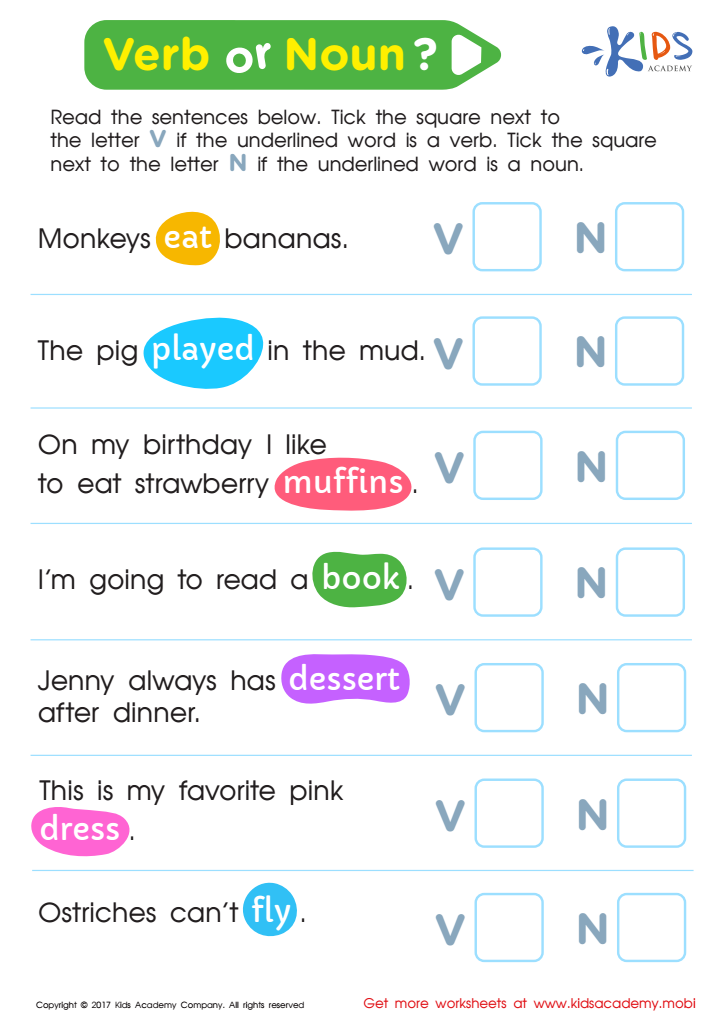
Verb or Noun Worksheet
 Assign to My Students
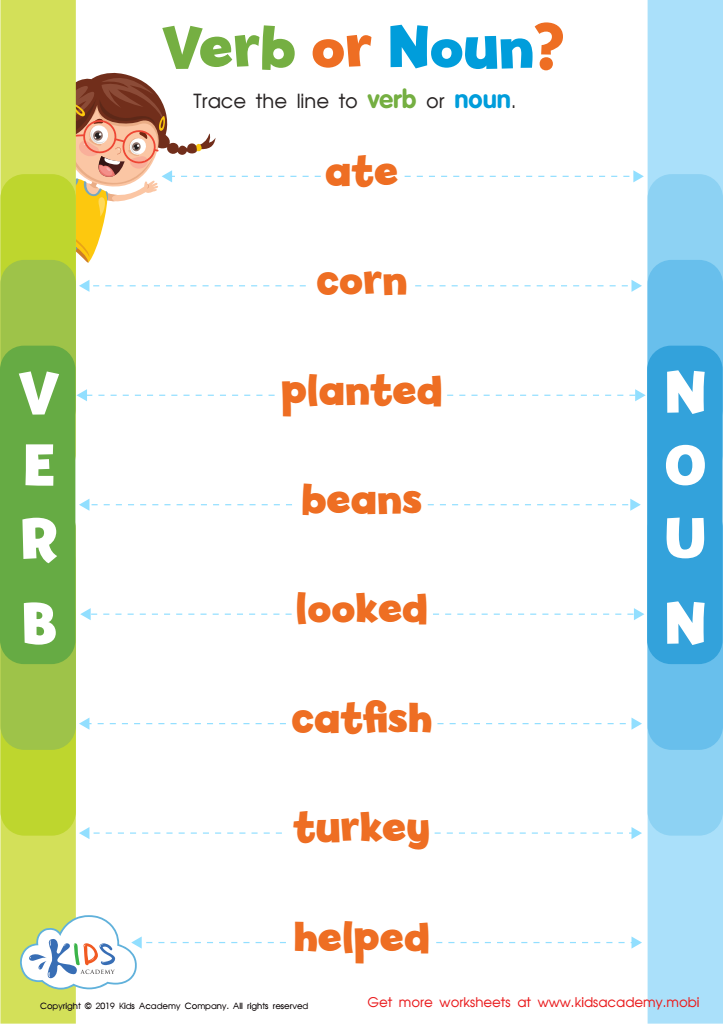
Verb or Noun Worksheet
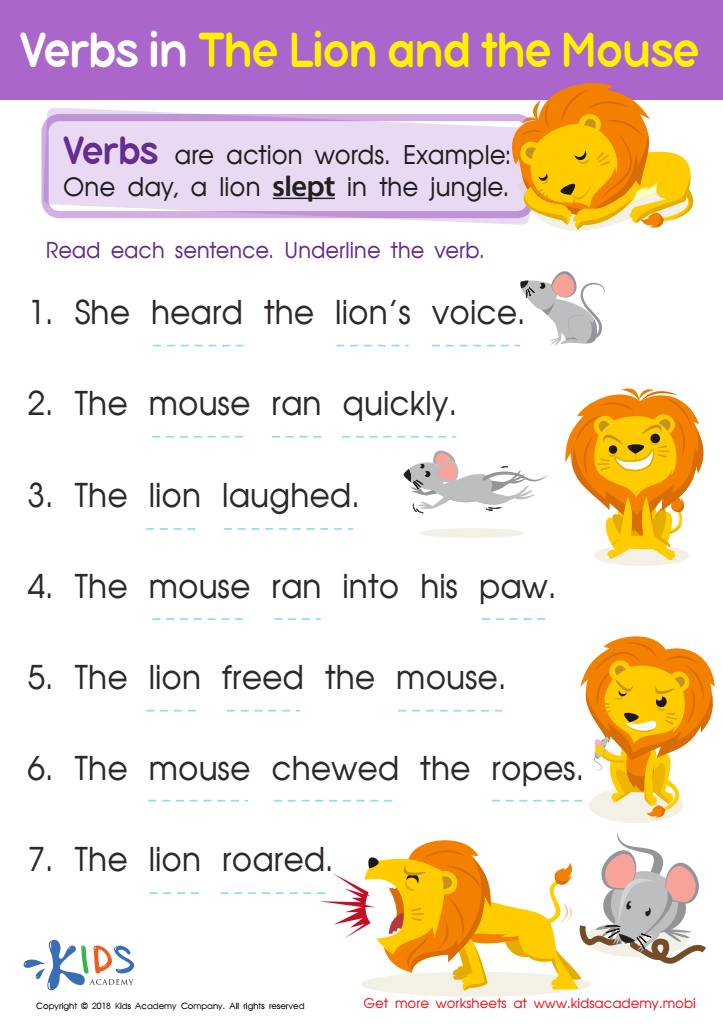
Verbs in The Lion and the Mouse Worksheet
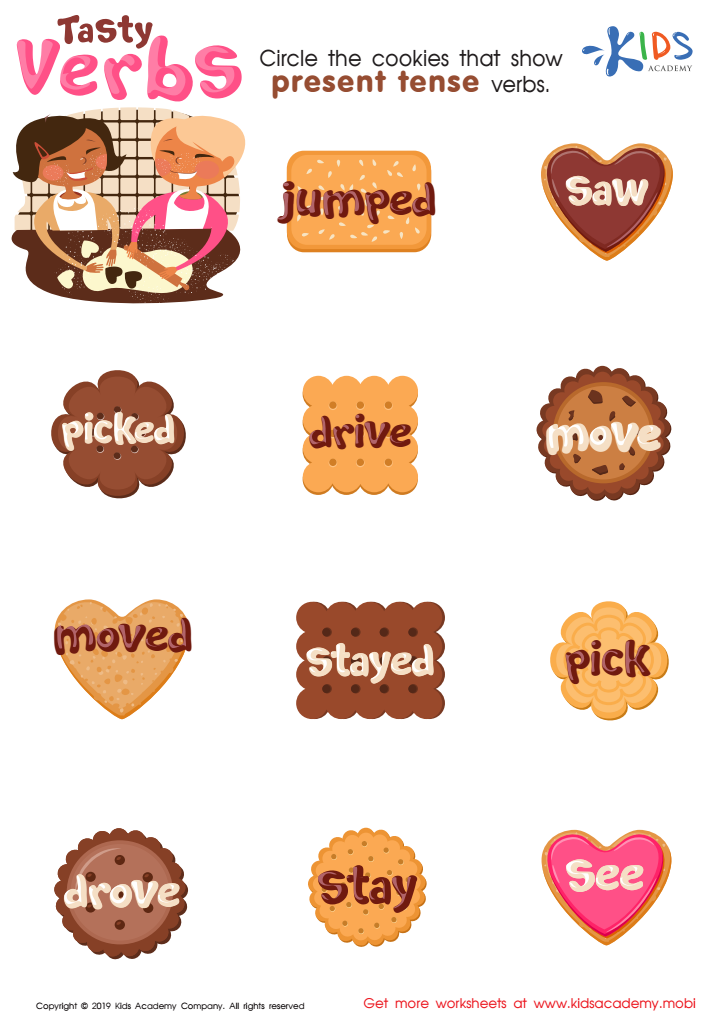
Tasty Verbs Worksheet
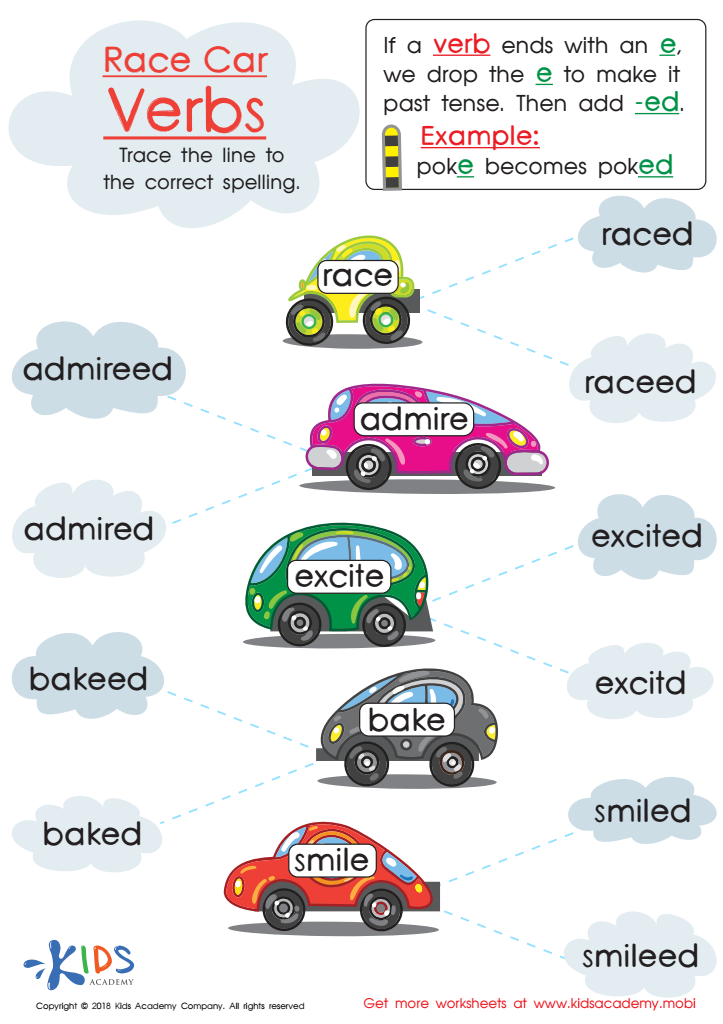
Race Car Verbs Worksheet







Verb identification is a crucial aspect of grammar that significantly impacts the language development of children aged 7-8. At this developmental stage, children are refining their reading and writing skills, making a strong grasp of verbs essential. Verbs are action words that convey what the subject is doing, making sentences complete and meaningful. When children learn to identify verbs, it enhances their comprehension of sentence structure, enabling them to construct clear, coherent sentences.
Furthermore, understanding verbs lays the groundwork for more complex grammatical concepts, including tense, voice, and verb agreement. Mastery in identifying and using verbs boosts their writing fluency, allowing them to express their thoughts and ideas more effectively. It also aids in reading comprehension; when children understand the verbs in a text, they can better infer meanings and predict outcomes in stories.
Parents and teachers should prioritize verb identification in their teaching strategies, as it supports overall literacy development, aids in academic performance, and fosters confidence in communication. By focusing on verbs, adults can help nurture a child’s ability to express themselves articulate and engage with language more deeply, setting the stage for lifelong learning and effective communication skills.








