Pronoun identification Writing Worksheets for Ages 7-8
3 filtered results
-
From - To
Boost your child’s writing skills with our engaging Pronoun Identification Writing Worksheets for ages 7-8! Specifically crafted for young learners, these activity sheets provide a fun and interactive way to master the use of pronouns. Each worksheet presents clear, simple exercises designed to help students identify, understand, and correctly use pronouns in various contexts. Strengthen grammar understanding and build confidence in writing through practice tailored for 2nd and 3rd graders. Unlock your child's potential and make learning enjoyable with Kids Academy's expertly designed worksheets that turn pronoun practice into an exciting learning adventure!
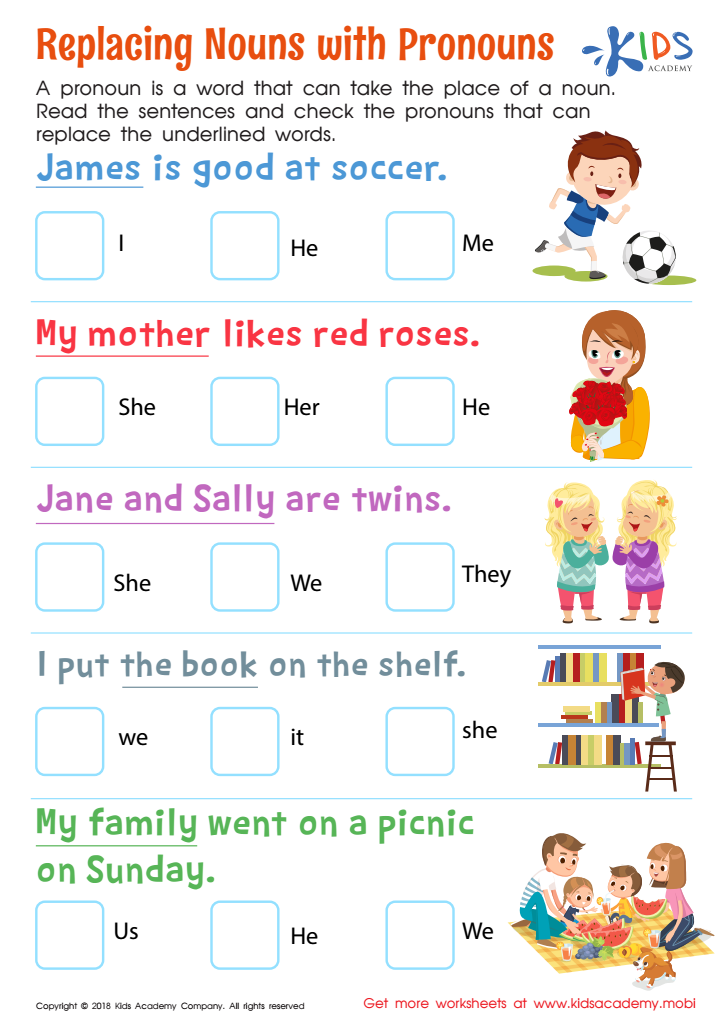
Replacing Nouns with Pronouns Worksheet
 Assign to My Students
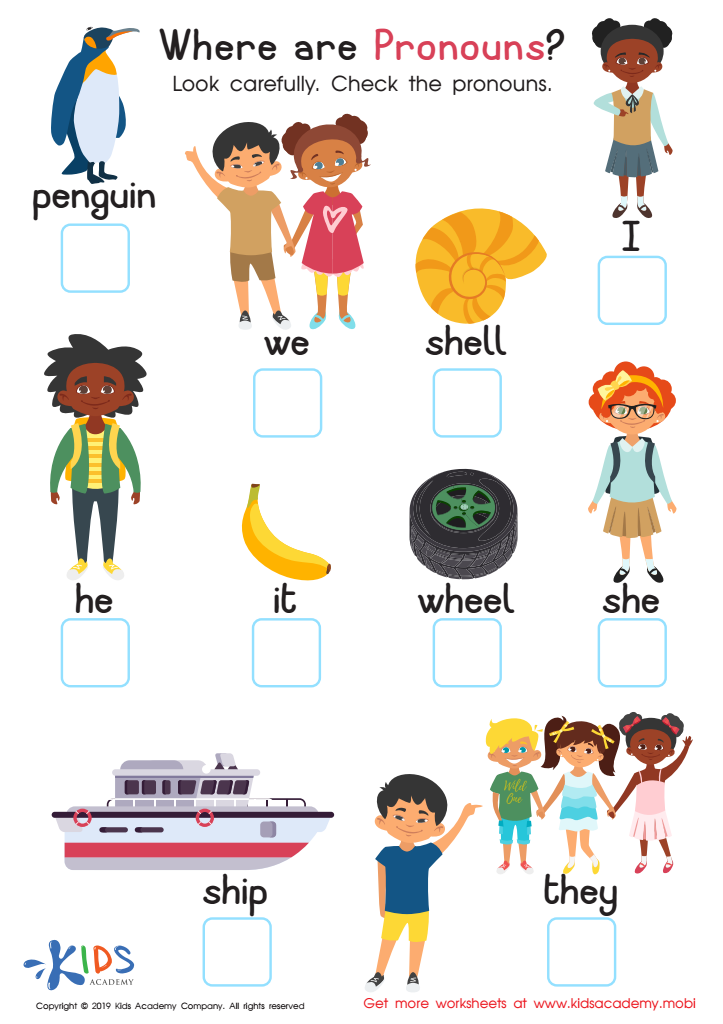
Where Are Pronouns? Worksheet
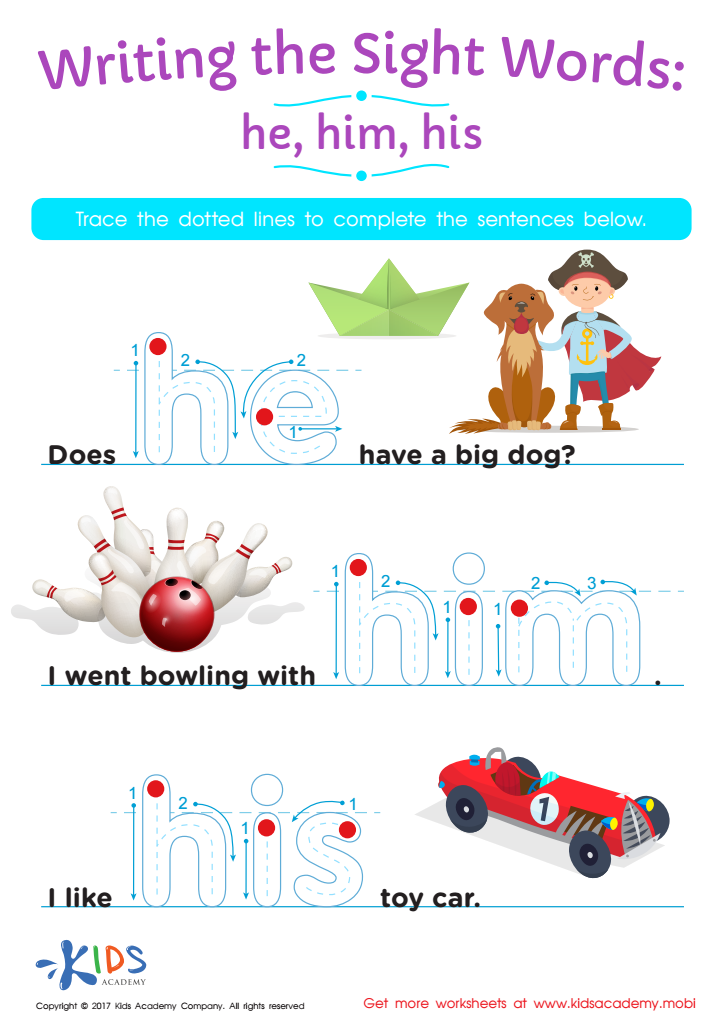
He, Him, His Printable Sight Words Worksheet







At ages 7-8, children are refining their language and writing skills, foundational for effective communication. Understanding pronouns is essential for several reasons, making it crucial for parents and teachers to prioritize pronoun identification in their instruction.
Firstly, pronouns enhance clarity and conciseness. By replacing nouns with appropriate pronouns, children create smoother, less repetitive sentences, fostering more engaging and coherent writing. For example, transforming "Sarah went to Sarah's friend's house" to "Sarah went to her friend's house" demonstrates effective pronoun use.
Secondly, mastering pronouns boosts reading comprehension. When children recognize and correctly interpret pronouns, they follow narratives more easily and grasp relationships between characters and events. This skill translates into stronger overall understanding, promoting a more enjoyable and enriching reading experience.
Furthermore, identifying and using pronouns correctly cultivates social awareness. Recognizing pronouns helps children appreciate differences in language and gender, encouraging respect and inclusivity. Understanding that everyone has a pronoun preference fosters empathy and respectful interactions, crucial for their social development.
Lastly, proficiency in pronoun use aligns with curriculum standards, ensuring academic readiness. By investing in pronoun identification, parents and teachers equip children with vital language tools, setting a solid foundation for future learning and success. This balanced focus on language development benefits interpersonal communication, academic growth, and respectful social interaction.








