
Understanding prefixes Writing Worksheets for Ages 7-8
6 filtered results
Difficulty Level
Grade
Age
-
From - To
Subject
Activity
Standards
Discover our engaging "Understanding Prefixes" writing worksheets designed specifically for children aged 7-8! These interactive resources help young learners explore the meaning of common prefixes, boosting their vocabulary and enhancing their reading and writing skills. Each worksheet promotes fun activities that challenge students to identify, write, and apply prefixes in various contexts. By mastering prefixes, children will gain confidence in their language abilities, helping them become more effective communicators. Ideal for classroom use or homeschooling, these worksheets cater to various learning styles, ensuring every child develops a strong foundation in language arts. Empower your child’s writing journey today!
Favorites
With answer key
Interactive
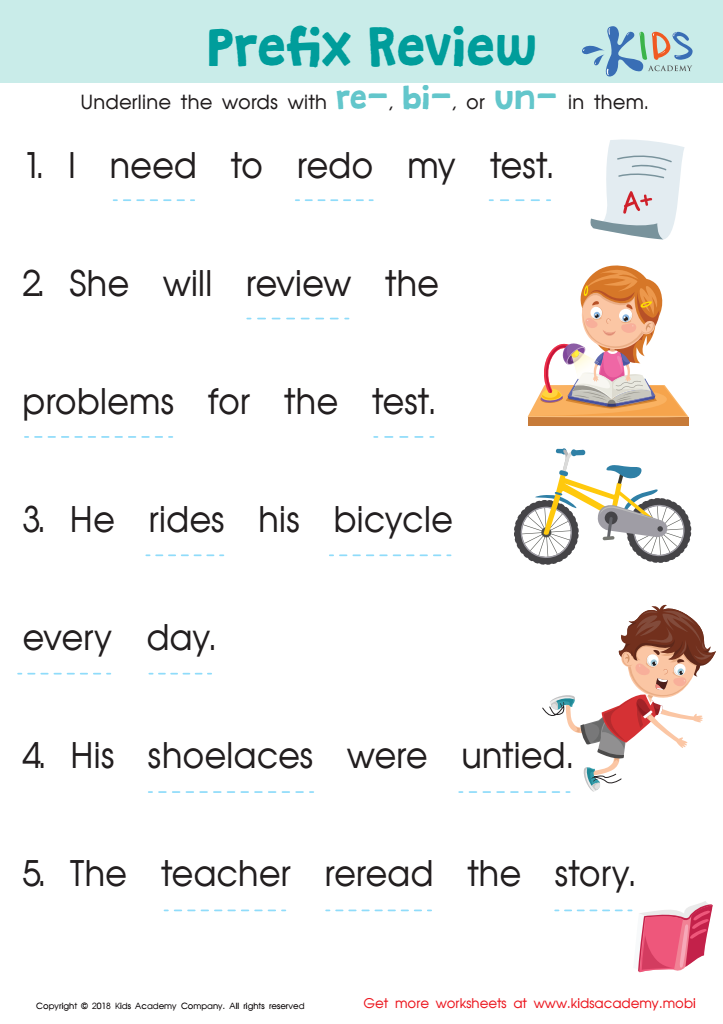
Prefix Review Worksheet
Learning prefixes is key for effective communication. Help your child master re-, bi-, and un- with a Kids Academy worksheet. Ask them to go through each sentence, underlining words with one of the prefixes. This will help them appreciate how prefixes alter the meaning of a root word.
 Assign to My Students
Prefix Review Worksheet
Worksheet
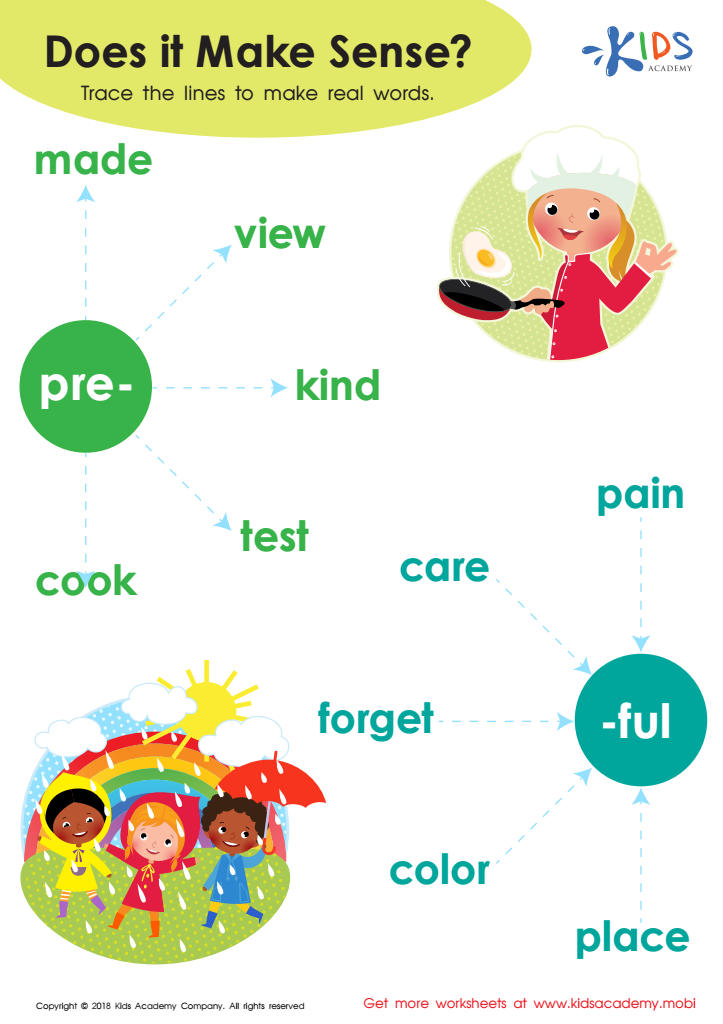
Prefix pre– and Suffix ful– Worksheet
Can't preforget something! This worksheet helps kids learn how to attach prefixes and suffixes to root words, forming new words that make sense. With this activity, they'll evaluate how the root words change when adding the prefix or suffix.
Prefix pre– and Suffix ful– Worksheet
Worksheet
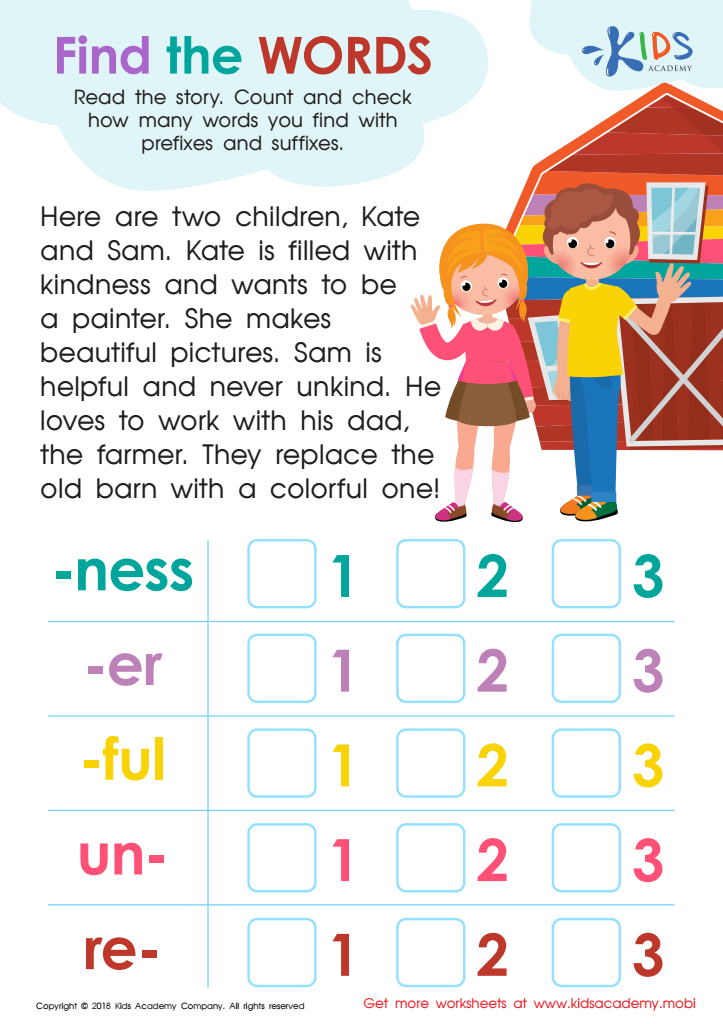
Prefix and Suffix Worksheet For Grade 3
Read the story about Sam and Kate and help your grade 3 child tally all the words with prefixes and suffixes. Check their work by counting the words and ticking the appropriate boxes. This entertaining worksheet will help develop their reading and counting skills! (80 words)
Prefix and Suffix Worksheet For Grade 3
Worksheet
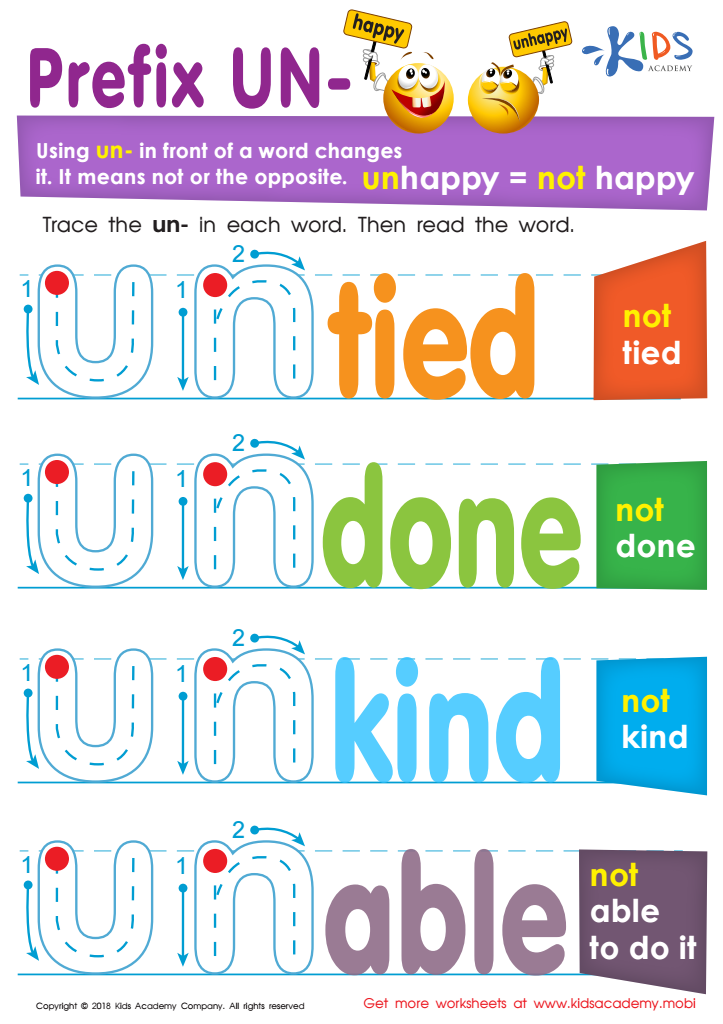
Prefix Un- Worksheet
Help your child understand the concept of adding "un-" to the front of words by giving examples such as "unhappy" (not happy) and "unserious" (not serious). Guide them in tracing the "un-" in each word and read it aloud together.
Prefix Un- Worksheet
Worksheet
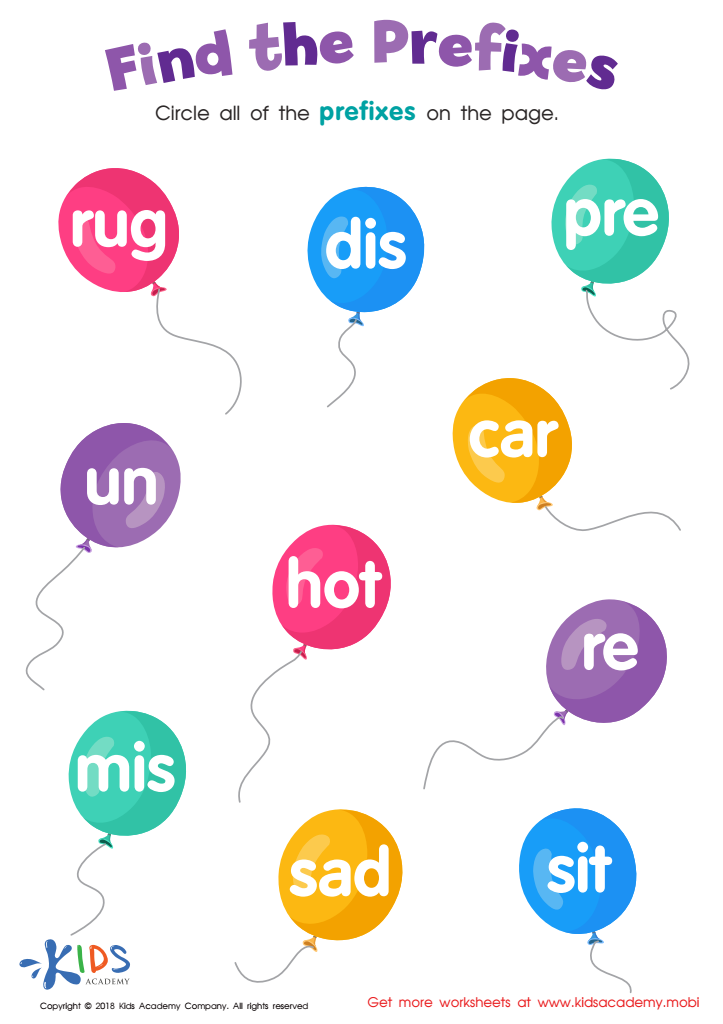
Reading: Find the Prefixes Worksheet
Students are asked to circle all prefixes on this worksheet and brainstorm a list of words that have them. It's a great tool for teaching vocabulary and helps students understand new and unfamiliar words by recognizing how prefixes change meaning.
Reading: Find the Prefixes Worksheet
Worksheet
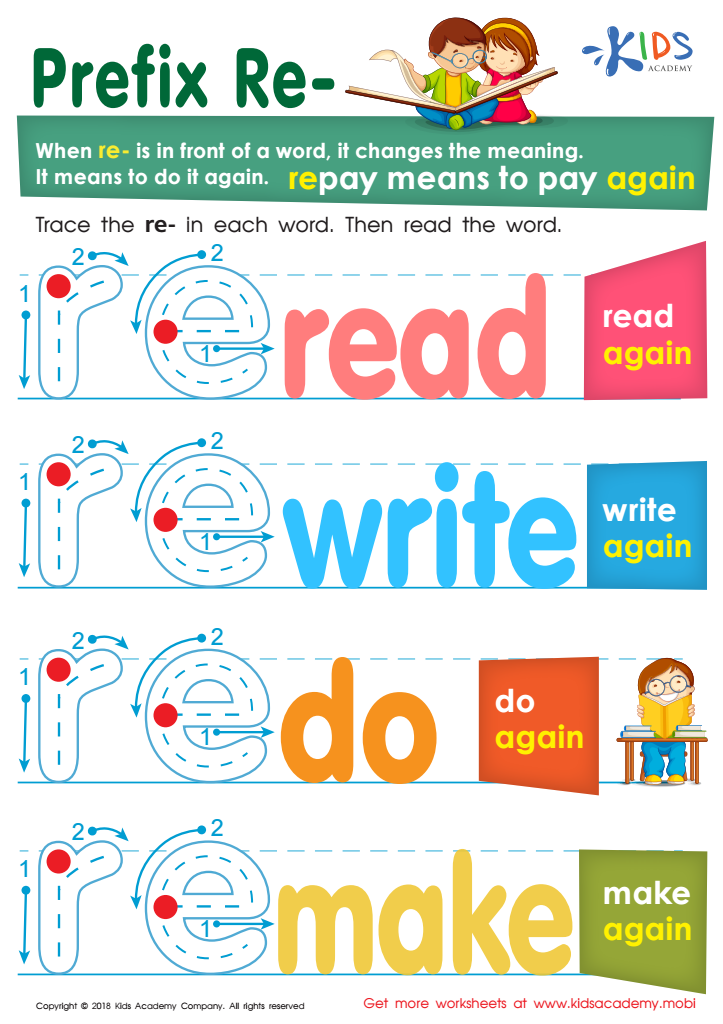
Prefix Re- Worksheet
Give your child examples of the re- prefix such as repay, restart, et cetera. Hold their hand and trace the re- in each word. Read the word aloud together and explain how it changes the meaning to 'to do again'. This worksheet will help your child see the re- prefix in action.
Prefix Re- Worksheet
Worksheet
Join Kids Academy for Free
Who is primarily going to use this learning content?




.jpg)



Understanding prefixes is crucial for children aged 7-8 as it lays the foundation for vocabulary development and reading comprehension. Prefixes, which are letters added to the beginning of words, change their meanings and can enhance a child's language skills. When parents or teachers focus on prefixes, they equip children with the tools to decode complex words, making reading more accessible and enjoyable.
For instance, knowing that the prefix "un-" means "not" helps students immediately grasp the meaning of words like "happy" and "unhappy." This skill encourages confidence, fosters critical thinking, and enhances their ability to comprehend texts independently. A strong grasp of prefixes also allows for more effective writing, as children learn to use them to create new words and provide clearer descriptions in their written work.
Moreover, engaging with prefixes cultivates a sense of curiosity about language. It enables children to make connections between words and understand their meanings in various contexts. In a society that values effective communication, developing these skills at an early age will serve students well as they progress through their education and beyond. By prioritizing prefix understanding, parents and teachers can significantly contribute to a child’s linguistic competence and academic success.








