Beginning Sounds Worksheets for Ages 7-9
3 filtered results
-
From - To
Enhance your child's phonics skills with our engaging Beginning Sounds Worksheets designed for ages 7-9. These interactive worksheets help young learners identify and practice the sound each letter makes at the beginning of words. Through fun activities, such as matching letters to images and filling in the blanks, children build their vocabulary and sharpen their comprehension. Perfect for homeschooling or classroom use, our worksheets provide a structured approach to learning, ensuring a solid understanding of phonetic principles. Download these printable resources today and watch your child develop confidence and expertise in reading and language, setting the foundation for future academic success!
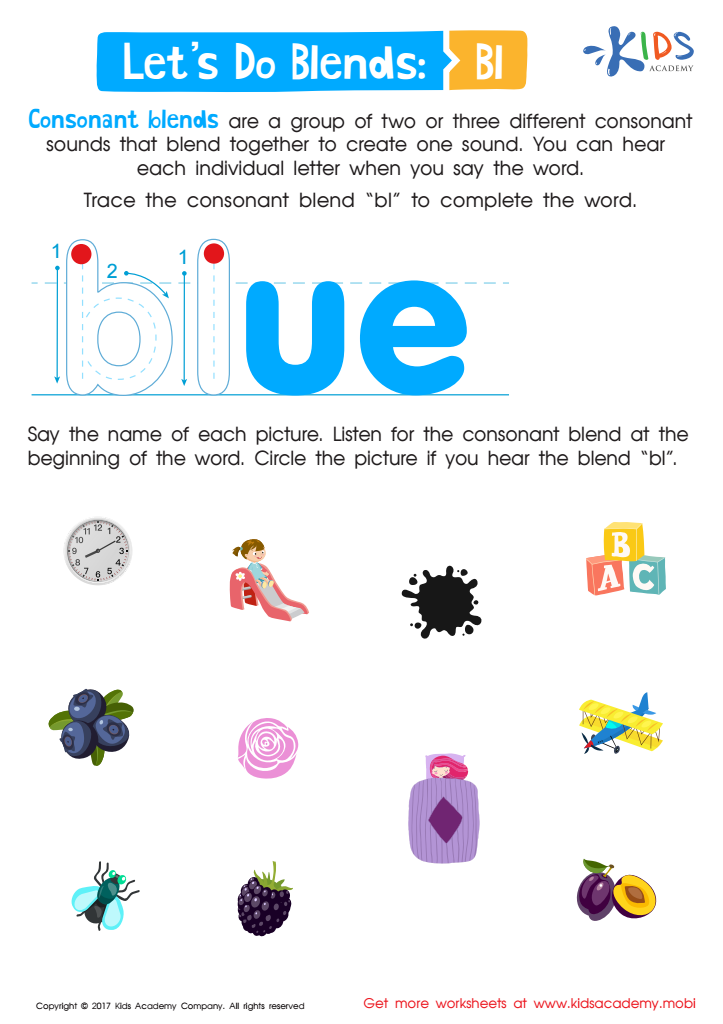
Beginning Blends: "Bl" Words Worksheet
 Assign to My Students
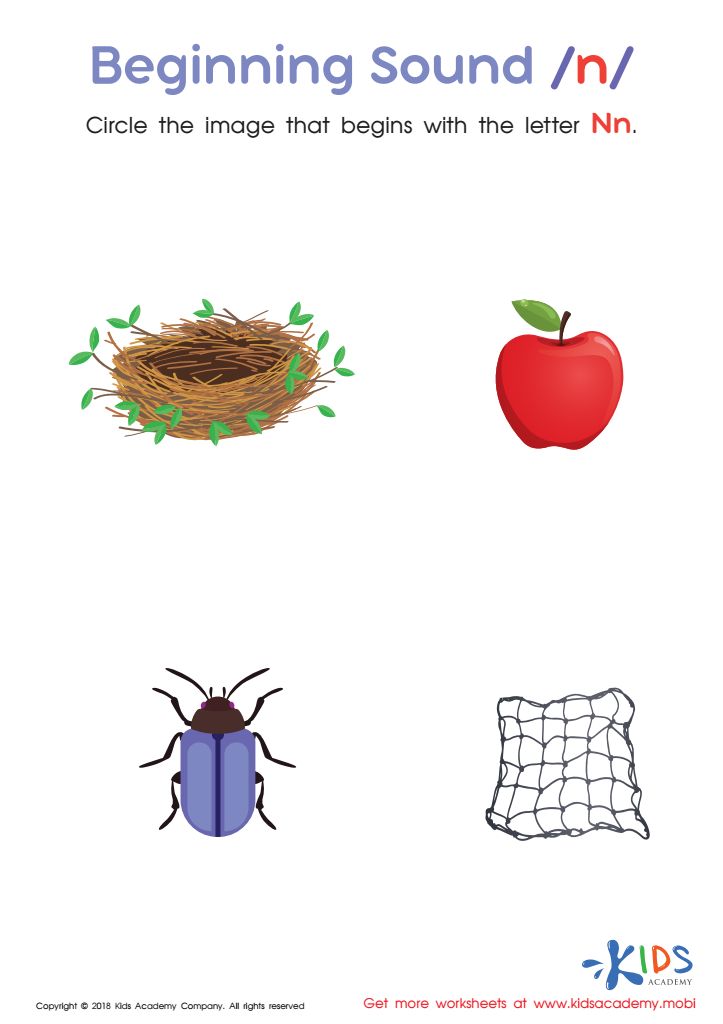
Beginning Sound «n» Worksheet
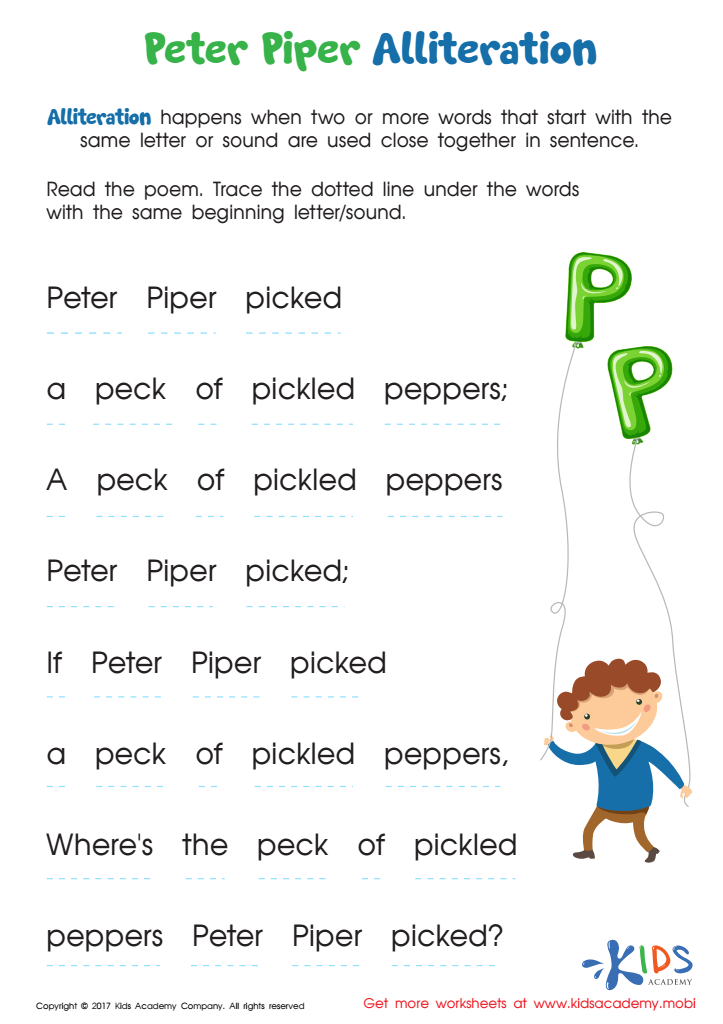
Peter Piper Alliteration Worksheet








Beginning sounds are crucial for children aged 7-9 as they form the foundation for reading and writing skills. Understanding and recognizing these sounds help children decode new words, leading to improved reading fluency and comprehension. At this age, students transition from learning to read to reading to learn; thus, mastering beginning sounds plays a critical role in their academic success.
Parents and teachers should prioritize beginning sounds because they foster phonemic awareness, which is the ability to hear, identify, and manipulate individual sounds in spoken words. This skill not only supports reading but also enhances spelling and writing abilities. For instance, when children can identify the first sounds in words, they gain confidence in their reading and spelling, making them more likely to engage with text.
Furthermore, activities focusing on beginning sounds encourage linguistic creativity and vocabulary expansion. Simple games and interactive activities involving these sounds make learning enjoyable and help build a strong foundation for future literacy skills. By nurturing these crucial skills, parents and teachers can significantly contribute to a child's academic growth and foster a lifelong love for reading and learning. Thus, focusing on beginning sounds lays the groundwork for overall literacy development in children.







