Discover our engaging Word Identification Alphabet Worksheets designed specifically for children aged 7-9! These thoughtfully crafted resources promote early literacy skills and help young learners master word recognition. Each worksheet includes fun activities that focus on alphabet letters, enhancing vocabulary and reinforcing phonetic understanding. Perfect for both classroom use and at-home learning, these worksheets make learning exciting and interactive. With a variety of exercises tailored to different learning styles, students will build confidence as they explore language and improve their reading skills. Boost your child’s education with our effective and enjoyable worksheets, designed to inspire a lifelong love for reading!

Check out this FREE Trial Lesson on Alphabet for age 7-9!

Identify Irregular Past Tense Verbs Standard

Favorites
With answer key
Interactive
  • 7-9
  • Word identification
  • Alphabet
Open Syllables Worksheet

Open Syllables Worksheet

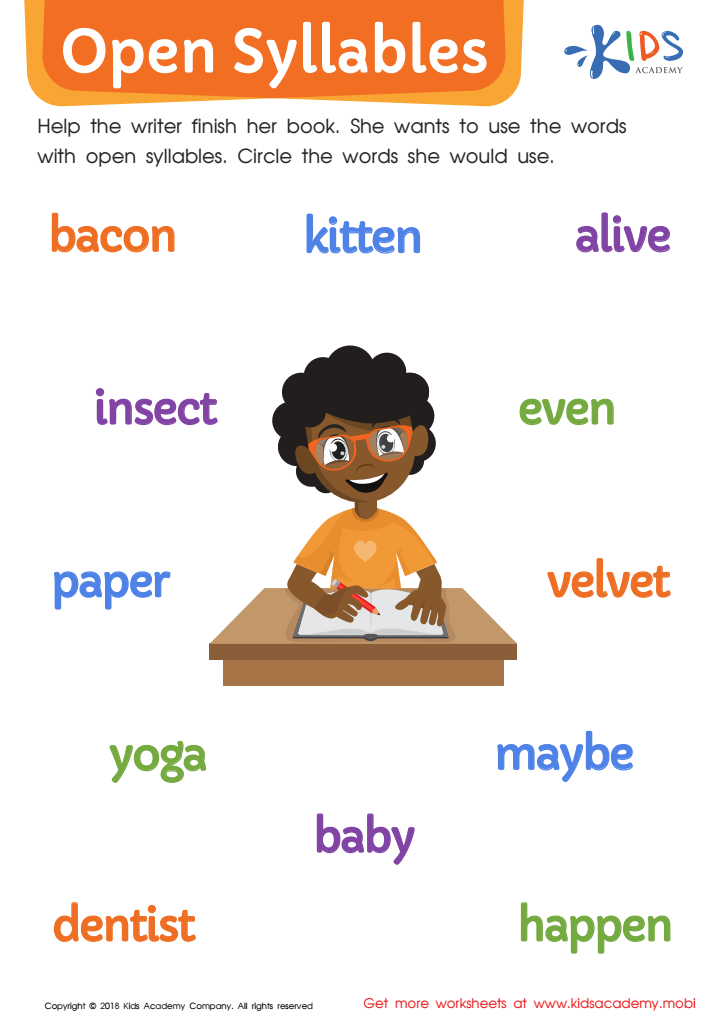
Before beginning this worksheet, make sure your child knows what open syllables are. If not, take time to teach them with examples. Then, help the writer finish her book by circling words with open syllables. She needs your child's help!
Open Syllables Worksheet
Worksheet
Phonics and Word Recognition: Assessment 1 Worksheet

Phonics and Word Recognition: Assessment 1 Worksheet

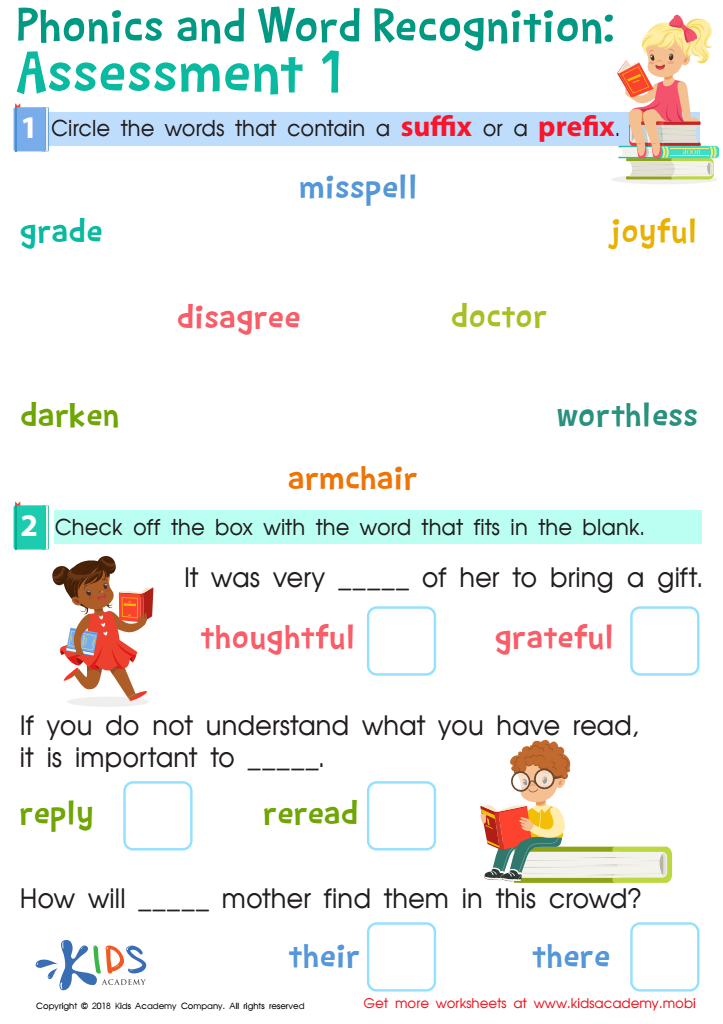
Explain prefixes (words added to start of another word to give it a new meaning) and suffixes (added to end of word to change its meaning) to your kids with examples like 'unhappy' (prefix) and 'forgetful' (suffix). Now, help your child complete this worksheet, including circling words and checking boxes.
Phonics and Word Recognition: Assessment 1 Worksheet
Worksheet
Reading: Prefix Search Worksheet

Reading: Prefix Search Worksheet

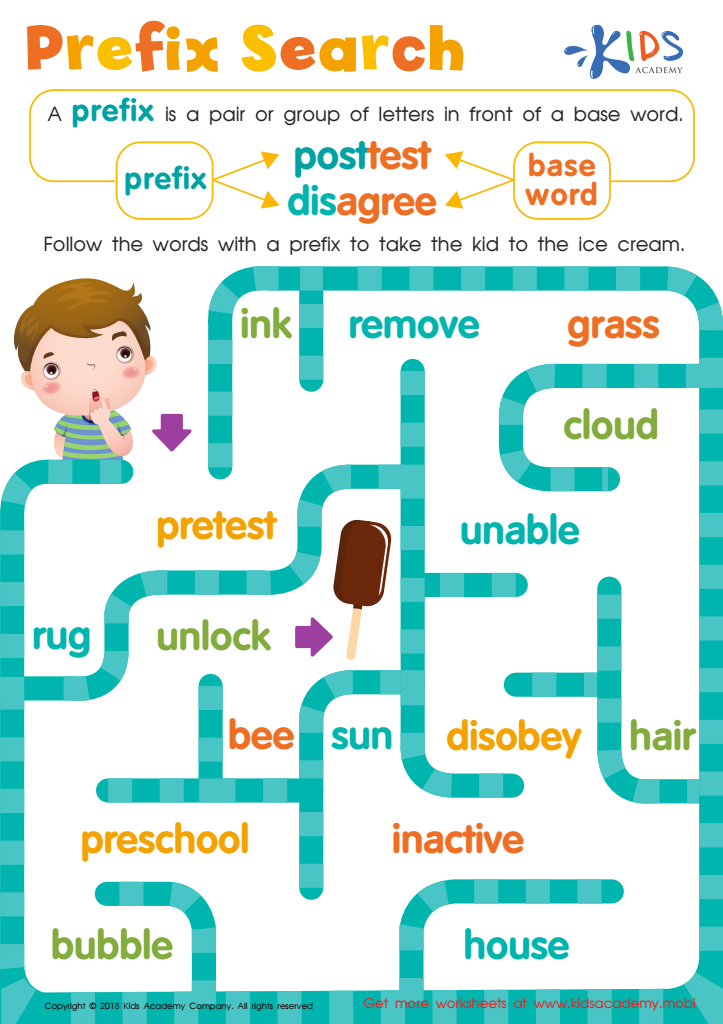
Maze your way through prefixes! This worksheet helps students practice reading new words with a prefix and figuring out the base word. An understanding of prefixes gives students the skills to comprehend new words. A fun and useful activity for the reading classroom!
Reading: Prefix Search Worksheet
Worksheet
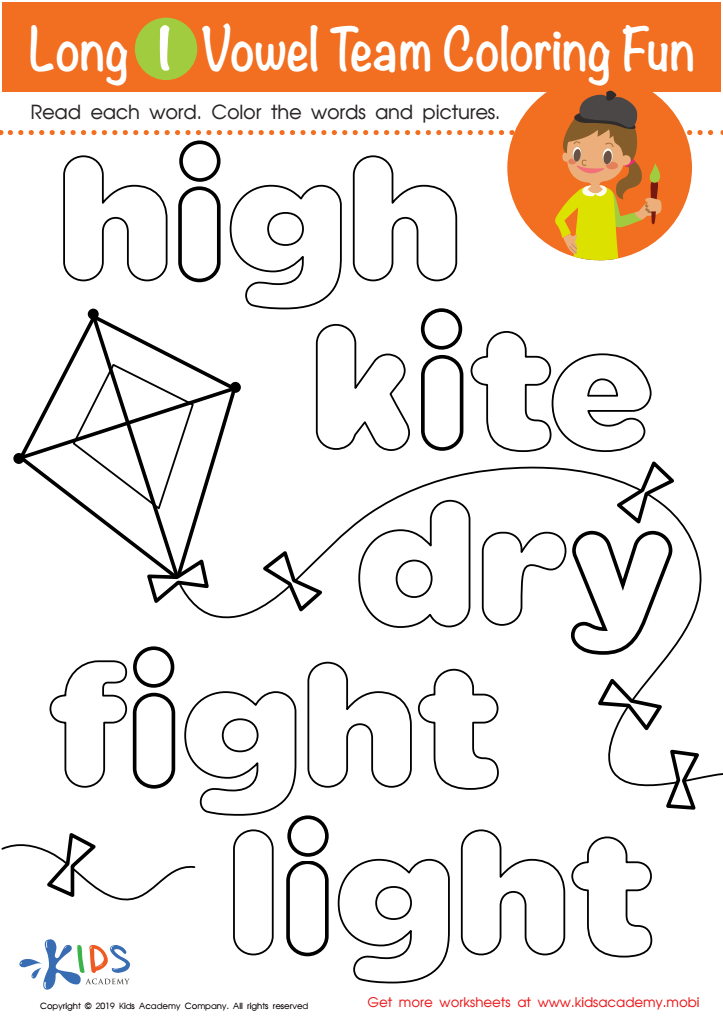
Long I Vowel Team Coloring Worksheet

Long I Vowel Team Coloring Worksheet

This worksheet provides practice with letter combinations that make the long "i" sound while enhancing creativity and motor skills with a fun coloring activity. Unknowingly, new readers learn key phonics skills while having fun!
Download (PDF)
Assign to My Students
Long I Vowel Team Coloring Worksheet
Worksheet
Phonics and Word Recognition: Assessment 1 Worksheet

Phonics and Word Recognition: Assessment 1 Worksheet

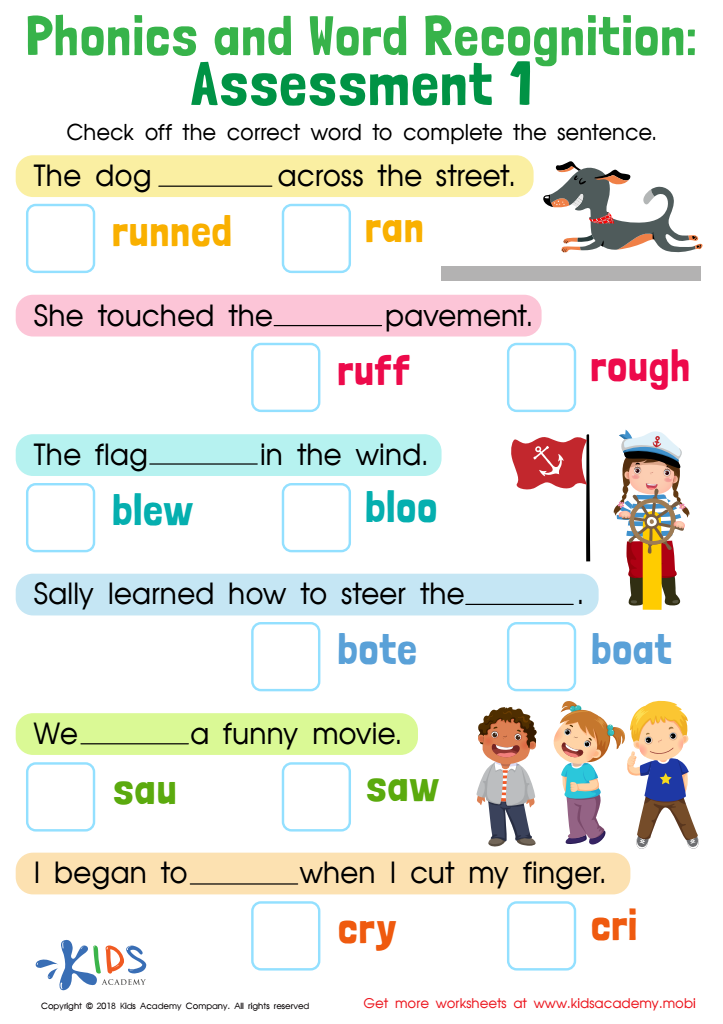
This worksheet tests phonetics and word recognition. Students should be familiar with past tense verbs. Read incomplete sentences, then read multiple options and help students select the correct one.
Phonics and Word Recognition: Assessment 1 Worksheet
Worksheet
Phonics and Word Recognition: Assessment 2 Worksheet

Phonics and Word Recognition: Assessment 2 Worksheet

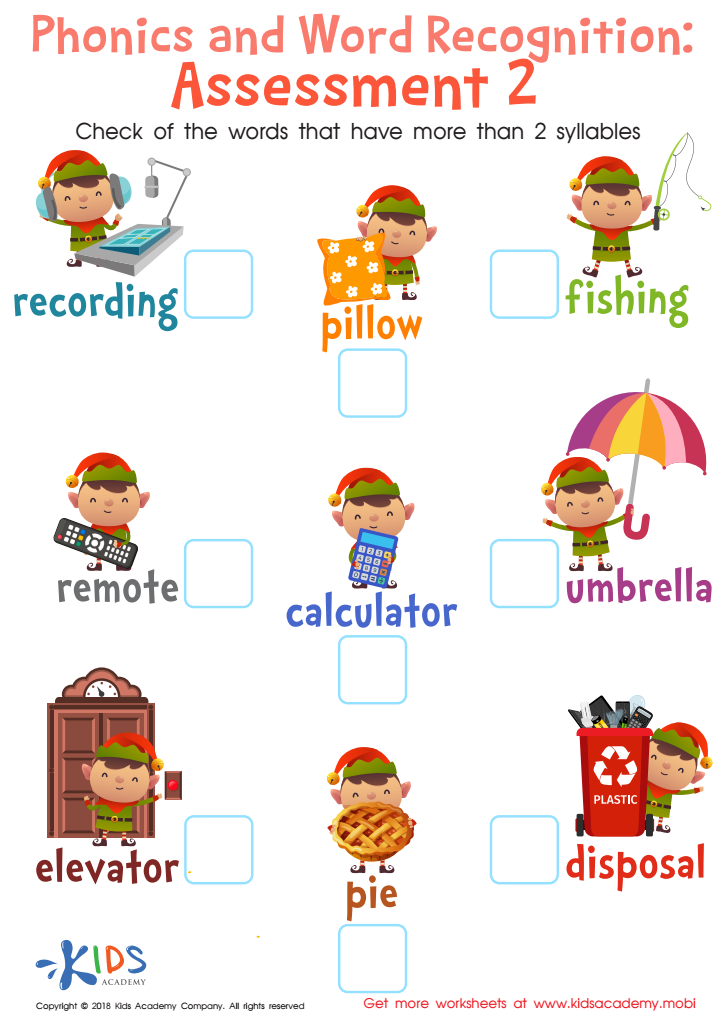
Help your kids learn proper pronunciation by counting syllables. Most words they'll encounter have 1-3 syllables, making them simple to say. Have them repeat the words in your worksheet after you. Focus on longer words with more than two syllables.
Phonics and Word Recognition: Assessment 2 Worksheet

Worksheet
Phonics and Word Recognition: Assessment 2


Phonics and Word Recognition: Assessment 2

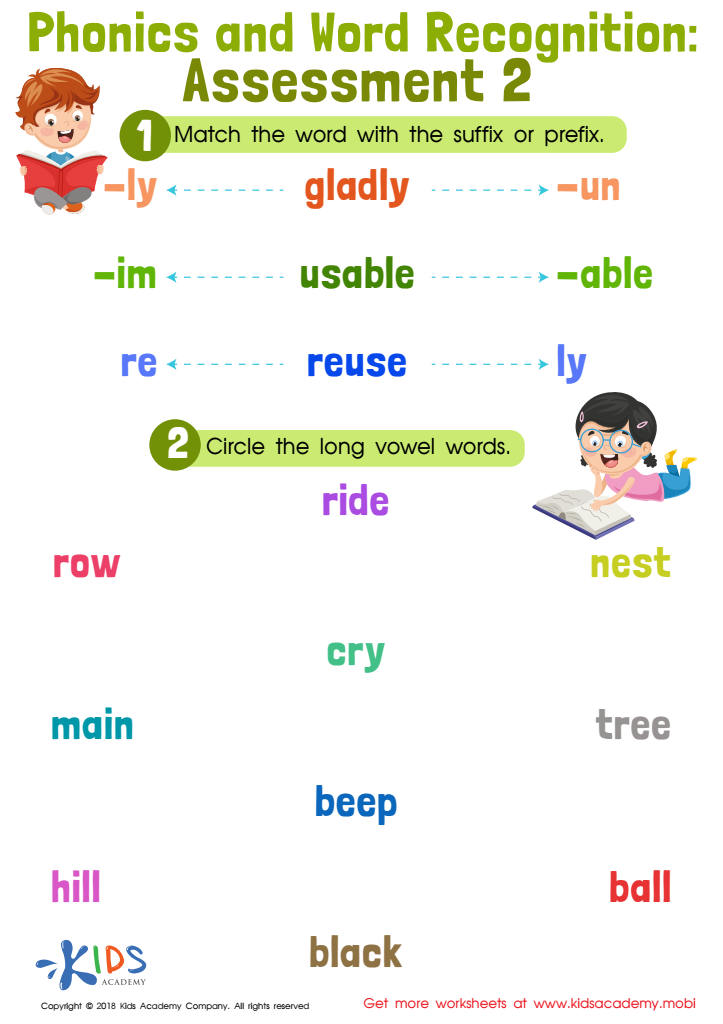
Give kids common examples of suffixes and prefixes, such as "un-," "unhappy," "ness," "happyness." Ask them to match each word in the word recognition exercise to the correct suffix or prefix. Test phonetic understanding by having them circle the long vowel sounds.
Phonics and Word Recognition: Assessment 2

Worksheet


Parents and teachers should prioritize word identification skills for children ages 7-9 because these skills form the backbone of reading proficiency, thereby enhancing literacy development. During this critical stage, children transition from learning to read to reading to learn, making word identification essential for understanding and engaging with various texts.

Effective word identification promotes fluency, allowing children to recognize words quickly and effortlessly. This fluency facilitates improved comprehension, enabling kids to grasp more complex concepts and ideas across subjects. As children develop strong word identification skills, they feel more confident in their reading abilities, which fosters a lifelong love for reading—an essential tool for success in academics and beyond.

Additionally, word identification is closely tied to vocabulary development. Understanding words in context empowers children to express themselves more clearly and creatively, broadening their communication skills. Parents and teachers play a pivotal role in nurturing these skills through targeted activities, exposure to diverse literature, and encouraging reading at home.

Ultimately, prioritizing word identification not only supports literacy growth but also equips children with the fundamental skills necessary for academic success and personal development throughout their educational journey.