Phonics skills improvement Phonics Worksheets for Ages 7-9
6 filtered results
-
From - To
Enhance your child's reading abilities with our engaging Phonics Skills Improvement Worksheets tailored for ages 7-9. Our expertly designed resources focus on crucial phonics concepts, helping young learners develop strong decoding and blending skills. Each worksheet is crafted to encourage practice in a fun and interactive way, ensuring that phonemic awareness becomes second nature. With a variety of activities like matching sounds, filling in the blanks, and letter recognition, these worksheets provide comprehensive support for children as they gain confidence in their reading capabilities. Explore our collection today to give your child the tools they need for successful reading!
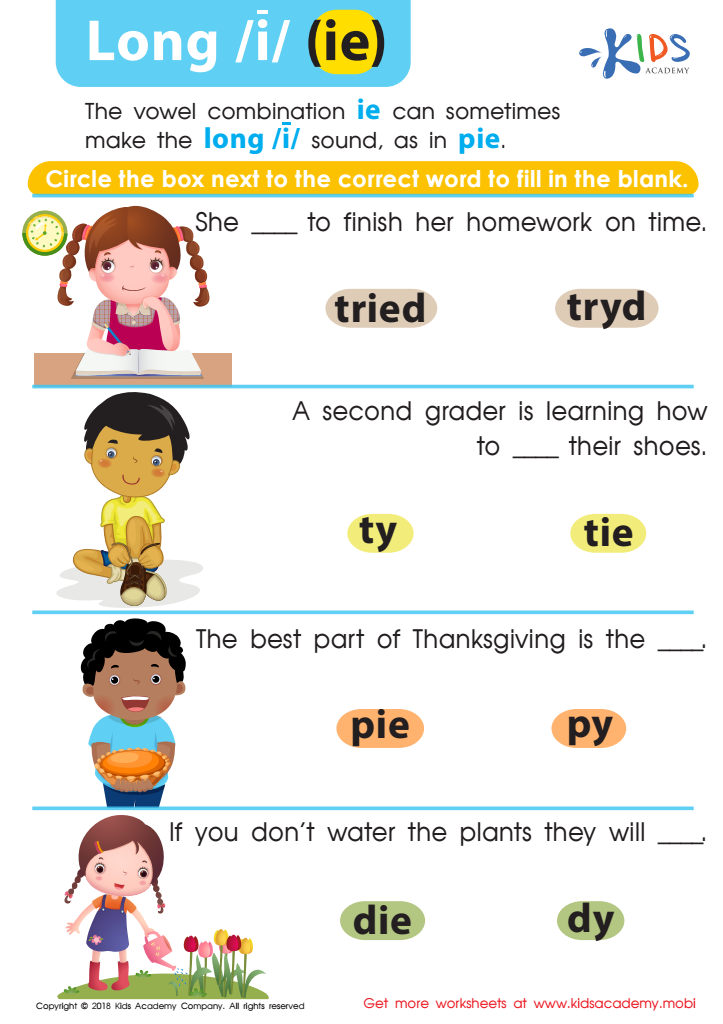
Reading: Long I and IE Worksheet
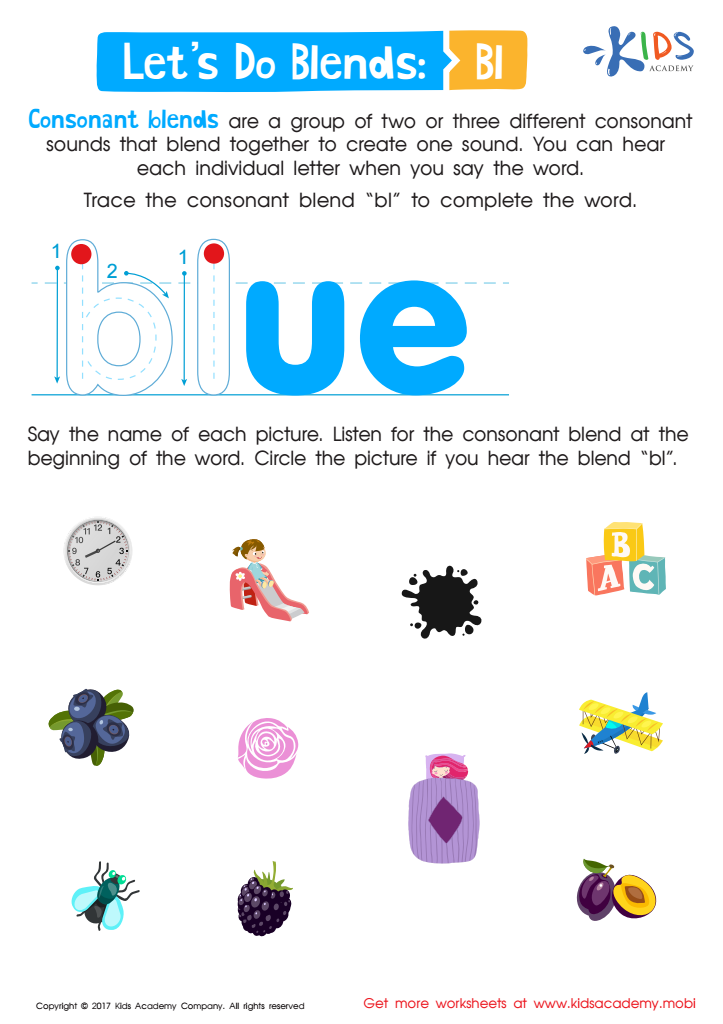
Beginning Blends: "Bl" Words Worksheet
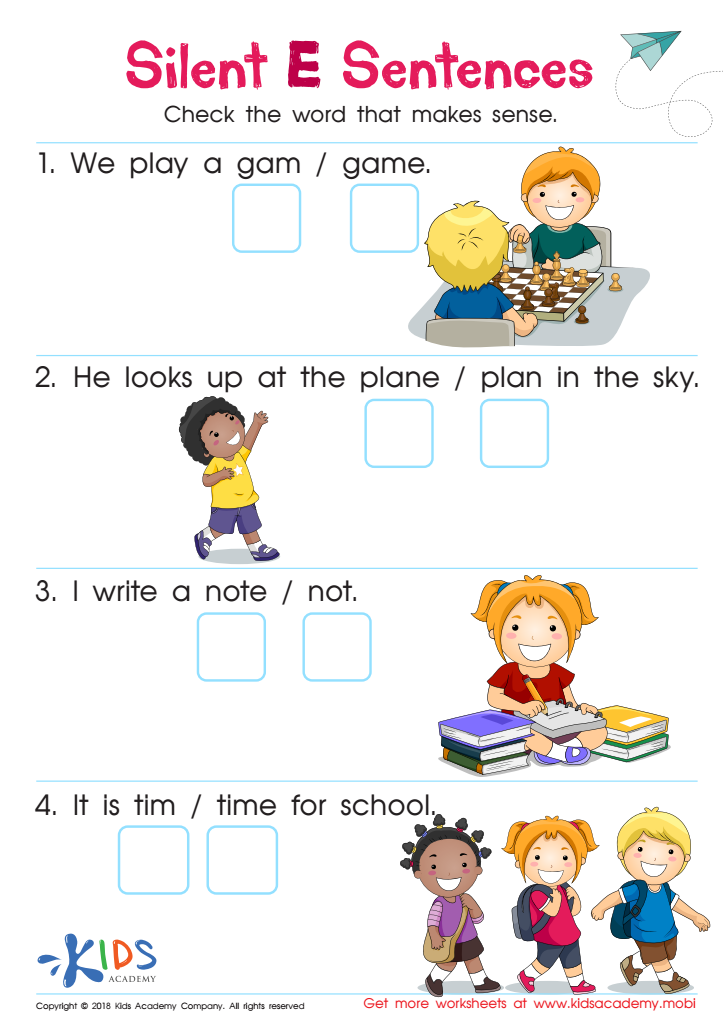
Silent E Sentences Worksheet

Long and Short U Worksheet
 Assign to My Students
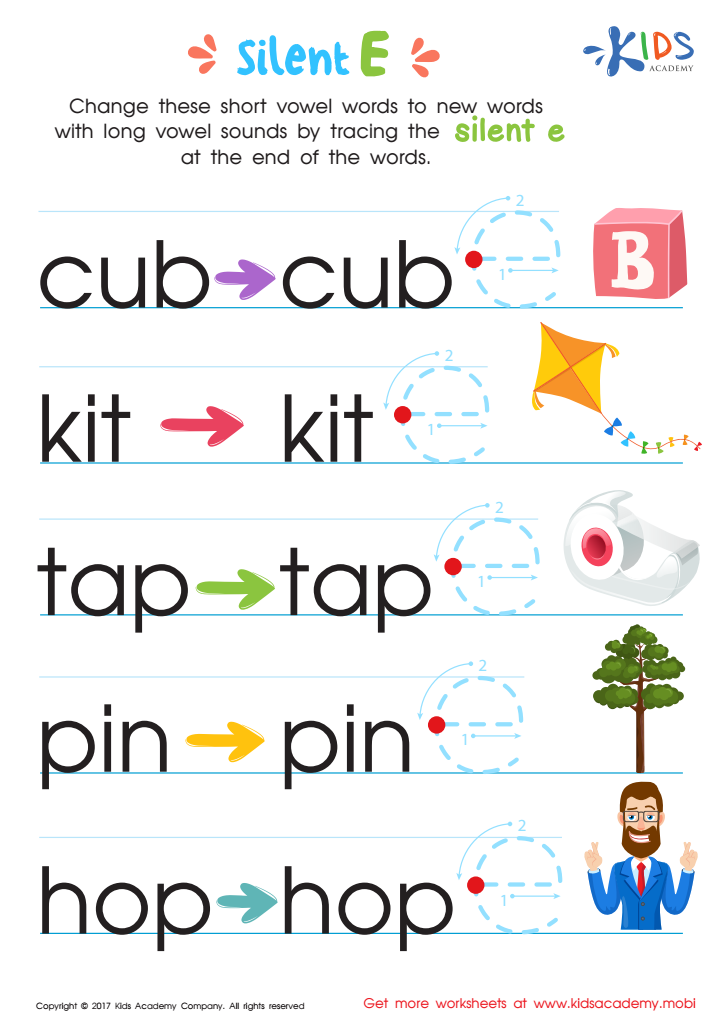
Silent E Words Worksheet
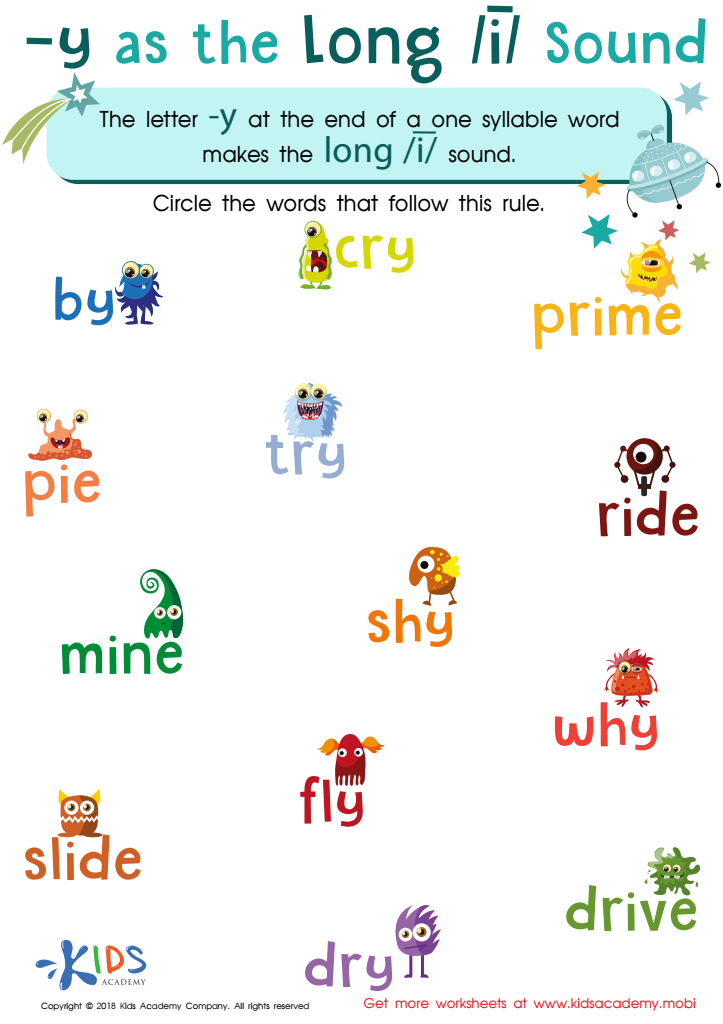
Reading: Y as Long I Worksheet








Phonics skills are crucial for children aged 7-9 as they form the foundation for proficient reading and writing. At this age, children transition from learning to read to reading to learn. Strong phonics skills enable them to decode unfamiliar words, enhancing their comprehension and vocabulary. When parents and teachers prioritize phonics improvement, they help children develop confidence in their reading abilities, which encourages a lifelong love for literature and learning.
Moreover, effective phonics instruction supports children with diverse learning needs, including those who may struggle with traditional literacy methods. By focusing on phonemic awareness—the ability to hear, identify, and manipulate sounds—children become better equipped to tackle spelling patterns and complex texts. This is particularly important in a world where reading proficiency significantly impacts academic success and social development.
Furthermore, systematic phonics instruction aids in reducing literacy gaps that can develop at this transitional stage. When parents and teachers collaboratively invest in phonics skills, they create a strong support system that nurtures literacy development, leading to improved academic performance across all subjects. In summary, fostering phonics improvement is essential for children’s educational growth and gives them the tools necessary to thrive in an increasingly text-driven world.







