Reading development Phonics Worksheets for Ages 7-9
3 filtered results
-
From - To
Our "Reading Development Phonics Worksheets for Ages 7-9" are expertly designed to enhance children's reading skills during vital learning years. With engaging exercises focused on phonics, letter recognition, and word formation, our worksheets turn learning into a fun and educational experience. Perfect for home or classroom use, they aid in building a strong reading foundation, boosting confidence, and fostering a love for reading. Each worksheet is crafted to cater to different learning styles, ensuring every child can succeed. Explore our selection and watch your child’s reading abilities flourish while they enjoy the journey of discovery and learning!
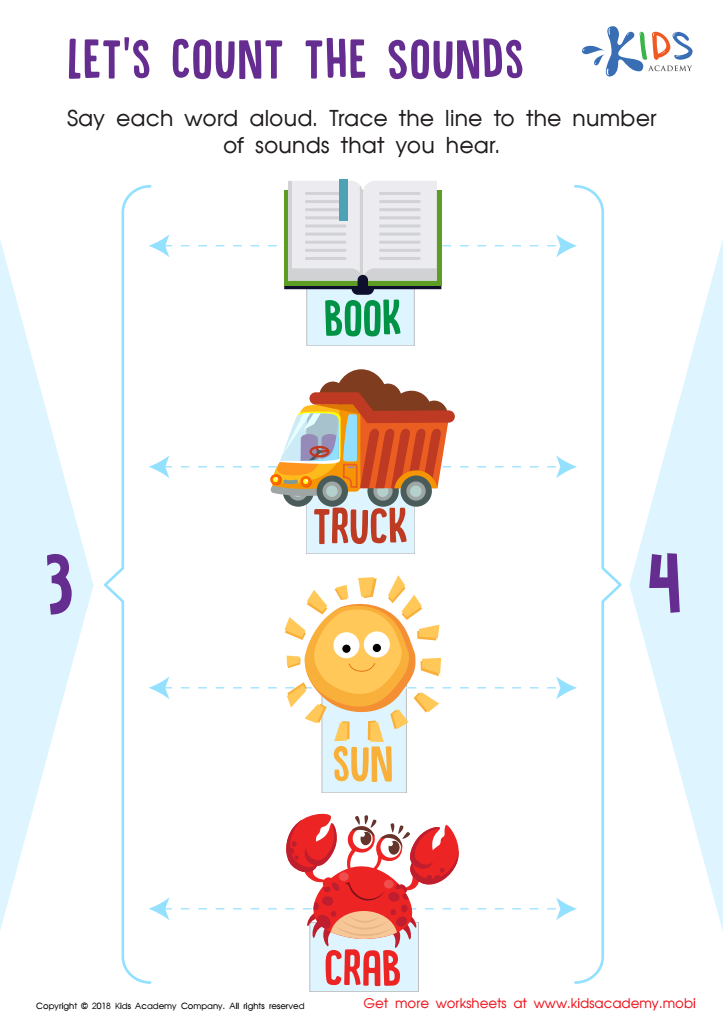
Let's Count the Sounds Worksheet
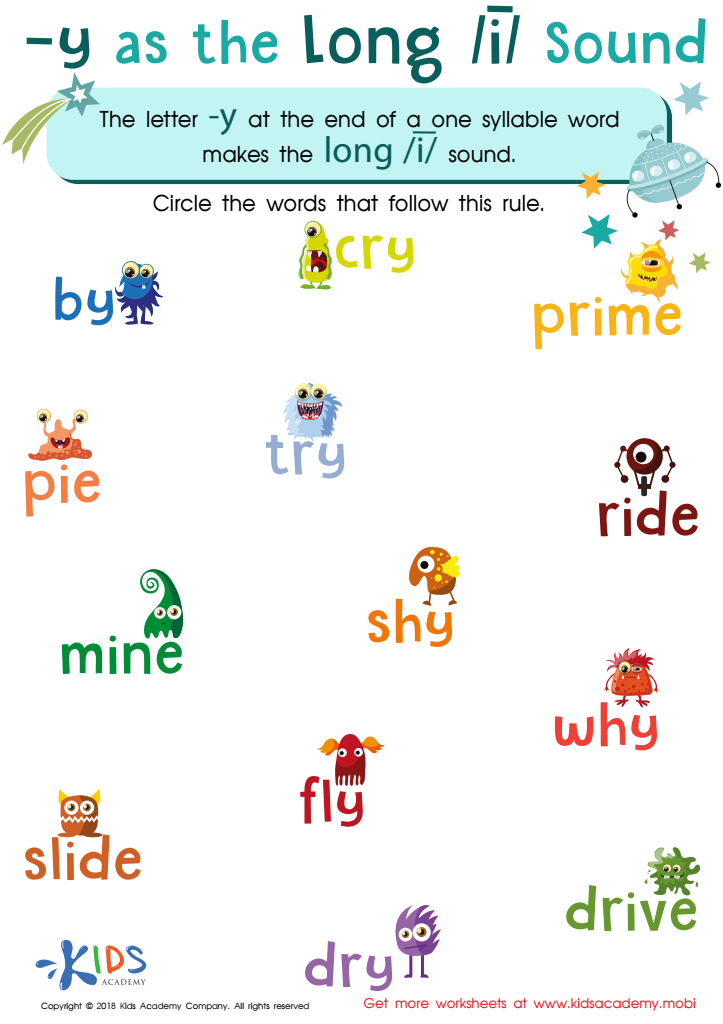
Reading: Y as Long I Worksheet
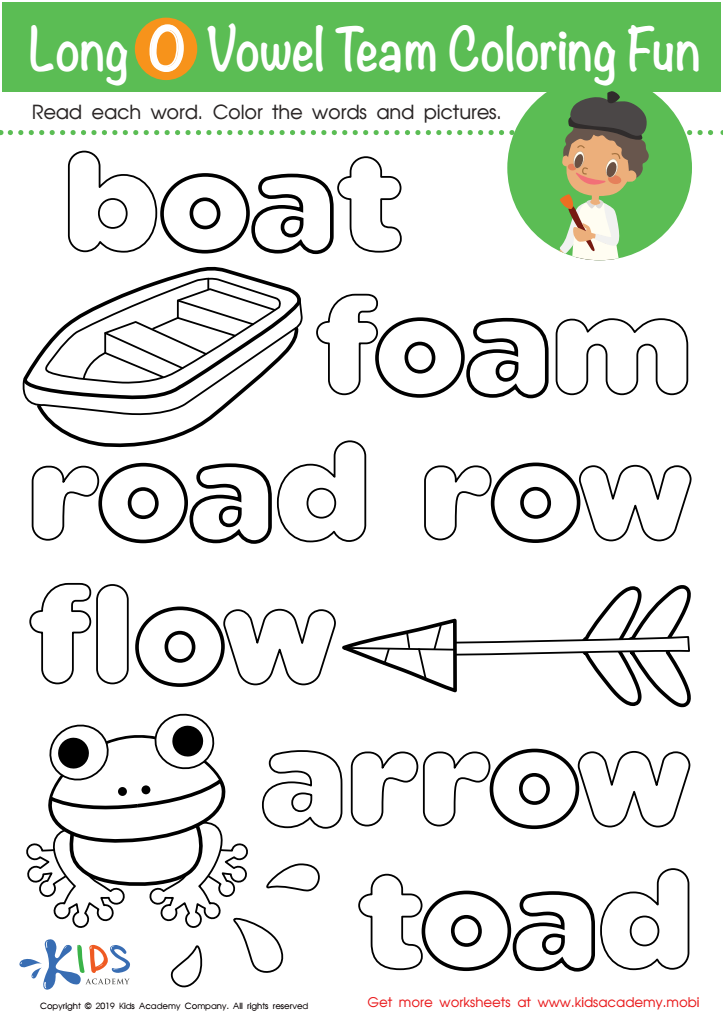
Long O Vowel Team Coloring Worksheet
 Assign to My Students








Parents and teachers should prioritize reading development and phonics for children aged 7-9 as these are foundational elements for literacy and overall academic success. At this critical stage, children transition from learning to read to reading to learn. Strong phonics skills enable children to decode new words independently, fostering their ability to read more fluently and comprehend text more effectively.
By understanding the relationship between letters and sounds, children can better grasp spelling and pronunciation patterns, which bolsters their vocabulary and written communication skills. Phonics instruction also helps prevent reading difficulties and can identify potential learning issues such as dyslexia early on, allowing for timely interventions.
Furthermore, proficient reading skills enhance cognitive development, improving critical thinking, concentration, and problem-solving abilities. Reading fluency supports other educational areas, including math and science, since these subjects require substantial reading and comprehension skills.
For many children, positive reading experiences can instill a lifelong love of books and learning. This early engagement boosts their confidence and motivation, making them more enthusiastic learners. In short, effective phonics instruction at ages 7-9 lays the groundwork for future educational opportunities and lifelong intellectual development, underscoring its crucial importance for parents and teachers.







