Rhyming skills development Phonics Worksheets for Ages 7-9
4 filtered results
-
From - To
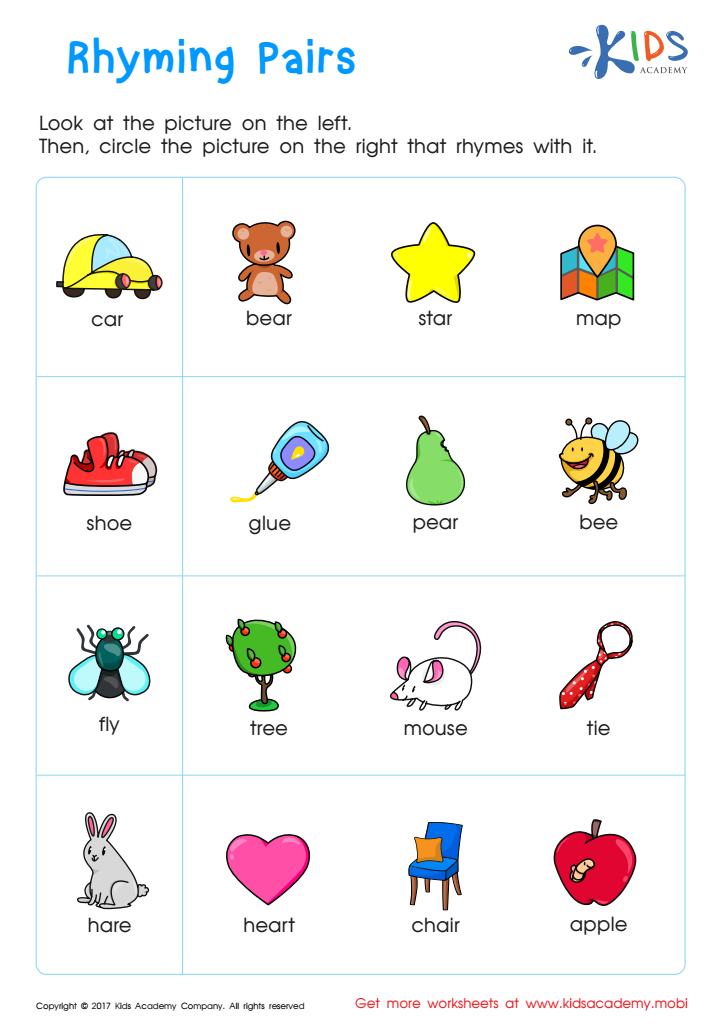
Enhance your child's phonics skills with our engaging Rhyming Skills Development Worksheets, specifically designed for ages 7-9. These interactive printables focus on fostering rhythm and rhyme recognition while promoting literacy through fun activities. Each worksheet encourages children to identify, create, and manipulate rhyming words, reinforcing their phonemic awareness in an enjoyable way. With a variety of exercises, including matching, sorting, and filling in blanks, your child will strengthen their vocabulary and reading comprehension. Perfect for classroom or home use, these worksheets provide valuable practice that makes learning exciting and effective. Support your child's educational journey with our rhyming skills resources today!
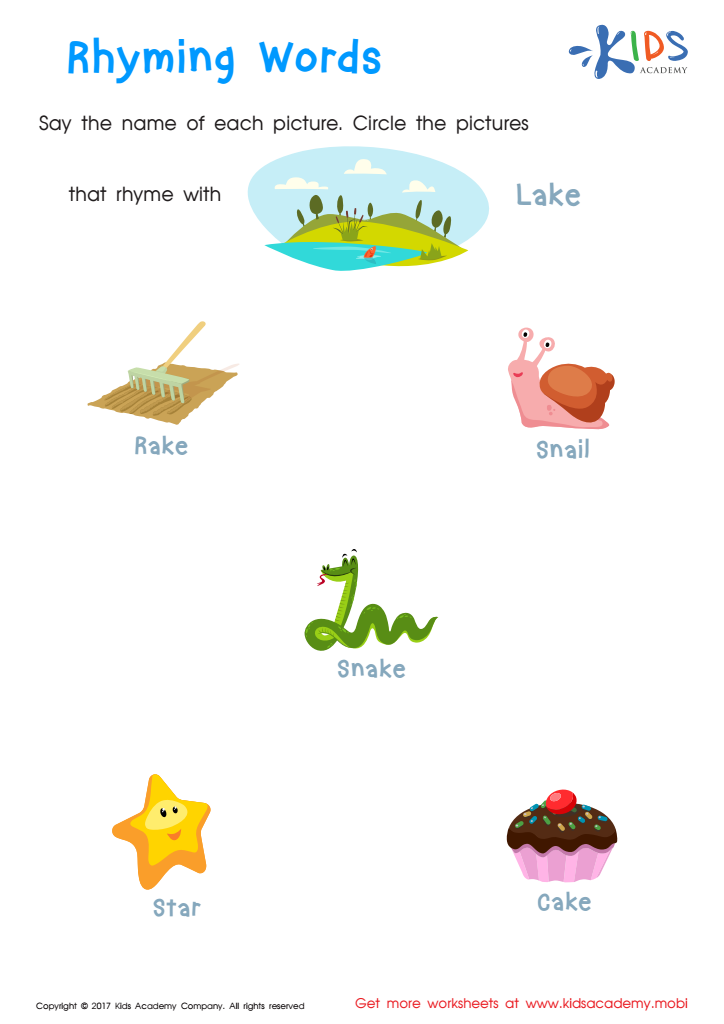
Rhyming Words Rhyming Worksheet
 Assign to My Students
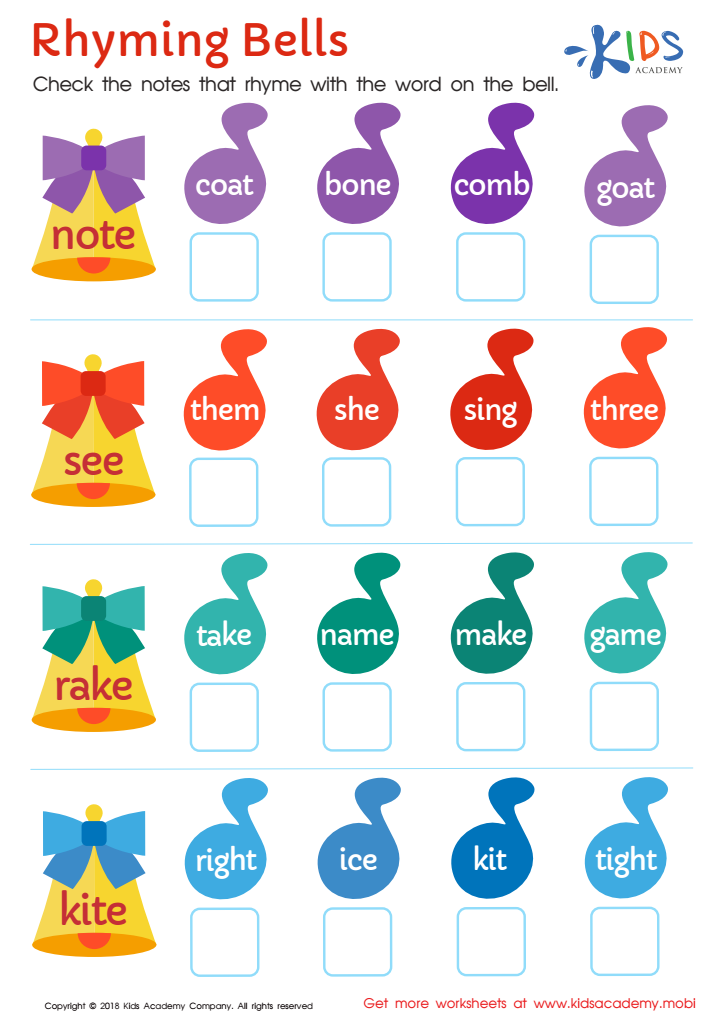
Rhyming Bells Worksheet
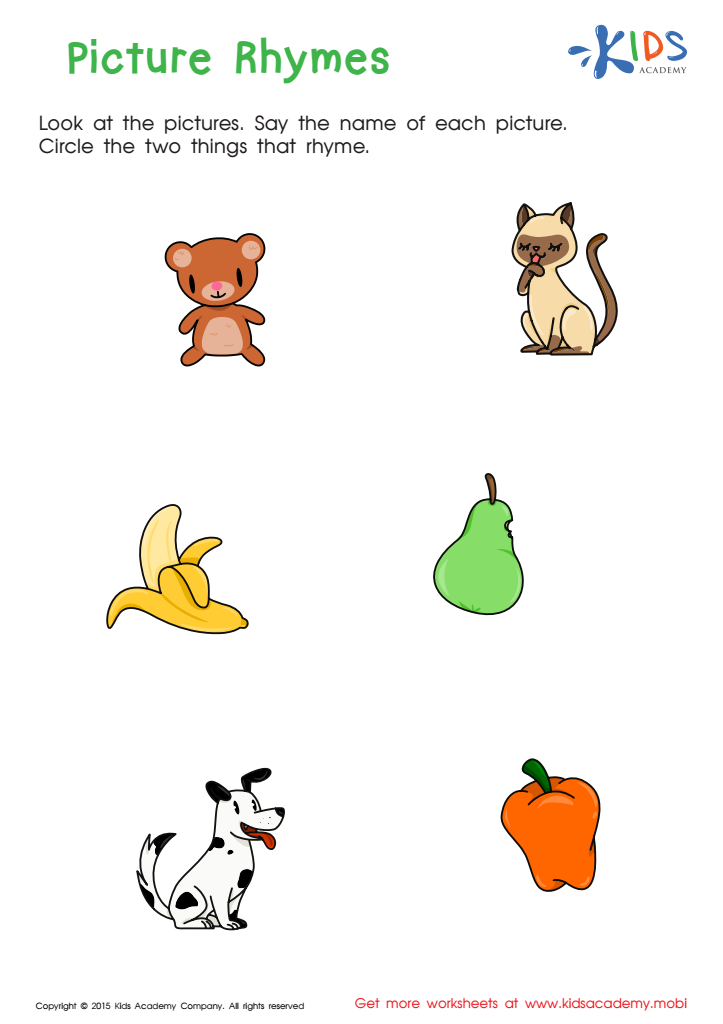
First Words: Picture Rhymes Worksheet








Rhyming skills development is crucial for children aged 7-9 as it forms a foundational part of phonics education, significantly impacting literacy and language development. At this age, children are transitioning from learning to read to reading to learn, making strong phonemic awareness essential. Rhyming helps children recognize sound patterns, which enhances their decoding abilities, essential for fluent reading. As they become more proficient in identifying rhyming words, they develop a stronger understanding of word structure and spelling, facilitating easier learning of new vocabulary.
Additionally, rhyming fosters creativity and improves auditory discrimination, which is vital for oral communication and writing skills. Engagement in playful language activities, such as nursery rhymes and poems, not only makes learning enjoyable but also strengthens listening skills, promoting greater focus during instruction.
From a holistic approach, encouraging rhyming can enhance children’s confidence in their reading skills, thereby improving their overall attitude toward literacy. Teachers and parents play a vital role in creating rich linguistic environments that include rhyming games and activities. Awareness of these developmental aspects can foster supportive engagement in educational practices, creating positive learning experiences that resonate well into their future education.







