
Sound Association Phonics Worksheets for Ages 7-9
8 filtered results
Difficulty Level
Grade
Age
-
From - To
Subject
Activity
Standards
Enhance your child's reading skills with our engaging Sound Association Phonics Worksheets designed for ages 7-9! These worksheets provide fun and interactive activities that reinforce phonemic awareness through sound association exercises. Children will strengthen their ability to connect sounds with letters, improving their decoding and spelling skills. Each worksheet is tailored to promote critical thinking and enhance literacy development in young learners. Perfect for home or classroom use, our resources make phonics practice enjoyable! Download now and watch your child gain confidence in reading and literacy as they master sound-letter connections in an exciting way!
Favorites
With answer key
Interactive
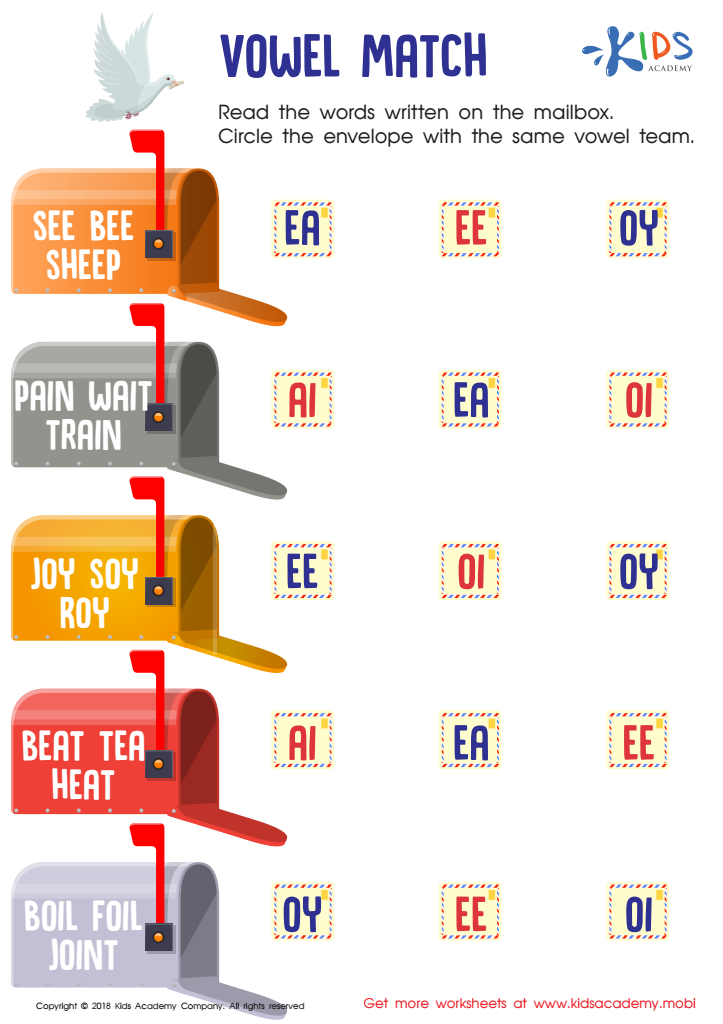
Vowel match Worksheet
Early readers can find vowel teams (digraphs) tricky. This simple worksheet helps kids match words with the right digraphs and learn to read! They'll practice reading words from different families, and linking the letters to their sounds. It's a fun way to get kids sending letters to the right addresses!
 Assign to My Students
Vowel match Worksheet
Worksheet
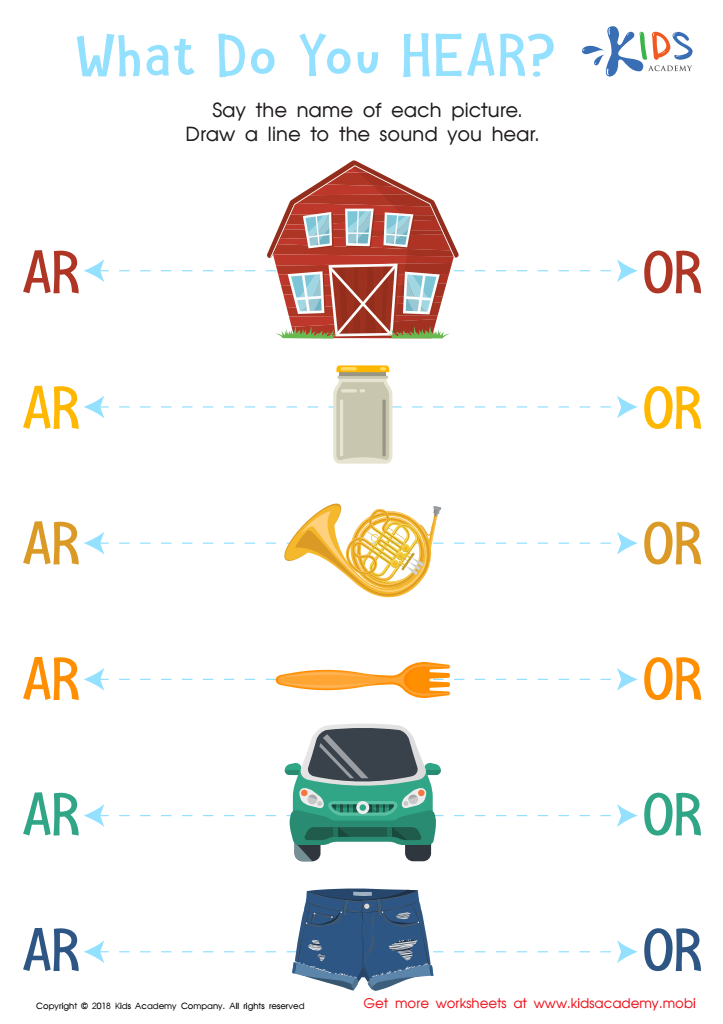
What do you hear Worksheet
Kids can practice distinguishing between r-controlled vowel teams /ar/ and /or/ with this worksheet. The pictures help identify the words and the sounds heard. Tracing a line to the correct sound supports fine motor skills development.
What do you hear Worksheet
Worksheet
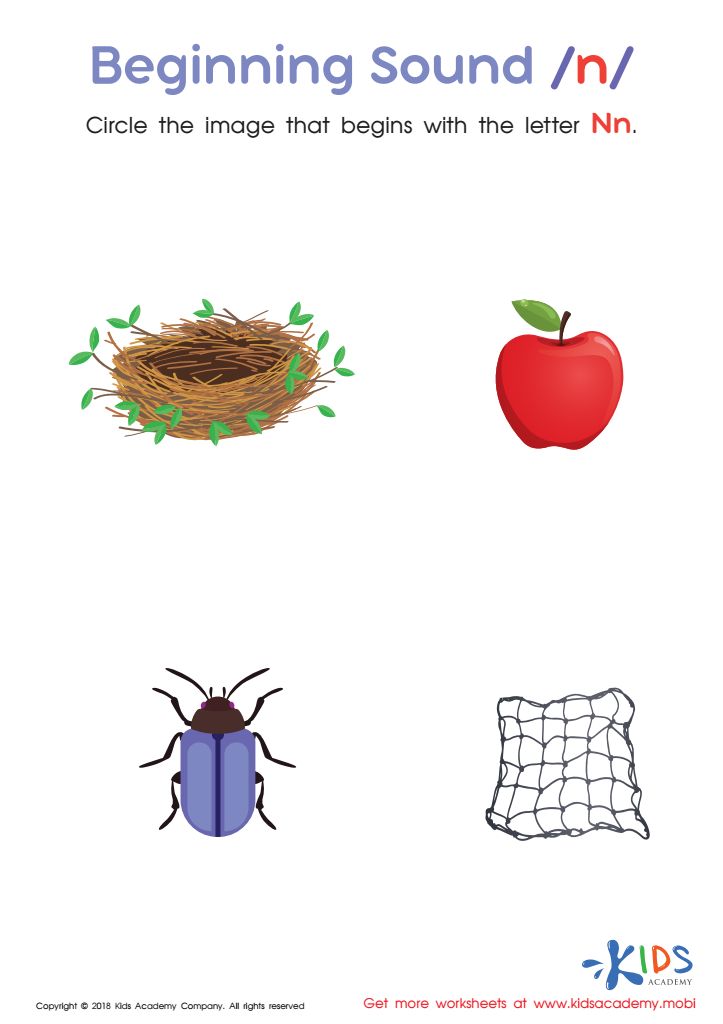
Beginning Sound «n» Worksheet
Help your emerging reader learn the initial «n» sound with this free PDF worksheet! Strengthen fine motor skills by tracing circles around words beginning with «n». Pictures are clear and engaging, giving beginning Phonics learners the right amount of practice and the confidence to succeed.
Beginning Sound «n» Worksheet
Worksheet
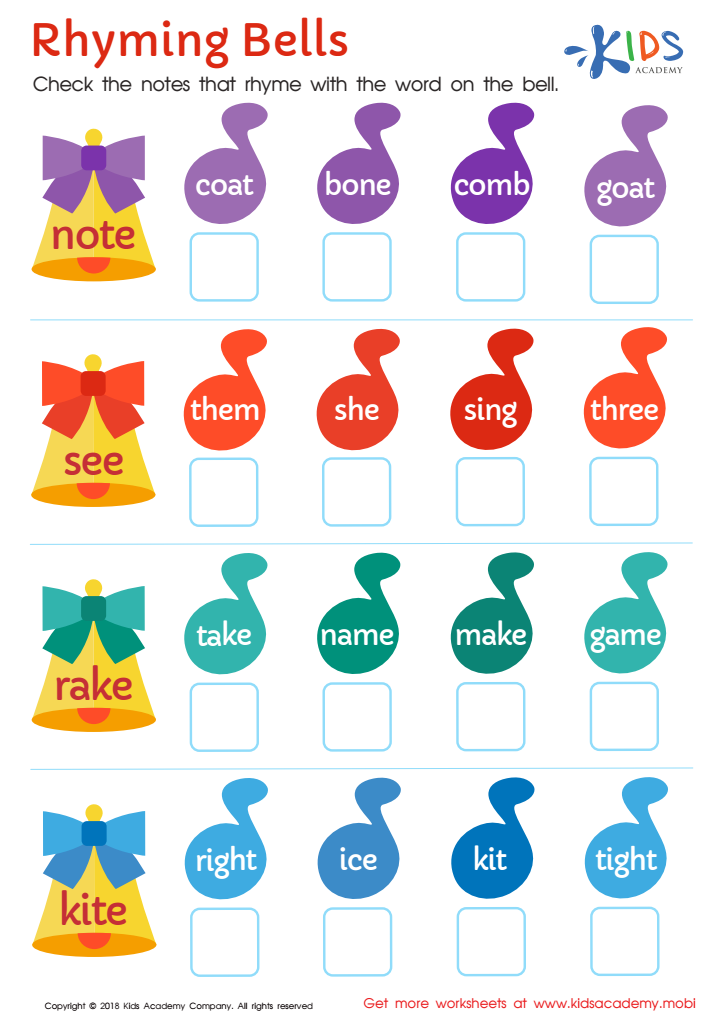
Rhyming Bells Worksheet
This printable worksheet helps students recognize rhyming words. Read a word, then pick the 4 words that rhyme. Look out for words with different spellings but same ending sound. It's a great exercise to improve understanding of rhyming words.
Rhyming Bells Worksheet
Worksheet
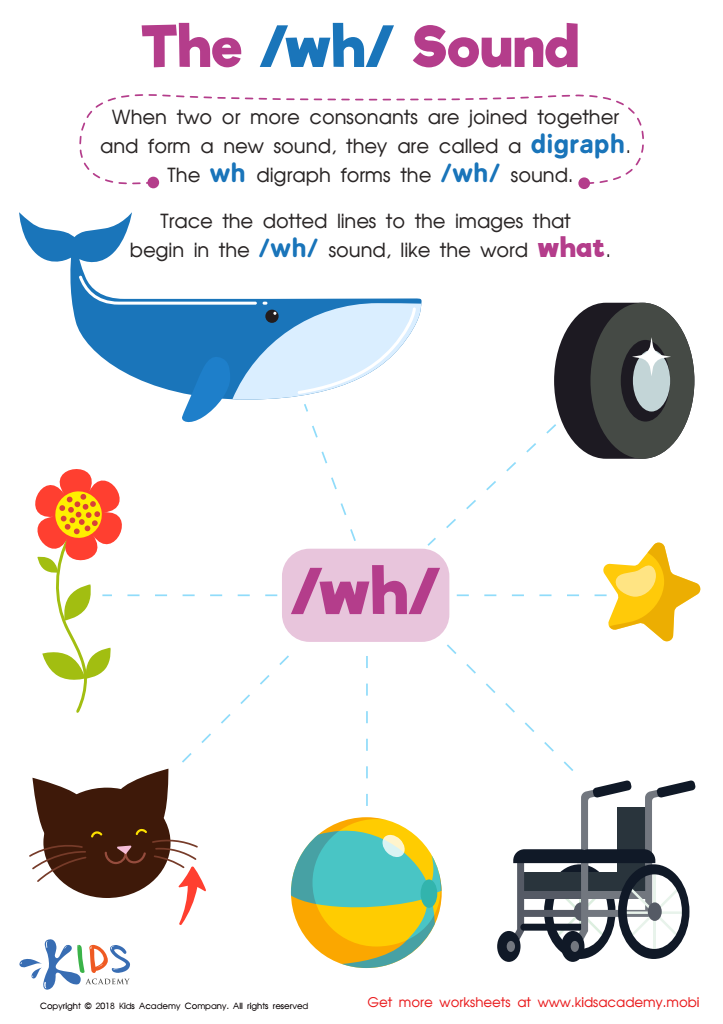
The /wh/ Sound Worksheet
Digraphs join two consonants to make a new sound, like /wh/. Give examples, like "whale", "when" and "why". Ask kids to name pictures in a worksheet and trace dotted lines to images beginning with the /wh/ sound; "what" is one example.
The /wh/ Sound Worksheet
Worksheet
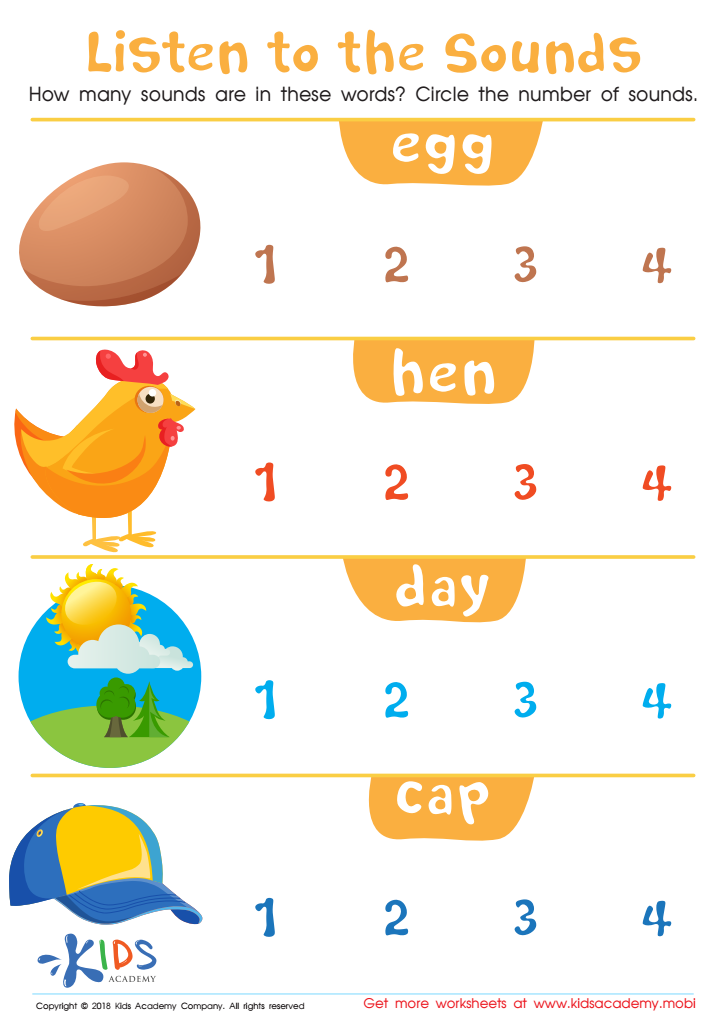
Listen to the Sounds Worksheet
This worksheet builds emerging readers' skills in using sounds for reading and spelling. It helps strengthen auditory processing by having them count the sounds in each word, then trace the corresponding number. Fun and cheerful!
Listen to the Sounds Worksheet
Worksheet
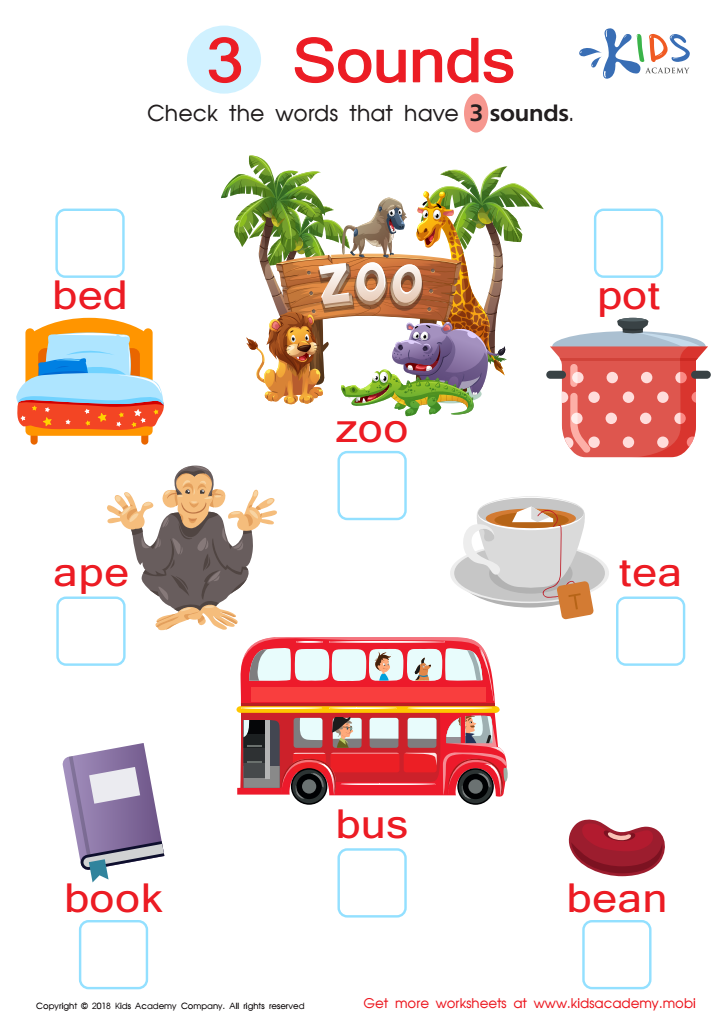
3 Sounds Worksheet
Kids will love learning with this free, colorful worksheet. It's full of familiar words they can name and sound out with three distinct sounds. This helps build decoding skills, plus they get to check off words they read. It's a fun way to teach children to identify and use sounds.
3 Sounds Worksheet
Worksheet
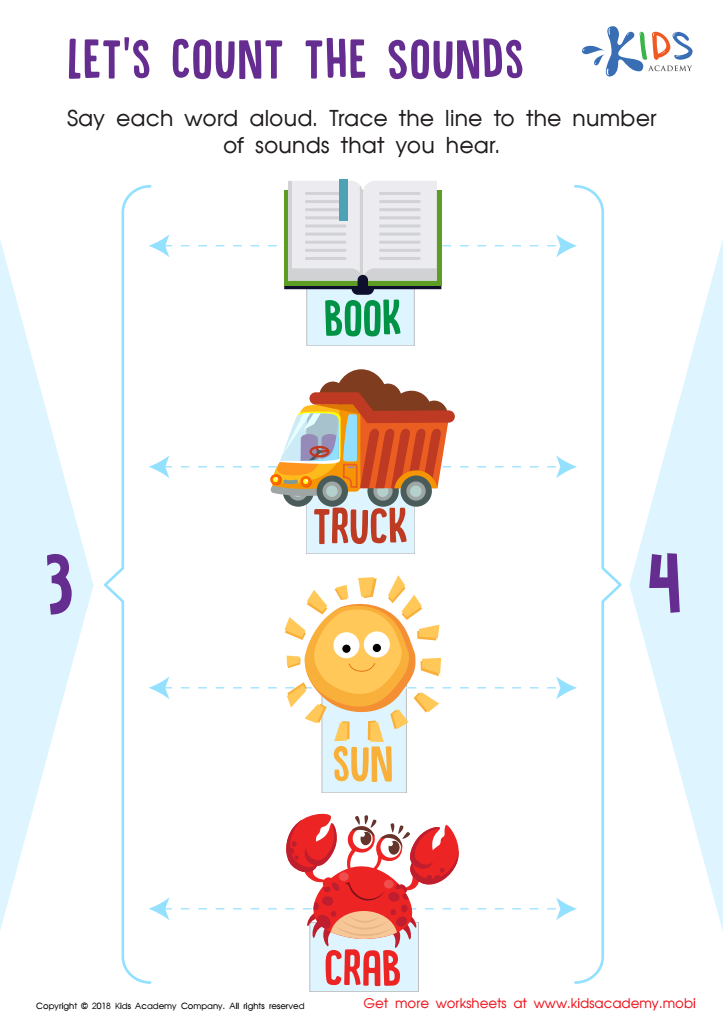
Let's Count the Sounds Worksheet
This bright and cheery traceable worksheet encourages children to practice auditory discrimination and phonological awareness. Using picture clues, they read each word and trace the line that represents the number of sounds heard. This builds decoding skills and helps them become successful readers.
Let's Count the Sounds Worksheet
Worksheet
Join Kids Academy for Free
Who is primarily going to use this learning content?








Sound Association Phonics is crucial for children aged 7-9, as it lays the foundation for reading fluency and comprehension. At this developmental stage, children are transitioning from learning to read to reading to learn. Sound association helps them connect phonemes (the smallest units of sound) with their corresponding graphemes (letters or letter groups).
When parents and teachers prioritize this type of phonics instruction, they equip children with essential skills to tackle complex texts, enhancing their vocabulary and decoding abilities. It promotes confidence in reading, enabling students to approach new words with the tools to sound them out independently.
Moreover, solid phonics skills can lead to better academic performance across subjects, as strong reading abilities contribute to understanding math problems, science concepts, and beyond. This holistic development fosters not only literacy but also critical thinking and problem-solving skills.
Furthermore, fostering a love for reading at this age can build life skills like empathy and imagination. With the added benefit of transforming struggling readers into proficient ones, focusing on Sound Association Phonics is an investment in a child's future learning and success. Ultimately, parents and teachers play a pivotal role in supporting and guiding children through this vital phase of literacy development.







