Vocabulary expansion Two Vowels Together Worksheets for Ages 7-9
4 filtered results
-
From - To
Enhance your child's reading and vocabulary skills with our engaging "Two Vowels Together Worksheets" designed specifically for ages 7-9. These fun and interactive worksheets focus on the unique combinations of two vowels that often create new sounds and meanings in words. By practicing with a variety of exercises, children will expand their vocabulary and improve their pronunciation. Each worksheet encourages creativity and critical thinking, making learning a delightful experience. Perfect for at-home study or classroom use, these resources help build a strong literacy foundation while keeping young learners excited about words. Unlock the magic of language with our curriculum-aligned resources!
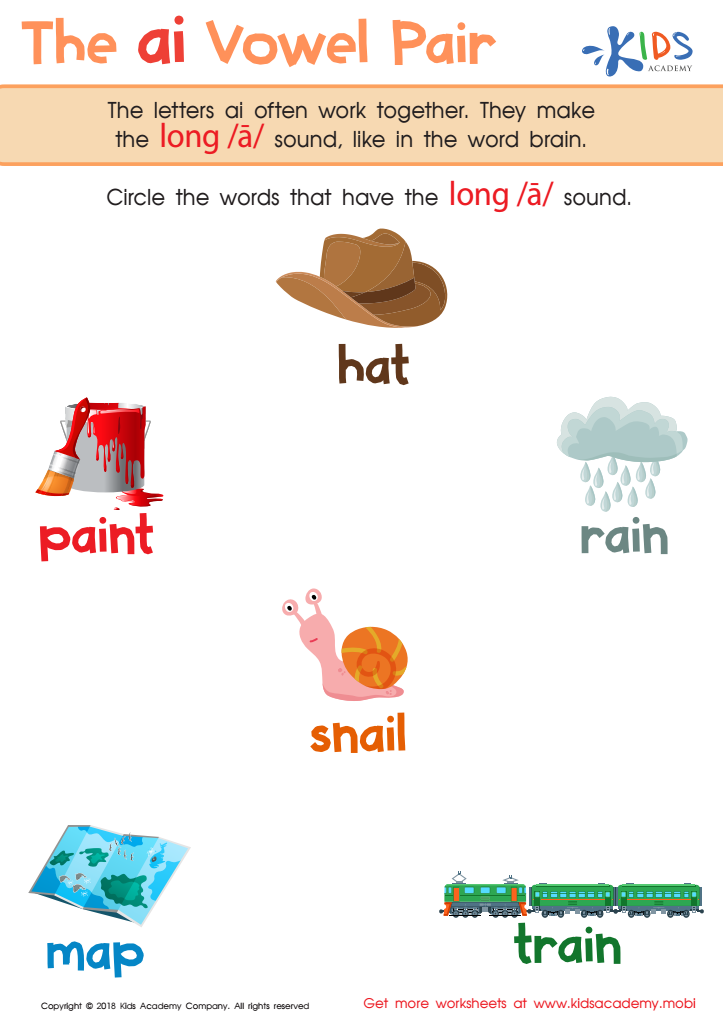
The AI Vowel Pair Worksheet
 Assign to My Students
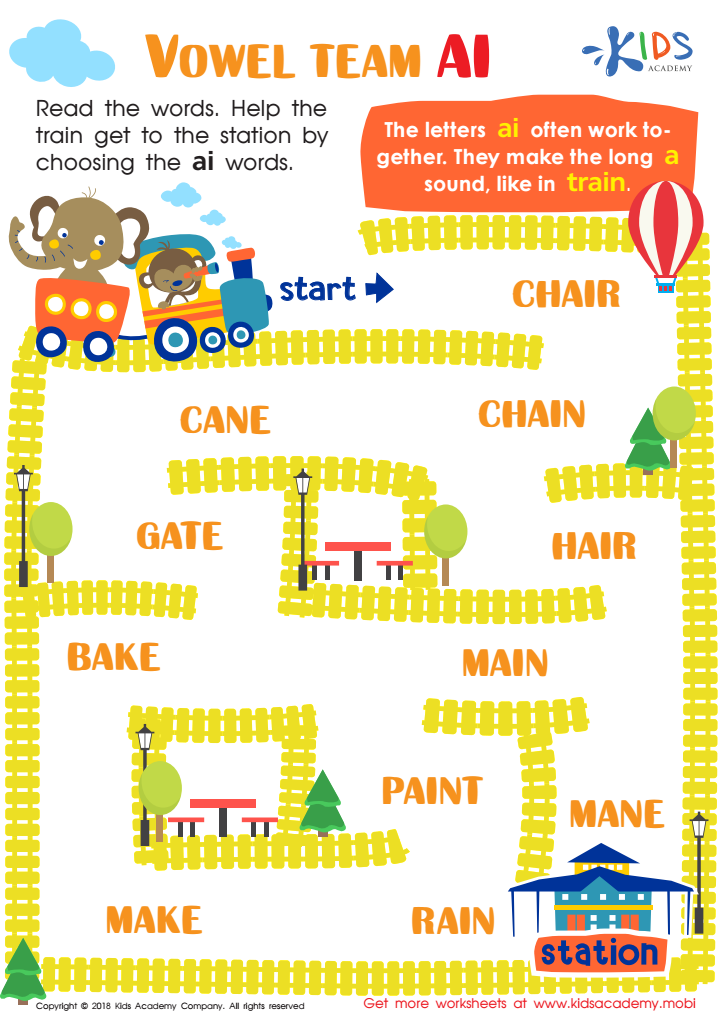
Vowel team ai Worksheet
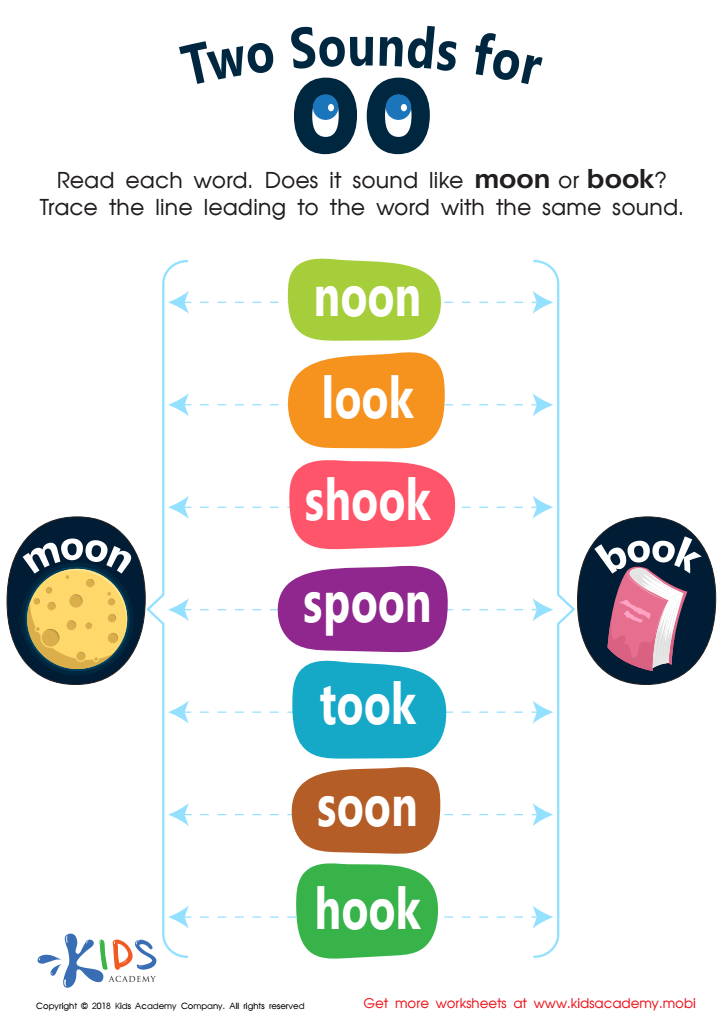
Two Sounds for OO Worksheet
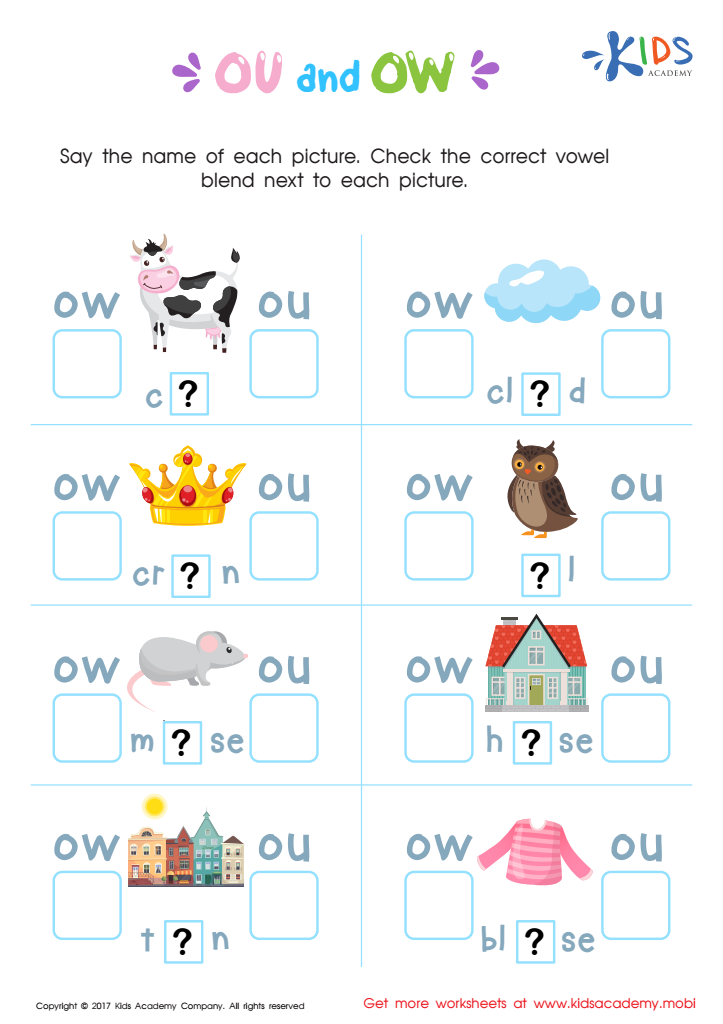
OU and OW Words Worksheet


Vocabulary expansion is crucial for children aged 7-9, especially when it comes to understanding the concept of "Two Vowels Together." This pronunciation rule helps young learners decode words more confidently, enhancing their reading fluency and comprehension skills. Mastering two-vowel combinations enables children to tackle more complex texts, fostering a richer vocabulary that enriches both their spoken and written expressions.
Parents and teachers should care about this skill because vocabulary is foundational for academic success. Children with a robust vocabulary can articulate their thoughts clearly, engage in meaningful conversations, and better comprehend their environment. With a solid grasp of two-vowel combinations, children can access a wider range of literature and information, promoting a lifelong love for reading.
Furthermore, vocabulary skills inherently boost confidence. As children become adept at recognizing and using two-vowel words, they gain assurance in their literacy abilities, leading to more active participation in classroom discussions and activities. By prioritizing vocabulary expansion strategies at this formative age, educators and parents can help children build essential literacy skills that positively impact their overall learning trajectory and social interactions. This investment in vocabulary is, therefore, key to shaping competent and expressive young communicators.