Word Recognition Vowels Worksheets for Ages 7-9
6 filtered results
Difficulty Level
Grade
Age
-
From - To
Subject
Activity
Standards
Enhance your child's reading skills with our Word Recognition Vowels Worksheets, perfectly crafted for ages 7-9. These engaging worksheets focus on helping young readers recognize vowel sounds within words, aiding in their ability to decode and blend sounds effectively. Through fun and interactive activities, children will become more confident in identifying and pronouncing vowels in different contexts. Our expertly designed worksheets cater to various learning stages, ensuring every child can improve their phonemic awareness and literacy skills. Make learning vowels a delightful experience with our comprehensive and easy-to-use printable resources. Explore now to support your child's journey to reading success!
Favorites
With answer key
Interactive
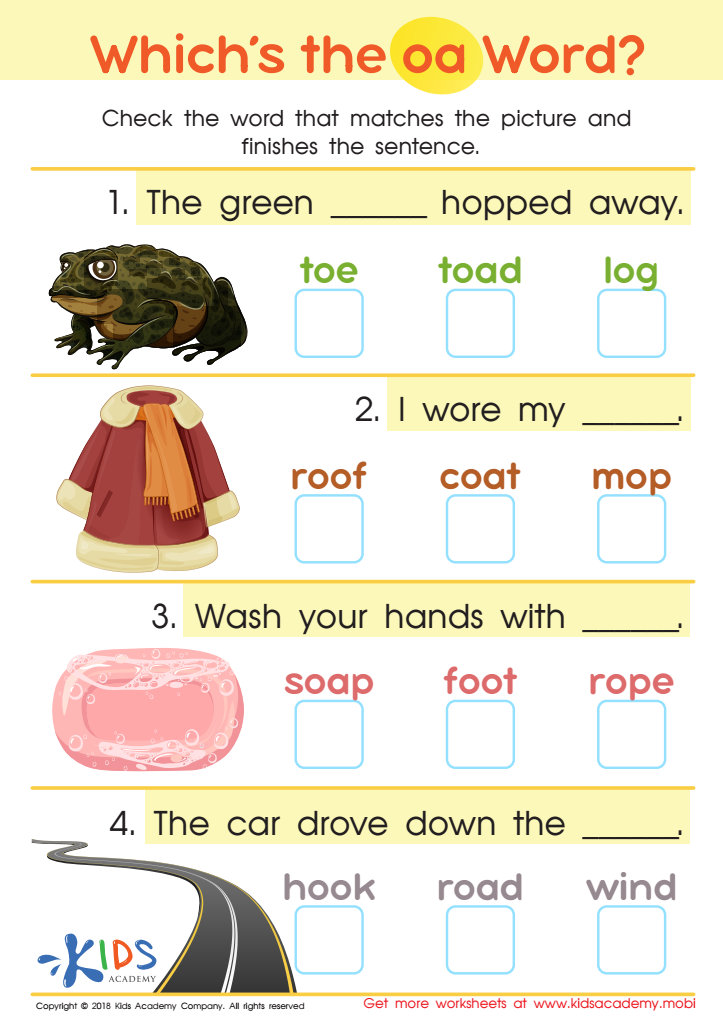
Which's the OA Word? Worksheet
Encourage your kids to complete this fun worksheet. Ask them to identify the animals and objects in the pictures. Read the incomplete sentences aloud, and then find the correct word to finish the sentence. Check their work.
 Assign to My Students
Which's the OA Word? Worksheet
Worksheet
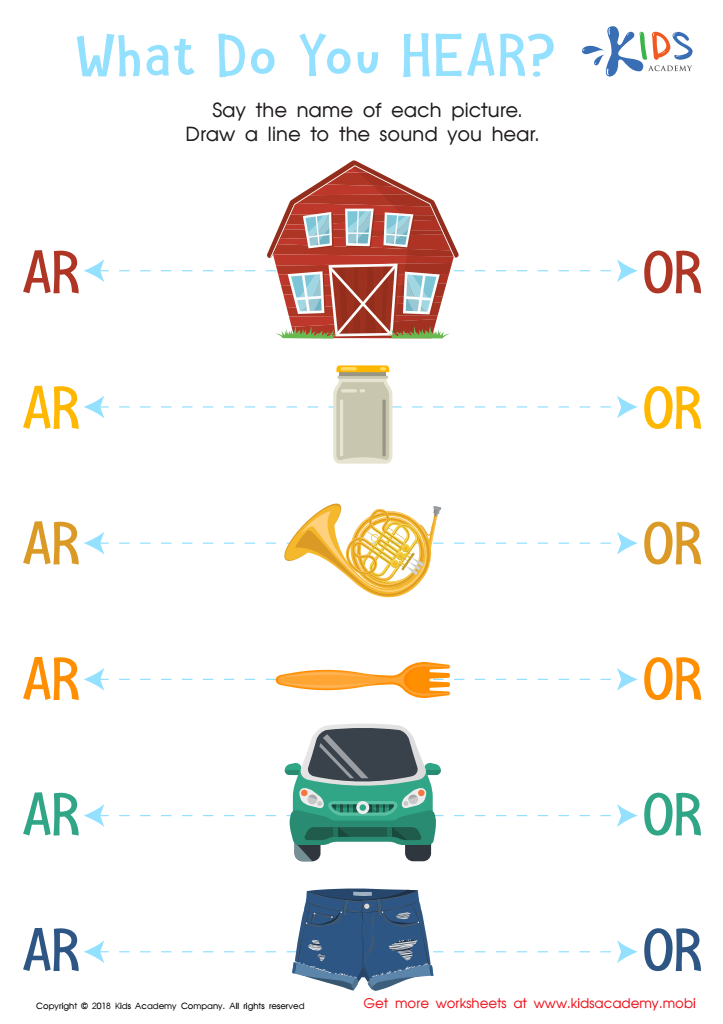
What do you hear Worksheet
Kids can practice distinguishing between r-controlled vowel teams /ar/ and /or/ with this worksheet. The pictures help identify the words and the sounds heard. Tracing a line to the correct sound supports fine motor skills development.
What do you hear Worksheet
Worksheet
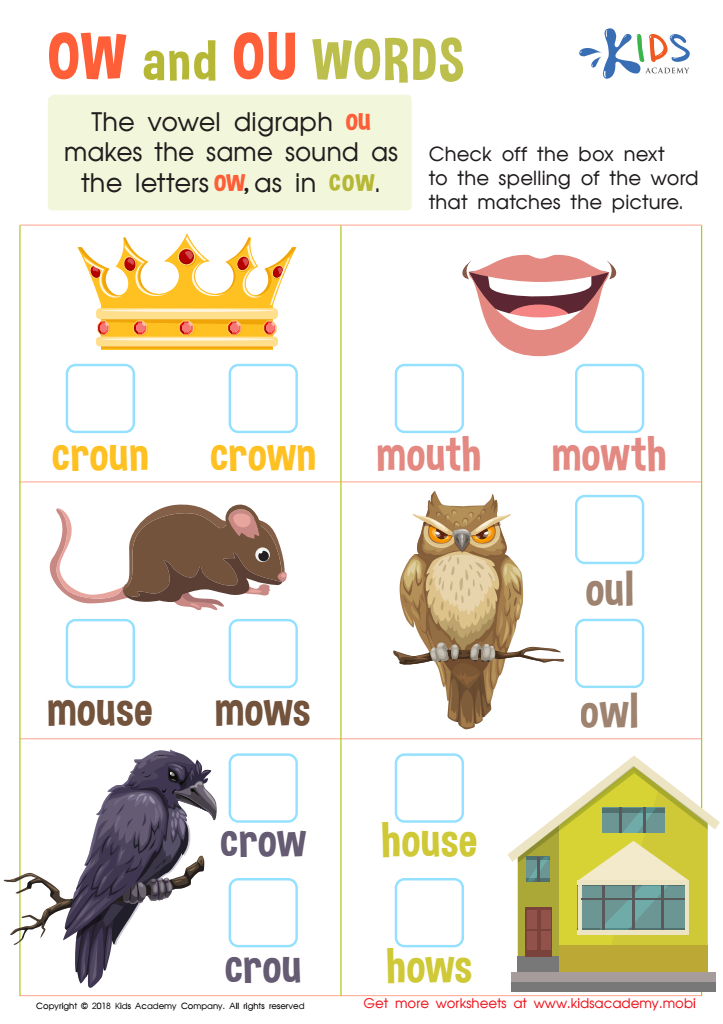
Reading: OW and OU Words Worksheet
Help your kids learn phonetics! Explain the different sounds and long/short variations. Emphasize that some vowel sounds are the same, e.g. ou = ow in cow. For practice, have them read aloud the words in the worksheet and check the box next to the spelling that matches the picture.
Reading: OW and OU Words Worksheet
Worksheet
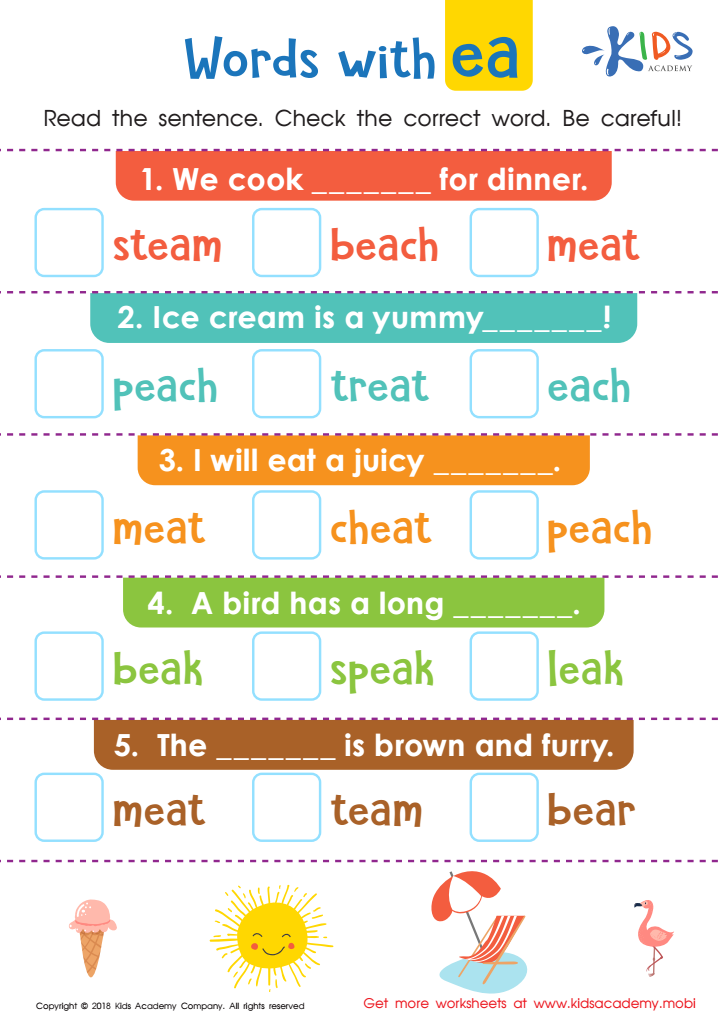
Words with ea Worksheet
Beginning readers may struggle with -ea vowel digraphs, which can have multiple sounds and be tricky to decode. This cheerful worksheet helps kids practice reading sentences with missing -ea words, using context clues to fill in the blanks. They'll also be exposed to various -ea sound examples, and build their sight word knowledge.
Words with ea Worksheet
Worksheet
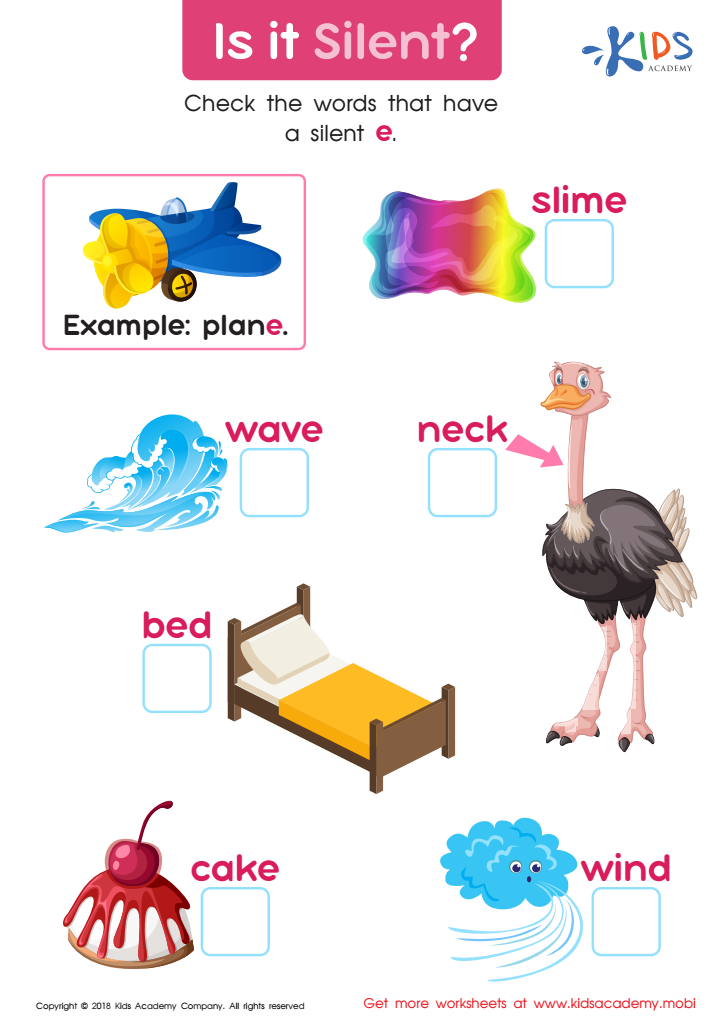
Is It Silent? Worksheet
Phonetics can be tricky, like the sound of /e/ in 'egg' vs. the silent /e/ at the end of 'slime'. Ask your students to give more examples. Read out the words in this worksheet with your kids and ask them to identify the silent /e/ ones.
Is It Silent? Worksheet
Worksheet
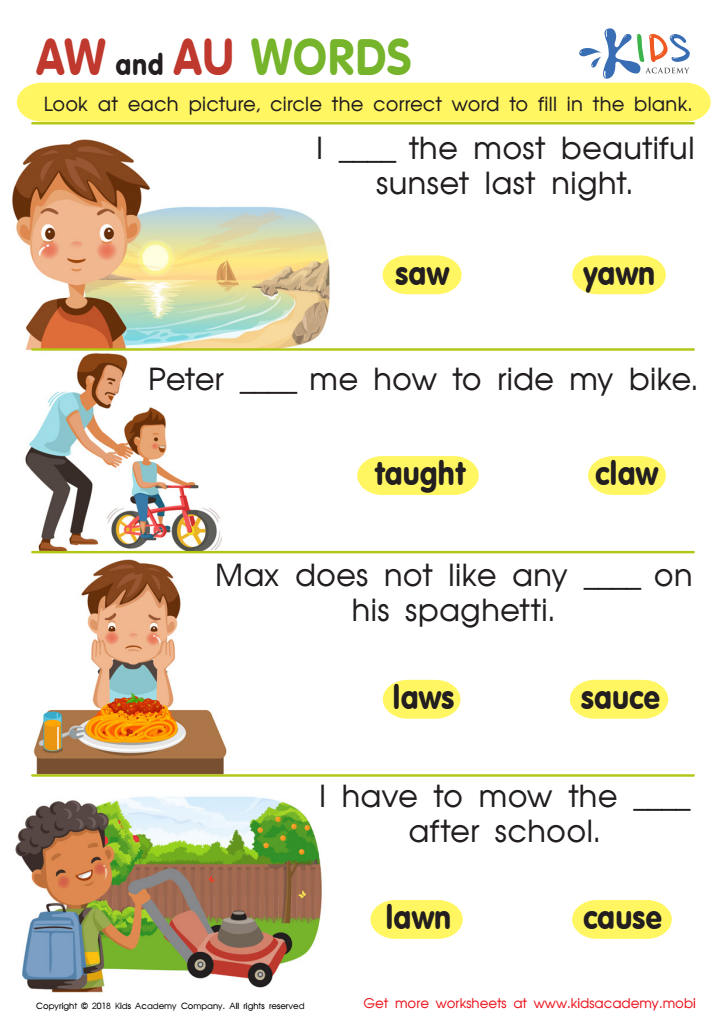
Reading: AW and AU Words Worksheet
This worksheet helps kids recognize that /au/ and /aw/ can make the same sound. Students read sentences and pick the correct word with one of the digraphs. Understanding digraphs improves decoding and reading fluency. Perfect for reading and phonics classes.
Reading: AW and AU Words Worksheet
Worksheet
Join Kids Academy for Free
Who is primarily going to use this learning content?





Word recognition is a crucial skill for young readers, and understanding vowels plays a vital role in this process for children aged 7-9. Vowels contribute to the correct pronunciation and meaning of words, functioning as the glue that holds syllables together. Developing strong word recognition skills by mastering vowels can significantly enhance a child’s reading fluency, comprehension, and overall literacy.
At this age, children transition from learning to read to reading to learn. Fluent word recognition enables them to focus on understanding content rather than decoding individual words. Mastery of vowels helps children decode unfamiliar words more quickly and accurately, promoting confidence and a positive attitude towards reading.
Parents and teachers should care because strong word recognition leads to better academic performance not only in reading but across all subjects that require reading comprehension, such as science and social studies. This foundational skill sets the stage for advanced literacy skills that are critical for lifelong learning.
Moreover, engaging families in supporting vowel recognition can create a cohesive learning environment. Catchy songs, word games, and reading books together can reinforce what is taught in the classroom, making learning enjoyable. Thus, focusing on word recognition and vowels benefits children’s reading development and fosters a collaborative, supportive learning journey.