Addition Practice Worksheets for Ages 7-9 - Page 5
106 filtered results
-
From - To
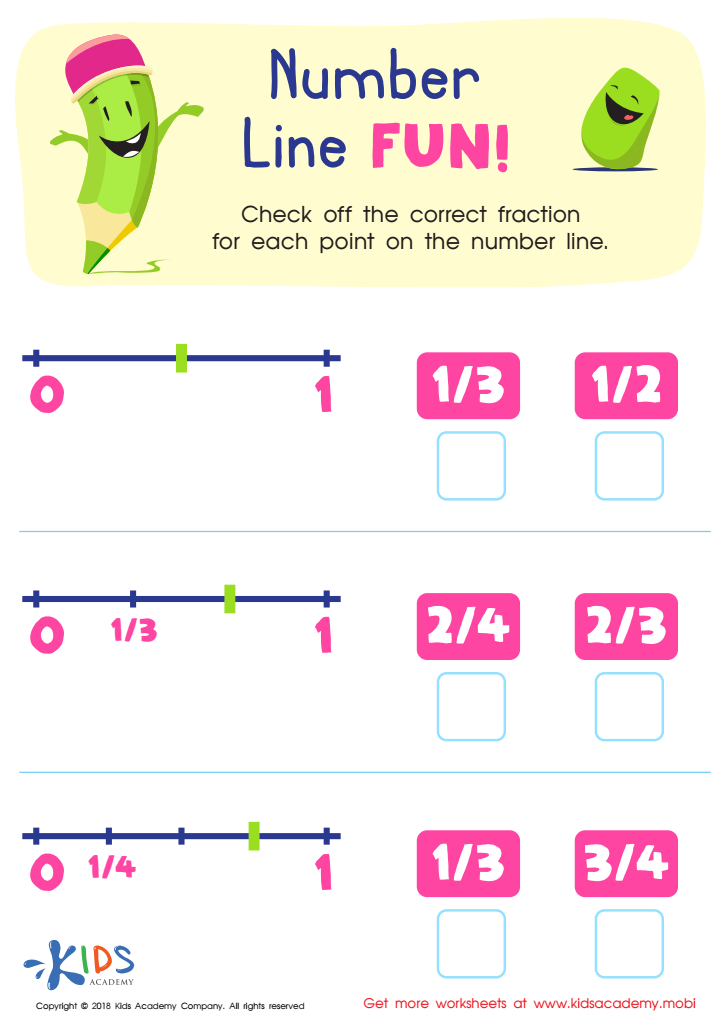
Number Line Fun Worksheet
 Assign to My Students





.jpg)

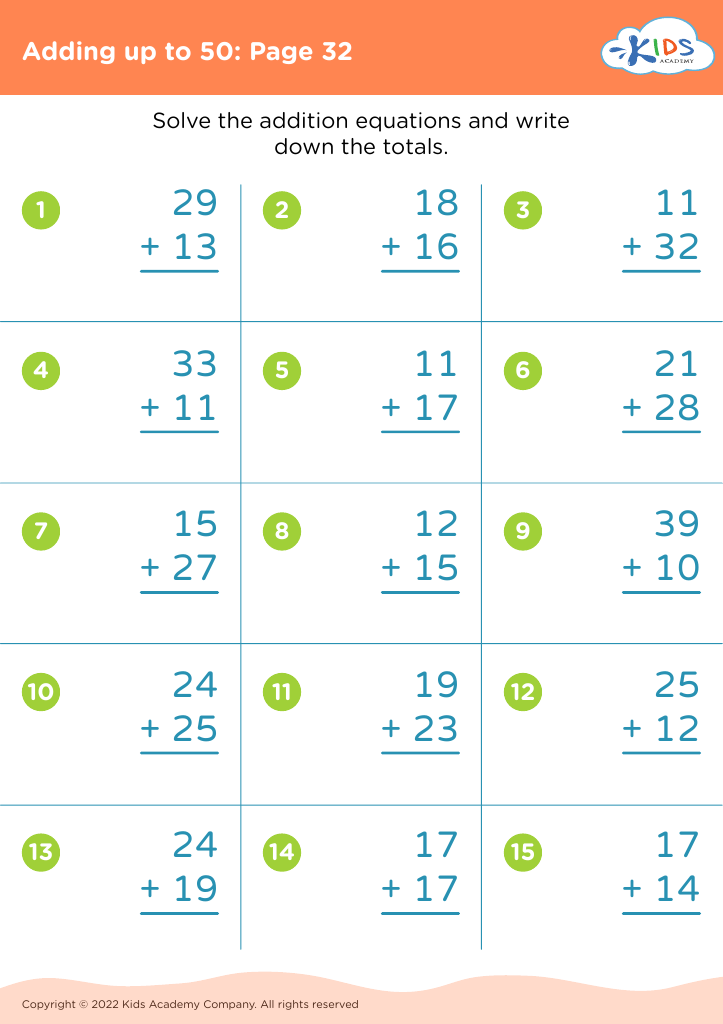
Addition practice for ages 7-9 is essential for several reasons, making it a priority for both parents and teachers. First and foremost, mastering addition lays the foundation for more complex mathematical concepts, such as subtraction, multiplication, and division. As children in this age group move from concrete to abstract thinking, practice helps reinforce their understanding of numbers and their relationships.
Furthermore, regular addition practice enhances problem-solving skills and boosts confidence in mathematics. Children are more likely to enjoy math and perform better when they feel competent in their skills. Moreover, practicing addition supports cognitive development, improving working memory and critical thinking.
Engaging in addition exercises can also promote healthy study habits and discipline. It encourages kids to establish routines, whether through games, worksheets, or technology-based activities, making learning enjoyable. Additionally, teamwork and collaboration opportunities arise when students practice with peers, fostering social skills.
Parents play a vital role in providing support and encouragement, helping to create a positive learning environment. Ultimately, prioritizing addition practice helps children develop a strong mathematical foundation, ensuring they are well-equipped to tackle future academic challenges effectively. Investing in these early skills translates into long-term success, both in mathematics and beyond.








