Analog clock reading Worksheets for Ages 7-9
4 filtered results
-
From - To
Discover our engaging Analog Clock Reading Worksheets designed for children ages 7-9! These worksheets help young learners develop essential time-telling skills by covering various aspects of analog clocks, including reading hours, minutes, and understanding the relationship between numbers and clock hands. With fun and colorful designs, each activity encourages critical thinking and reinforces learning through hands-on practice. Perfect for at-home use or in the classroom, these worksheets foster confidence in time management and enhance mathematical understanding. Start your child's journey to mastering the art of telling time today with our free, printable resources that make learning enjoyable and effective!
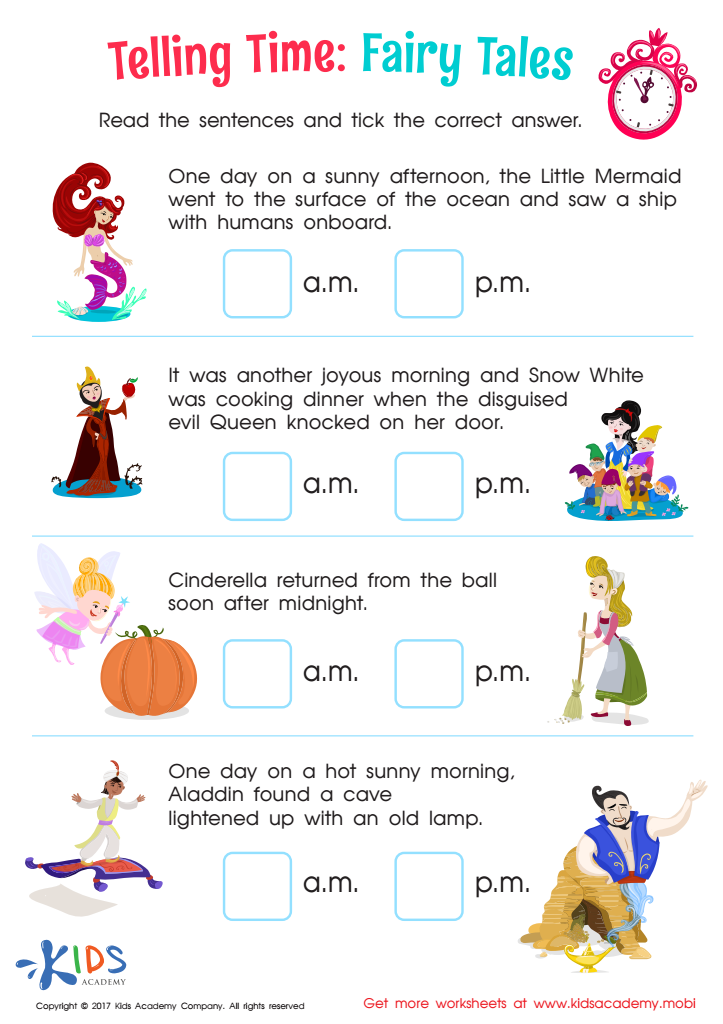
Telling Time: Fairy Tales Worksheet
 Assign to My Students
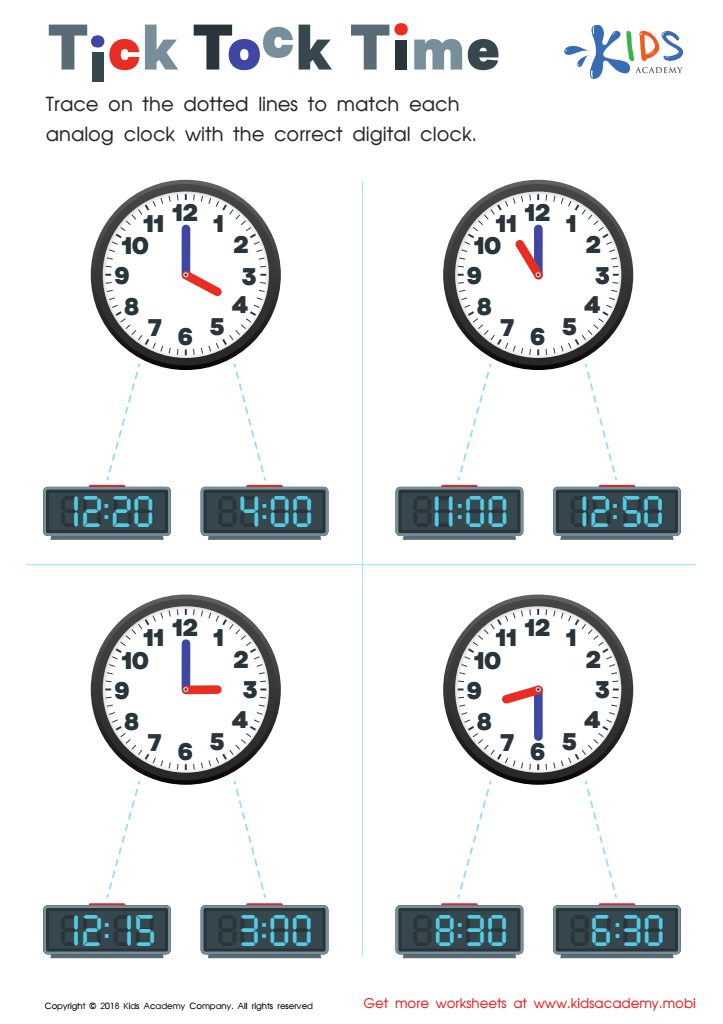
Tick Tock Time Worksheet
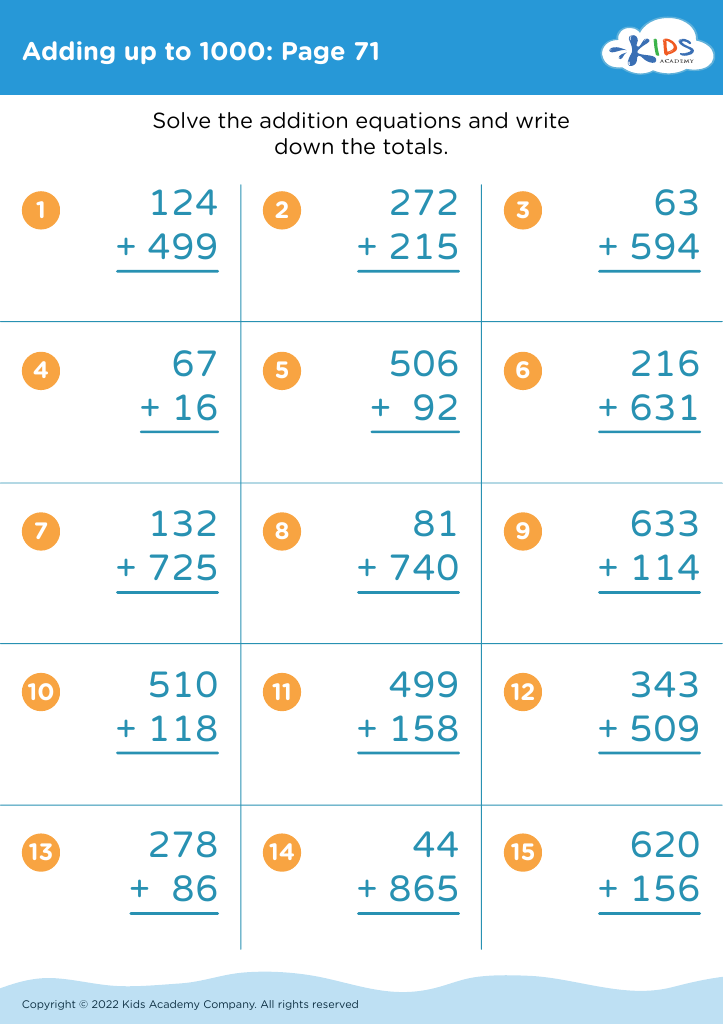
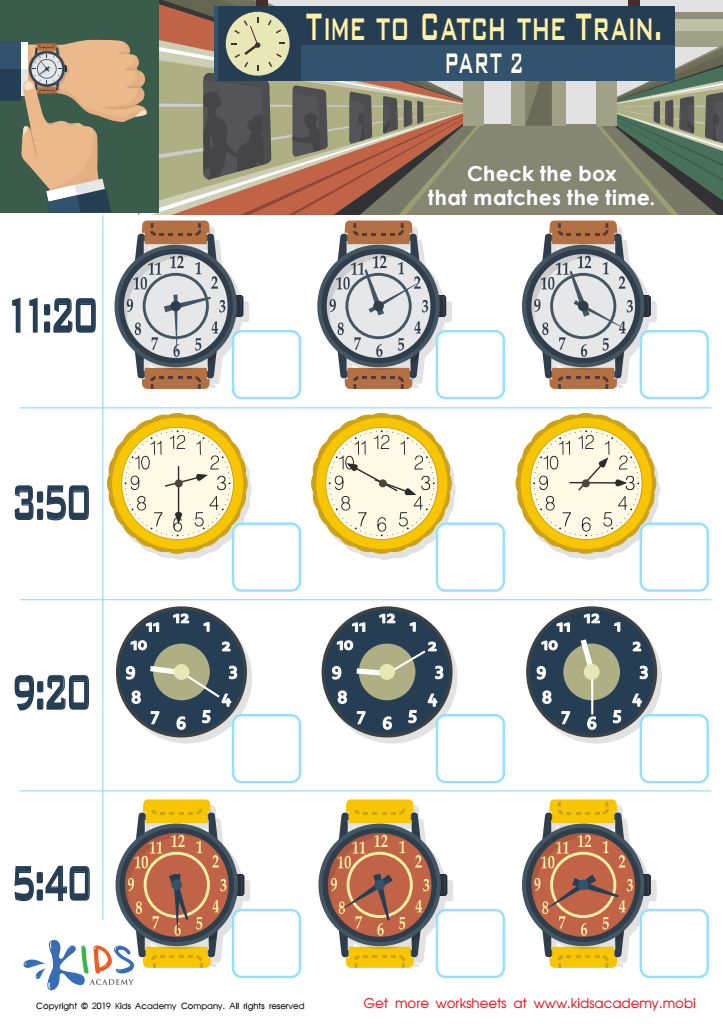
Time to Catch the Train Part 2 Worksheet





.jpg)

Teaching children to read analog clocks is a vital skill that extends beyond just telling time. For children ages 7-9, mastering analog clocks fosters a deeper understanding of time and can enhance various cognitive skills. Analog clocks encourage critical thinking and problem-solving as students learn to interpret the hands in relation to numbers and intervals.
By understanding how time works in a more visual and tactile way, children also improve their number sense and spatial awareness. This early mastery lays a foundation for more complex mathematical concepts, such as multiplication and division, as they relate to time—like calculating elapsed time or dividing an hour into segments.
Furthermore, reading an analog clock is a life skill; many public spaces and devices still rely on it. Emphasizing analog clocks helps children appreciate the different representations of time and the world's rhythm around them.
In this digital age, where screens dominate, understanding analog clocks promotes mindfulness about time management, allowing children to learn routines and punctuality. For parents and teachers, fostering this skill is crucial not only for academic growth but also for providing children with tools that will serve them throughout their lives.








