Basic geometry knowledge Worksheets for Ages 7-9
3 filtered results
-
From - To
Explore our collection of Basic Geometry Knowledge Worksheets designed specifically for children ages 7-9. These engaging and interactive worksheets introduce young learners to essential geometric concepts, including shapes, angles, and spatial reasoning. With a variety of activities that incorporate coloring, drawing, and problem-solving, children will enhance their understanding of geometry in a fun and playful manner. Perfect for home or classroom use, our worksheets are aligned with educational standards, ensuring boys and girls build a solid foundation in foundational math skills. Dive into the world of geometry and watch your child's confidence and enthusiasm for learning flourish!
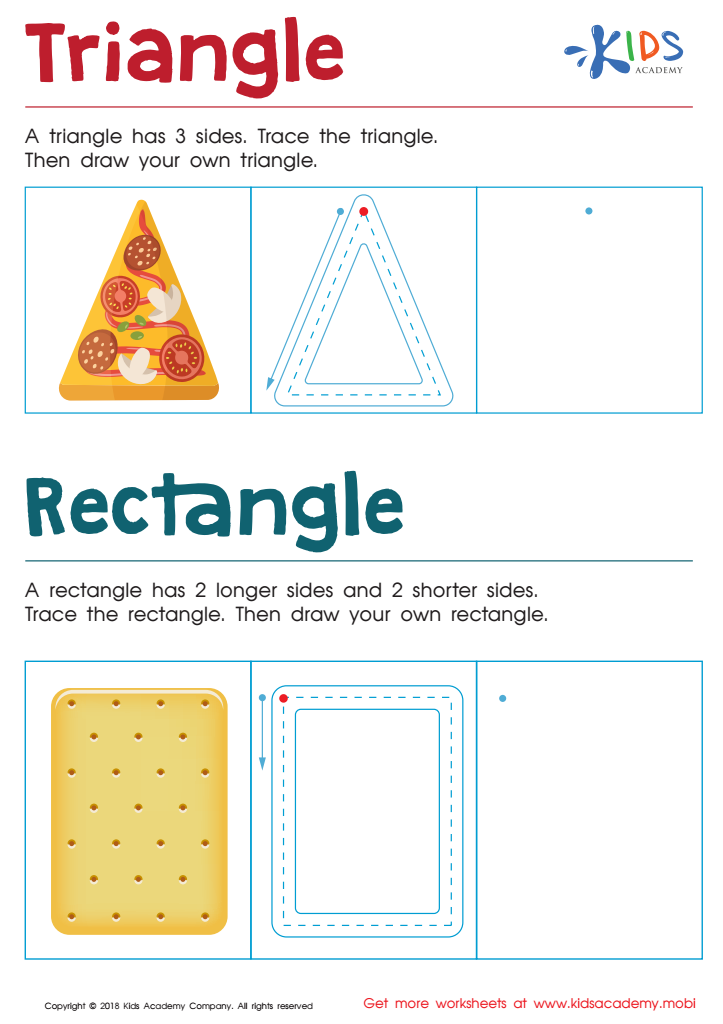
Triangle Rectangle Worksheet
 Assign to My Students
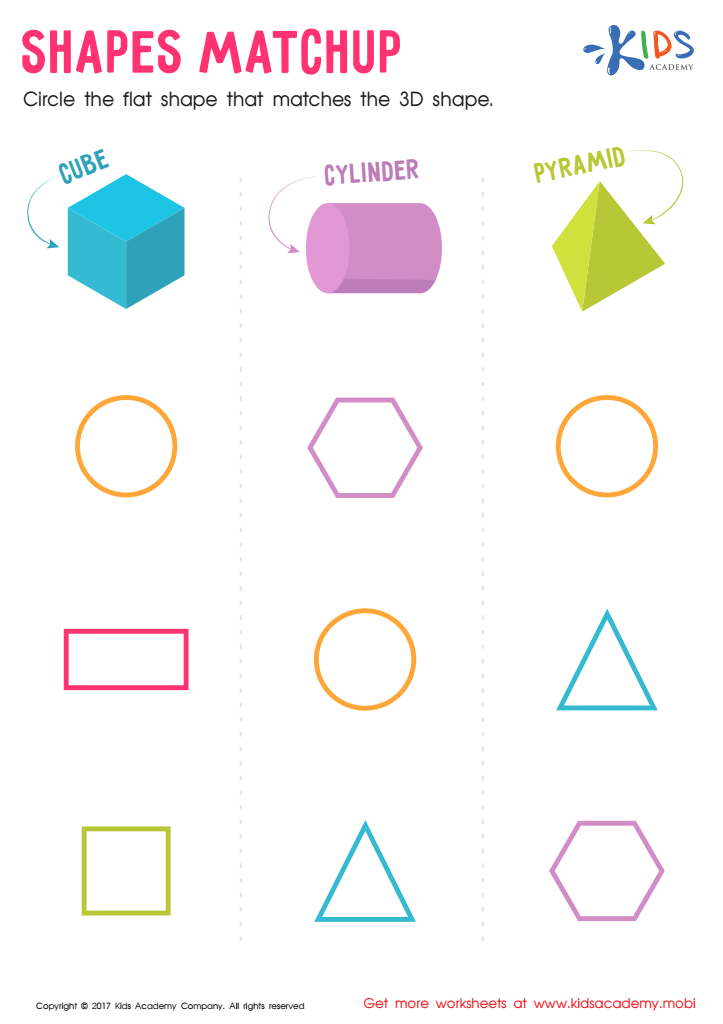
Shapes Matchup Worksheet







Basic geometry knowledge is vital for children aged 7-9 because it forms the foundation for their spatial awareness and critical thinking skills. At this developmental stage, children are naturally curious about the world around them, and geometry provides a framework for understanding shapes, sizes, and the relationships between objects. Mastering basic geometric concepts helps enhance their problem-solving abilities, as they learn to visualize and manipulate shapes in their minds.
Additionally, geometry is not just about mathematics; it permeates various aspects of the real world. Everyday activities, such as playing with toys, arts and crafts, and even sports, involve geometric reasoning. By learning shapes, symmetry, and simple measurements, children can apply this knowledge in practical scenarios, promoting their cognitive development and encouraging creativity.
For parents and teachers, fostering geometric understanding can boost children’s confidence in math-related tasks. It makes learning fun and interactive, fostering an environment where children feel comfortable exploring mathematical concepts. Ultimately, investing in basic geometry not only equips children with essential skills for future academic success but also prepares them to navigate and interpret the world more effectively. Encouraging engagement with geometry is a pivotal step towards nurturing well-rounded, logically-minded individuals.








