
Counting objects Worksheets for Ages 7-9
11 filtered results
Difficulty Level
Grade
Age
-
From - To
Subject
Activity
Standards
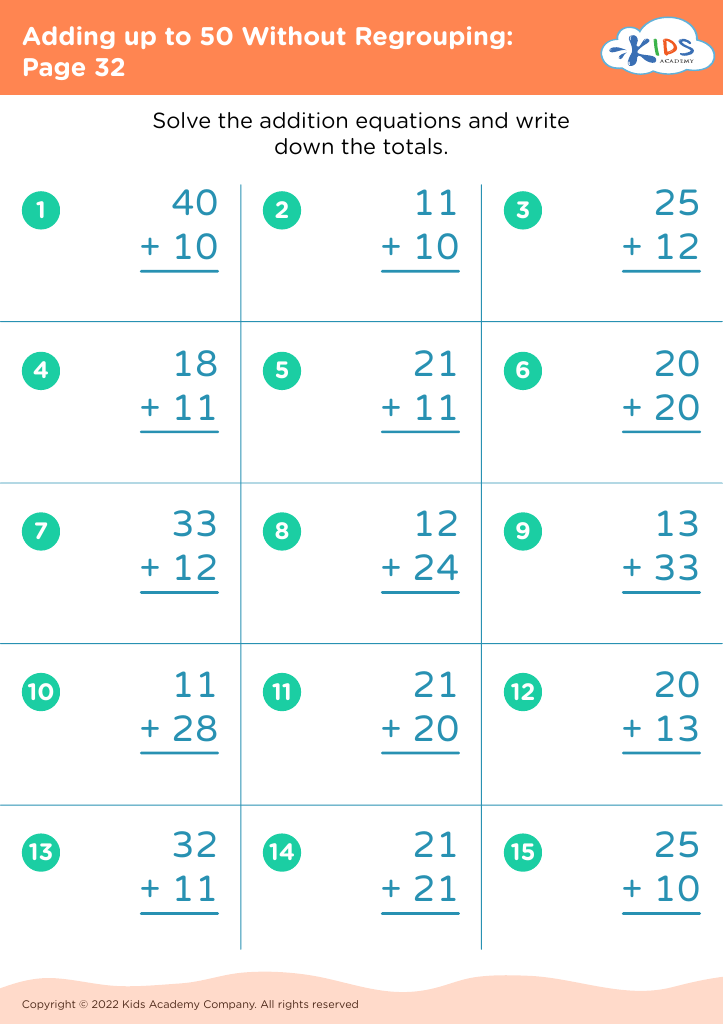
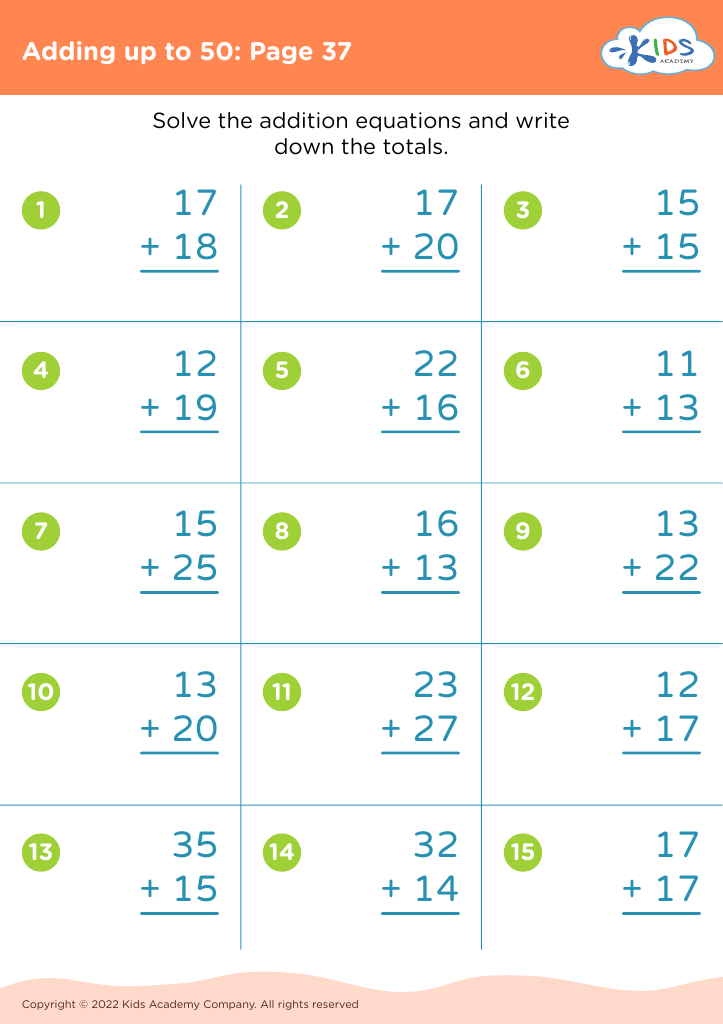
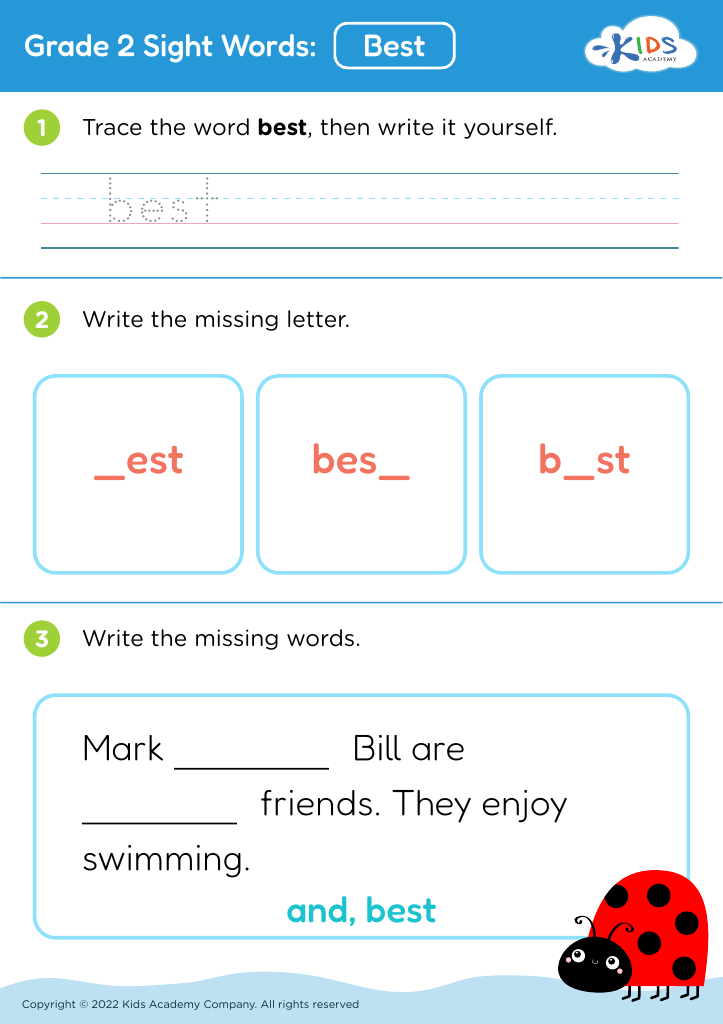
Discover engaging Counting Objects Worksheets designed specifically for children aged 7-9! These worksheets enhance foundational math skills by allowing young learners to practice their counting abilities through fun and interactive activities. Each worksheet features vibrant visuals and relatable themes that capture children's interest, making learning enjoyable and effective. From counting everyday objects to solving simple problems, these resources promote critical thinking and boost confidence in math. Whether in the classroom or at home, our worksheets provide valuable practice and reinforce essential counting concepts. Equip your child with the skills they need to succeed in math while having fun with counting!
Favorites
With answer key
Interactive
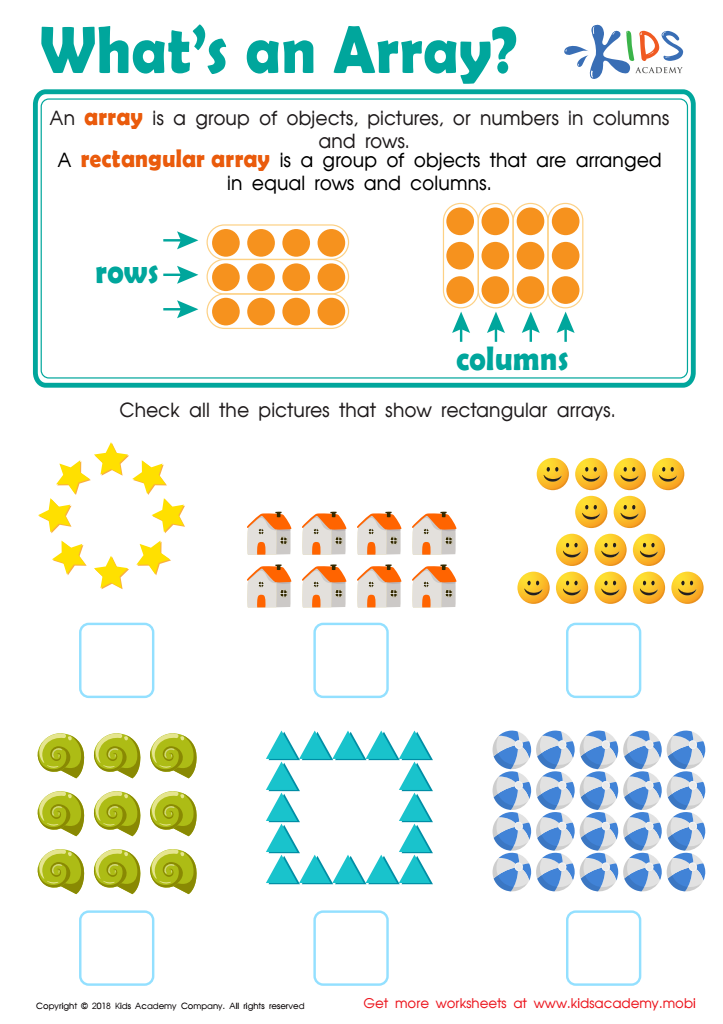
What's an Array? Worksheet
Explain to your child that an array is a group of objects, pictures, or numbers in columns and rows. Show them a rectangular array is a group of objects in equal rows and columns. Guide them to check the pictures in the worksheet to spot any rectangular arrays. Help them remember this concept.
 Assign to My Students
What's an Array? Worksheet
Worksheet
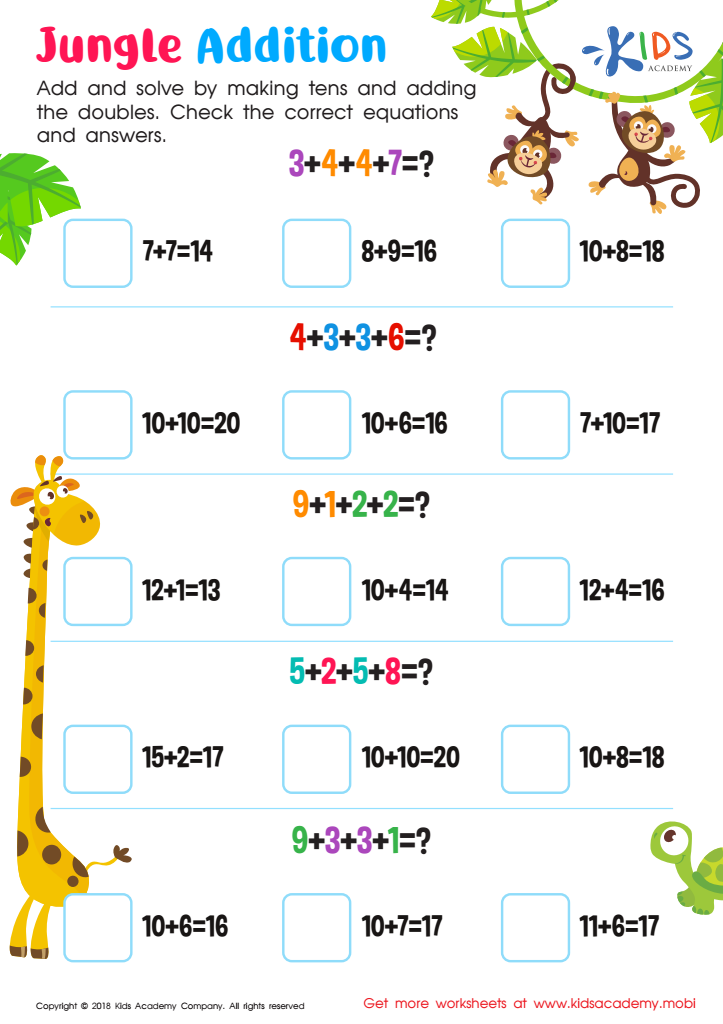
Jungle Addition Worksheet
With this worksheet, kids can use the strategies of making tens and adding doubles to add numbers with more than three addends. They'll practice choosing the right method and become more confident in their calculations, enabling quicker, more efficient computation.
Jungle Addition Worksheet
Worksheet
Join Kids Academy for Free
Who is primarily going to use this learning content?








Counting objects is a foundational skill for children aged 7-9, and it offers significant benefits that parents and teachers should prioritize. At this age, children are refining their mathematical understanding and developing critical thinking skills, making effective counting essential for future learning.
Firstly, counting cultivates numerical fluency, enabling children to confidently perform basic arithmetic operations such as addition and subtraction. This skill lays the groundwork for more complex mathematics, such as multiplication and division.
Moreover, counting helps children make connections between numbers and real-world applications. When they count objects, they learn categorization and comparison, enhancing their problem-solving abilities. Engaging in counting activities also boosts memory and concentration, as children practice keeping track of numbers and quantities.
In addition to cognitive benefits, counting fosters social skills. Group activities that involve counting can encourage collaboration and communication among peers.
Overall, counting is more than a basic math skill; it's essential for holistic development. Parents and teachers should incorporate enjoyable, hands-on counting experiences in daily routines to enhance children’s learning journey and instill a solid foundation for future educational success.








