
Letter-sound recognition Worksheets for Ages 7-9
3 filtered results
Difficulty Level
Grade
Age
-
From - To
Subject
Activity
Standards
Unlock your child's reading potential with our engaging Letter-Sound Recognition Worksheets, specially designed for ages 7-9! These vibrant, educational resources foster essential literacy skills as children explore the connections between letters and their corresponding sounds. Our interactive worksheets feature a variety of activities that make learning fun, from matching games to fill-in-the-blank exercises. Perfect for homeschool settings or classroom use, our materials promote phonemic awareness and enhance vocabulary development. Help your child build a strong foundation in reading with our carefully crafted worksheets, ensuring they gain the confidence to excel. Start their literacy journey today!
Favorites
With answer key
Interactive
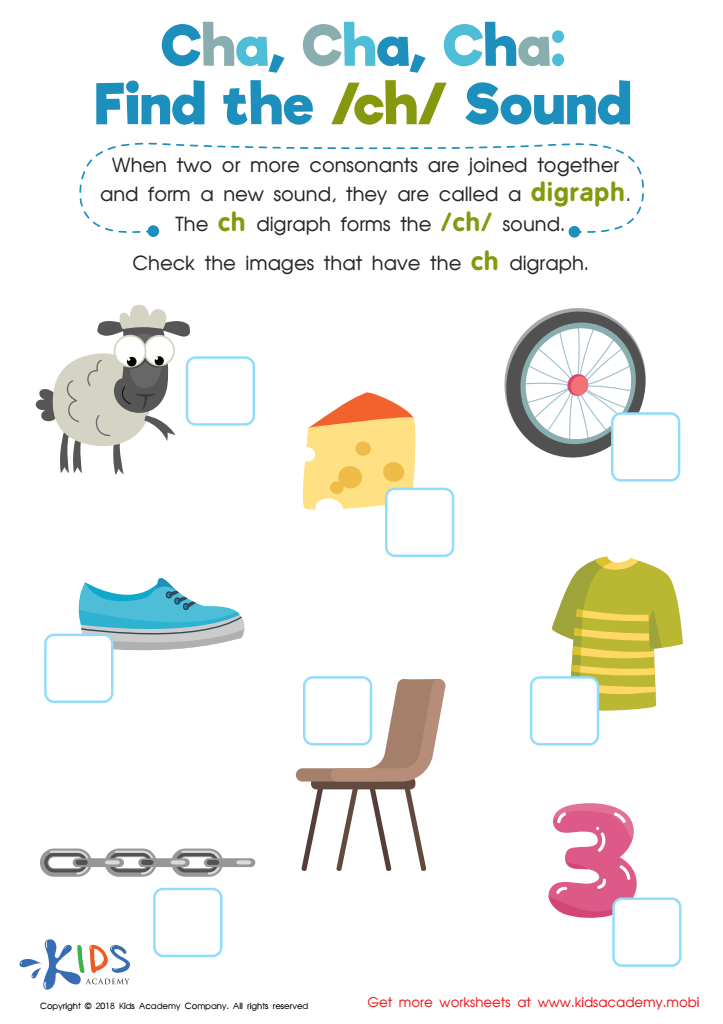
Cha, Cha, Cha: Find the /Ch/ Sound Worksheet
Have your students identify the objects in the images and if they struggle, help them check for the /ch/ digraph. This digraph forms a new sound when two or more consonants are combined, so it can be helpful to point it out to them in the colourful printout.
 Assign to My Students
Cha, Cha, Cha: Find the /Ch/ Sound Worksheet
Worksheet
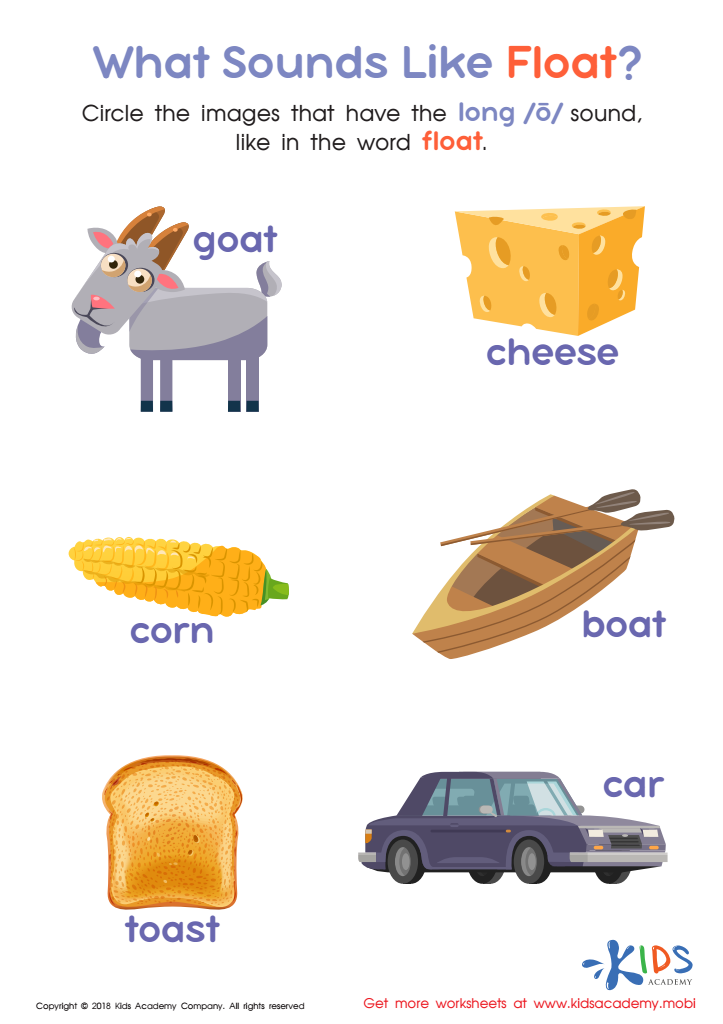
What Sounds Like Float? Worksheet
Help your kids practice the long /o/ sound with words such as 'boat', 'goat' and 'float'. Ask them to identify and circle the images in the worksheet that have the same sound. Award bonus points if they come up with more words with 'oa' spelling!
What Sounds Like Float? Worksheet
Worksheet
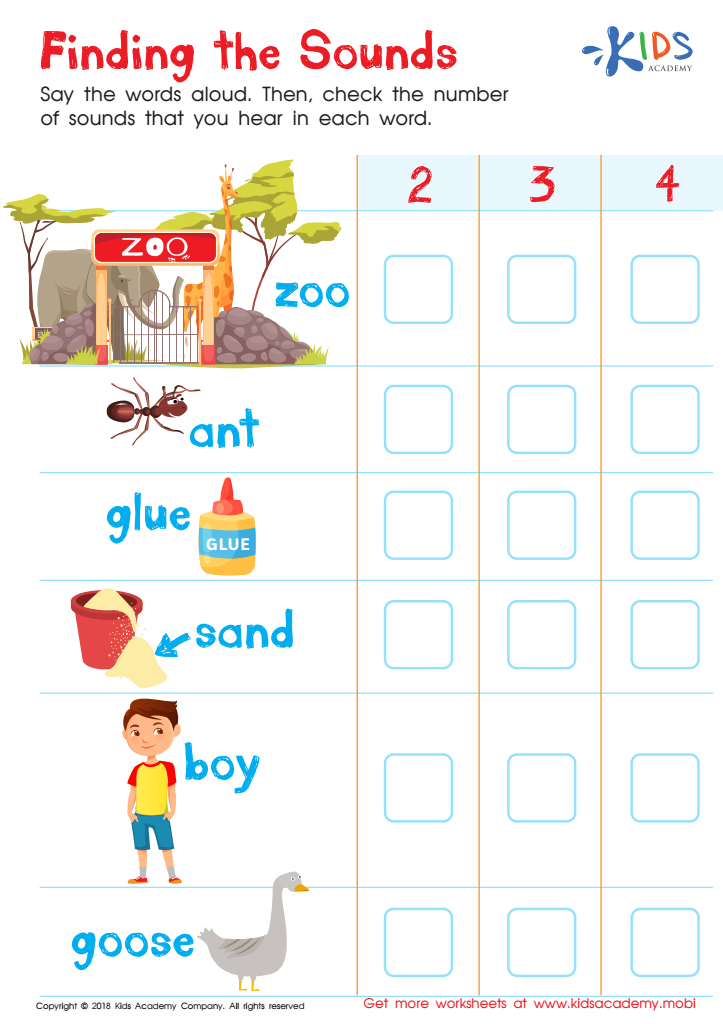
Finding the Sounds Worksheet
This free colorful worksheet assists children in learning words and breaking them down into sounds. It boosts auditory discrimination, phonological awareness and fine motor skills. Picture clues help them read confidently, and they can check the appropriate boxes to practice their reading skills.
Finding the Sounds Worksheet
Worksheet
Join Kids Academy for Free
Who is primarily going to use this learning content?







Letter-sound recognition is crucial for children aged 7-9 as it forms the foundation of their reading and writing skills. During this developmental stage, children are transitioning from learning to read to reading to learn. Mastery of letter-sound relationships enables them to decode new words independently, fostering a sense of confidence and autonomy in their reading abilities.
Understanding letter-sound relationships also directly impacts children's spelling and writing skills. As they internalize these connections, they can better express their thoughts and ideas through written language. Additionally, strong letter-sound recognition helps prevent literacy difficulties that can hinder academic success later on.
For parents and teachers, awareness and reinforcement of letter-sound recognition can bridge gaps that may arise due to diverse learning styles and paces among students. Engaging children in interactive activities like phonics games, rhyming exercises, or using multimedia resources can make learning enjoyable while reinforcing essential skills. Encouraging a supportive environment that prioritizes letter-sound recognition not only aids in literacy development but also fosters a lifelong love for reading. Ultimately, when children can effortlessly recognize letter sounds, they are better equipped for academic challenges and personal growth, making it a crucial focus for caregivers in this age group.








