Map reading Worksheets for Ages 7-9
3 filtered results
-
From - To
Explore our engaging map reading worksheets, meticulously designed for children ages 7-9. These worksheets, available at Kids Academy, enhance geographical skills, blending fun with education. Your young learners will navigate through activities that build spatial thinking, promote direction sense, and understand map symbols and compass use. With diverse and interactive exercises, students will capture the exciting essence of exploration and adventure. Our resources align with educational standards, ensuring that your child builds a strong foundation in map reading while staying entertained. Set them on a path to becoming map-reading maestros with our thoughtfully crafted worksheets.
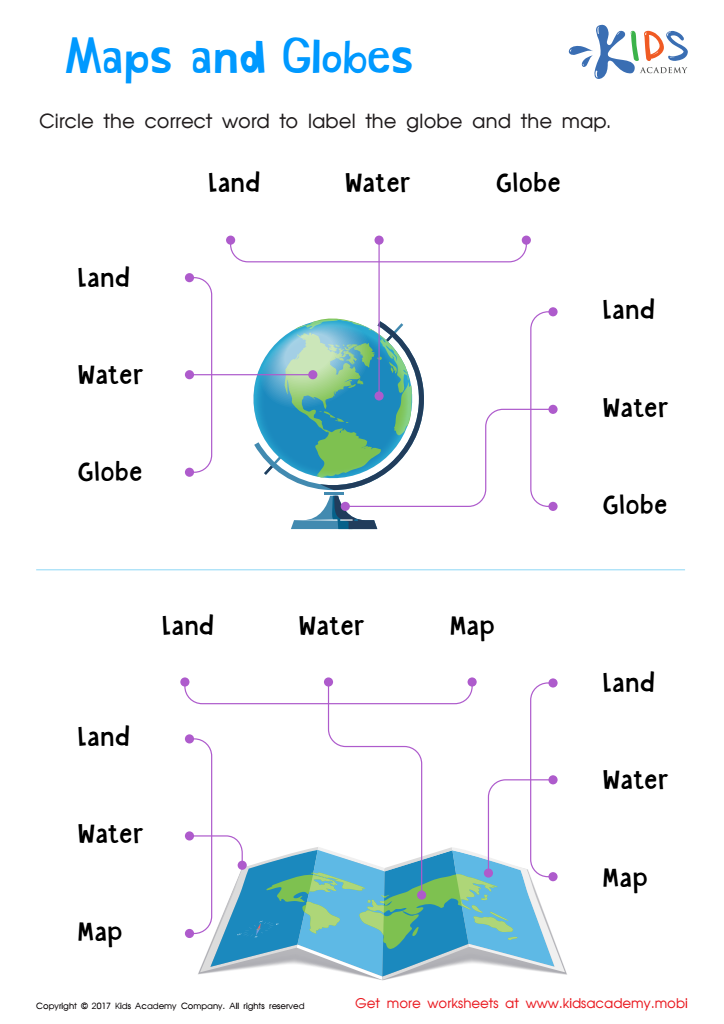
 Assign to My Students
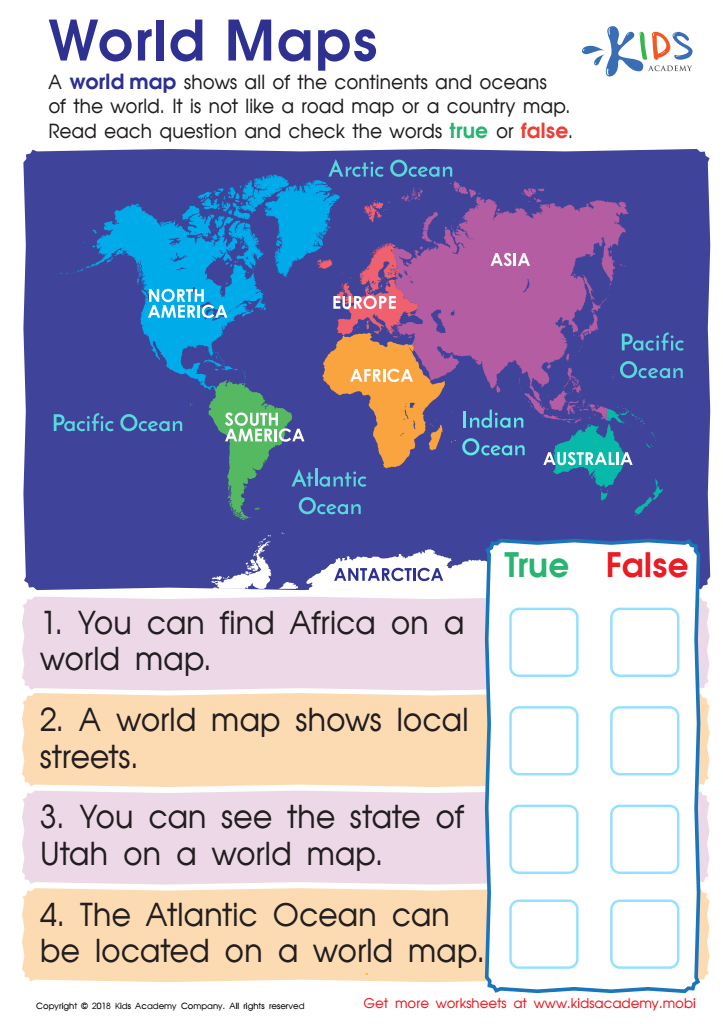
World Maps Worksheet
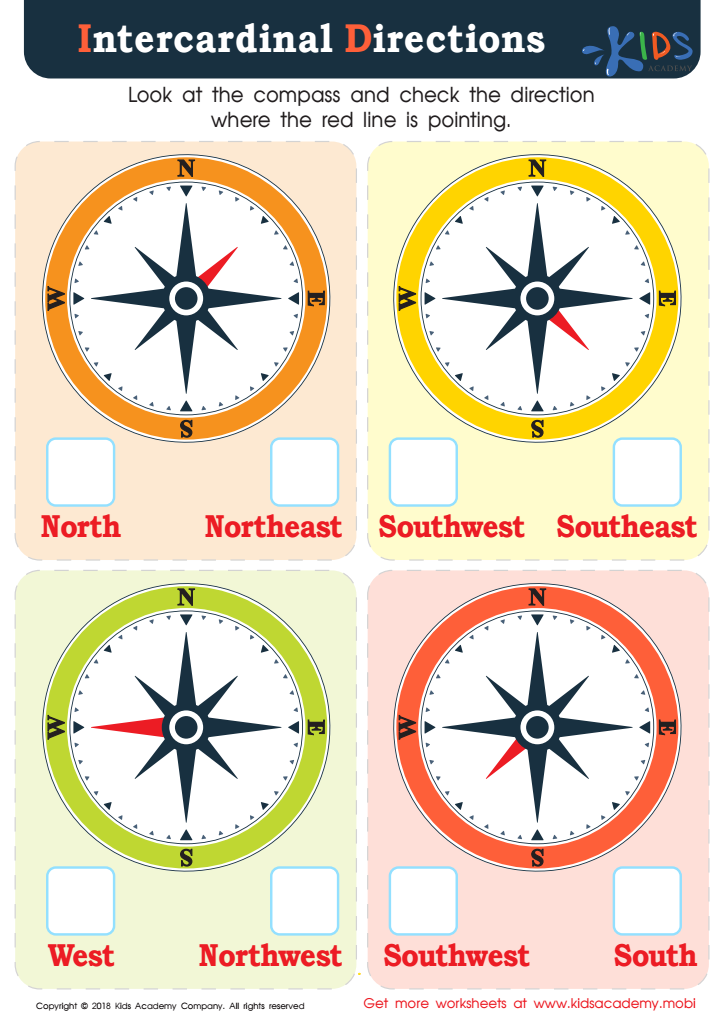
Intercardinal Directions Worksheet






Teaching map reading skills to children aged 7-9 is crucial for their overall cognitive and practical development. At this stage, children are developing their spatial awareness and ability to understand symbols and representations of the real world. By learning to read maps, they enhance their ability to visualize and navigate spaces, an essential skill for their everyday activities and future tasks.
Moreover, map reading fosters critical thinking and problem-solving. When children learn to interpret maps, they engage in exercises that require them to analyze, synthesize, and evaluate information. These skills are not only foundational for geography but also support academic growth in subjects such as mathematics and science.
In addition, map reading can spark curiosity and a sense of adventure. It can connect children with a wider world beyond their immediate surroundings, encouraging an interest in exploration, cultures, and global awareness. This can lead to a greater understanding of and appreciation for diversity.
Socially, map reading is often a collaborative activity, enabling children to work together and communicate effectively. It teaches them about leadership, responsibility, and teamwork. In a world where technology increasingly mediates experiences of space and place, manual map reading can still form a foundational and enriching part of a child’s education. Consequently, both parents and teachers should prioritize this skill for its myriad developmental benefits.








