
Number comparison Worksheets for Ages 7-9
9 filtered results
Difficulty Level
Grade
Age
-
From - To
Subject
Activity
Standards
Discover engaging and educational Number Comparison Worksheets designed for children ages 7-9! Our worksheets empower young learners to develop essential math skills by comparing numbers through fun and interactive activities. These resources are perfect for helping students sharpen their ability to identify greater and lesser values, enhancing their understanding of place value and number sense. With a variety of exercises that cater to different learning styles, your child will easily build confidence and proficiency in number comparison. Whether at home or in the classroom, our printable worksheets are a fantastic way to make math enjoyable and accessible. Start exploring today!
Favorites
With answer key
Interactive
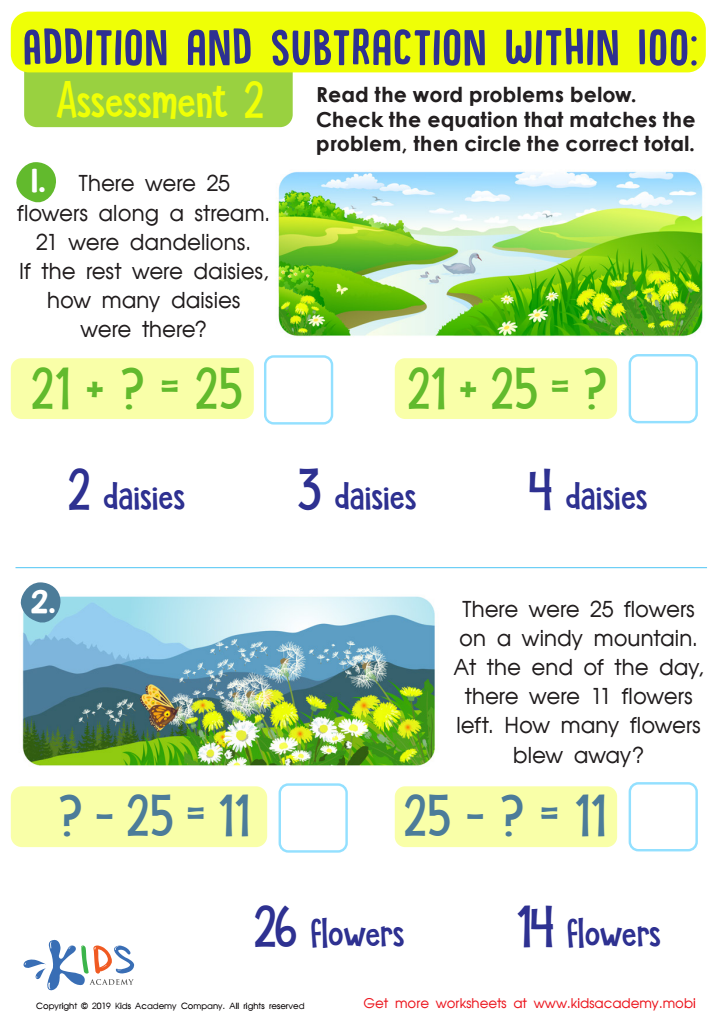
Assessment 2 Math Worksheet
Using fun exercises and pictures, you can get kids excited about math. With practice and reminders of what they've learnt, they'll be solving simple addition and subtraction equations with ease. Read the word problems in the picture to them, then help them check the equation and choose the correct answer.
 Assign to My Students
Assessment 2 Math Worksheet
Worksheet
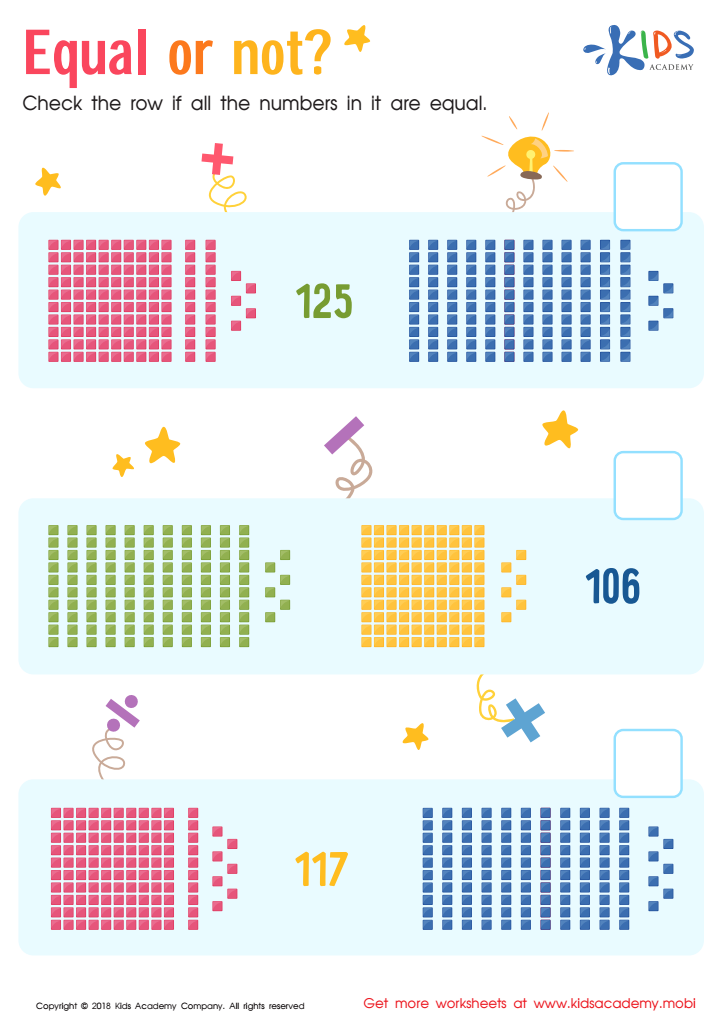
Equal or not Worksheet
To grow your child's learning, challenge them with new tasks. Stimulate their brains with activities that will build their knowledge and thinking skills. Take advantage of this worksheet exercise: ask your child to check the rows where all the numbers are equal. This simple exercise will improve their learning.
Equal or not Worksheet
Worksheet
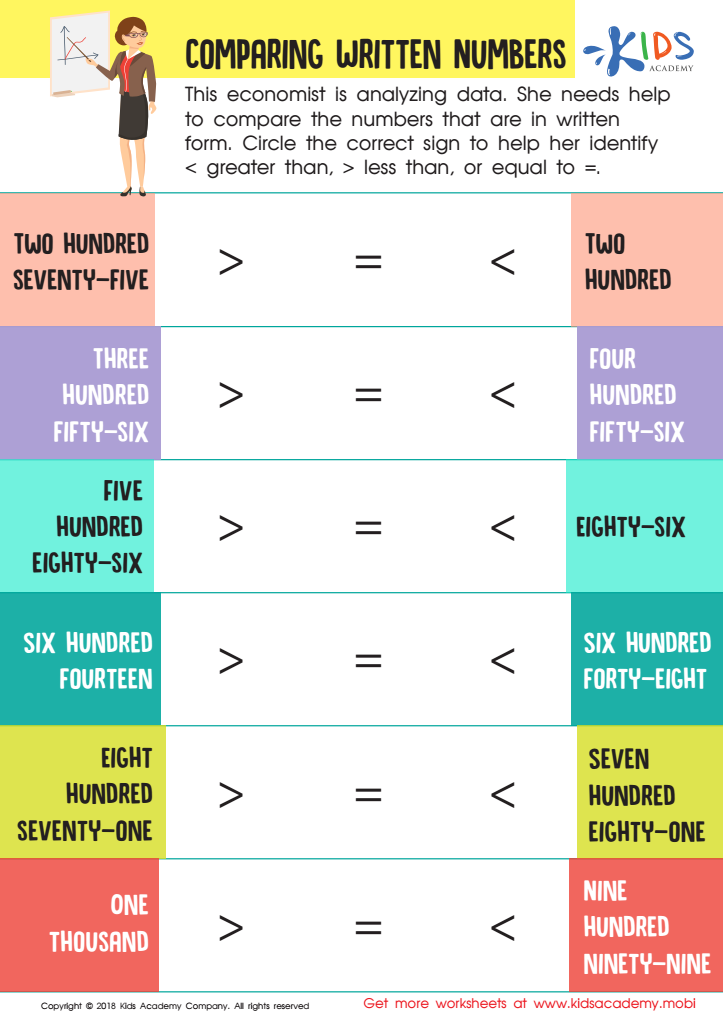
Comparing Written Numbers Worksheet
Children need to grasp that numbers come in different forms. This exciting PDF provides practice for comparing values written as words. Young economists can analyze the number pairs, then circle the sign (<, =, or >) to make comparisons true.
Comparing Written Numbers Worksheet
Worksheet
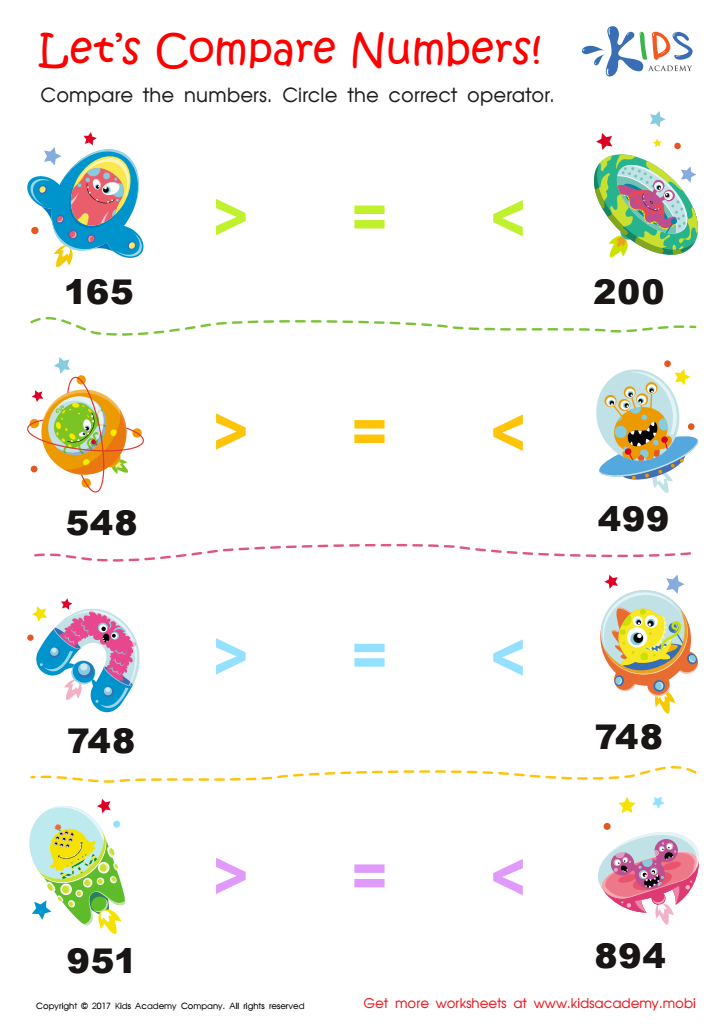
Comparing Numbers Worksheet for 2nd Grade
Alien friends are back to help your child learn to compare numbers using >, < and = symbols. This 2nd grade worksheet will challenge them with larger numbers!
Comparing Numbers Worksheet for 2nd Grade
Worksheet
Comparing Numbers Printable
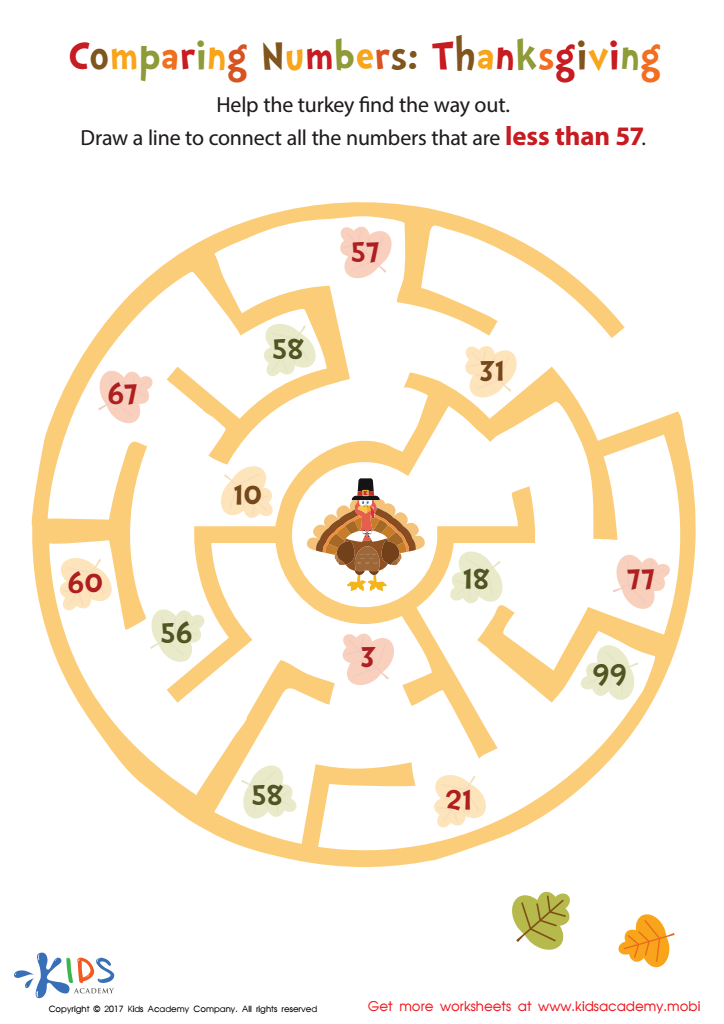
Test your child's number skills with this fun and tricky maze! This Thanksgiving worksheet lets them explore a maze, using numbers less than 57 to get to the tasty goal: A Thanksgiving turkey! Develop their number sense in a fun and engaging way!
Comparing Numbers Printable
Worksheet
Comparing Numbers Worksheet for 1st Grade
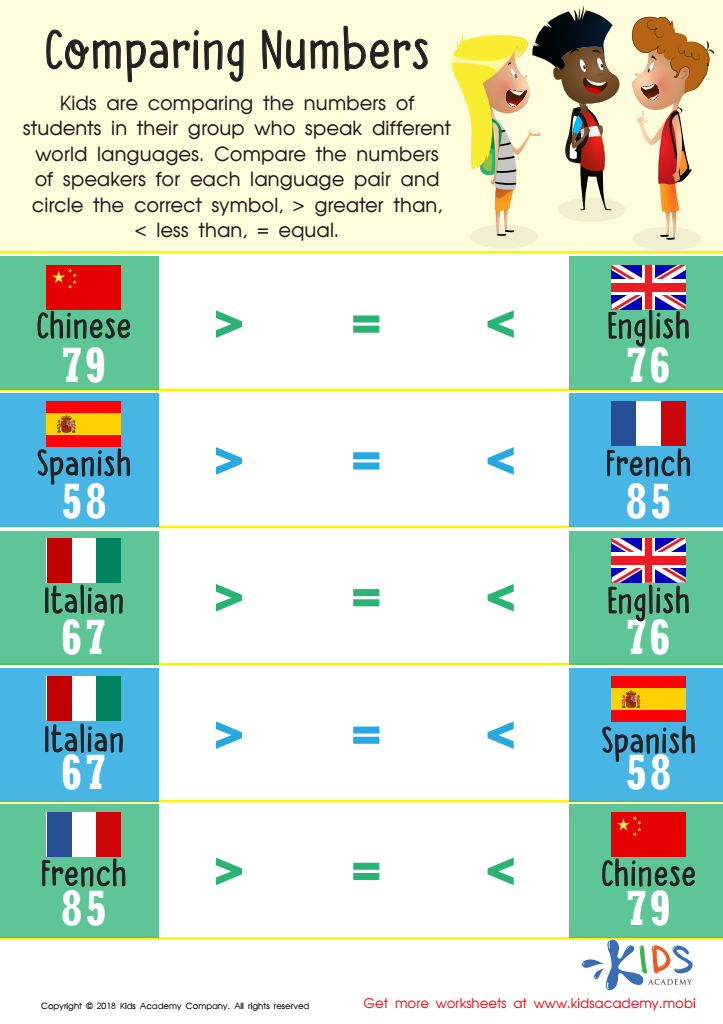
Children can build number sense by exploring the relationship between numbers. This worksheet uses bright international flags to compare numerical groups. Kids will love the cheerful colors and flags from different countries. It encourages them to compare numbers and reinforces their number sense with tens and ones place values.
Comparing Numbers Worksheet for 1st Grade
Worksheet
Compare Numbers Worksheet for 3rd Grade
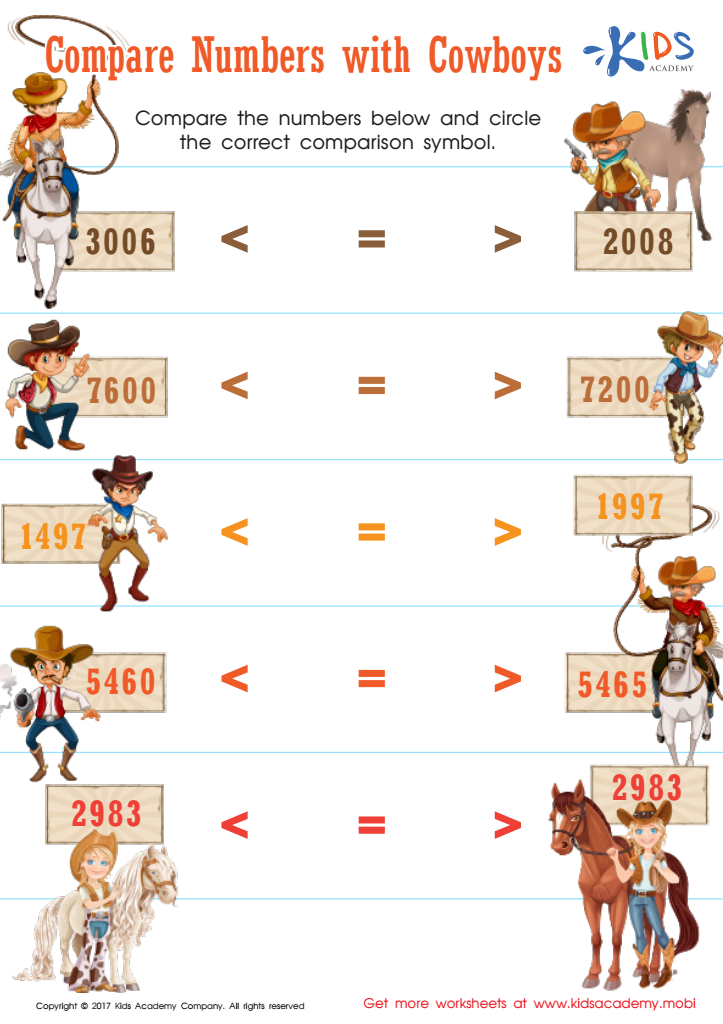
Time to get a roundup on big numbers! Help your 3rd grader practice comparing thousands with this compare numbers worksheet. They'll use >, <, and = symbols for tricky numbers. Jump in and join the cowboys!
Compare Numbers Worksheet for 3rd Grade
Worksheet
Join Kids Academy for Free
Who is primarily going to use this learning content?



.jpg)



Number comparison is a crucial skill for children aged 7 to 9 as it lays the foundation for mathematical understanding and critical thinking. During this developmental stage, children are increasingly exposed to more complex mathematical concepts, making number comparison essential for their numerical fluency and problem-solving abilities.
Firstly, mastering number comparison helps children develop a solid grasp of greater than, less than, and equal to concepts. This understanding enables them to make informed decisions when faced with mathematical problems and real-world scenarios, such as budgeting or estimating distances.
Secondly, this skill fosters cognitive development. As children learn to compare numbers, they enhance their analytical abilities, improve their logical reasoning, and boost their confidence in tackling more advanced math topics that arise later.
From a social-emotional perspective, when children are competent in number comparison, they develop a positive attitudes towards math, reducing math anxiety as they progress through school. Teachers and parents play a pivotal role in reinforcing this skill through engaging activities and practical applications, ultimately leading to lifelong mathematical proficiency. Recognizing the importance of number comparison ensures that children are well-prepared for future academic tasks and everyday problem-solving.








