Phonics recognition Worksheets for Ages 7-9
12 filtered results
-
From - To
Boost your child's reading skills with our engaging Phonics Recognition Worksheets designed specifically for ages 7-9. These worksheets provide a fun and interactive way for young learners to master phonics through various activities, such as letter sound associations, word recognition, and blending exercises. Tailored to reinforce essential literacy concepts, our resources encourage children to read with confidence and comprehension. With colorful illustrations and exercises that cater to different learning styles, these worksheets are perfect for classroom use or home learning. Discover the joy of reading as your child develops stronger phonetic awareness and becomes a more proficient reader today!
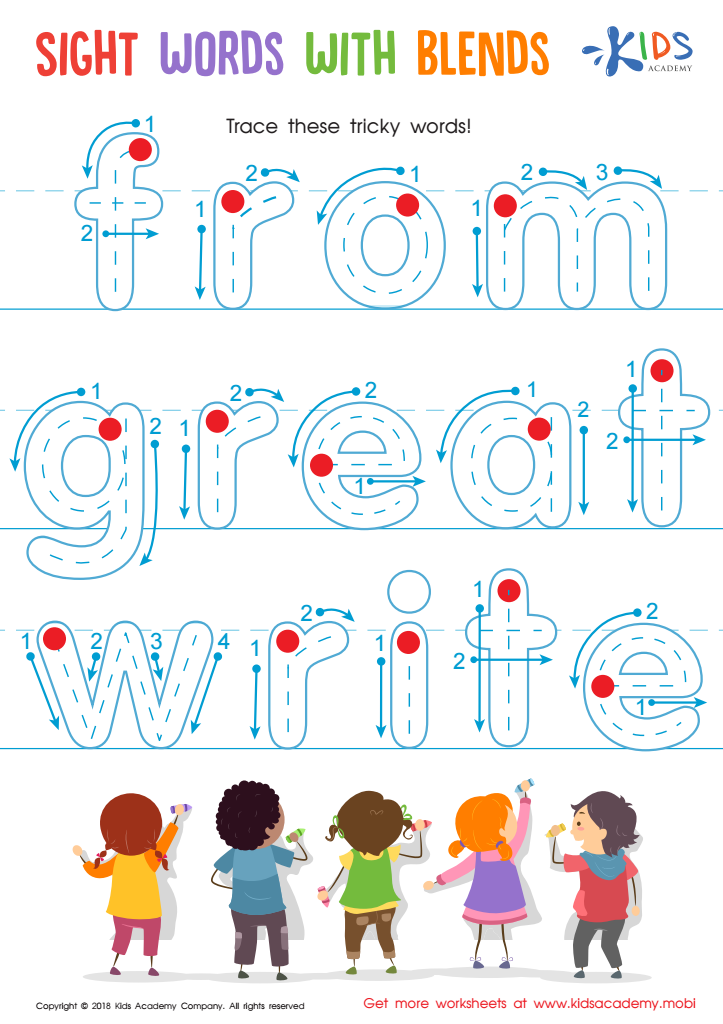
Sight Words with Blends Worksheet
 Assign to My Students
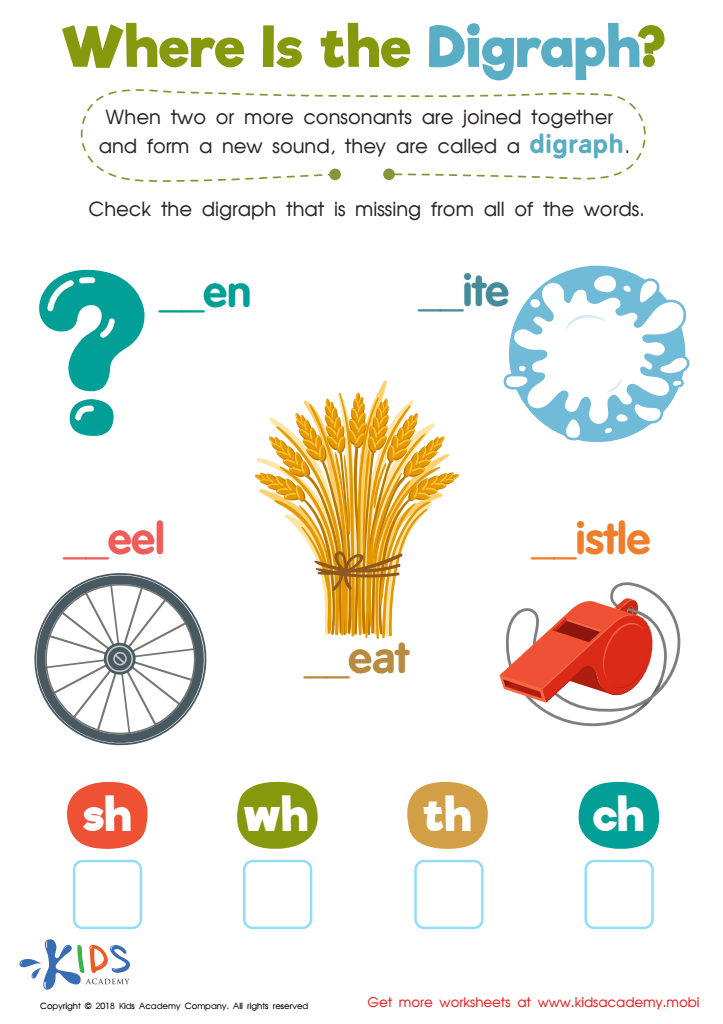
Where Is the Digraph? Worksheet
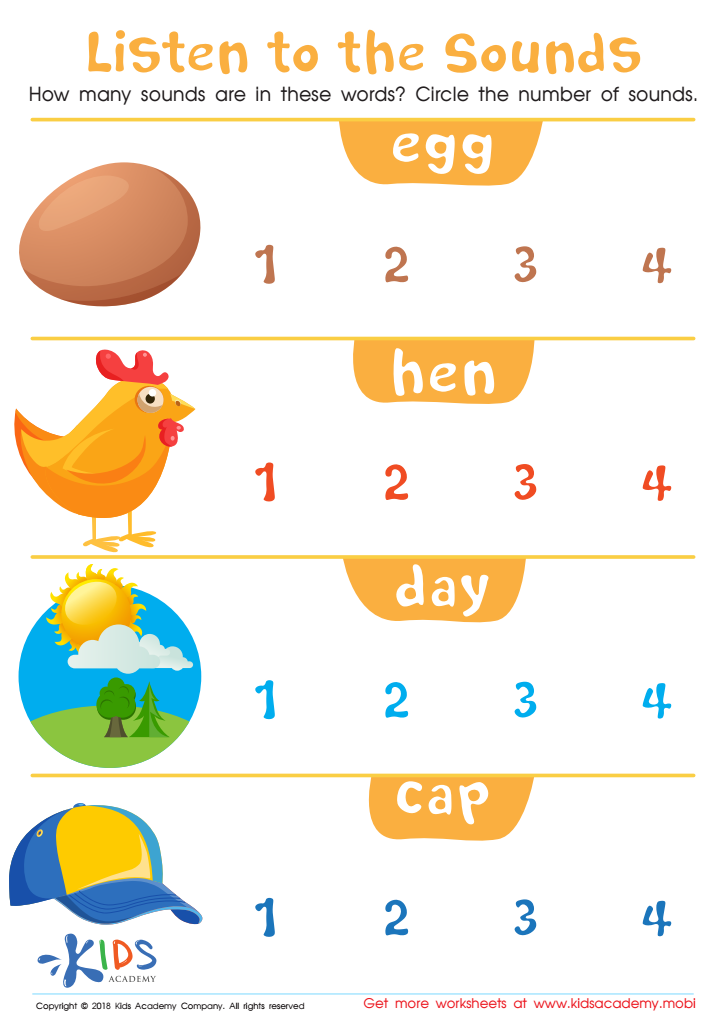
Listen to the Sounds Worksheet
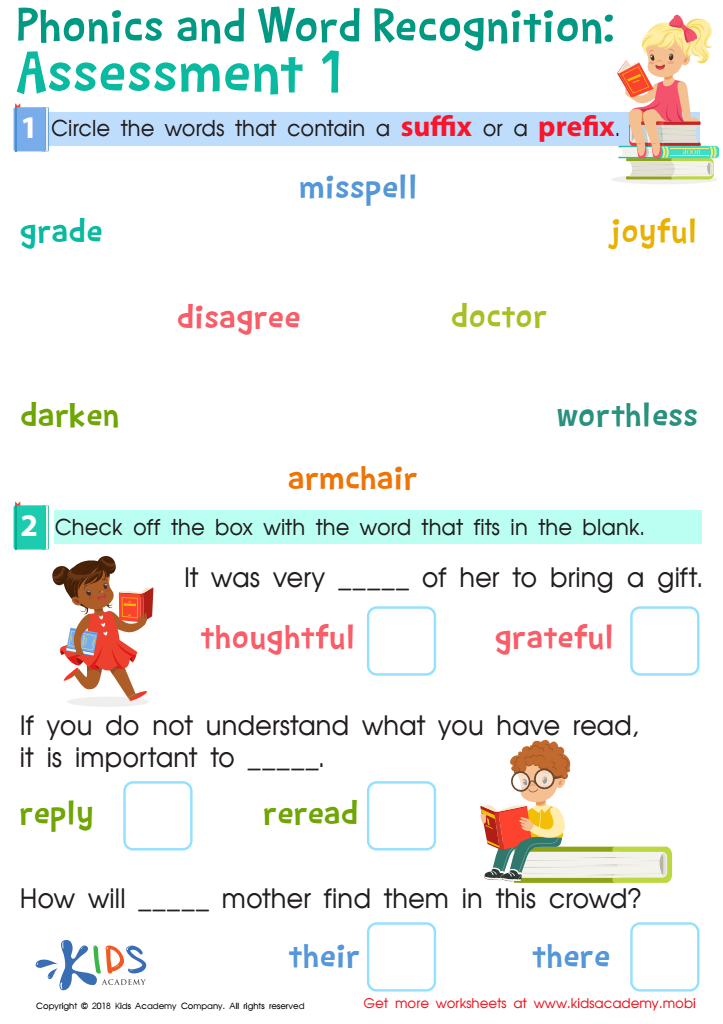
Phonics and Word Recognition: Assessment 1 Worksheet
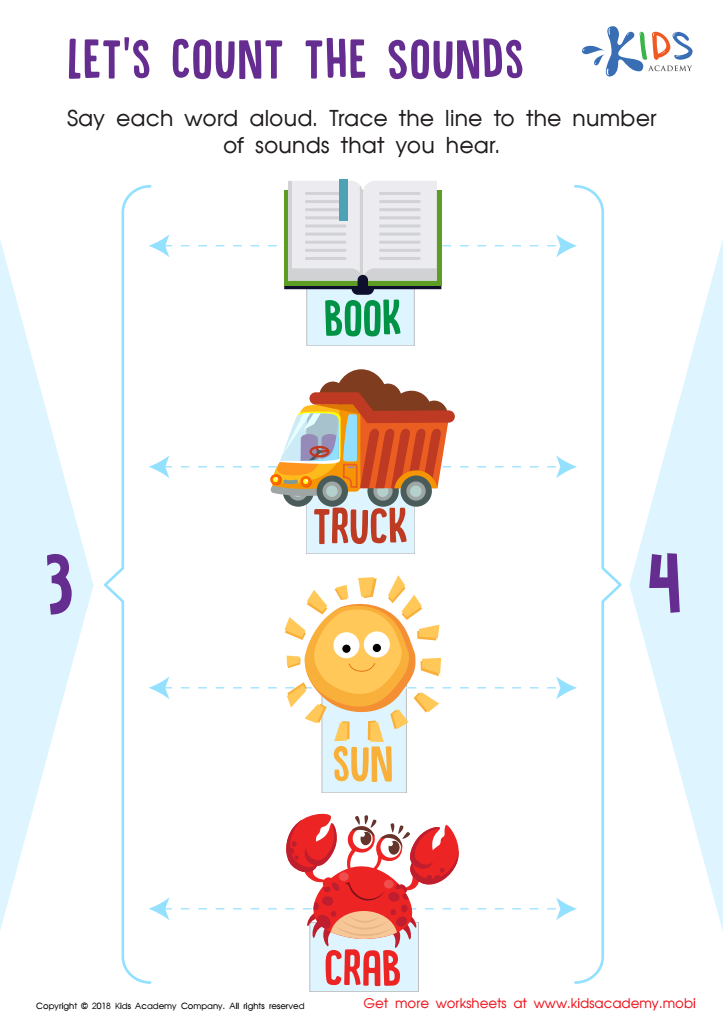
Let's Count the Sounds Worksheet
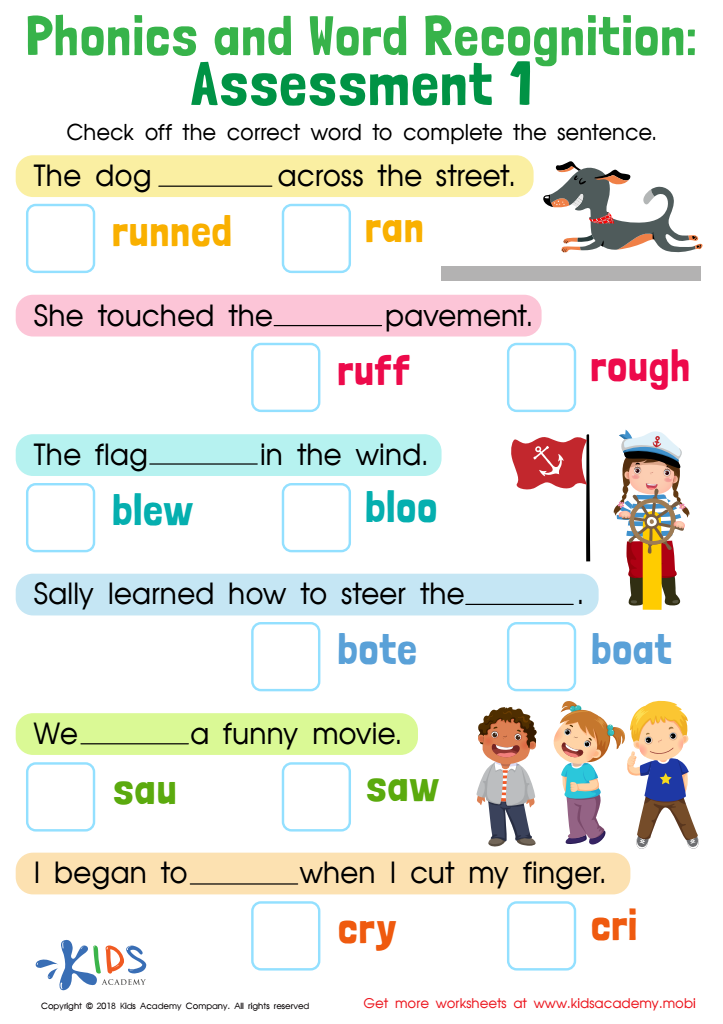
Phonics and Word Recognition: Assessment 1 Worksheet
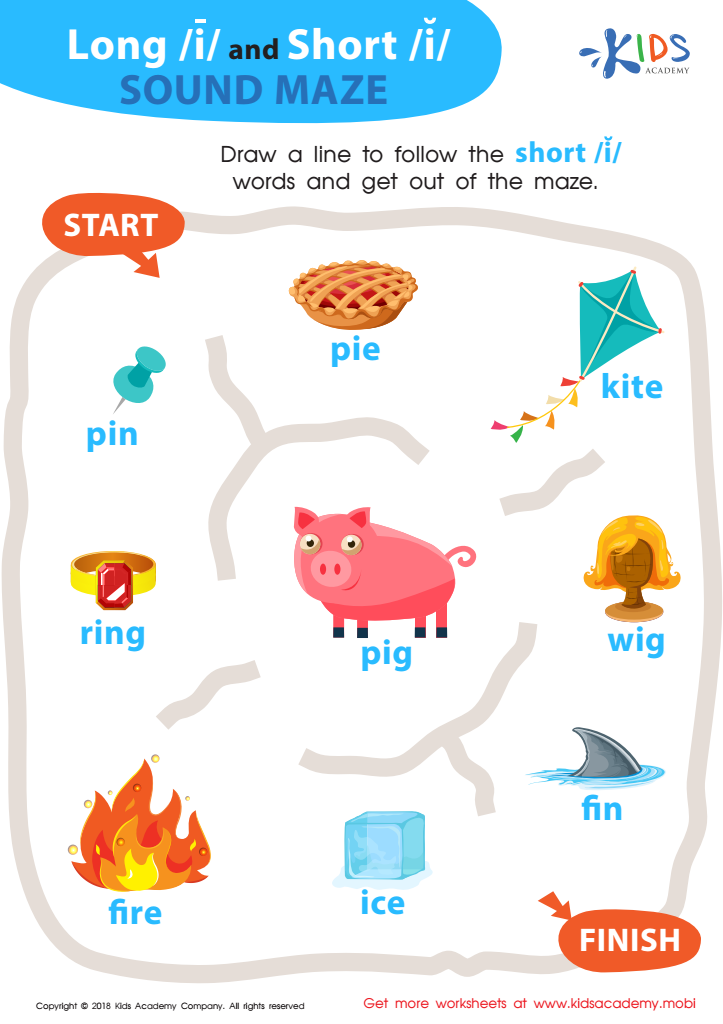
Reading: Long I and Short I Sound Maze Worksheet
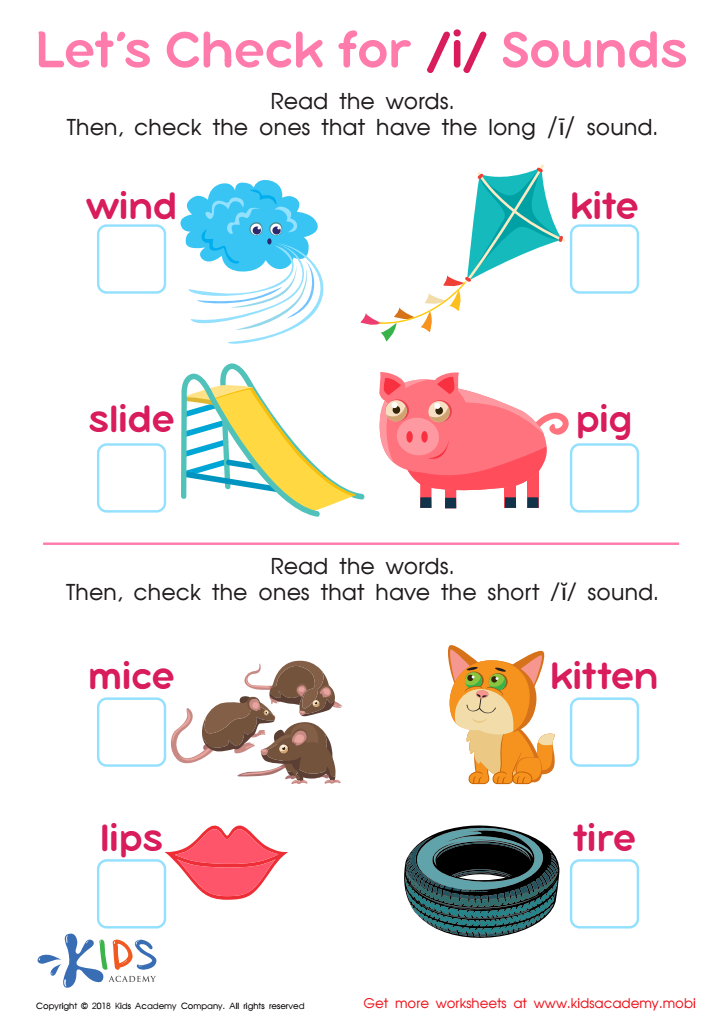
Let's Check for «i» Sounds Worksheet
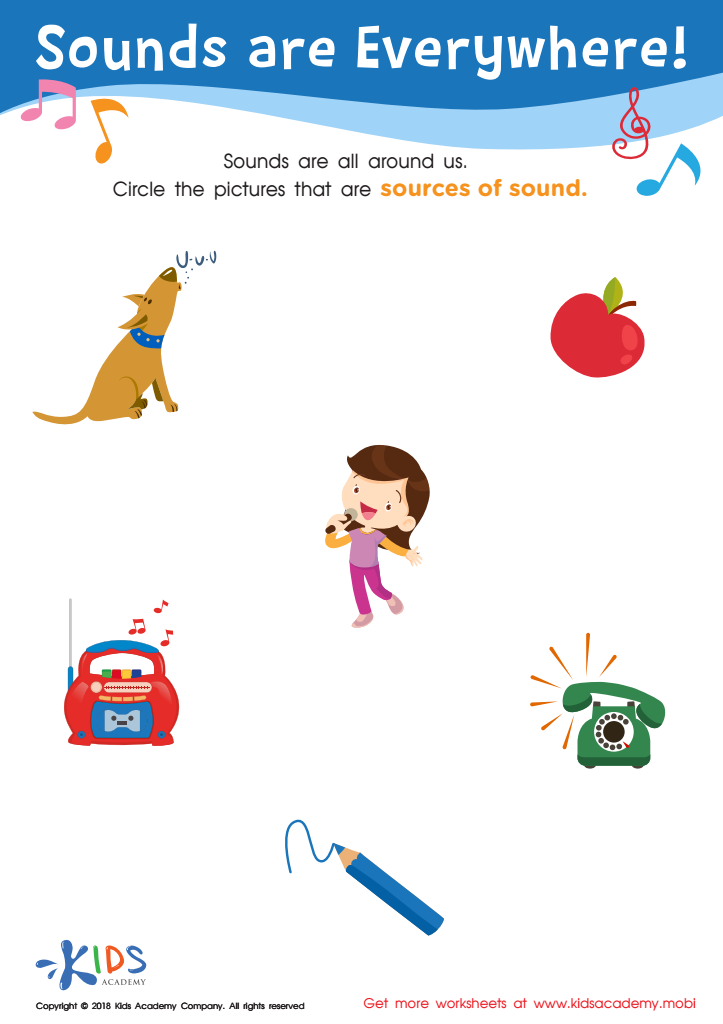
Sounds Are Everywhere! Worksheet
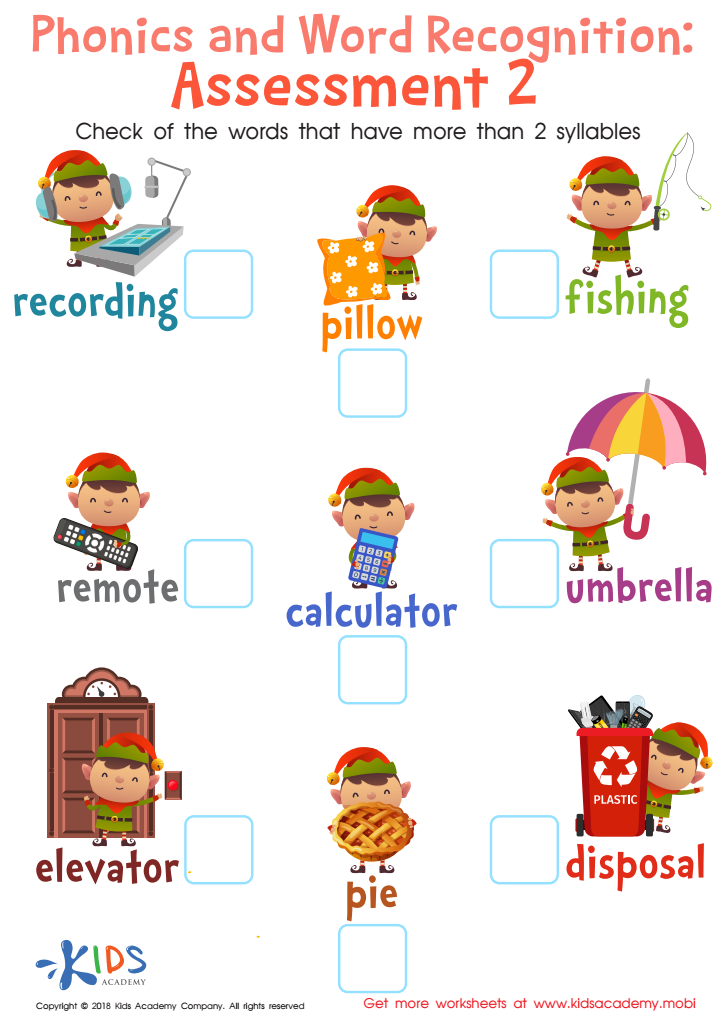
Phonics and Word Recognition: Assessment 2 Worksheet
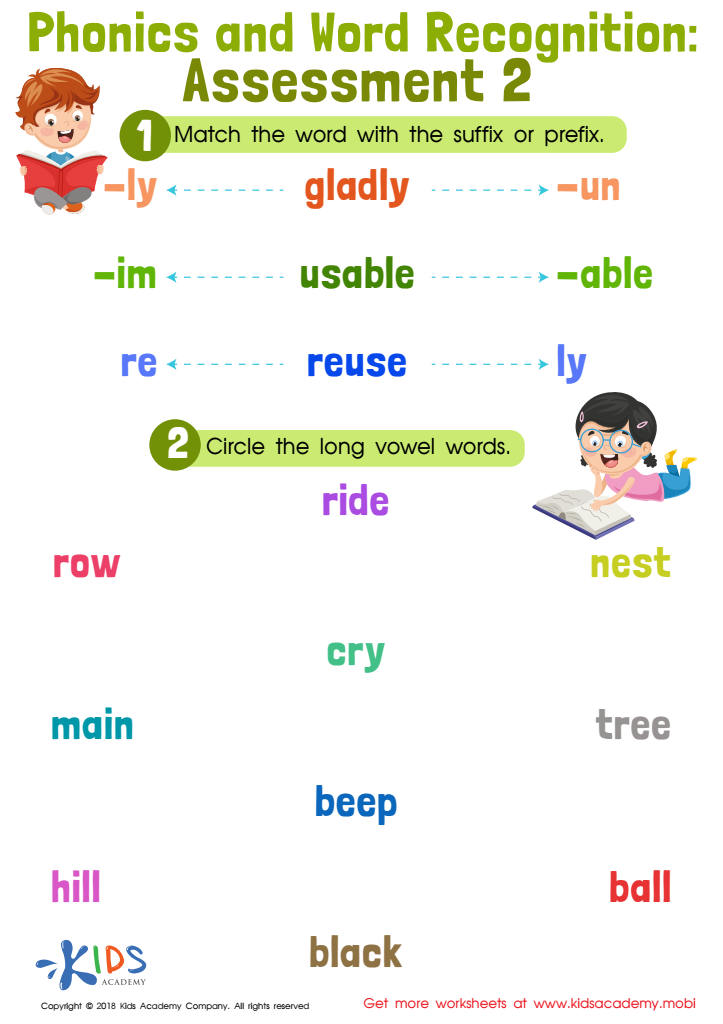
Phonics and Word Recognition: Assessment 2
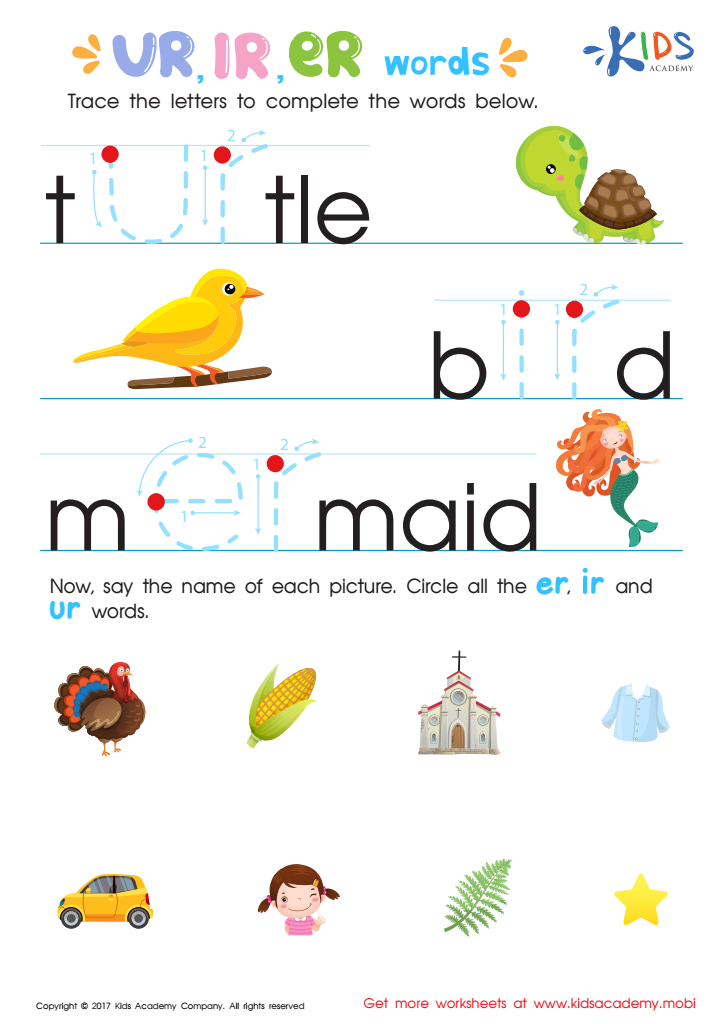
IR UR ER Words Worksheet







Phonics recognition is crucial for children aged 7-9 as it serves as a foundational skill for reading and comprehension. At this age, children transition from learning to read to reading to learn. Proficient phonics skills enable them to decode new words, which is essential for understanding different subjects and accessing a broader range of vocabulary. Children who master phonics can tackle unfamiliar texts with more confidence, enhancing their overall learning experience.
Additionally, strong phonics recognition directly influences academic achievement. Children who struggle with phonics are at risk of falling behind in literacy, impacting their performance in all subjects. This can lead to a cycle of frustration and disengagement from school.
Furthermore, phonics provides essential tools for spelling and writing. As children learn to recognize sound-letter relationships, they gain the ability to articulate their thoughts effectively. With effective support from educators and parents, children can develop these skills, ultimately fostering a love for reading and learning that lasts a lifetime.
Investing time into phonics recognition not only helps children academically but also contributes to their confidence and self-esteem as learners. This skill set lays the groundwork for future success, emphasizing why parents and teachers should prioritize its importance.








