Reading analog clocks Worksheets for Ages 7-9
9 filtered results
-
From - To
Explore our engaging "Reading Analog Clocks Worksheets" designed for children ages 7-9! These worksheets help young learners grasp the essential skill of telling time on analog clocks through fun and interactive activities. With colorful visuals and varied exercises, students will practice identifying clock features, reading different times, and solving real-world time-related problems. Our resources encourage critical thinking and boost confidence as children master time-telling skills. Perfect for classroom or at-home learning, these worksheets make understanding analog clocks an enjoyable experience. Download today and watch your child become a time-telling expert!
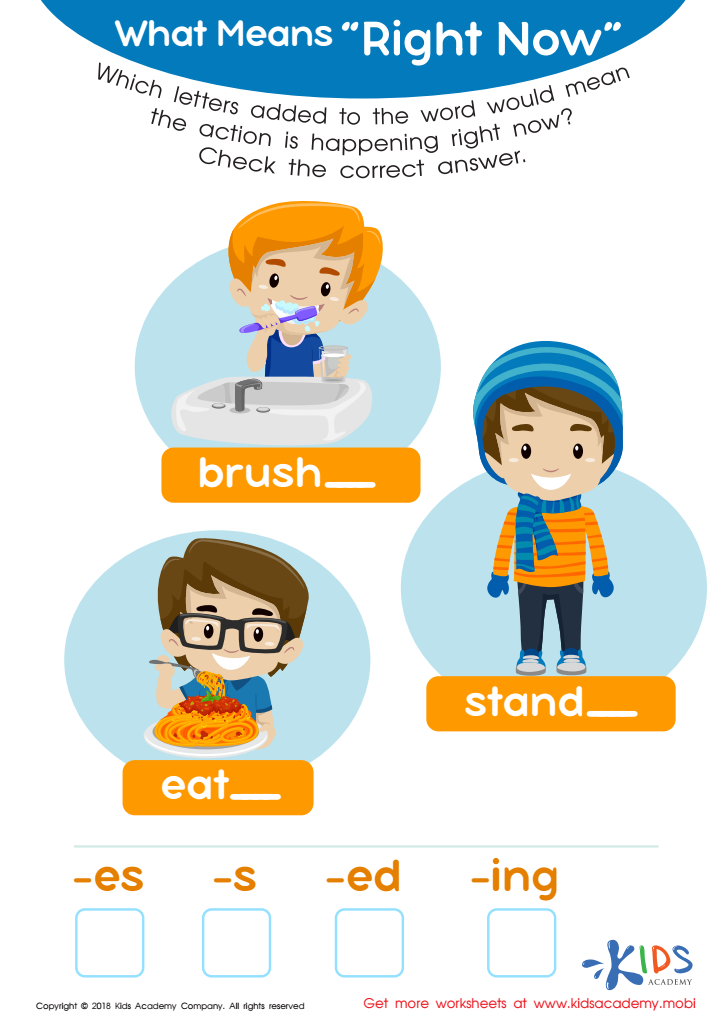
What Means "Right Now" Worksheet
 Assign to My Students
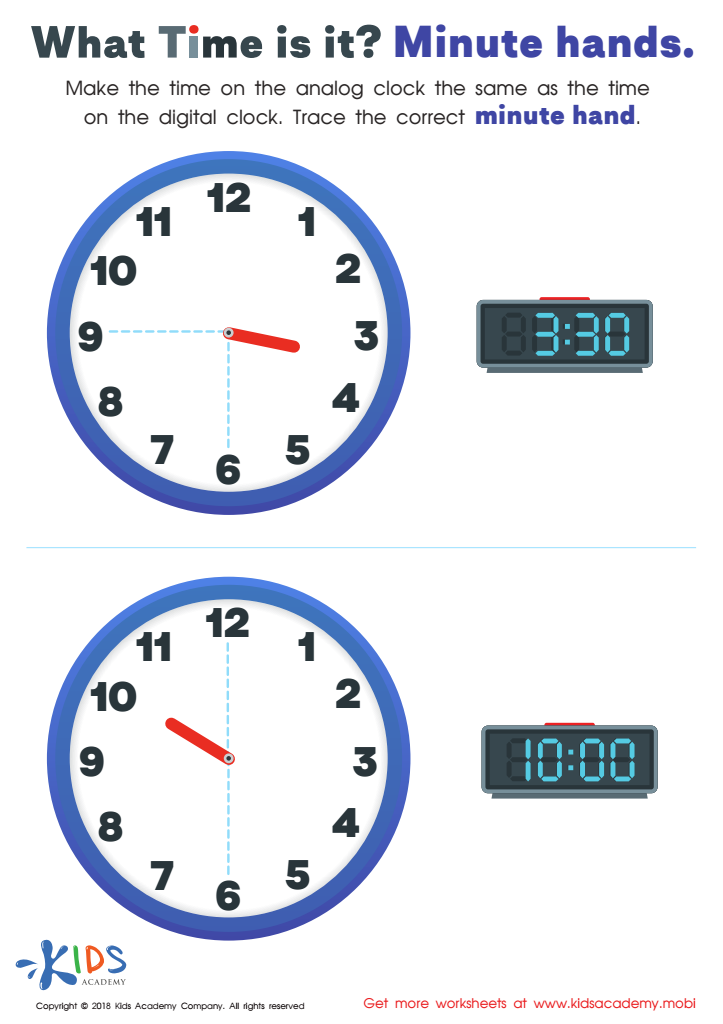
What Time Is it? Minute Hands Worksheet
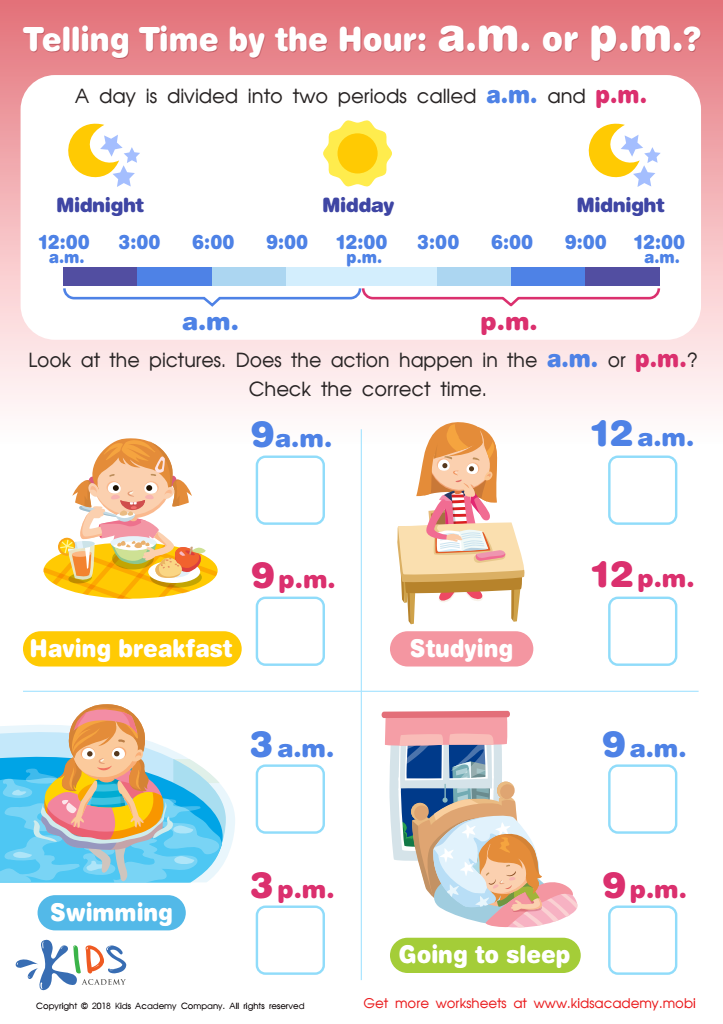
Tilling Time by the Hour: a.m. or p.m.? Worksheet
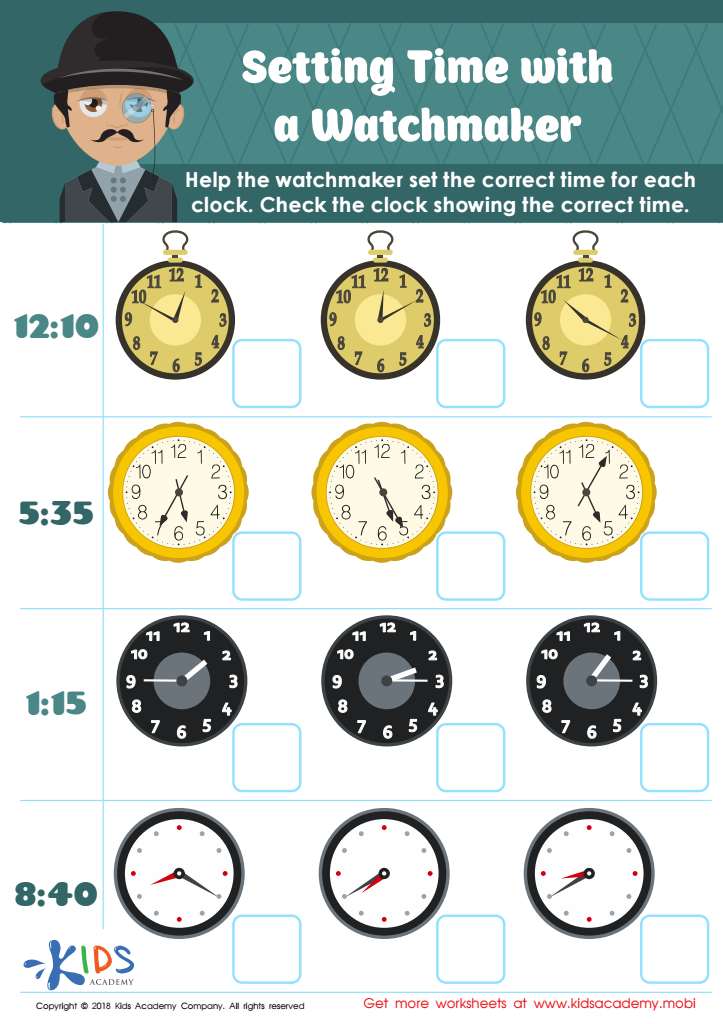
Setting Time with Watchmaker Worksheet
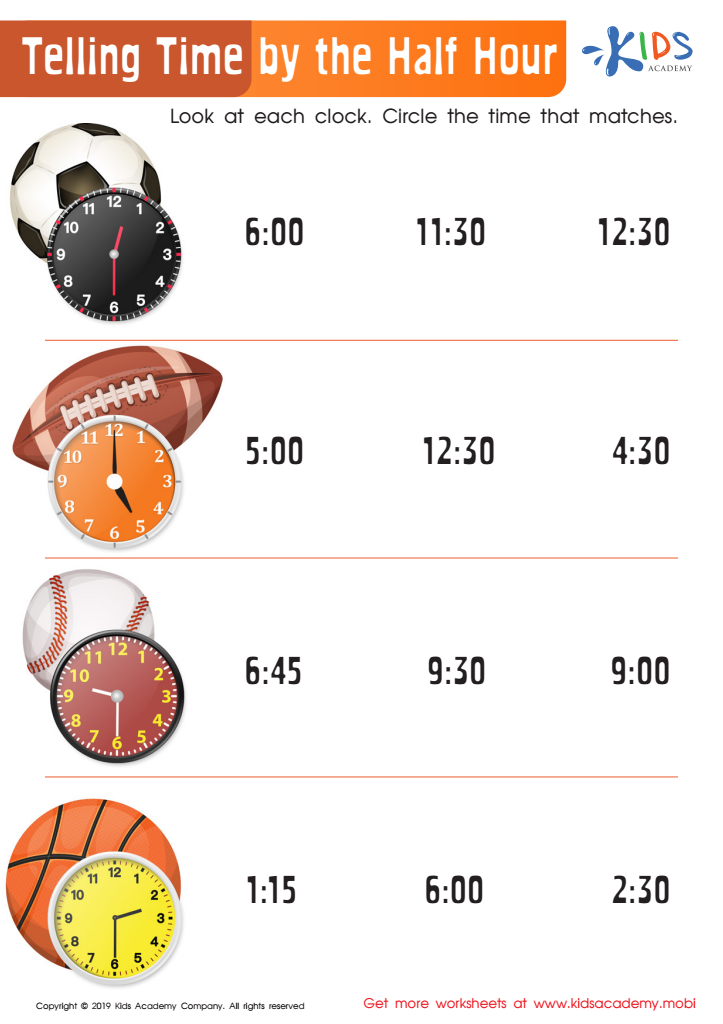
Telling Time by the Half Hour Worksheet





.jpg)

Reading analog clocks is an essential skill for children aged 7-9, as it lays the foundation for understanding time management and numeracy. In an increasingly digital world, the ability to read analog clocks fosters a sense of independence and responsibility. By teaching kids to interpret time on a traditional clock, parents and teachers help enhance their observational skills and patience, which are critical components of cognitive development.
Moreover, analog clocks incorporate concepts of fractions and division, as they are divided into hours and minutes, aiding in students' mathematical understanding. Additionally, being comfortable with analog clocks improves children's social skills; they become more engaged in conversations about time and scheduling, which promotes collaboration.
Finally, understanding how to read an analog clock cultivates an appreciation for various timekeeping methods, promoting historical knowledge and technological awareness; many classical and public settings still use this type of clock. Overall, teaching children to read analog clocks not only boosts their self-confidence but also equips them with practical life skills that will benefit them long beyond their early education years.








