Rhyming skills development Worksheets for Ages 7-9
4 filtered results
-
From - To
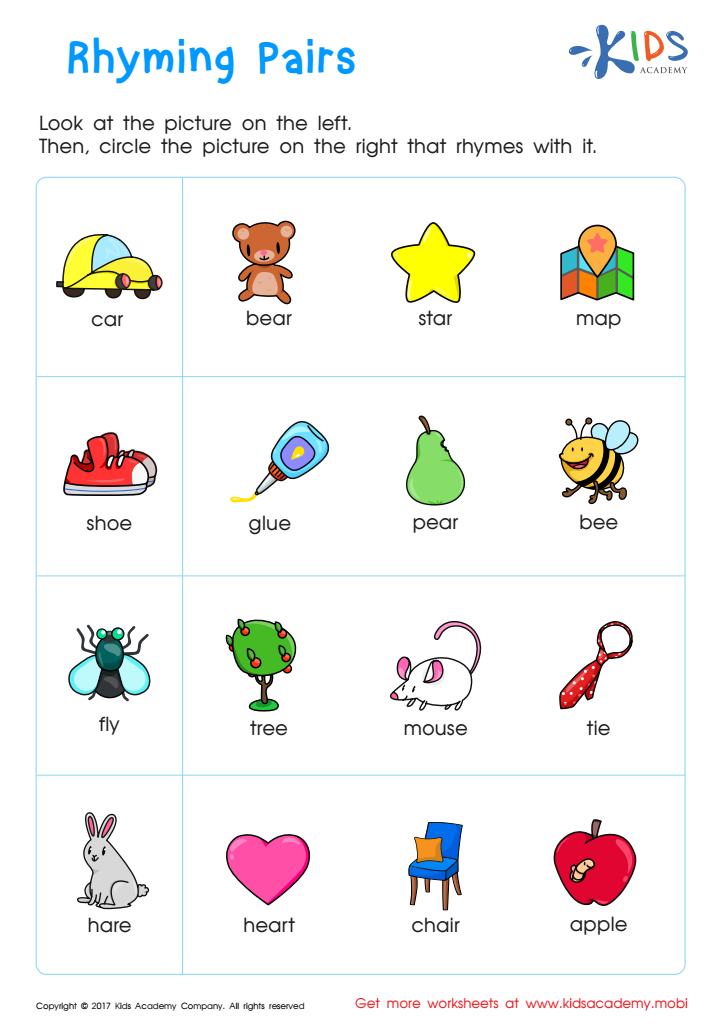
Unlock the power of language with our Rhyming Skills Development Worksheets designed specifically for ages 7-9! These engaging activities foster phonemic awareness, enhance vocabulary, and promote creativity through the delightful art of rhyming. Our varied worksheets include fun exercises such as matching rhyming pairs, completing verses, and creating original poems, all aimed at making learning exciting. Perfect for classroom use or at-home practice, these resources offer interactive ways to help young learners develop their linguistic abilities while enjoying the process. Foster a love for words and storytelling in your child today with our captivating rhyming worksheets!
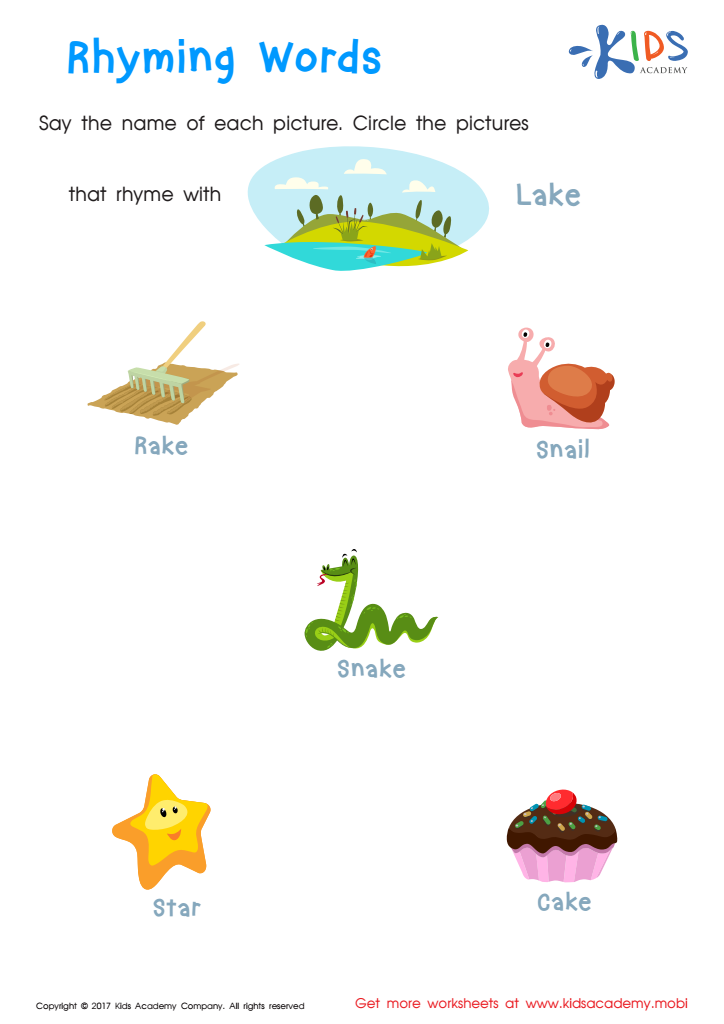
Rhyming Words Rhyming Worksheet
 Assign to My Students
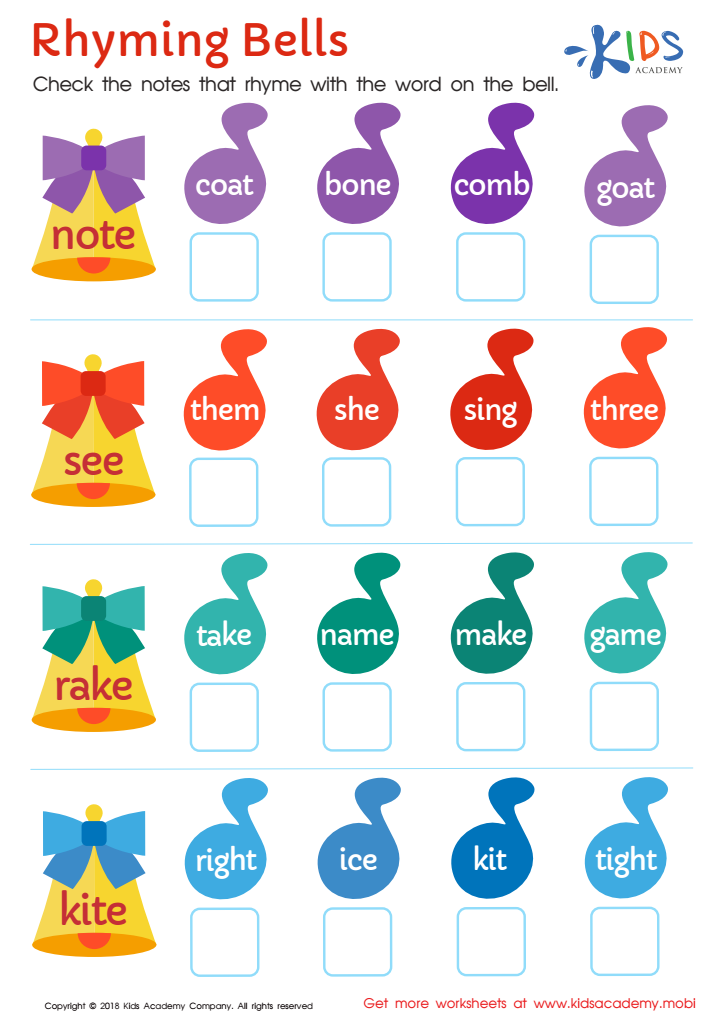
Rhyming Bells Worksheet
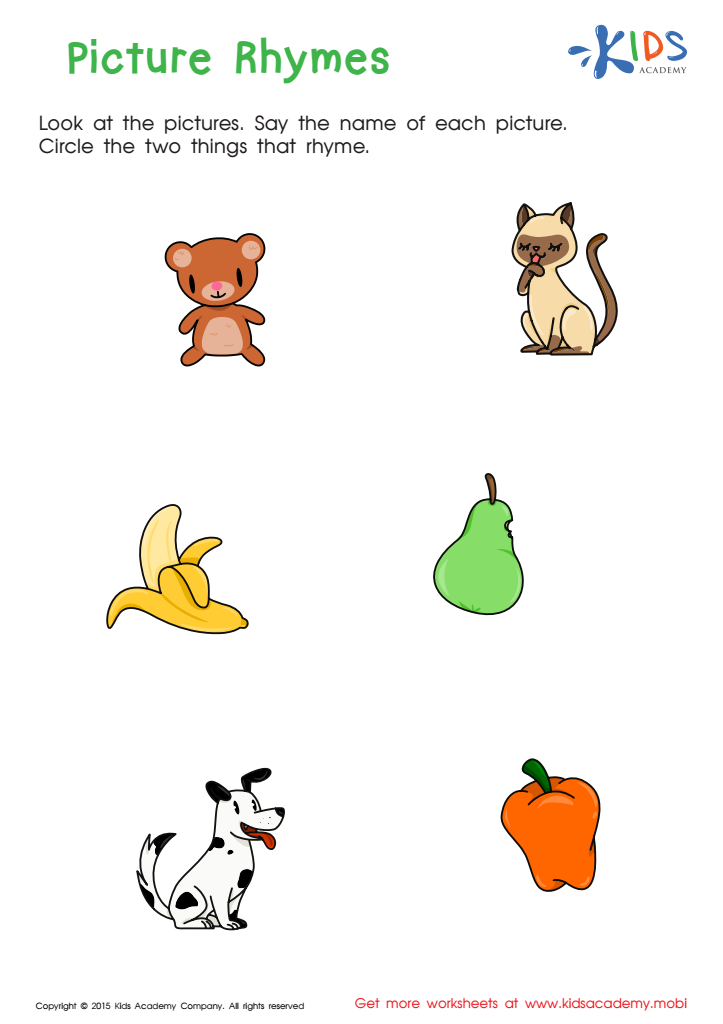
First Words: Picture Rhymes Worksheet






.jpg)
Rhyming skills play a crucial role in the language and literacy development of children aged 7-9. During this stage, children begin to deepen their understanding of phonemic awareness, which is the ability to hear and manipulate sounds in spoken language. Developing rhyming skills enhances this awareness and helps lay a strong foundation for reading and writing.
When children engage in rhyming activities, they learn to recognize patterns in words, which supports their decoding skills as they begin to read more complex texts. This understanding of phonetics and sound relationships not only aids in reading fluency but also enriches vocabulary development.
Additionally, rhyming promotes phonological memory and auditory discrimination. Children who are proficient in rhyming are often better equipped to tackle spelling and handwriting challenges, since they can identify and compare similar sounds in words.
Furthermore, rhyming is vital for fostering creativity and language play. It can enhance expressive skills, allowing children to develop a love of language through songs, poems, and stories. Encouraging rhyming through playful activities also makes learning enjoyable, ultimately instilling a positive attitude toward literacy and academic pursuits. Overall, nurturing rhyming skills is essential for holistic language development in young learners.








