Sequence Understanding Worksheets for Ages 7-9
3 filtered results
-
From - To
Unlock your child’s potential with our Sequence Understanding Worksheets for ages 7-9! Tailored to enhance comprehensibility and critical thinking, these engaging activities help young learners grasp the concept of sequencing in stories and events. Through interactive exercises, your child will improve their ability to identify the order of actions, enhancing reading comprehension and narrative skills. Our worksheets are designed to be fun and educational, encouraging creativity while reinforcing essential learning objectives. With easy-to-follow instructions, your child will gain confidence and master the skill of sequencing. Perfect for home or classroom use, these worksheets make learning enjoyable! Start exploring today!
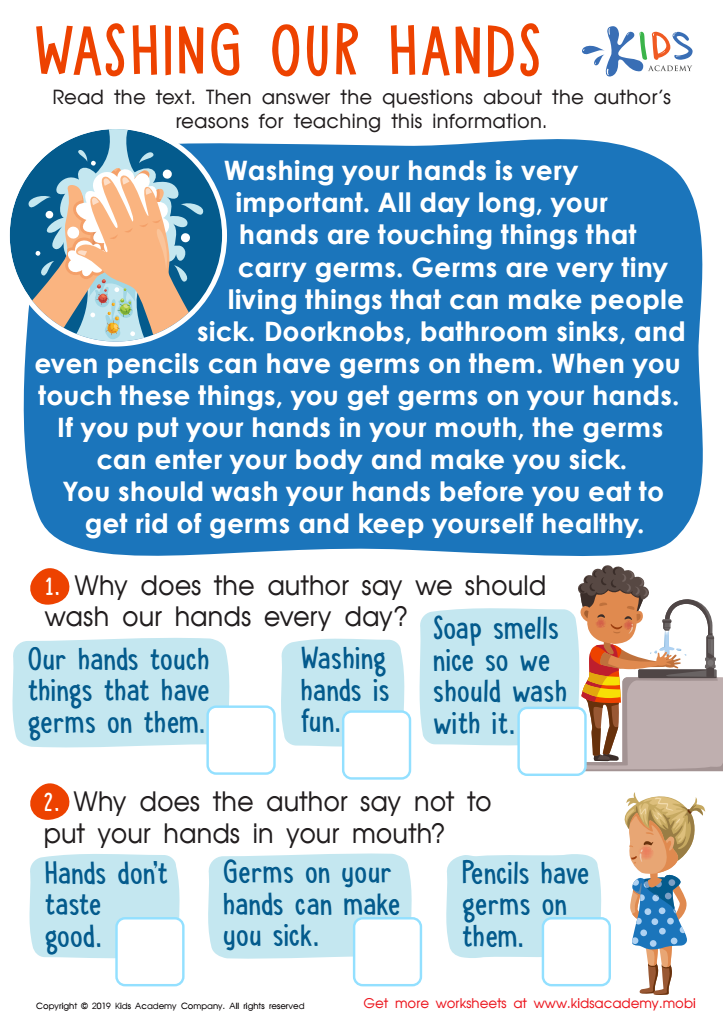
Washing Our Hands Worksheet
 Assign to My Students
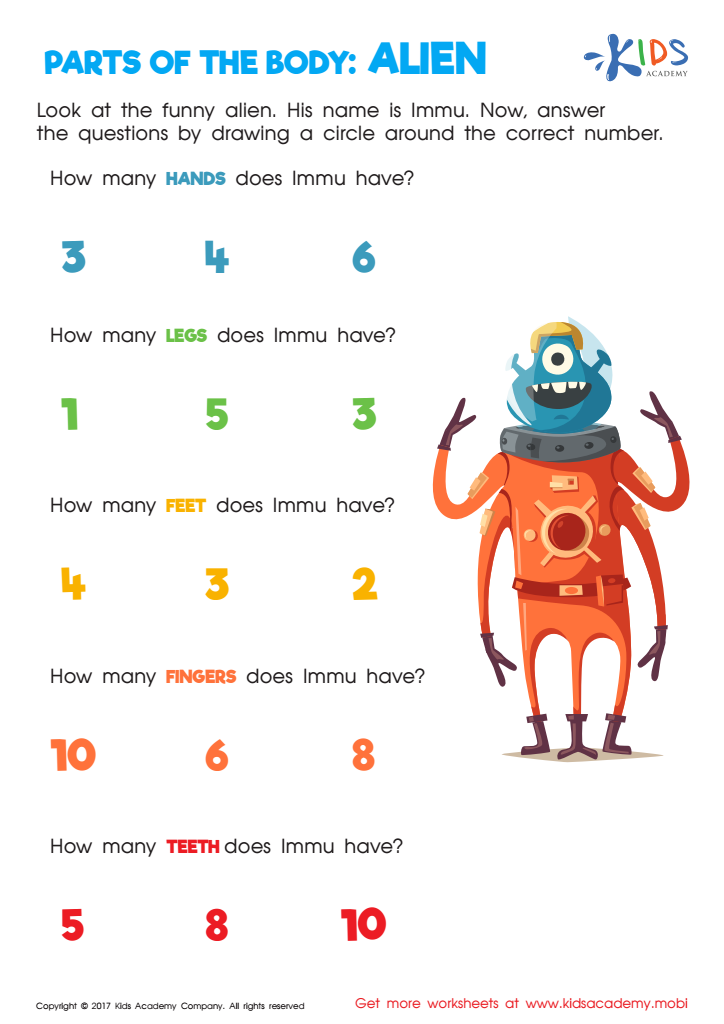
Alien Worksheet
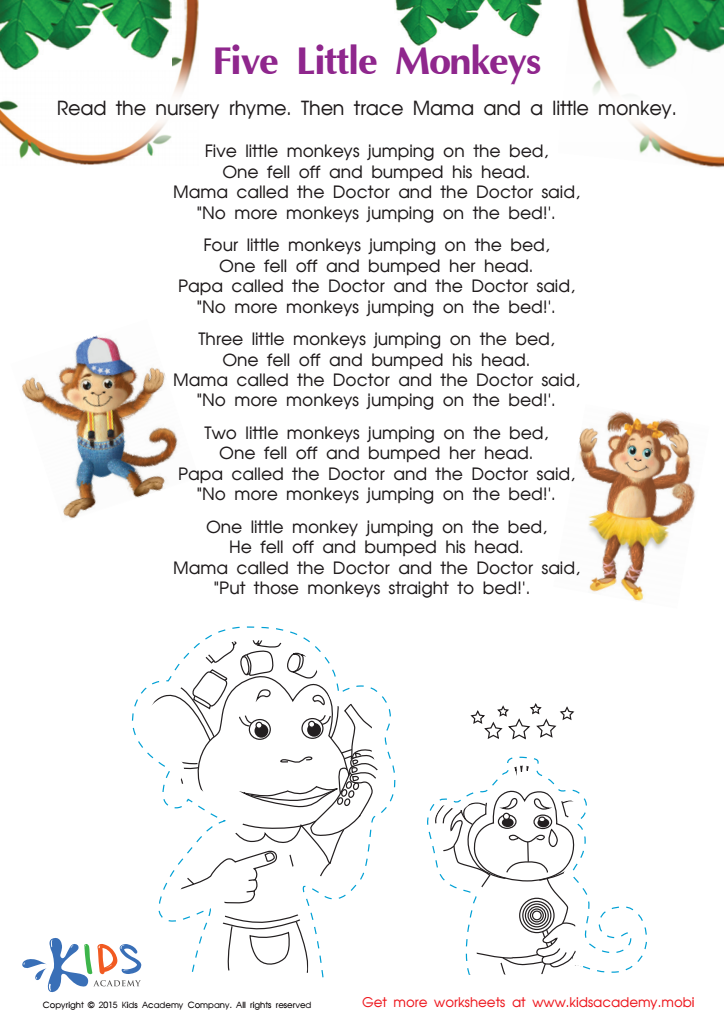
The Five Little Monkeys Nursery Rhyme Worksheet








Sequence understanding is a fundamental skill crucial for children aged 7-9 as it serves as a building block for various academic and life skills. This developmental stage is when children begin to grasp the importance of order and process, critical in problem-solving, reading comprehension, and mathematical reasoning.
For instance, in literacy, recognizing the sequence of events in a story enhances comprehension and prediction skills, allowing children to relate to narratives and connect ideas. In mathematics, understanding numerical sequences and the order of operations is essential for performing calculations and solving equations effectively.
Moreover, sequence understanding fosters organizational skills that are invaluable in both academic and personal contexts. By learning to arrange tasks or relate events chronologically, children become more organized thinkers, which can improve their ability to complete assignments or manage daily routines.
Parents and teachers play a vital role in nurturing this understanding through engaging activities, such as storytelling, games, or structured lessons that emphasize sequencing. Cultivating this skill not only boosts academic performance but also promotes critical thinking and decision-making abilities that children will carry into adulthood, making it an essential focus in early education.








