Sequencing events Worksheets for Ages 7-9
5 filtered results
-
From - To
Enhance your child's understanding of narrative structure with our “Sequencing Events Worksheets for Ages 7-9.” Designed to support early learners, these engaging worksheets help children practice putting events in chronological order, a key reading comprehension and storytelling skill. Students will explore various fun activities, including illustrated scenarios and stories, to reinforce their ability to recognize sequences in everyday life and literature. With stimulating prompts and vibrant visuals, these worksheets make learning fun and effective. Perfect for homeschoolers and classroom settings alike, our resources ensure that children develop critical thinking and analytical skills while boosting their confidence in reading and writing.
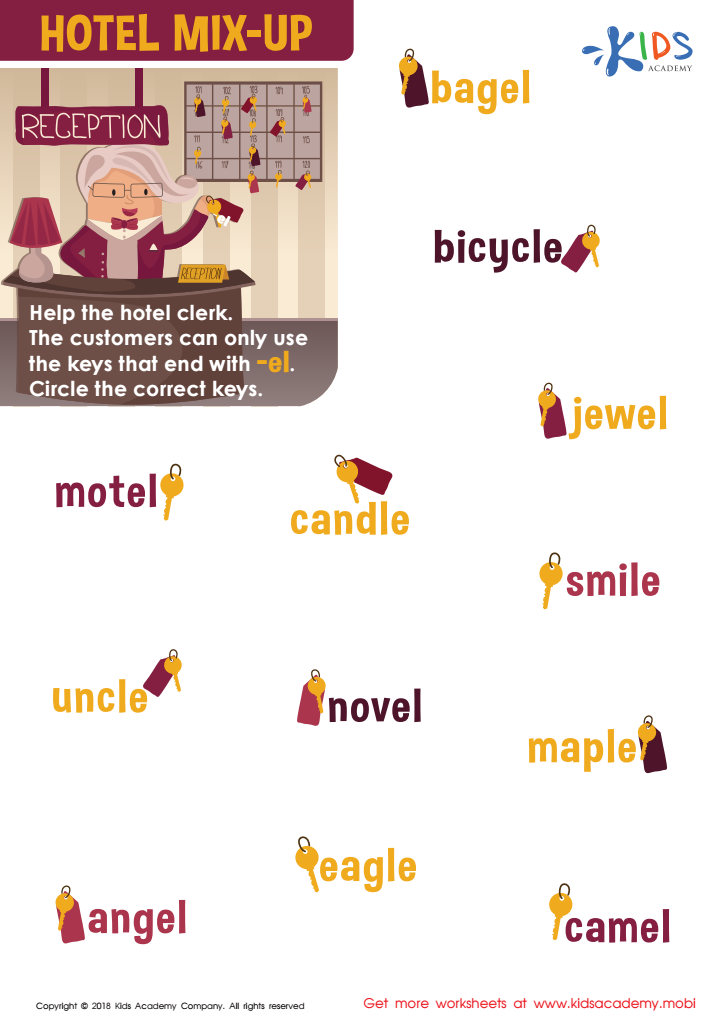
Hotel Mix-up Worksheet
 Assign to My Students
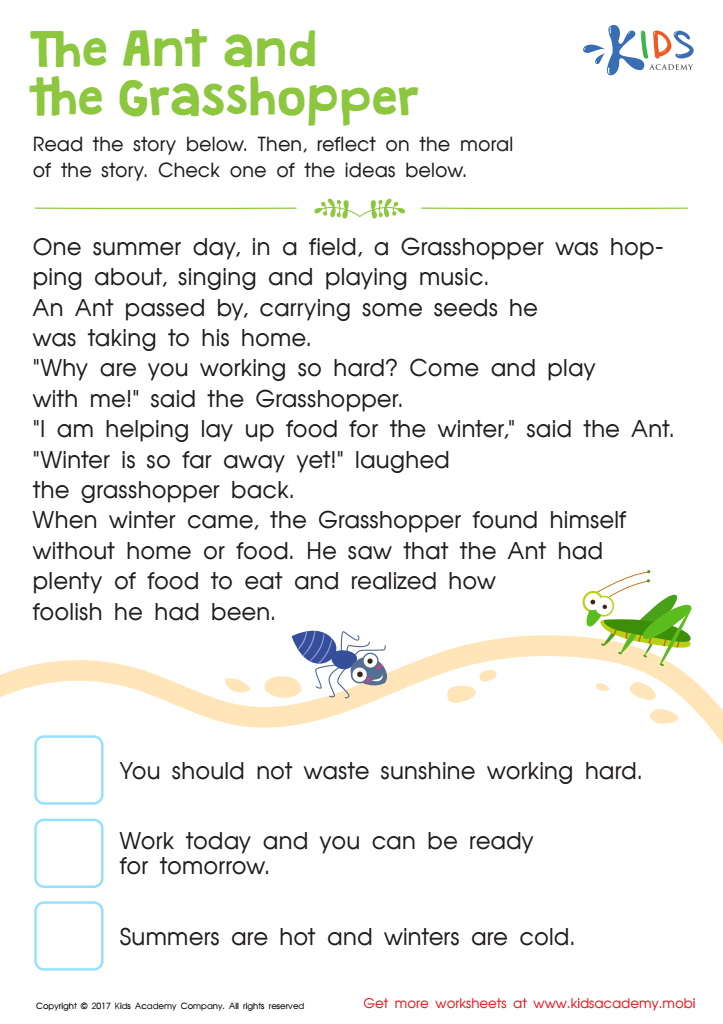
The Ant and The Grasshopper Printable

Emperor Penguin Journey Worksheet
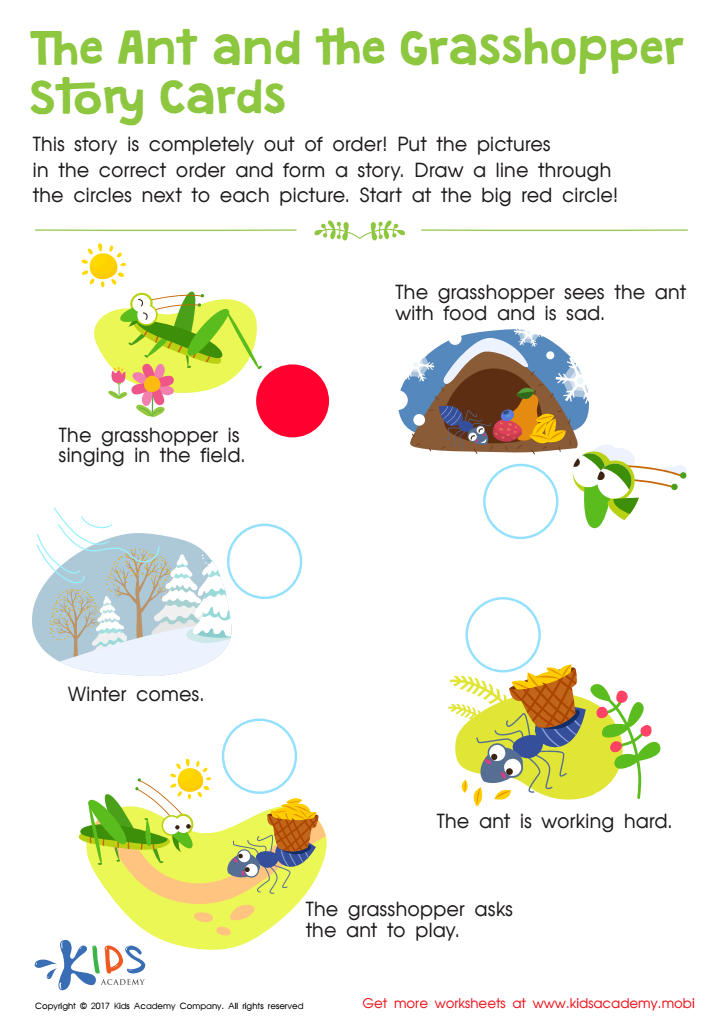
The Ant and The Grasshopper Worksheet
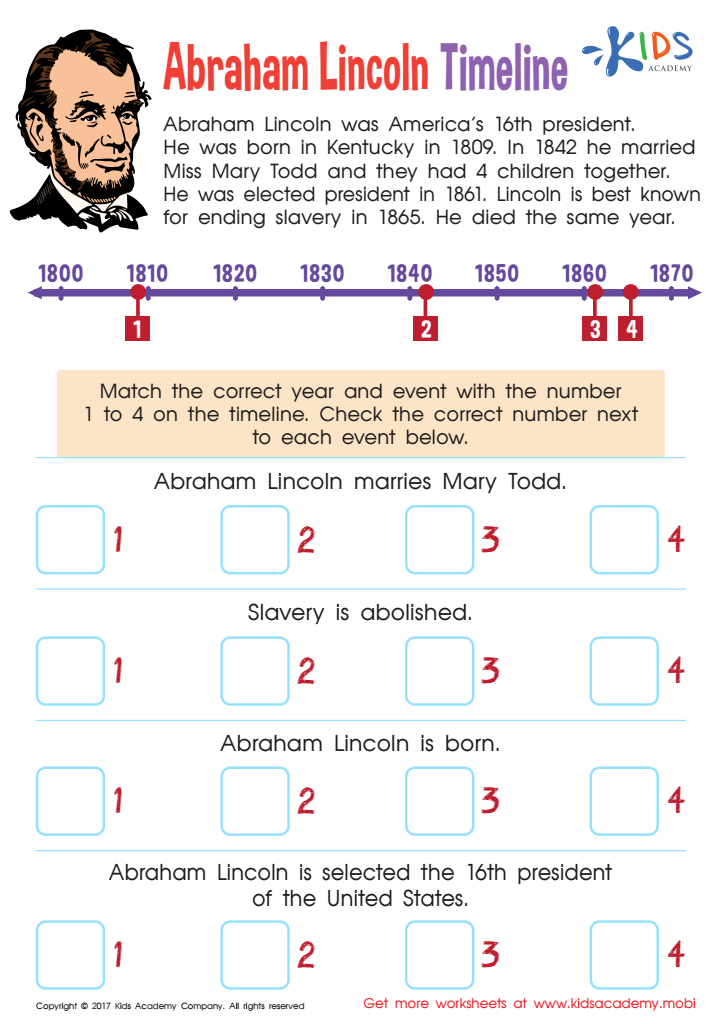
Abraham Lincoln Timeline Worksheet





.jpg)


Sequencing events is a fundamental skill for children ages 7-9, as it forms the foundation for critical thinking, comprehension, and effective communication. At this age, children are developing their ability to understand structured narratives, which is crucial for both their academic and social development. Understanding the order of events helps them make sense of stories they read or hear, improving their reading comprehension and retention.
Moreover, sequencing teaches children how to logically organize their thoughts and ideas, promoting better problem-solving skills. When children learn to sequence, they can more effectively explain their own experiences and articulate their thoughts, both in written and verbal forms. This ability is particularly important in subjects like writing, where a clear sequence of ideas enhances coherence and clarity.
Additionally, mastering sequencing can boost children's confidence, as it equips them with a vital tool for understanding the world around them. It enables them to anticipate outcomes, which is crucial in social interactions and forming predictions. Consequently, parents and teachers should prioritize the teaching of sequencing events, embedding it in various classroom activities and daily life, to nourish a child’s cognitive growth and communication skills. Doing so lays the groundwork for successful lifelong learning.








