Shape identification Worksheets for Ages 7-9 - Page 2
30 filtered results
-
From - To
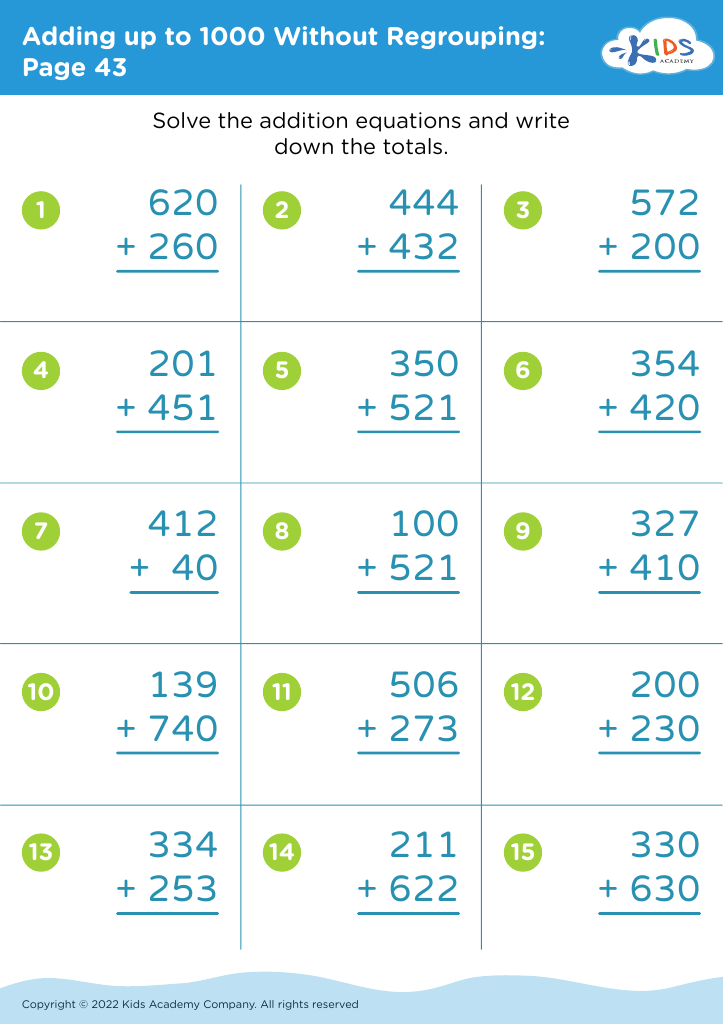
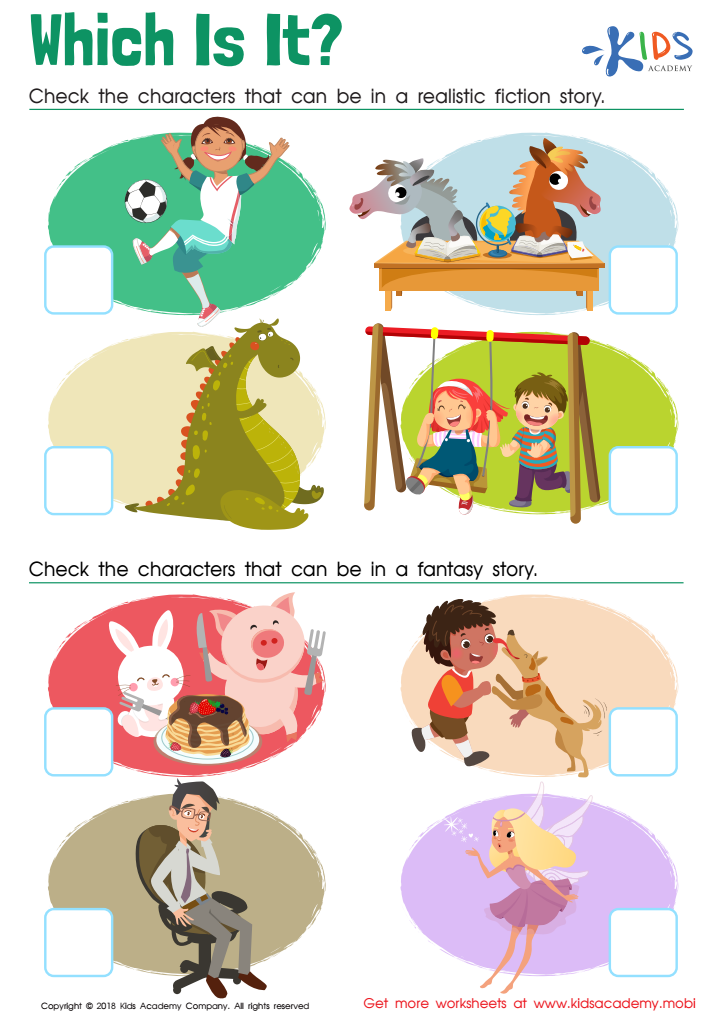
Which Is It? Worksheet
 Assign to My Students
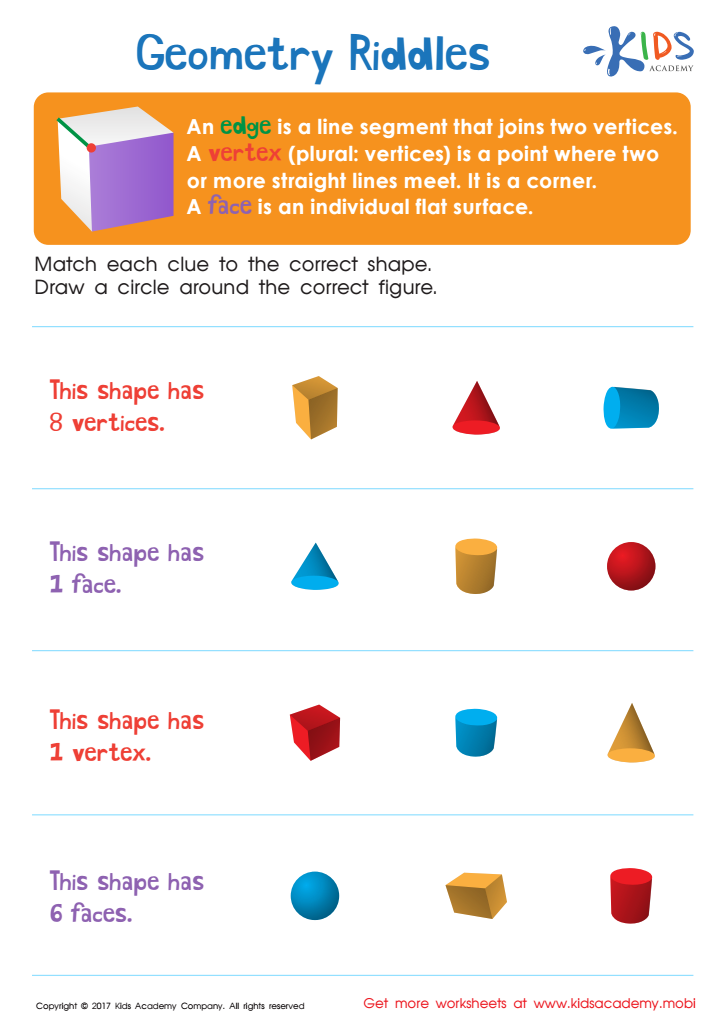
Geometry Riddles Printable
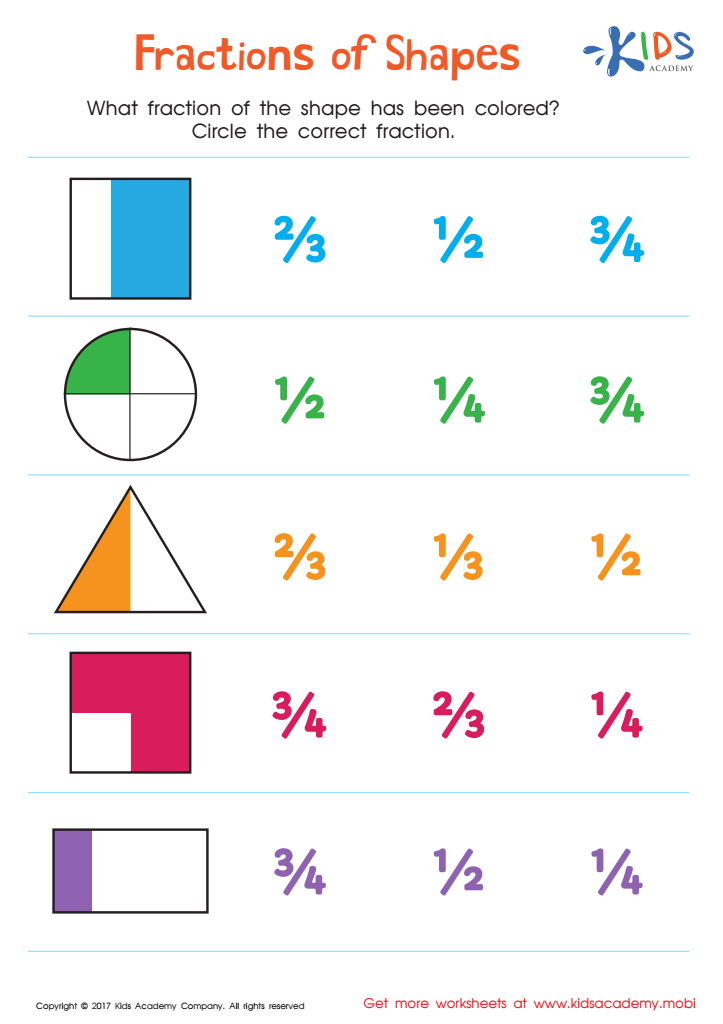
Fractions of Shapes: Math Concept Worksheet
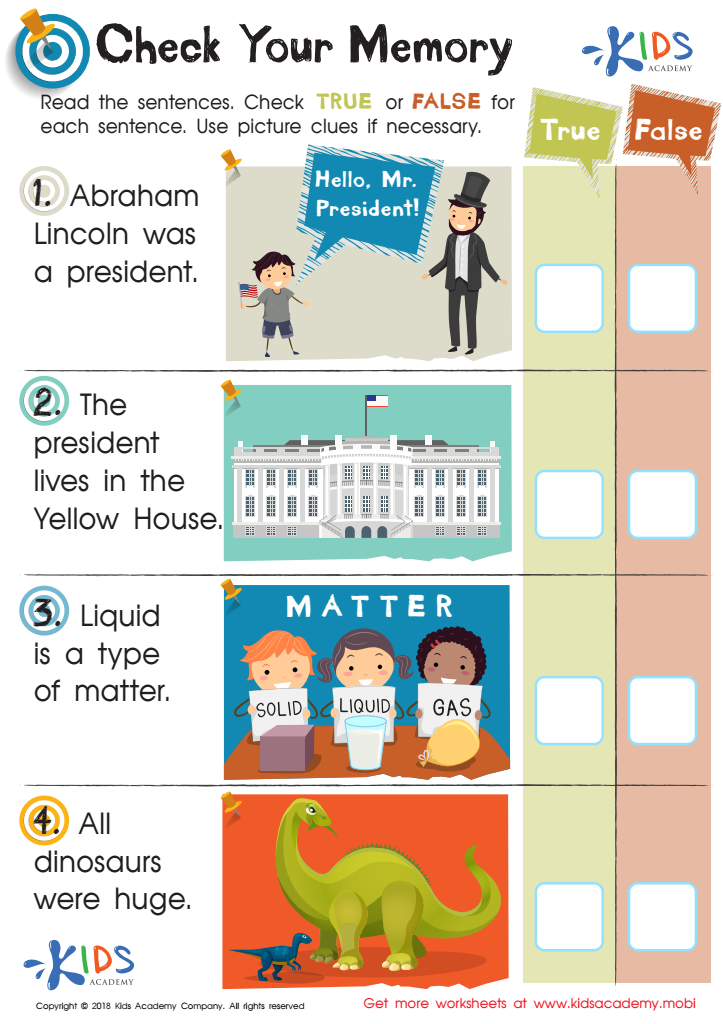
Check Memory Worksheet







Shape identification for children aged 7-9 is crucial because it builds foundational math and cognitive skills that are essential for their overall academic development. At this age, children begin to form a deeper understanding of the world around them, and recognizing shapes helps enhance their spatial awareness. This skill is integral for geometry, which they will encounter in advanced math courses.
Moreover, identifying shapes isn't only a mathematical exercise. It promotes critical thinking and problem-solving abilities, enabling children to observe patterns, categorize objects, and understand relationships between different items. In addition to cognitive growth, shape identification supports language development; children learn new vocabulary and descriptive language as they discuss different attributes like sides, corners, and angles.
Incorporating shape activities in everyday learning helps kids improve fine motor skills as well. For instance, drawing or manipulating shape-based toys develops their hand-eye coordination and preciseness. Recognizing and naming shapes also directly ties to reading and writing; the ability to perceive different shapes boosts letter recognition, facilitating better reading fluency.
Parents and teachers play a vital role by integrating shape-related conversations and activities into both playtime and structured learning. Doing so prepares children holistically for future educational challenges and fosters an environment where foundational concepts are thoroughly understood and appreciated.








