Syllable identification Worksheets for Ages 7-9
5 filtered results
-
From - To
Enhance your child's reading skills with our engaging Syllable Identification Worksheets tailored for ages 7-9. Designed to develop phonemic awareness and improve vocabulary, these worksheets provide fun activities that help students practice breaking down words into syllables. Interactive tasks, including matching exercises and picture identification, make learning enjoyable and effective. Perfect for homeschooling or classroom use, our resources aim to bolster literacy skills essential for academic success. Boost your child's confidence and understanding in reading with these comprehensive, easy-to-use syllable worksheets, fostering a lifelong love for learning. Explore our materials and watch your child thrive in their literacy journey!
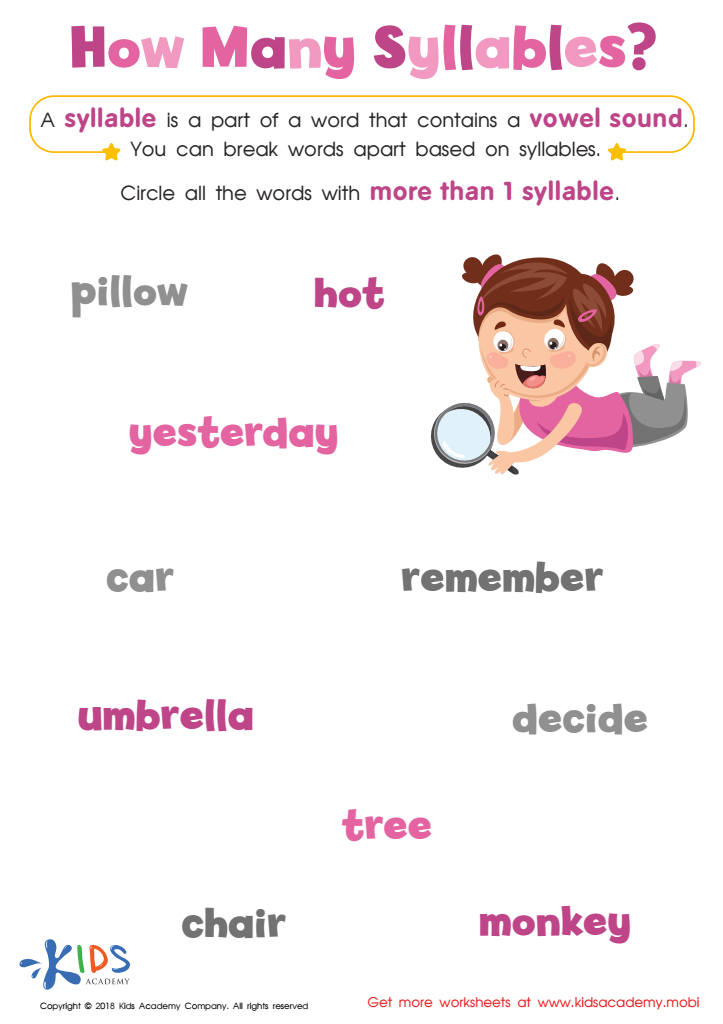
Reading: How Many Syllables Worksheet
 Assign to My Students
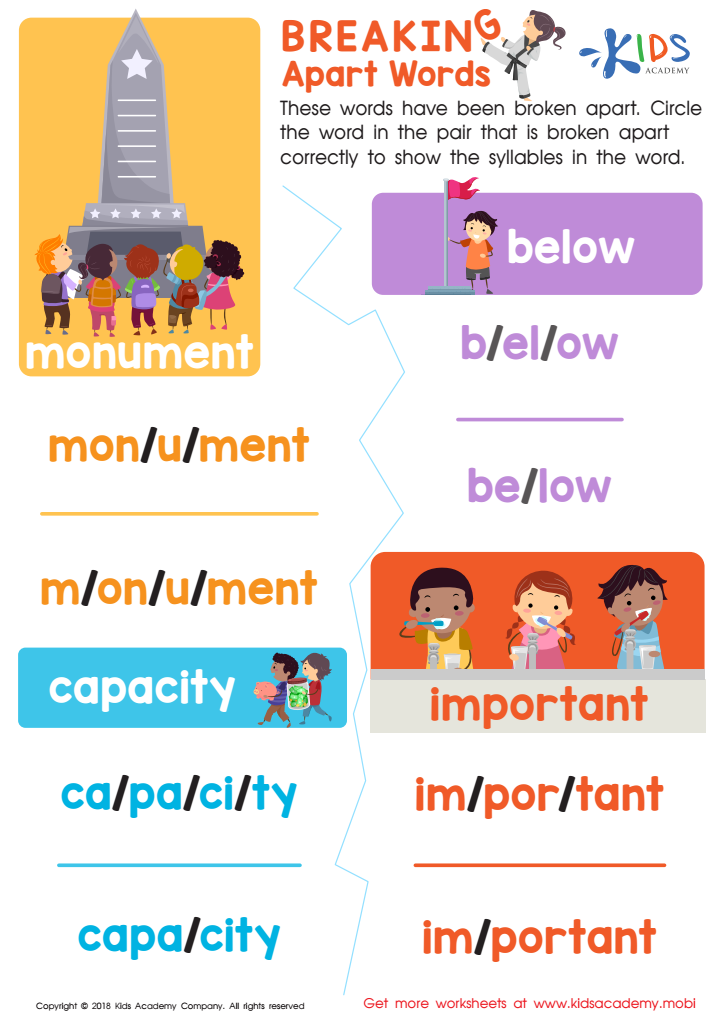
Breaking Apart Words Worksheet
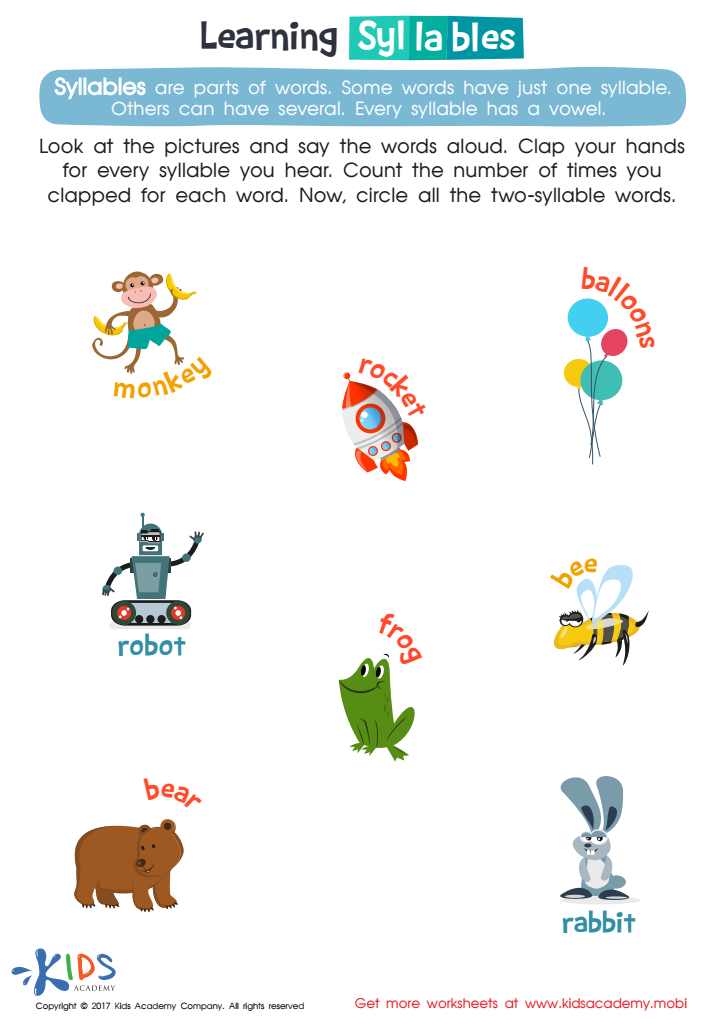
Learning Syllables Word Structure Worksheet
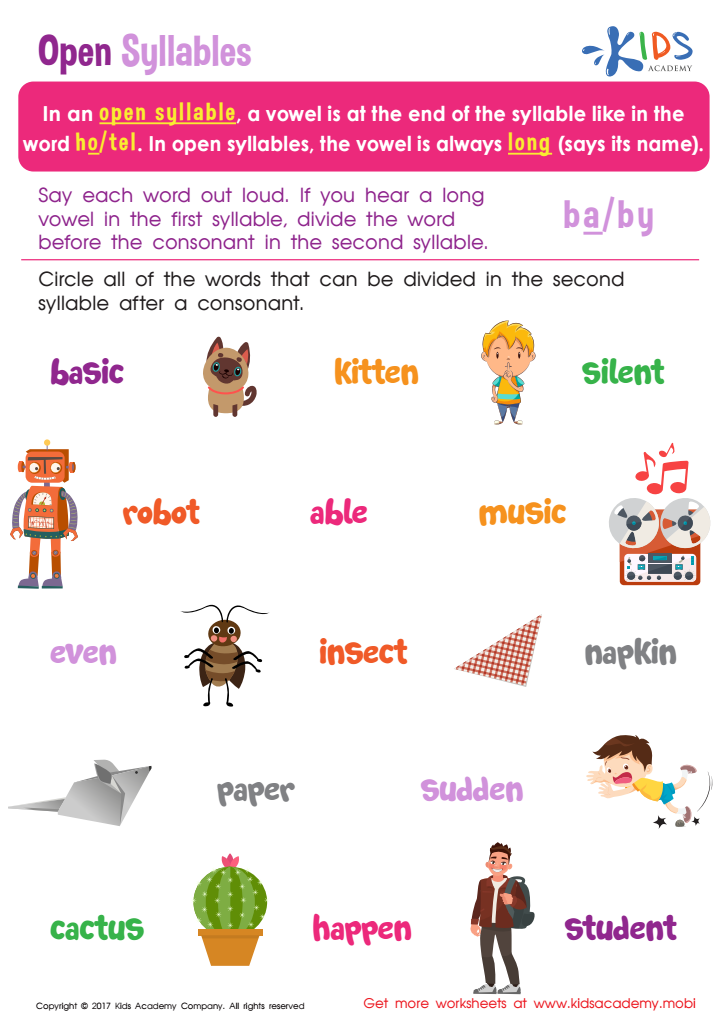
Open Syllable Printable Worksheet
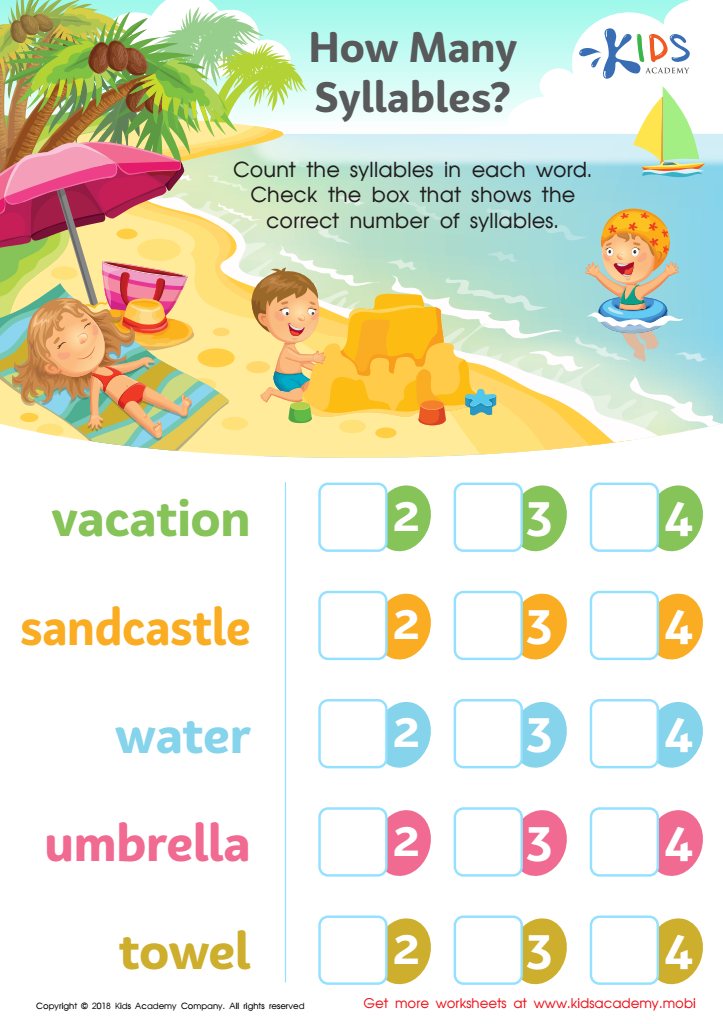
How Many Syllables Worksheet






Syllable identification is a fundamental linguistic skill that is crucial for children aged 7-9, as it lays the groundwork for reading, writing, and ultimately language comprehension. At this age, children are refining their phonemic awareness, and understanding syllables helps them break words into manageable parts, making it easier to decode unfamiliar words. This skill enhances their reading fluency, as they gain confidence in tackling complex vocabulary, leading to improved overall reading comprehension.
Teachers and parents should prioritize syllable identification because it also has broader implications for literacy. Proficiency in syllable counting aids in spelling, as children learn to segment words into smaller, easier-to-manage components. This practice facilitates better writing skills and enhances expressive language capabilities.
Moreover, involvement in activities centered on syllable identification can be engaging and fun, fostering a love of language and curiosity about words. In turn, this can boost a child's self-esteem and motivation to learn. By paying attention to syllable proficiency, educators and parents can provide a supportive foundation that not only addresses immediate literacy tasks but also cultivates lifelong learning and communication skills, supporting children's academic success and personal growth.








