Understand number relationships Worksheets for Ages 7-9
4 filtered results
-
From - To
Explore our engaging "Understand Number Relationships" worksheets designed for children aged 7-9! These thoughtfully crafted resources enhance essential math skills through interactive and enjoyable activities. Students will develop a solid understanding of number relationships, including addition, subtraction, and the concept of greater or lesser values. By working through various exercises, kids will strengthen their critical thinking and problem-solving abilities while building a foundation for more advanced math concepts. Perfect for classroom use or at-home learning, these worksheets aim to foster a love for math and help young learners excel! Download now and watch your child thrive in their mathematical journey!
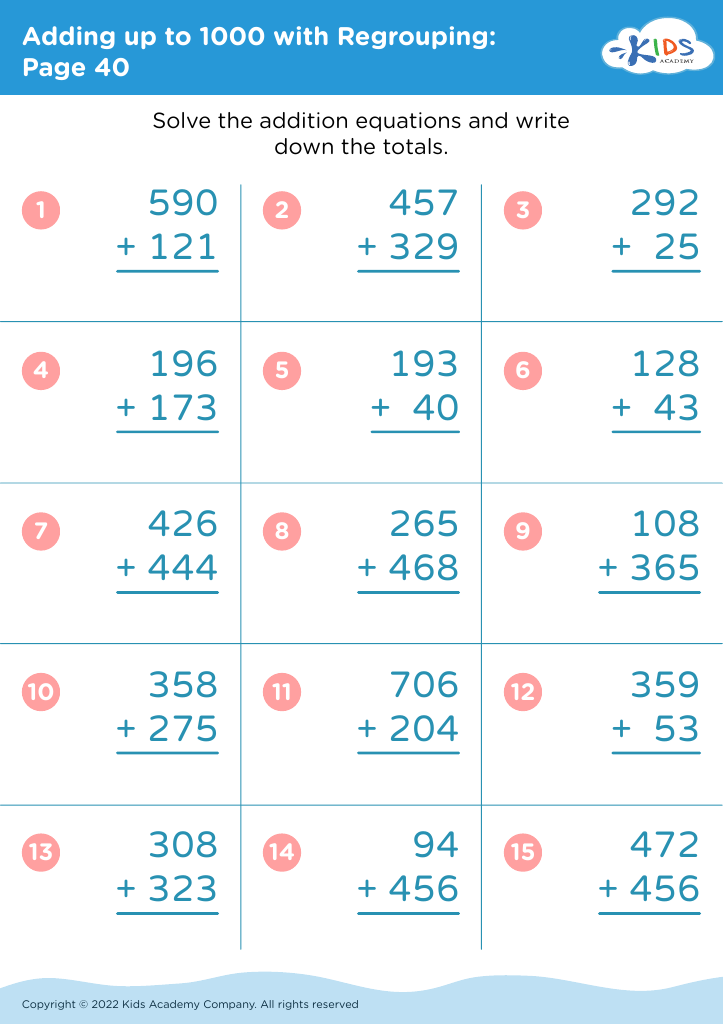
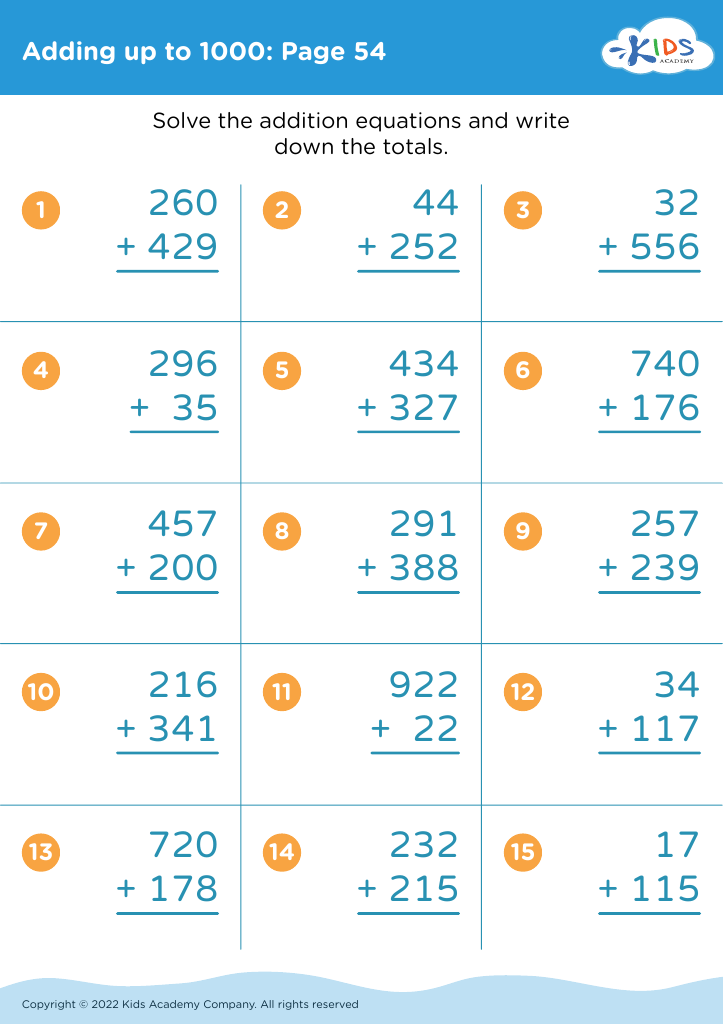
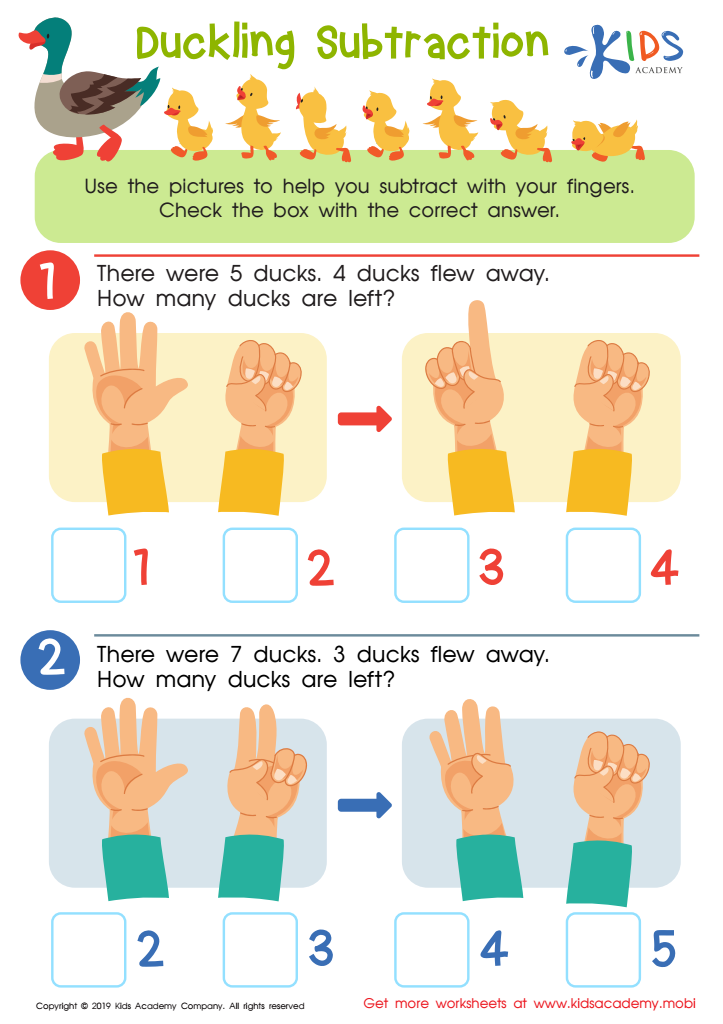
Duckling Subtraction Worksheet
 Assign to My Students
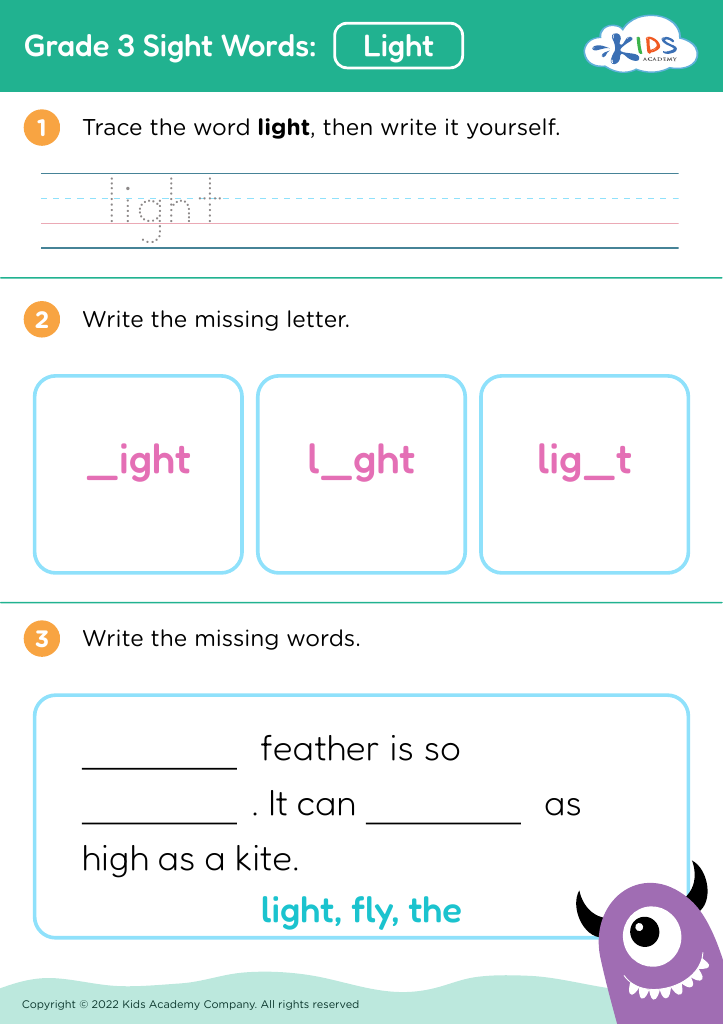







Understanding number relationships is crucial for children aged 7 to 9, as this knowledge serves as the foundation for their mathematical skills. At this age, children begin to explore more complex mathematical concepts, and a strong grasp of number relationships helps them identify patterns, make connections, and solve problems more effectively.
When children understand how numbers relate to one another, such as through addition and subtraction or concepts like greater than and less than, they become more confident in their abilities to tackle different math challenges. This understanding also supports their learning of multiplication and division, as these concepts often rely on children being able to manipulate numbers in relation to each other.
Moreover, fostering an understanding of number relationships cultivates critical thinking and reasoning skills. It encourages children to ask questions, analyze information, and make informed decisions. As a result, this foundational skill not only aids in their mathematical journey but also enhances their overall cognitive development.
Parents and teachers should prioritize instilling this understanding as it builds the necessary skills for future learning, helps reduce math anxiety, and sets the stage for academic success in higher grades. Ultimately, nurturing children’s understanding of number relationships equips them to navigate a mathematically driven world with confidence.








