Understanding area Worksheets for Ages 7-9
3 filtered results
-
From - To
Discover our engaging “Understanding Area Worksheets” designed specifically for children ages 7-9. These worksheets introduce young learners to the concept of area through fun visuals and interactive activities. Perfect for reinforcing mathematical skills, students will explore different methods of calculating area, including using grid lines and counting units. The worksheets cater to varying skill levels, ensuring every child can grasp this essential math concept. Enhance your child's learning experience with activities that promote critical thinking and problem-solving skills. Download our worksheets today to help your child develop a strong foundation in understanding area, making math enjoyable and accessible!
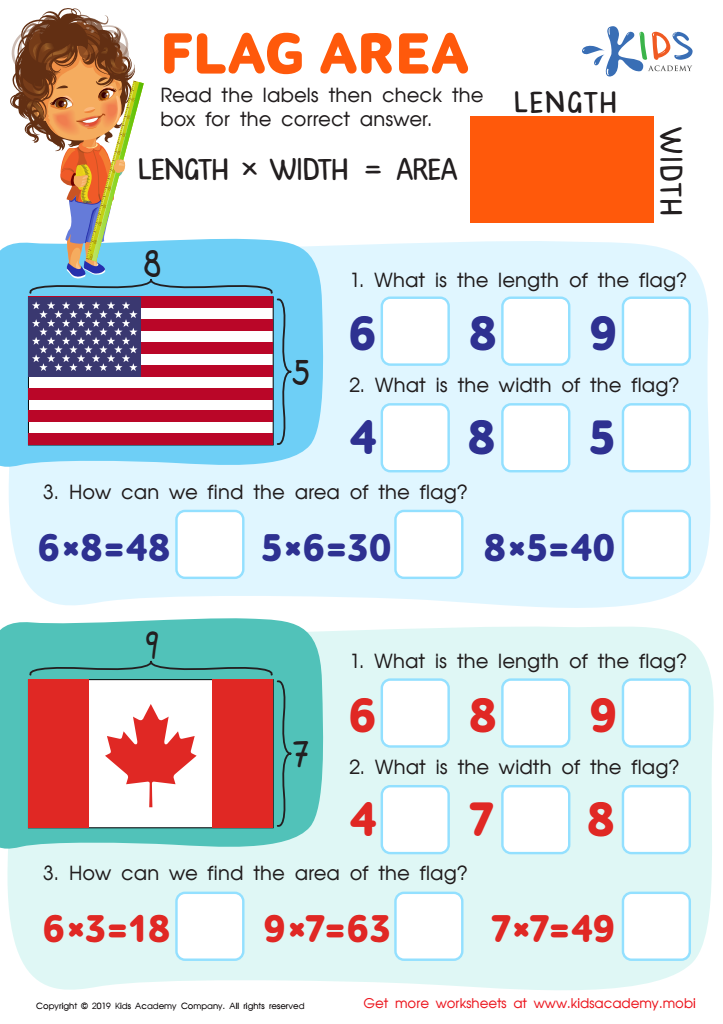
Flag Area Worksheet
 Assign to My Students
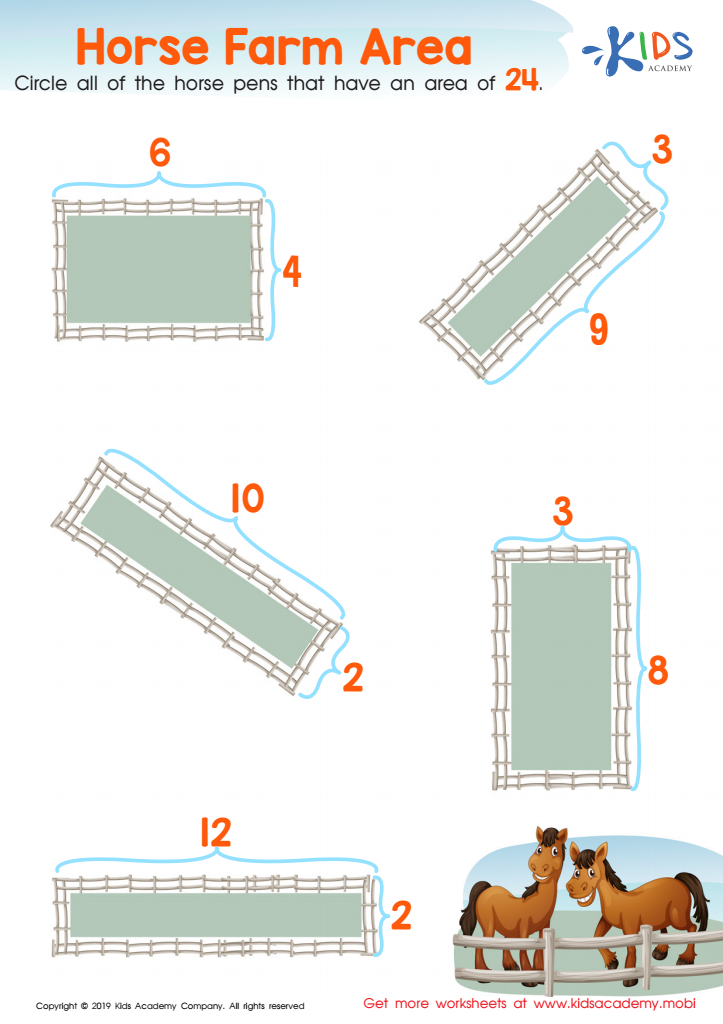
Horse Farm Area Worksheet
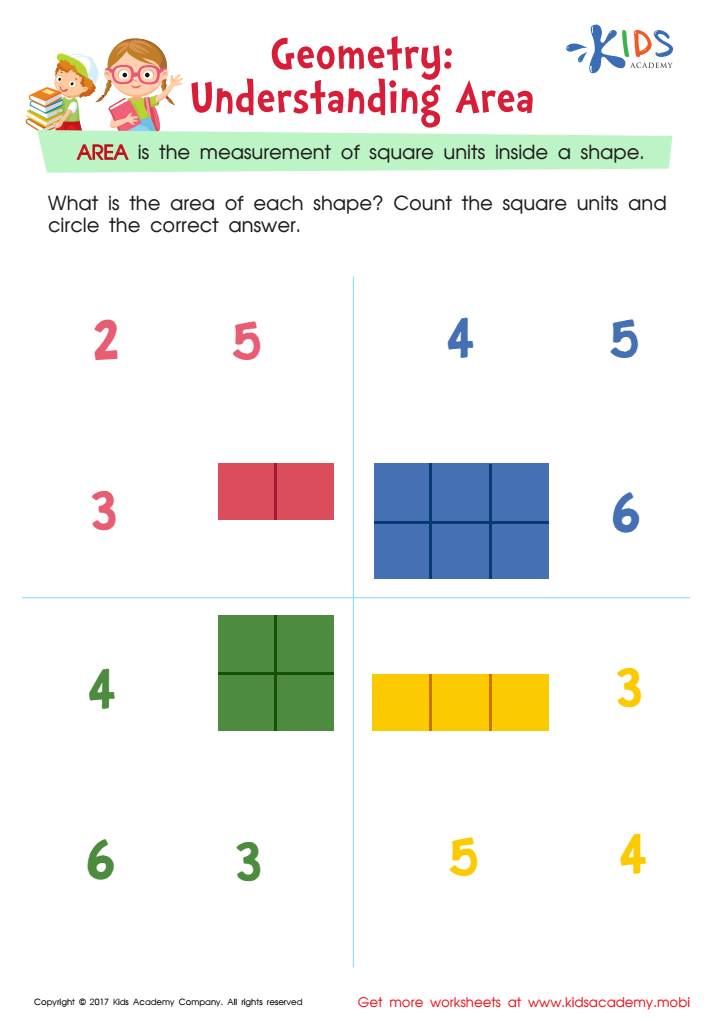
Understanding Area Worksheet




.jpg)



Understanding area is crucial for children aged 7-9, as it lays the foundation for essential mathematical concepts and real-world applications. At this age, children are developing spatial awareness and critical thinking skills, making it an ideal time to teach them about area. Grasping the concept of area helps children make sense of how two-dimensional objects occupy space—an important skill not only in mathematics but in everyday life, from packing a suitcase to designing a school project.
Additionally, learning about area integrates concepts from geometry and measurement, reinforcing skills that will be vital as they progress in their education. It encourages logical reasoning, problem-solving, and even creativity, as students can visualize and manipulate shapes. Teachers and parents should care about this topic as it fosters confidence in math, paving the way for more complex subjects in later grades.
When engaged in activities involving area, such as measuring room dimensions or calculating the size of a garden, students can apply math to real life, making the learning experience more meaningful. This practical approach helps nurture a love for learning and prepares them for future challenges in math and other disciplines, ultimately shaping a well-rounded understanding of the world around them.








