Understanding division Worksheets for Ages 7-9
8 filtered results
-
From - To
Welcome to our “Understanding Division Worksheets” designed for children ages 7-9! These worksheets provide engaging activities to help young learners grasp fundamental division concepts through fun and interactive methods. With a variety of exercises, students will explore basic division problems, visual representations, and real-world applications, building their confidence and mathematical skills. Our resources aim to make division approachable, ensuring that kids can practice at their own pace. Perfect for classroom settings or at home, these worksheets come with answer keys for easy assessment. Start your child’s journey toward division mastery today and watch their problem-solving abilities flourish!
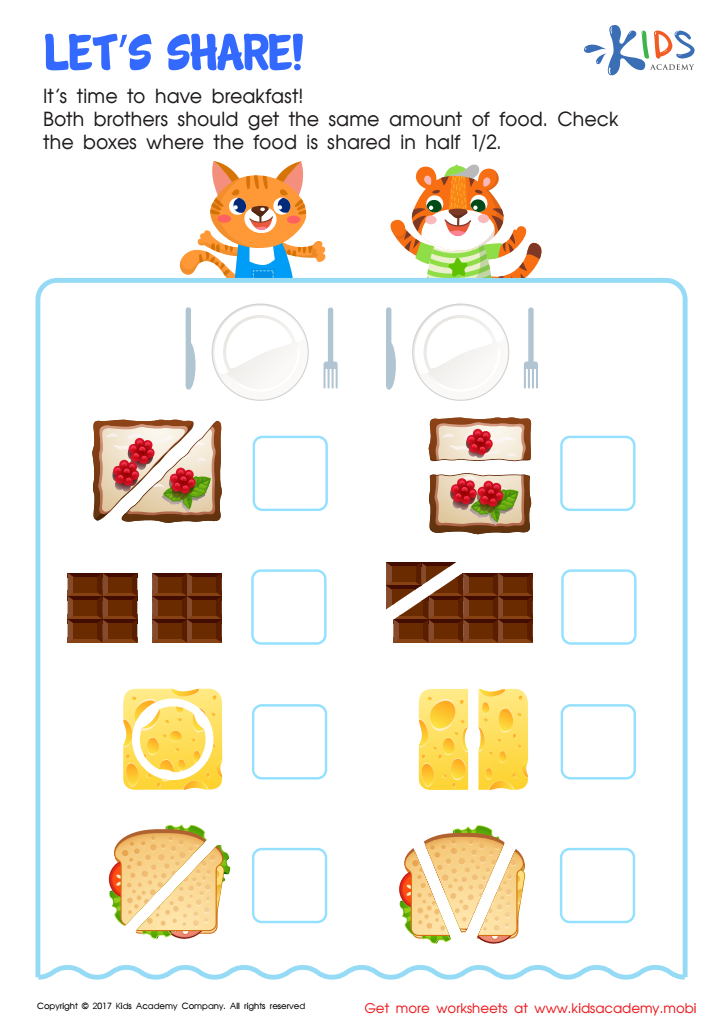
Let's Share Worksheet
 Assign to My Students
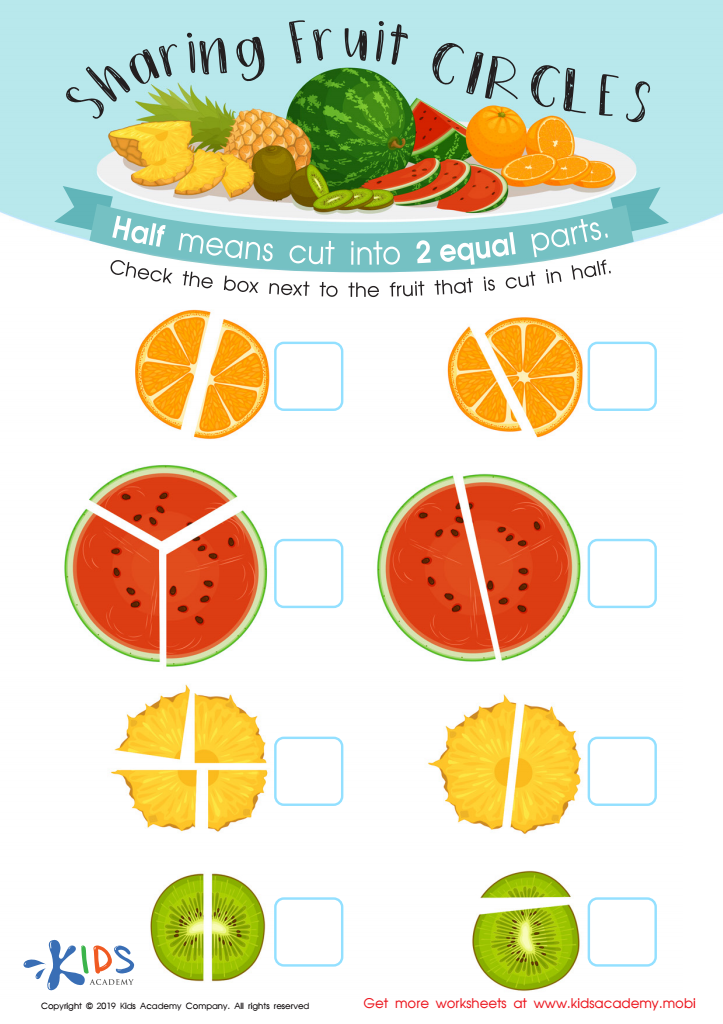
Sharing Fruit Circles Worksheet
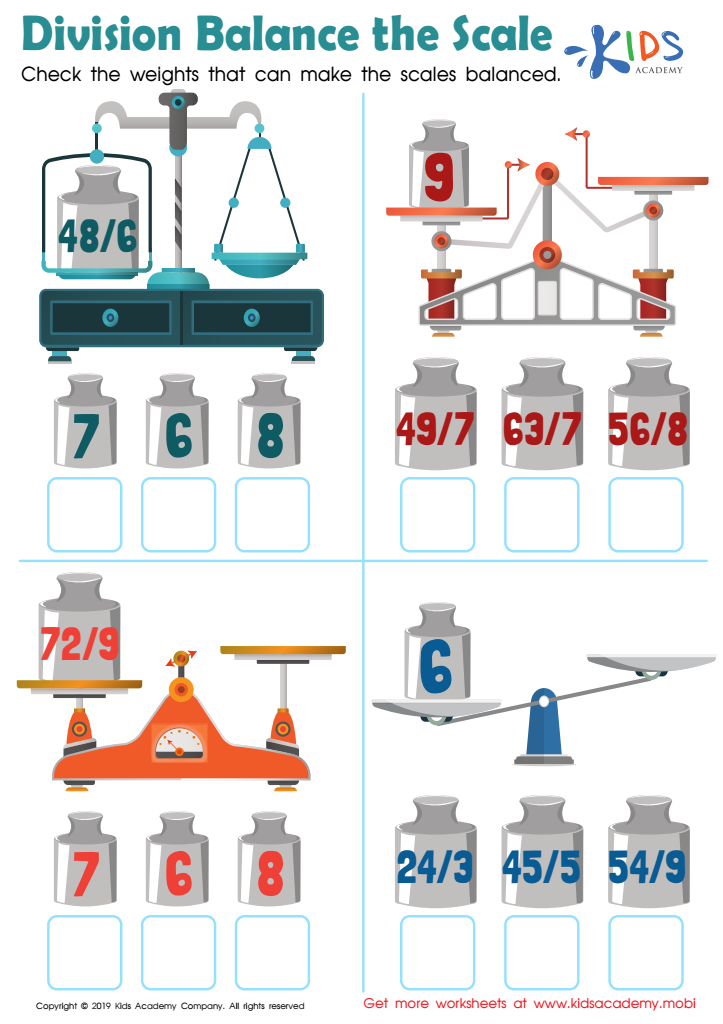
Division Balance the Scale Worksheet




.jpg)



Understanding division is crucial for children aged 7-9 as it lays the foundation for their math literacy and critical thinking skills. At this age, children shift from concrete mathematical concepts to more abstract ideas, making it an ideal time to deepen their understanding of division. Mastering this operation not only helps in developing number sense but also fosters problem-solving abilities necessary for real-life situations.
Socially and emotionally, understanding division enhances children’s confidence in their math skills. It empowers them to tackle more complex mathematical concepts like fractions, ratios, and even algebra in later grades. By grasping division, students learn to distribute and share fairly, developing a sense of equity and cooperation in group settings.
Additionally, educators and parents can use division as a tool to connect math with day-to-day activities, such as splitting items for a party or divvying up chores, thus making the learning process more relatable and engaging. Overall, when teachers and parents promote a solid understanding of division, they equip children with essential skills not just for academic success, but also for thoughtful decision-making in their everyday lives. This commitment to foundational math education will serve them well throughout their educational journeys and beyond.








