
Understanding habitats Worksheets for Ages 7-9
5 filtered results
Difficulty Level
Grade
Age
-
From - To
Subject
Activity
Standards
Explore our engaging "Understanding Habitats Worksheets" designed for children aged 7-9! These worksheets provide a fun and interactive way for young learners to discover different ecosystems, including forests, oceans, and deserts. Each activity fosters critical thinking and promotes an understanding of biodiversity and the importance of environmental conservation. With colorful illustrations and age-appropriate tasks, kids will learn about animal adaptations and their roles in various habitats. Perfect for classroom or homelearning, these resources support STEM education and inspire a love for nature. Download our printable worksheets today to help your child deepen their understanding of the world around them!
Favorites
With answer key
Interactive
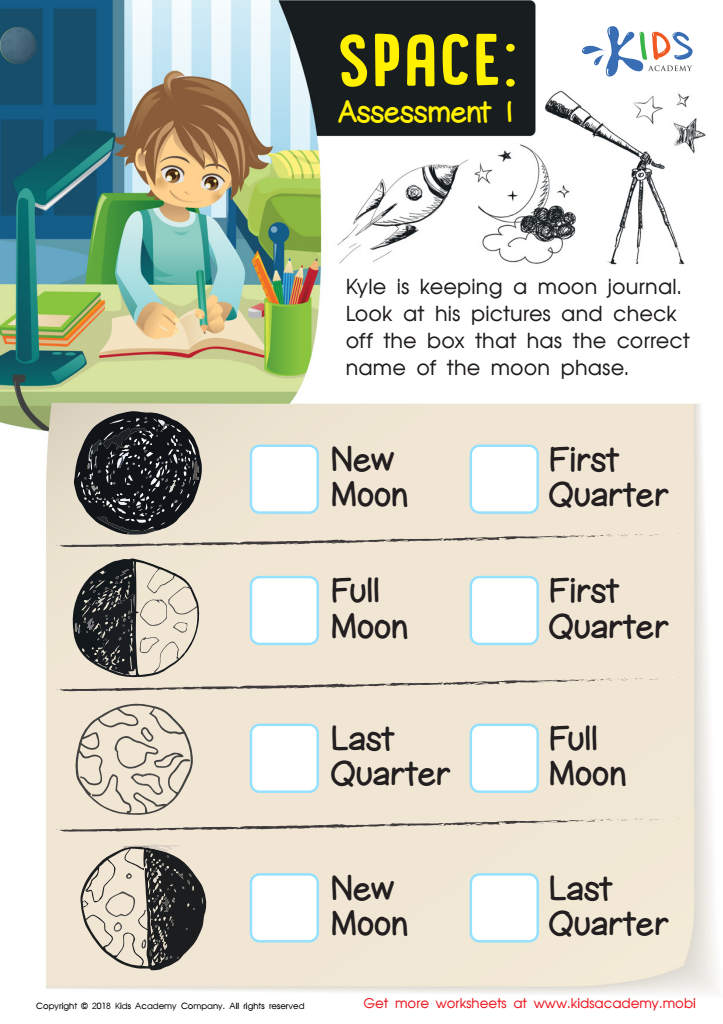
Space: Assessment 1 Worksheet
Introduce Kyle and his moon journal to your kids! Ask if they know what it is, or if they keep one too. Together, look at Kyle's pics and help them identify the phases of the moon. Have them check off the correct name of each. It's a great way to get kids interested in space!
 Assign to My Students
Space: Assessment 1 Worksheet
Worksheet
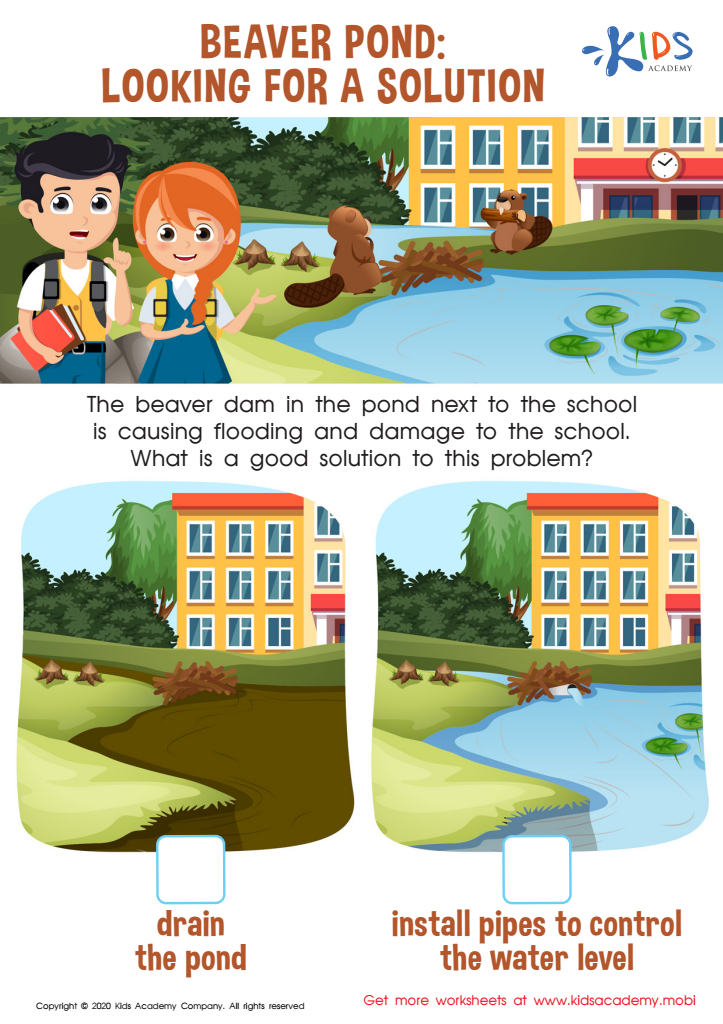
Beaver Pond: Looking for a Solution Worksheet
Beavers are building dams and flooding the local pond! Help your child practice problem-solving skills by reading through and selecting from possible solutions, with this fun PDF worksheet. See how your child's skills are improved!
Beaver Pond: Looking for a Solution Worksheet
Worksheet
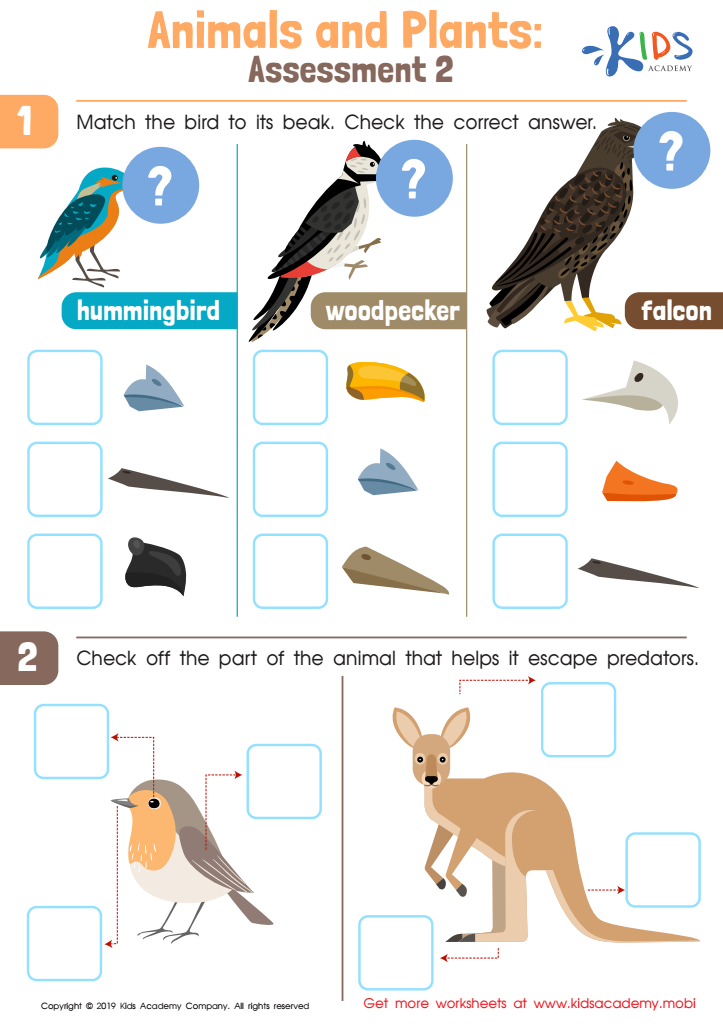
Animals and Plants: Assessment 2 Worksheet
This free PDF is ideal to quickly test your child's knowledge of animal adaptations. They'll select the right beak patterns for hummingbird, woodpecker and falcon, and identify which parts of animals help them escape predators. It's easy to assess your kid's understanding.
Animals and Plants: Assessment 2 Worksheet
Worksheet
Join Kids Academy for Free
Who is primarily going to use this learning content?








Understanding habitats is crucial for children aged 7-9, as it lays the foundation for their appreciation of nature and environmental science. During this vital developmental stage, children are naturally curious about the world around them. Teaching them about different habitats—like forests, oceans, and deserts—encourages critical thinking and inquiry.
Learning about habitats promotes awareness of biodiversity and the interdependence of living organisms. This understanding helps children recognize the importance of ecosystems and their role in sustaining life, fostering empathy towards animals and plants. Furthermore, exploring habitats can spark a lifelong interest in environmental stewardship, inspiring future conservation efforts.
Parents and teachers play a key role in nurturing this awareness. By introducing habitat-related topics through hands-on activities, field trips, and engaging discussions, they can enhance children's literacy, observational, and analytical skills. This educational approach helps students develop a sense of responsibility towards their environment.
In addition, discussing the challenges facing habitats, such as climate change and pollution, can empower children to become proactive in seeking solutions. Ultimately, cultivating a deep understanding of habitats equips young learners with the knowledge and values necessary for becoming informed, engaged, and compassionate citizens in a rapidly changing world.








